# The 2026 AI Infrastructure Surge: Building Resilience, Expanding Horizons, and Navigating New Frontiers
The year 2026 stands as a watershed moment in the evolution of artificial intelligence (AI) infrastructure, marked by unprecedented levels of investment, regional strategic initiatives, and technological breakthroughs. As AI becomes deeply woven into societal frameworks—from autonomous transportation and enterprise automation to space-based networks—the landscape is transforming at an extraordinary pace. This rapid expansion is fueled by massive datacenter buildouts, surging power and resource demands, innovations in space infrastructure, and advancements in robotics and autonomous agents. Simultaneously, critical challenges around sustainability, resource management, safety, and governance are emerging, demanding coordinated and forward-thinking responses.
## Global Expansion and Regional Strategies: Resilience and Sovereignty
### Building Resilience Through Diverse Approaches
Across the globe, nations are adopting tailored strategies to develop resilient AI infrastructures aligned with their geopolitical and economic priorities:
- **Europe** is emphasizing **technological sovereignty**. The recent partnership between **Mistral AI** and **Accenture**, involving an extensive deal with a major global consulting firm, exemplifies Europe's initiative to **reduce dependency on foreign cloud providers** and **foster independent AI ecosystems**. This move aims to **bolster local innovation** and **mitigate external geopolitical risks**, ultimately creating a more self-reliant AI infrastructure.
- **India** continues its aggressive ascent as an emerging AI powerhouse. Collaborations such as **G42 of Abu Dhabi** partnering with **Cerebras** are deploying over **8 exaflops of compute infrastructure** in the country. Efforts to **scale domestic hardware manufacturing** have gained momentum, exemplified by recent funding rounds—including a **$67 million Series B investment** for startup **Freeform**—focused on **building regional AI leadership** and **strengthening onshore hardware ecosystems**.
- The **United States** maintains its dominant position by consolidating technological sovereignty through strategic investments. Industry giants like **Marvell Technology** are investing heavily in **AI accelerators** to **fortify domestic supply chains**, while Nvidia’s broadening hardware portfolio and large-scale investments continue to **cement US leadership** in AI hardware infrastructure.
### Pushing Frontier Boundaries: Space and Edge
The **space frontier** progresses rapidly, with innovative startups—many led by **ex-SpaceX veterans**—securing significant funding, such as **$50 million in Series A rounds**, to develop **orbital data links** and **space-based networks**. These initiatives aim to **reduce latency**, **expand connectivity** in underserved regions, and **lay the groundwork for orbiting data centers** and **space solar power stations**. These advancements are poised to **extend AI computational capabilities beyond Earth**, supporting **space exploration**, **global connectivity**, and **resilient infrastructure** in unprecedented ways.
**Edge projects** are also gaining momentum. Investments like **Algorized’s $13 million** for **edge AI systems** and **RobCo’s $100 million** infusion to **scale robotic automation** demonstrate a focus on **distributed AI deployment**—bringing intelligence closer to physical operations in logistics, manufacturing, and infrastructure management. The integration of **space-based systems and edge AI** heralds a future where **resilient, distributed AI ecosystems** operate seamlessly across terrestrial and extraterrestrial domains.
### Infrastructure Hubs and Community Engagement
Regional initiatives continue to foster local innovation:
- **Colorado’s Global AI Weld County** project, spanning **438 acres with 20-year tax incentives**, aims to **foster AI research clusters**, **stimulate local economies**, and **attract international talent and investment**.
- Conversely, regions such as **Buckinghamshire** face **societal and environmental opposition** to siting critical infrastructure, which underscores the importance of **sustainable planning** and **community engagement** to ensure **long-term viability**.
### Capital Flows and Investment Confidence
Investment activity remains robust, reflecting strong confidence in AI’s transformative potential:
- **World Labs** continues to lead in funding and innovation.
- **Cleantech startups**, including **Rapidata** and **Optiml**, each secured approximately **CHF 7 million**, signaling a **strategic convergence** between **AI innovation and green energy solutions**. Recognizing that **sustainable energy** is vital for **scaling AI infrastructure responsibly**, these investments underscore the importance of **renewable energy integration**.
## Power Demand and Sustainability: Challenges and Responses
### Soaring Energy Needs and Industry Initiatives
AI infrastructure expansion has driven **dramatic increases in energy consumption**:
- Industry leaders like **Jensen Huang**, CEO of Nvidia, emphasize that **"Power demand will escalate sharply,"** highlighting the **urgent need for investments** in **renewable energy** and **grid modernization** to support AI growth while **mitigating environmental impacts**.
- Utilities such as **Constellation Energy** are actively securing **long-term renewable Power Purchase Agreements (PPAs)**—some extending **up to 20 years**—to **ensure sustainable energy supplies** capable of meeting AI’s surging power demands.
### Grid Modernization and Clean Energy Innovation
Regions including **Texas** and **California** are leading efforts to **integrate solar and wind energy** with **large-scale storage solutions**:
- These initiatives aim to **prevent environmental degradation**, **enhance grid resilience**, and **support the increasing power needs** driven by AI infrastructure.
- Startups like **Gruve**, which recently raised **$50 million** for **cooling systems** and **power optimization tools**, are crucial in **reducing operational costs** and **environmental footprints**.
- The **AI-powered energy management platform Tem**, which garnered **$75 million in Series B funding**, plays a pivotal role in **demand response orchestration**, **balancing grid loads**, and **maximizing renewable energy use**—all vital for **sustainable AI scaling**.
### Water: An Overlooked Resource
While power often receives the most attention, **water scarcity** is increasingly recognized as a **critical constraint**:
> **"Water risk is the missing variable in AI infrastructure planning,"** a recent analysis states, emphasizing that **datacenter cooling**, **energy generation**, and **resource sustainability** heavily depend on **adequate water supplies**. Investing in **water-efficient cooling technologies** and **sustainable resource management** is now essential for **long-term viability**.
## Hardware Supply Chain Bottlenecks and Resilience
### Memory Chips and Accelerators: Bottlenecks and Innovations
Despite rapid hardware advancements, **memory chip shortages** and **supply chain bottlenecks** persist:
- Industry experts warn that **"It’s still frothy in AI, but memory chips are now a big bottleneck,"** prompting **accelerated production efforts** and **architectural innovations** to meet demand.
- Regions are investing in **domestic manufacturing** to bolster resilience:
- **G42’s partnership with Cerebras** to deploy **8 exaflops** of compute exemplifies **regional resilience efforts**.
- **India’s ambition** to **become a global AI hardware hub** is reinforced by recent **$67 million Series B** funding for **Freeform**, a startup pioneering **AI-native manufacturing technologies** aimed at **scaling onshore production** and **reducing dependence on Western supply chains**.
### Nvidia’s Strategic Acquisitions and Market Dominance
Adding a new chapter, **Nvidia** recently acquired **Israeli AI startup Illumex** for **$60 million**, enhancing its **neural network hardware design capabilities**. Industry insiders note:
> **"Nvidia’s acquisition of Illumex gives it a 'brain' for advanced hardware design,"** reinforcing its **dominance in AI hardware ecosystems**.
Simultaneously, Nvidia is approaching a **$30 billion investment in OpenAI**, signaling a **major strategic move to influence AI research and deployment**. These developments underscore Nvidia’s **ambitions to control critical AI infrastructure components**, raising **market concentration** and **regulatory concerns**.
## Autonomous Agents, Safety, and Enterprise Platforms
### Explosion of Autonomous Systems
2026 has seen an **explosive growth** in deploying **autonomous agents** across infrastructure management, manufacturing, and transportation sectors:
- **OpenAI’s acquisition of OpenClaw** aims to **accelerate self-managing AI systems** capable of **orchestrating complex infrastructure** with **minimal human oversight**.
- **Oracle** is investing heavily in **autonomous AI agents** to **automate factories and supply chains**, emphasizing **self-diagnosis**, **dynamic adaptation**, and **resilience**.
### Safety, Trust, and Observability Tools
As autonomous systems grow more intricate, **safety and trust** are paramount:
- Platforms like **Overmind** are emerging as **crucial safety layers** designed to **monitor agent behavior**, **ensure safe operation**, and **coordinate multiple agents** to **prevent failures**:
> **"Overmind is designed to monitor agent behavior, ensure safe operation, and coordinate multiple agents to prevent failures,"** states a leading AI safety researcher.
- **Braintrust**, which recently raised **$80 million** in **Series B**, offers **behavior monitoring**, **anomaly detection**, and **safety assurance** within **multi-agent ecosystems**. Discussions—including videos titled **"Agentic AI Security Is Broken"**—highlight vulnerabilities such as **identity management**, **intent verification**, and **guardrails**, emphasizing the need for **robust security protocols** and **trust frameworks**.
### Sector-Specific Enterprise Platforms
Recent innovations include **Potpie AI**, a Californian startup that raised over **$2 million** pre-seed funding to **commercialize autonomous agent platforms** for **enterprise workflows**, aiming to **reduce complexity** and **accelerate deployment** in sectors like logistics, finance, and manufacturing.
Similarly, **Sherpas**, focused on **AI operating layers for wealth management**, secured **$3.2 million** in seed funding, emphasizing **transparency** and **compliance** through **sector-specific trustworthy operational layers**.
## Data Pipelines, Standards, and Governance
### Real-Time Data and Standardization
The importance of **reliable, real-time data streams** has driven the development of **'golden pipelines'**—**orchestrated, high-integrity data flows** critical for **decision-making** across logistics, finance, and infrastructure.
Organizations like **NIST** have launched the **AI Agent Standards Initiative** to develop **common frameworks** for **governance**, **interoperability**, and **safety protocols**:
> **"NIST is exploring approaches to extend cybersecurity frameworks to agent-based systems, focusing on governance, safety, and interoperability,"** a NIST spokesperson explained.
Establishing **robust standards** is essential to **regulatory compliance**, **public trust**, and **scalability** of these complex AI ecosystems.
### Trust and Security in Autonomous Systems
As autonomous agents proliferate, **trustworthiness** and **security** are critical:
- Platforms like **Braintrust** and **Overmind** are pioneering solutions to **monitor agent behavior**, **detect anomalies**, and **ensure safe, reliable operation**, especially in **critical infrastructure**.
## Frontier Technologies: Space, Edge, and Robotics
### Space-Based Data Infrastructure and Solar Power
The **space frontier** continues its rapid expansion:
- **SpaceX** is planning to deploy **up to 1 million satellites**, creating a **global, low-latency network** capable of **distributed AI processing**, resilient against terrestrial disruptions, and extending connectivity into remote regions.
- **Space solar power** initiatives are progressing, promising **sustainable energy sources** for satellites and orbital data centers—reducing dependence on terrestrial grids and **enabling long-term space-based AI infrastructure**.
### Edge AI and Robotics: The New Vanguard
Investments in **edge-native AI** and **robotics** accelerate:
- **Algorized** secured **$13 million** to develop **edge AI systems** for **autonomous robots** operating in industrial environments.
- **RobCo** attracted **$100 million** to scale **robotic automation** in manufacturing, integrating AI for **precision** and **efficiency**.
- **Sensera Systems** closed a **$27 million Series B** round to expand **AI-powered jobsite intelligence**, demonstrating AI’s role in **real-time operational monitoring**.
Furthermore, **spatial intelligence models** are gaining prominence, supported by regional investments in **next-generation AI capable of understanding 3D environments**. Recent advances include **world models** for **environmental modeling**—such as the work highlighted by **@RichardSocher** through **Moonlake**, which presents a **world built by Moonlake's world model**—and **agent reasoning dynamics** discussed in the **"Thinking Fast and Slow in AI"** video. These developments reinforce the focus on **spatial AI**, **agent cognition**, and **operational safety**.
### Transport and Logistics
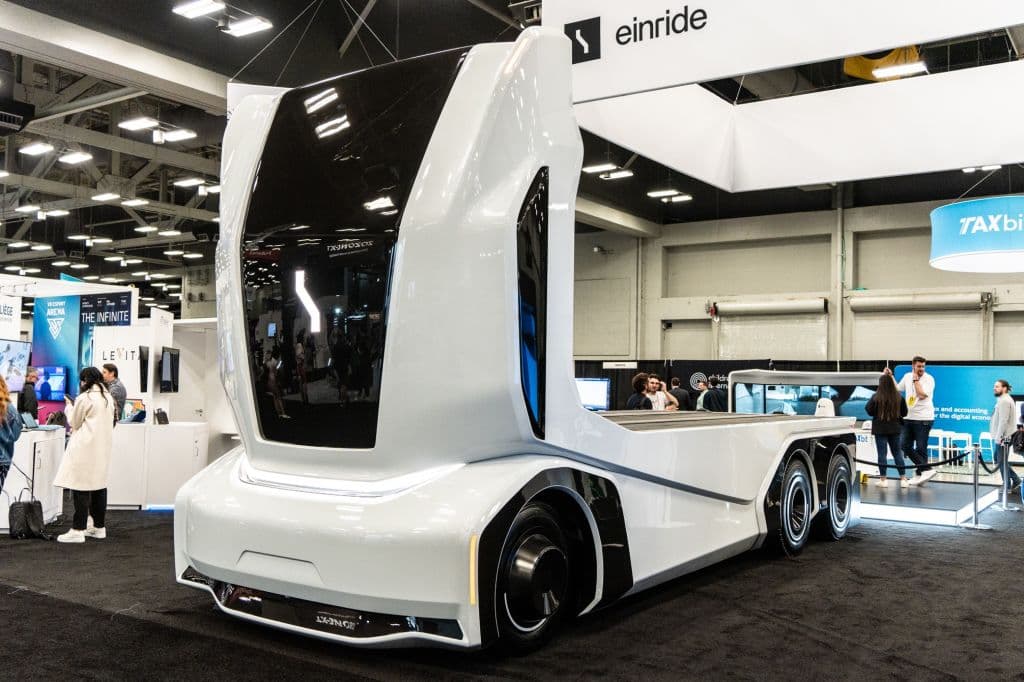
- **Einride**, a leader in autonomous freight trucks, recently raised **$113 million** in PIPE financing ahead of a planned IPO, signaling strong investor confidence in **self-driving logistics**.
- **RLWRLD**, a startup developing physical AI for industrial robotics, secured **$26 million** in Seed 2 funding to advance **robot foundation models** for manufacturing environments, emphasizing the convergence of **AI and robotics** in industrial sectors.
## Market Dynamics and Nvidia’s Strategic Expansion
Adding to the landscape, **Nvidia**’s recent acquisitions and investments reinforce its position:
- The acquisition of **Israeli AI startup Illumex** for **$60 million** enhances Nvidia’s **neural network hardware design capabilities**.
- Approaching a **$30 billion investment in OpenAI**, Nvidia aims to influence **AI research and ecosystem development**, further consolidating its **industry dominance**.
These moves underscore Nvidia’s **ambitions to shape standards**, **control critical infrastructure components**, and **maintain industry leadership**, raising **concerns over market concentration** and **regulatory oversight**.
## Recent Highlights and Emerging Topics
### World Models for Environmental and Spatial Intelligence
A notable recent development is the demonstration of **world models** for **environmental modeling**, as showcased by **@RichardSocher** through **Moonlake**. This work involves **building comprehensive, integrated models** of physical environments, which are crucial for **autonomous navigation**, **disaster response**, and **planetary exploration**.
### Agent Reasoning and Cognitive Dynamics
Another significant area gaining focus is **agent reasoning**, exemplified by the **"Thinking Fast and Slow in AI"** video. This work explores **dynamic reasoning processes** akin to human cognition, aiming to **enhance autonomous agent robustness** and **operational safety**. These advances are central to **developing AI systems capable of complex decision-making** in unpredictable environments.
## Current Status and Broader Implications
As 2026 unfolds, the AI infrastructure landscape is characterized by **remarkable technological growth**, **regional and sectoral competition**, and **exploration into space and robotics**. The confluence of **massive capital flows**, **hardware innovations**, and **resource management strategies** is laying the foundation for **exponential AI expansion**.
However, this rapid growth brings significant **challenges**:
- **Resource Management**: The **surging power demand** necessitates **long-term renewable PPAs**, **grid modernization**, and **water-efficient cooling solutions**. Jensen Huang’s warning that **"Power demand will escalate sharply"** underscores the urgency of **integrated resource planning**.
- **Safety and Governance**: The proliferation of **autonomous agents** and **complex AI ecosystems** requires **robust safety frameworks**, **standardized protocols** (such as those being developed by **NIST**), and **trustworthy monitoring tools** like **Overmind** and **Braintrust**.
- **Market Concentration and Regulation**: The aggressive expansion of corporations like Nvidia raises concerns over **market dominance**. **Proactive regulatory oversight** will be critical to **foster competition**, **protect innovation diversity**, and **serve the public interest**.
In conclusion, the AI infrastructure surge of 2026 is not merely about **scaling technology** but about **building a resilient, secure, and equitable foundation** for the future. The decisions made today—regarding **resource management**, **safety standards**, and **governance frameworks**—will determine whether this era leads to **inclusive progress** or exacerbates risks. Society stands at a crossroads: **harnessing innovation responsibly** is essential to **craft a sustainable, trustworthy, and equitable AI-driven future**.