# Tesla’s 2026 China and U.S. Autonomous Vehicle Developments: A Turbulent Yet Promising Road Ahead
As 2026 progresses, Tesla stands at a pivotal crossroads in its quest to dominate urban autonomous mobility, especially within China’s rapidly evolving regulatory landscape. Building on earlier milestones, recent developments highlight both the immense potential and the mounting challenges facing Tesla’s autonomous ambitions. From China’s groundbreaking conditional Level-3 certification to safety concerns and internal leadership shifts in the U.S., the year is shaping up as a defining chapter for Tesla’s future in urban transportation.
## China’s Landmark Conditional Level-3 Certification: A New Standard
In a groundbreaking move, **China’s Ministry of Industry and Information Technology (MIIT)** granted Tesla **conditional approval for its Level-3 (L3) autonomous driving system**—a first within China. This certification, announced in early 2026, **permits Tesla to operate its robotaxi fleet in major cities like Shanghai, Beijing, and Guangzhou** under strict safety protocols and operational conditions. The approval was the result of **rigorous safety validations, extensive real-world testing, and compliance with Chinese standards**, reflecting Tesla’s strategic focus on **safety, transparency, and technological robustness**.
Industry experts view this milestone as **a significant step toward establishing China as a pioneer in autonomous vehicle standards**, with plans underway for **full nationwide certification**. Once fully certified, Tesla intends to **expand its Cybercab deployment**, leveraging the nation’s **smart city initiatives and sustainability goals** to embed autonomous ride-hailing as a core urban mobility solution.
## Cybercab: Rapid Progress Toward Commercial Launch Amid Leadership Changes
Tesla’s **Cybercab**, designed specifically for dense urban environments, is nearing **its commercial debut**. The vehicle has transitioned from prototypes to active urban trials, with **full-scale production at Giga Shanghai** underway. Recent footage showcases Cybercab confidently navigating complex city streets, demonstrating **advanced obstacle avoidance, interior navigation, and urban adaptability**.
Tesla CEO Elon Musk reaffirmed that **mass production hinges on passing upcoming crash tests and securing regulatory approval**. The company has scheduled **crash testing for April 2026**, a critical step toward full deployment. However, internal leadership shifts have raised questions about program continuity. Notably, **Victor Nechita**, Tesla’s program manager for Cybercab, **exited the project ahead of its launch**, raising concerns about internal stability amidst rapid innovation.
Despite this, Tesla remains committed to **revolutionizing urban transportation** with Cybercab, emphasizing its potential to **offer cost-effective, fully autonomous rides** that align with China’s vision of **less congested, sustainable cities**.
## Manufacturing and Technological Advancements Drive Deployment Readiness
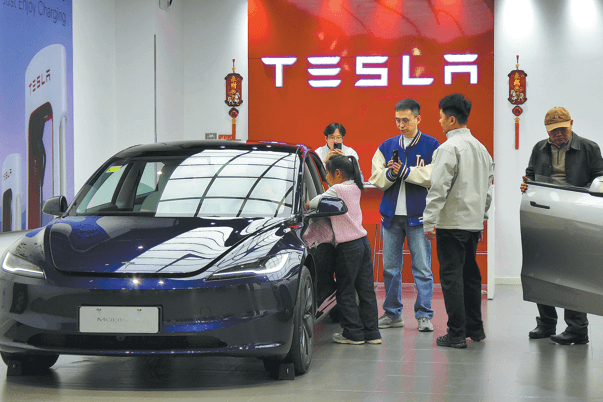
Tesla’s **Giga Shanghai** continues to scale up production, with **delivery wait times decreasing to 1–3 weeks in China**, reflecting **enhanced manufacturing capacity**. This capacity supports the **expansion of autonomous fleet operations**, including Cybercab deployment, and underscores Tesla’s resilience in its local supply chain.
Simultaneously, Tesla’s **software ecosystem** is evolving rapidly:
- The **Full Self-Driving (FSD)** software, currently in **V14.1.3**, is slated for an **upgrade to V14.2**, focusing on **urban navigation and safety enhancements** tailored for Chinese traffic environments.
- Recent **OTA updates (2026.2.6 and V13.2.2)** improve **pedestrian detection, intersection handling, and decision-making**, critical features for city driving.
- Hardware upgrades, including the **AI5 chip** now in **full production**, bolster **Level-3 autonomy** by providing **significantly increased processing power and energy efficiency**. Tesla’s collaboration with **Samsung** supports the scaling of **Dojo3**, its neural network supercomputer, while **HW4.5 sensors** further enhance perception and safety.
These advancements collectively reinforce Tesla’s position as a **technological leader** in urban autonomous driving, positioning the company to meet regulatory requirements and safety standards efficiently.
## Battery Innovations and Infrastructure Expansion
Tesla’s **4680 dry-electrode batteries** are integral to supporting **autonomous fleet scalability and vehicle longevity**. The company is also actively exploring **all-solid-state batteries**, promising **higher safety and faster charging times**, particularly vital in densely populated urban environments.
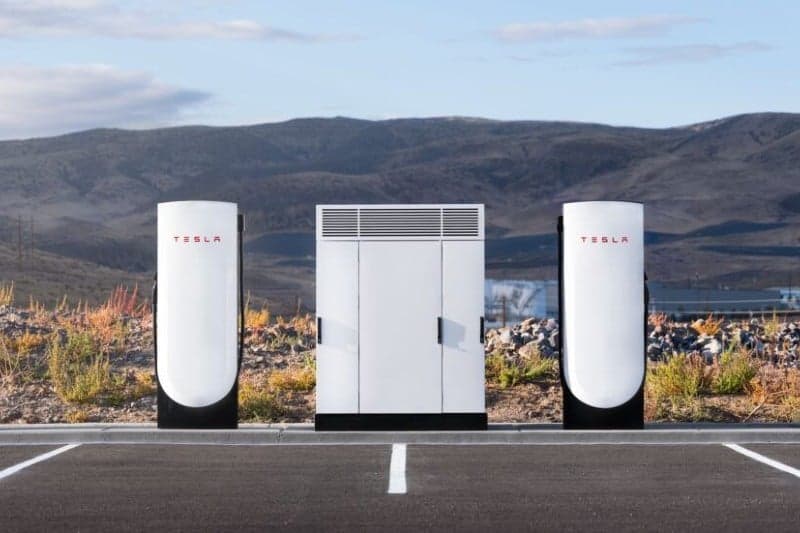
Further, Tesla is expanding **wireless inductive charging systems** utilizing **UWB (Ultra-Wideband) technology**, enabling **contactless recharging** in crowded cityscapes. These infrastructure investments aim to **streamline charging logistics**, reduce congestion, and enhance user convenience, making autonomous urban mobility more practical and appealing.
## Market Strategy: Subscription Models and Product Rationalization
Tesla’s recent shift toward **FSD software subscriptions** reflects a strategy to **broaden accessibility** and **generate recurring revenue**. Despite **price increases**, demand among premium consumers remains robust, especially in China, where **delivery volumes in late 2025 reached approximately 73,000 units**—a testament to the strength of local manufacturing and continuous product updates.
Tesla is also **rationalizing its product lineup** by discontinuing less popular variants like the **Model S and Model X**, focusing instead on **Model 3 and Model Y**, which continue to dominate the market. This focus aligns with **consumer preferences** and **regulatory trends** favoring more affordable and efficient EVs.
## Safety Incidents, Legal Challenges, and Regulatory Scrutiny
Despite these advancements, Tesla faces **significant safety and legal hurdles**:
- In the U.S., **multiple crashes involving Tesla robotaxis**—at least 14 incidents in Austin—have raised **public safety concerns** and prompted **regulatory scrutiny**.
- In California, a **state judge deemed Tesla’s marketing of Autopilot and FSD as full autonomy** as **misleading**, resulting in Tesla relabeling these systems as **“Driver-Assist” or “Auto-Assist”**—a move to enhance compliance and rebuild trust.
- The **NHTSA** has **expanded investigations** into crash incidents, and a **$243 million verdict** was awarded in a fatal Autopilot-related crash, underscoring **liability risks**.
Tesla’s **safety algorithms** are under constant refinement, with **software updates aimed at addressing fault lines exposed during incidents**. Nonetheless, these safety concerns pose ongoing **public confidence and regulatory challenges**, especially as the company pushes toward more widespread autonomous deployment.
## Strategic and Leadership Considerations
The recent **leadership shakeup** within Tesla’s Cybercab program, notably the departure of **Victor Nechita**, underscores the **internal challenges of rapid innovation** in a high-stakes environment. Tesla is balancing **aggressive technological development** with the need for **regulatory compliance and safety assurances**, all while navigating **public perception**.
## Outlook for 2026 and Beyond
Tesla’s trajectory in 2026 remains both **promising and perilous**:
- The **conditional L3 certification in China** opens doors for **massive urban deployment**, positioning Tesla as a pioneer in autonomous city mobility.
- **Advancements in hardware, software, and infrastructure** bolster its technological leadership.
- Conversely, **safety incidents, legal rulings**, and **internal leadership shifts** could delay timelines or impact market confidence.
**Key upcoming milestones include**:
- Achieving **full certification and operational deployment of Cybercab** following crash test approvals.
- **Expanding wireless charging infrastructure** across major Chinese cities.
- Securing **additional regulatory approvals** for broader autonomous operations.
- **Integrating Grok AI** and further AI enhancements for safer urban navigation.
In sum, Tesla’s ability to **navigate regulatory hurdles, reinforce safety protocols, and sustain technological innovation** will determine whether it can fulfill its vision of **transforming urban mobility into a safer, autonomous, and sustainable ecosystem** in 2026 and beyond. The coming months will be critical in shaping whether Tesla’s ambitions become a tangible reality or are tempered by the complex realities of safety, regulation, and internal execution.