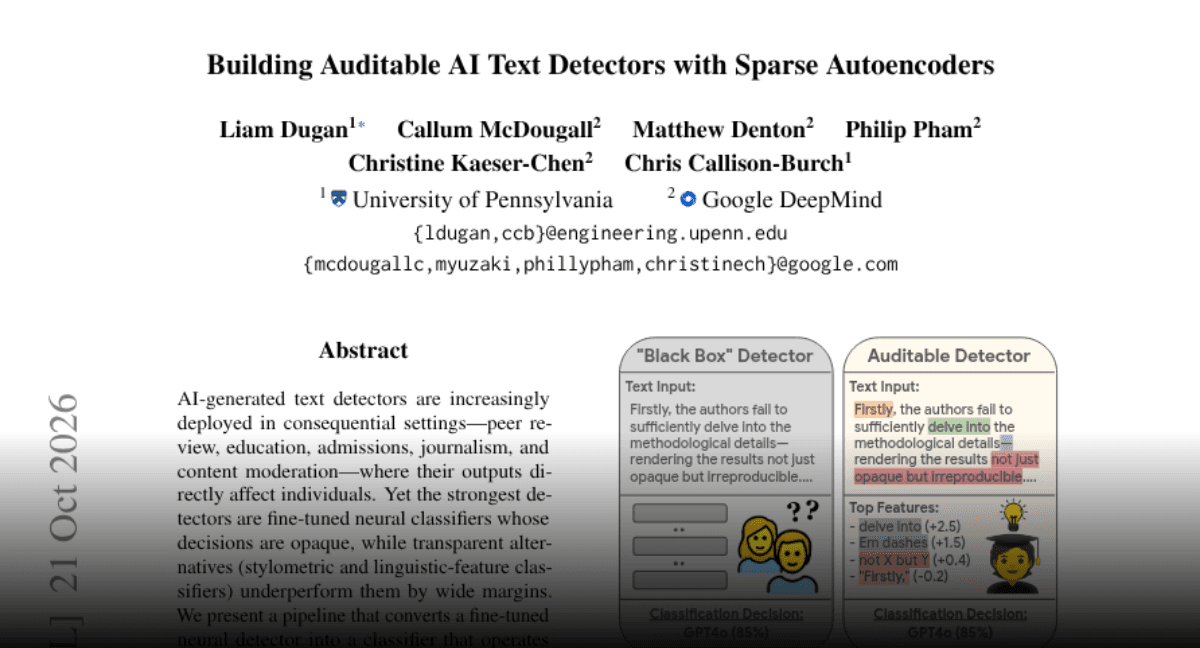
The evolution of next-generation artificial intelligence continues its rapid momentum, propelled by the deep integration of **agentic models, probabilistic inference, efficient architectures, and rigorous benchmarking**, now further enriched by critical advances in **interpretable uncertainty estimation, calibration of model confidence, and real-world deployment lessons**. These developments collectively sharpen the trajectory toward AI systems that are not only **autonomous and adaptive** but also **transparent, trustworthy, and aligned with human values**, capable of robust operation across complex and safety-critical domains.
---
### Reinforcing Probabilistic Inference: From Uncertainty-Aware Agentic Models to Interpretable Predictions
Probabilistic inference remains the cornerstone for enabling agentic AI systems to operate effectively under uncertainty, a challenge that grows paramount as AI moves from controlled research settings into dynamic, high-stakes environments.
- Building on prior breakthroughs such as the KARL framework and NerVE’s insights, recent work in **interpretable machine learning with prediction uncertainty** has advanced frameworks that explicitly quantify confidence alongside predictions. For example, novel descriptor construction methods integrate domain physics and probabilistic reasoning to produce transparent models that communicate not just outputs but calibrated uncertainty. This transparency is critical for human operators to trust AI decisions in areas like healthcare diagnostics and materials science.
- The practical impact of these advances is underscored by ongoing research focused on **calibrating AI confidence levels and mitigating overconfidence**, a well-documented risk factor in deploying agentic models. A recent popular analysis, *Why AI Lies with Confidence and How Researchers are Fixing It*, highlights that AI systems often exhibit unwarranted certainty, which can mislead users and amplify risk. Researchers are actively developing methods to improve calibration of predictions, ensuring that confidence scores genuinely reflect model reliability—a vital step to safer, interpretable deployment.
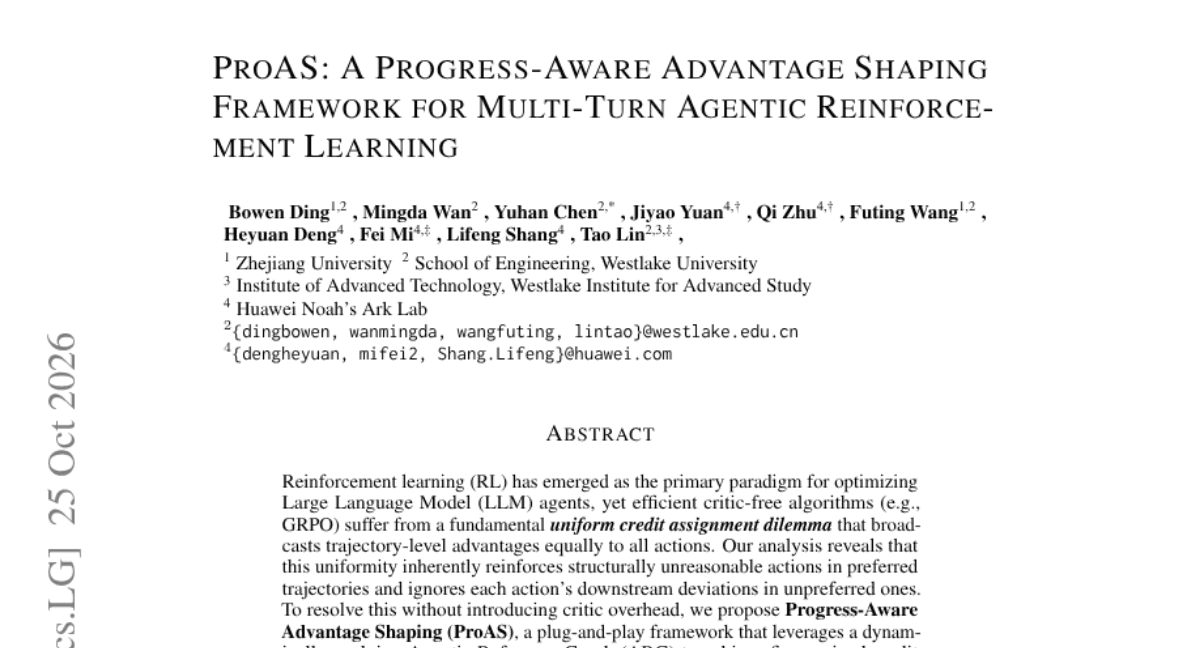
- These advances dovetail with earlier trends where **probabilistic inference fuses with reinforcement learning (RL) and meta-learning** to empower AI scientists and embodied agents to autonomously navigate uncertainty, solicit targeted data, and iteratively refine hypotheses with well-understood confidence bounds. The **CrysText system**, combining LLMs and RL for crystal structure discovery, exemplifies this synergy by accelerating scientific exploration with uncertainty-aware agentic reasoning.
---
### Agentic Models and Embodied Control: Extending Intelligence into the Physical World
Agentic AI systems continue to deepen their capabilities through enhanced integration of **sensory-motor feedback and adaptive policy generation**, enabling sophisticated control of embodied agents:
- The paradigm of **iterative policy generation via large language models (LLMs)** now effectively bridges symbolic reasoning with real-world robotic and autonomous navigation tasks. Agents leverage continuous sensory-motor loops coupled with probabilistic reasoning to manage complex environments with improved autonomy and flexibility.
- Meta-learning and reinforcement learning augment these capabilities, allowing agents to rapidly self-adapt in novel, uncertain conditions with minimal supervision—a crucial requirement for deployment in dynamic settings such as autonomous vehicles, interactive robotics, and environmental monitoring.
- These embodied agentic models build upon NerVE-informed efficient architectures and adaptive reasoning methods like elastic diffusion transformers, which balance expressivity with computational efficiency, enabling real-time, resource-conscious operation.
---
### Efficiency, Adaptive Reasoning, and Scalable Architectures
Continued architectural innovations maintain a critical focus on **efficiency and scalability**, ensuring that advanced agentic models remain deployable at scale:
- The **NerVE framework’s nonlinear eigenspectrum analysis** guides the design of models that optimize expressivity while minimizing computational overhead. Complementary techniques such as **key-value (KV) caching** and **lightweight weight perturbations** reduce latency and fine-tuning costs, facilitating on-demand adaptation without costly retraining.
- Adaptive reasoning protocols, including **chain-of-thought diffusion enhanced by meta-learning** and **dynamic complexity scaling**, enable AI agents to handle multi-step reasoning and context shifts with agility, supporting continual learning in evolving environments.
- These efficiency gains are paramount for extending agentic AI beyond data centers into embedded and edge contexts with tight power and latency constraints, such as autonomous drones and wearable health devices.
---
### Rigorous Benchmarks, Human–AI Teaming, and Enterprise Deployment Insights
The gap between AI research and real-world impact narrows as benchmarks and enterprise lessons sharpen focus on **deployment readiness, safety, and collaboration**:
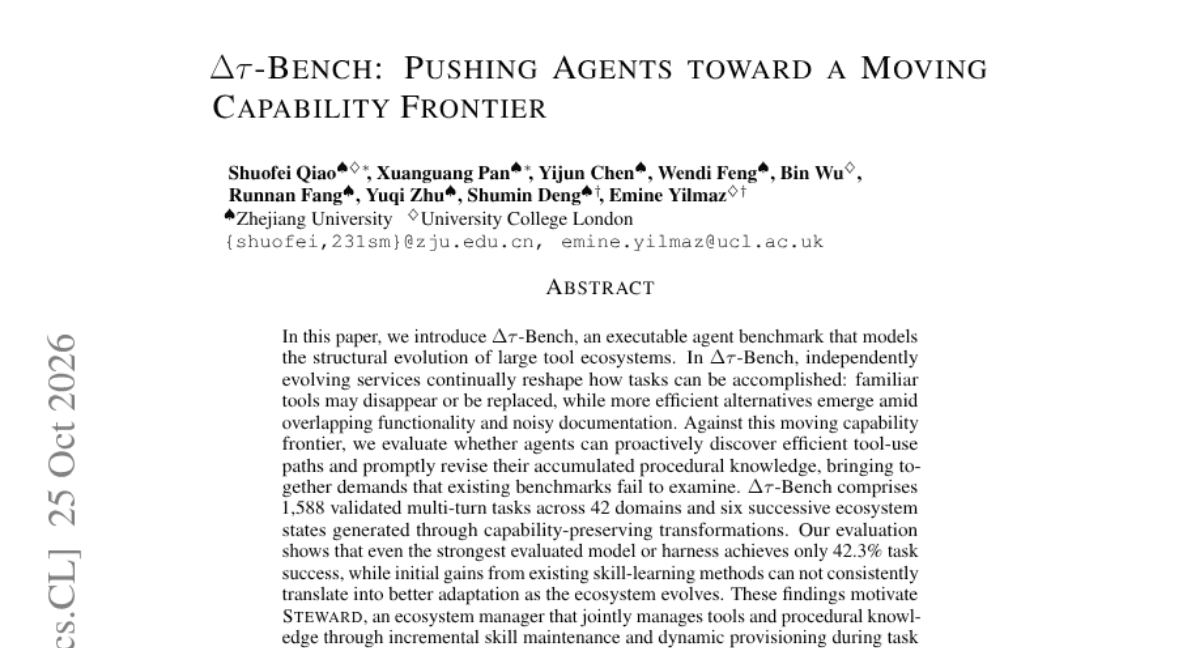
- New benchmarking suites like the **LLM Health Triage Evaluation Format** and **egocentric multi-agent video question answering** rigorously measure AI systems’ ability to maintain safety, uncertainty awareness, and sustained contextual understanding in complex, multi-agent scenarios.
- Research into **human–AI teaming** increasingly leverages cognitive science to optimize workflows where AI acts as a collaborator rather than a replacement, reinforcing trust and effective shared decision-making.
- From an enterprise viewpoint, the report *Fixing AI Failure: Three Changes Enterprises Should Make Now* crystallizes the operational challenges in scaling AI safely. It highlights the urgent need to:
- Embed uncertainty quantification and continuous evaluation in production pipelines to detect and mitigate failures proactively
- Establish rigorous human oversight and intervention mechanisms that empower human actors to intercede when AI uncertainty or risk thresholds are breached
- Develop comprehensive governance frameworks that align AI deployment with organizational risk tolerance and regulatory requirements
These insights emphasize that technical innovation alone is insufficient; organizational practices and governance structures must evolve in tandem to realize dependable, production-grade AI.
---
### Heightened Focus on Alignment, Risk Mitigation, and Governance
The AI community’s increasing awareness of catastrophic risks and ethical challenges has propelled **alignment, safety auditing, and governance** to the forefront of research and policy:
- The influential 2026 DeepMind report underscores the necessity for robust alignment methods, continuous safety auditing, transparent uncertainty quantification, and enforceable human oversight mechanisms to prevent AI misuse or catastrophic failure.
- These imperatives have catalyzed collaboration between researchers, policymakers, and international bodies to formulate standards for AI safety certification and development accountability, marking a shift toward embedding ethics and risk mitigation as core design principles.
- Governments worldwide are translating these commitments into funding initiatives and legislation that mandate transparency, accountability, and risk management, operationalizing safety beyond theoretical discourse.
---
### Hardware-Software Co-Design and Explainability: Foundations for Transparent, Energy-Efficient AI
Parallel advancements in infrastructure and interpretability complement agentic AI progress:
- Emerging **photonic AI chips and neuromorphic architectures** demonstrate remarkable energy efficiency and low-latency inference, critical for real-time, power-constrained applications in edge and embedded devices.
- Explainable AI frameworks employing **mathematically grounded reasoning** enhance transparency and interpretability, vital for regulatory compliance and user trust, particularly in sensitive domains like healthcare, finance, and autonomous systems.
- Together, these hardware-software co-design approaches enable the deployment of sophisticated agentic models that are both resource-conscious and transparent.
---
### Synthesis and Outlook: Toward Autonomous, Transparent, and Trustworthy AI Ecosystems
The collective advances in probabilistic inference, embodied agentic control, efficiency innovations, deployment benchmarking, governance, and infrastructure paint a compelling vision for AI’s near future:
- Agentic models empowered by calibrated probabilistic reasoning and meta-learning are evolving into **self-optimizing AI scientists and embodied agents** capable of dynamic knowledge management under uncertainty.
- Efficiency-driven architectures and adaptive reasoning protocols expand accessibility and scalability, enabling real-time operation in resource-constrained environments.
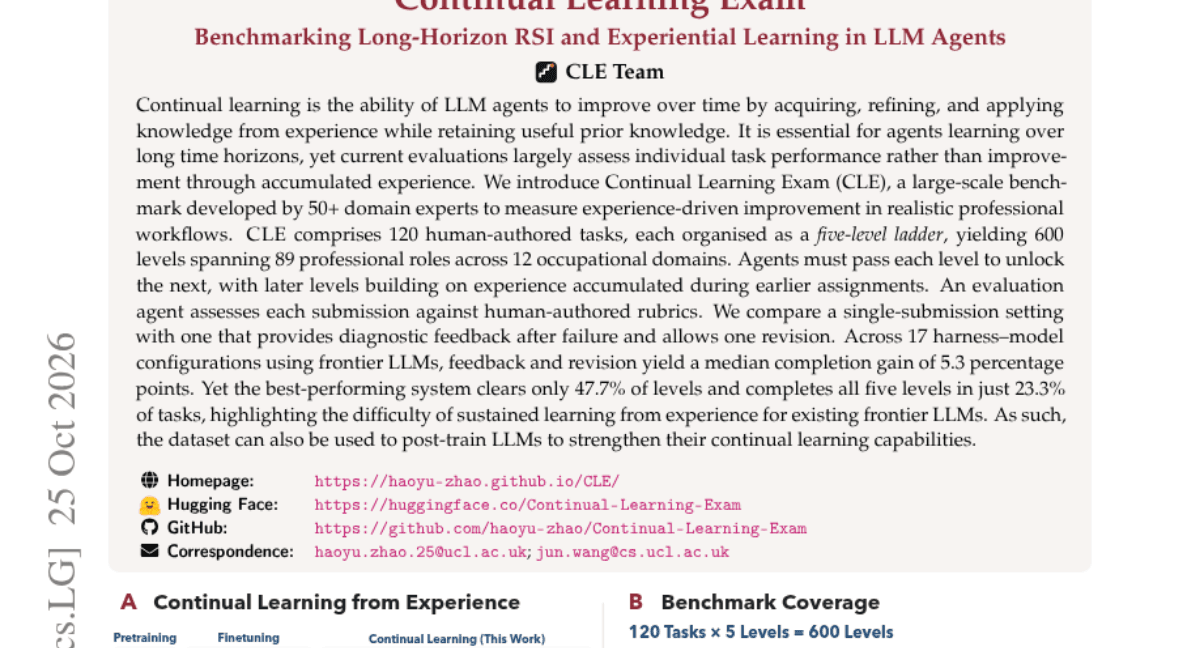
- Realistic benchmarks and enterprise lessons ensure AI systems meet stringent safety, continual learning, and collaboration standards necessary for impactful real-world deployment.
- Hardware innovations and explainability frameworks support deployment in energy-sensitive and safety-critical contexts, fostering transparency and trust.
- Crucially, a maturing ecosystem of alignment research, governance frameworks, and policy engagement embeds ethical safeguards and risk mitigation into AI development lifecycles, aligning AI progress with societal values.
As one leading AI researcher recently reflected:
> “The future of AI hinges on systems that not only learn and adapt independently but also transparently evaluate their own reasoning under uncertainty, all within frameworks that guarantee alignment with human values and robust governance.”
This holistic approach signals the dawn of AI ecosystems that are **autonomous, interpretable, continually learning, and trustworthy**, poised to address the most pressing scientific, industrial, and societal challenges of the coming decades.
---
### Key Takeaways
- **Probabilistic inference and calibrated uncertainty estimation** remain foundational, enabling autonomous scientific reasoning with interpretable confidence, critical for trust and safety.
- **Agentic models augmented with reinforcement learning, meta-learning, and sensory-motor control** extend AI capabilities into embodied and dynamic real-world domains.
- **Efficiency and adaptive reasoning innovations**, guided by frameworks like NerVE and elastic diffusion transformers, reduce computational costs while enhancing model flexibility.
- **Expanded benchmarks and enterprise insights** highlight deployment challenges, emphasizing uncertainty management, human oversight, and governance as prerequisites for scaling AI safely.
- **Alignment, risk mitigation, and governance** efforts have transitioned from academic focus to operational reality, supported by policy frameworks and multi-stakeholder collaboration.
- **Hardware-software co-design and explainability** underpin energy-efficient, transparent AI suitable for embedded and safety-critical applications.
Together, these developments chart a robust pathway toward AI ecosystems that are not only **autonomous and continually learning but also transparent, trustworthy, and ethically governed**, ready to transform science, industry, and society.