# The 2025–2026 Revolution in Memory and Post-Training Techniques for Large Language Models: An Expanded and Updated Perspective
The artificial intelligence landscape has undergone a seismic transformation during 2025 and into 2026, fundamentally redefining how large language models (LLMs) operate, reason, and retain knowledge over extended periods. Moving beyond early paradigms rooted in static, prompt-dependent text generation, these systems are now evolving into **hybrid, memory-augmented, long-term reasoning agents** capable of **dynamic recall, continuous adaptation, and complex problem-solving**. This revolution is driven by a convergence of **advanced post-training strategies, architectural innovations, operational tooling, systemic frameworks, and internal reasoning techniques**—collectively establishing a **new paradigm for knowledge storage, access, and reasoning** in AI.
This comprehensive update synthesizes recent breakthroughs, practical implementations, and emerging research directions shaping this new era. It emphasizes the **paradigm shift from static contexts to hybrid memory systems** that more closely emulate human-like long-term reasoning. We explore **technical innovations**, **systemic challenges**, **practical deployments**, and **future trajectories** that are defining this transformative period.
---
## The Paradigm Shift: From Static Contexts to Hybrid Memory Systems
By late 2025 and early 2026, the AI community widely recognized that **LLMs do not possess genuine, biological-like memory**. Instead, they **simulate memory** through **architectural components**, **retrieval strategies**, and **context management techniques**—methods that, while effective, lack true persistence. This realization has **catalyzed a fundamental rethinking** of how models **store, access, and reason over, knowledge**.
A pivotal influence was **Sriram Krishnan’s December 2025 article, "LLM Deep Dive — Part 2 Post Training,"** which highlighted that **post-training techniques now encompass a broad spectrum**: **retrieval-augmented generation (RAG)**, **fine-tuning**, **external memory modules**, and **hierarchical attention mechanisms**. These innovations **shifted research efforts toward architectural augmentation** and **external knowledge integration**, vastly expanding the **effective memory horizon** of models.
---
## Core Techniques and Architectural Innovations
### Post-Training Strategies: Enhancing Knowledge Reach
Post-training methods have become **central** to elevating LLM capabilities:
- **Retrieval-Augmented Generation (RAG):**
RAG systems **enable models to fetch relevant external data during inference** from **knowledge bases** or **vector search systems**. Recent advancements include **chunking strategies** for optimized retrieval efficiency, as detailed in **"Why Chunking Is Important for AI and RAG Applications?"** (Deepchecks, Feb 2026). These techniques **allow models to access up-to-date information** without retraining, **vastly improving accuracy** across domains and **addressing static data limitations**.
- **Fine-Tuning and Continual Learning:**
Advances like **incremental or lifelong learning** enable models to **adapt to new information** with minimal retraining. This supports **long-term knowledge updates**, **domain specialization**, and **mitigation of catastrophic forgetting**, allowing models to **remember and reason over extended periods**.
- **Memory Modules:**
The integration of **differentiable neural databases**, **hierarchical memory banks**, and **external storage layers** offers **explicit repositories** for **long-term storage and retrieval**. Examples include **neural knowledge graphs** and **neural database systems** designed for **persistent, scalable knowledge management**.
### Architectural Paradigms: Emulating Human Long-Term Memory
While biological memory remains elusive, researchers have devised **architectures that emulate it**:
- **Extended Context Windows:**
Modern models utilize **massive token limits**, sometimes exceeding **tens of thousands of tokens**, facilitated by **sparse attention**, **recurrence**, and **hierarchical attention mechanisms**. These innovations **mitigate hardware constraints** and support **relational reasoning over extended sequences**, enabling **multi-hop reasoning, multi-turn dialogues, and complex problem-solving**.
- **Retrieval-Enhanced Architectures:**
Hybrid systems combine **internal inference capabilities** with **external knowledge retrieval**. Examples include **Long-Horizon Agents** and **Recursive Language Models (RLMs)** that **decompose complex tasks**, **call upon themselves or sub-models iteratively**, and **revisit prior outputs**—effectively **extending reasoning depth and context**.
- **Long-Horizon Reasoning Frameworks:**
Projects such as **MIT’s blueprint** and **Prime Intellect’s RLMEnv** exemplify **multi-layered, recursive architectures** supporting **multi-step, long-term reasoning** and **persistent knowledge management**. These frameworks facilitate **planning over extended horizons** and **dynamic external knowledge integration**.
### Functional "Memory": Embeddings, Prompts, and External Data
In operational deployment, **"memory" is functional and operational**:
- **Embedding Spaces:**
Knowledge encoded as **semantic vectors** allows **similarity-based retrieval** via **nearest neighbor search**, supporting **scalable, flexible knowledge access**—central to **retrieval-augmented generation** and **semantic caching**.
- **Prompt Engineering & "Memory Prompts":**
Carefully designed prompts **trigger internal knowledge** or **simulate recall**, effectively **extending the model’s effective memory** **without retraining**. This technique remains vital for **context management** and **domain adaptation**.
- **External Knowledge Retrieval:**
The hybrid approach of **internal inference** coupled with **external data fetching** **significantly extends the memory horizon**, enabling **context-rich, accurate interactions** and **trustworthy reasoning**.
---
## Operational Challenges and System-Level Resilience
As models become more intertwined with external systems, **robust operational practices** are critical:
- **Failures in Production:**
Challenges such as **data drift**, **system errors**, and **unexpected failures** demand **monitoring**, **fallback mechanisms**, and **resilience strategies**. Articles like **"There Is No Best LLM"** highlight that **reliable deployment** remains an ongoing concern.
- **Observability & Debugging:**
Tools such as **Langfuse**—an **open-source observability platform**—are **crucial** for **tracking model behavior**, **detecting retrieval failures**, and **monitoring cache effectiveness**. These tools **enable diagnostics** of **retrieval issues** and **reasoning failures** in long-term systems.
- **Deployment Platforms:**
The **"Top 7 Platforms to Fine-Tune Open Source LLMs in 2026"** underscore the importance of **scalable, reliable environments** supporting **domain adaptation**, **memory management**, and **system stability**.
- **Evaluation Frameworks:**
Metrics now include **long-horizon accuracy**, **retrieval effectiveness**, and **system resilience**. The article **"RAG Evaluation: Measuring Retrieval, Grounding & Drift"** emphasizes the necessity of **comprehensive assessment** for **long-term system reliability**.
### Cost-Effective Memory and Semantic Caching
A recent breakthrough is **semantic caching**, as discussed in **"Why your LLM bill is exploding — and how semantic caching can cut it by 73%"**. This technique **stores and reuses model outputs based on semantic similarity**, **reducing API costs significantly**—by **nearly 75%**—and **making persistent memory more feasible and scalable at enterprise levels**.
---
## Recent Practical Implementations: Long-Running Agents and Orchestrated Workflows
A notable development is **Hightouch’s long-running agent harness**, designed to **maintain persistent, context-aware interactions** over long durations. As explained in **"How Hightouch built their long-running agent harness,"** this system **enables continuous, stateful interactions with external data sources**, supporting **complex workflows** and **persistent reasoning**.
Similarly, **@weaviate_io’s article, "What separates a ChatGPT wrapper from a production-grade agentic system?"**, emphasizes that **building truly operational, agentic AI systems** involves **more than just wrapping a language model**. It requires **robust memory management**, **external knowledge integration**, and **systemic resilience**, aiming at **long-term, reliable reasoning**.
---
## Advances in Efficiency: FlashAttention 4 and Streaming Inference Engines
Enhancements in computational efficiency are vital:
- **FlashAttention 4:**
As detailed in **"FlashAttention 4: Faster, Memory-Efficient Attention for LLMs,"**, this innovation **accelerates attention computations** and **reduces hardware demands**, enabling models to **handle extended contexts—tens of thousands of tokens—with greater speed and lower cost**.
- **Streaming Inference Engines:**
Emerging engines like **xaskasdf/ntransformer** **support large-model deployment** on constrained hardware with **low latency** by **streaming layers through GPU memory** via PCIe. This **reduces memory footprint** and **improves throughput**, making **long-term, memory-rich reasoning systems** **more accessible**.
---
## Building Intelligent AI Agents: Architectures of Persistent Memory
A core consideration for **memory-augmented AI systems** is the choice between **vector-based embeddings** and **structured memory architectures**:
- **Vector-Based Recall:**
Encodes knowledge as **semantic vectors**, facilitating **fast similarity search** and **scalability**. Retrieval based on **cosine similarity** supports **broad knowledge access** suited for **retrieval-augmented generation** and **semantic caching**.
- **Structured Recall:**
Stores knowledge explicitly—**neural knowledge graphs**, **hierarchical databases**, or **tokenized memory modules**—offering **precision**, **interpretability**, and supporting **complex, rule-based reasoning**. Critical in domains demanding **traceability and explainability**.
- **Hybrid Approaches:**
Combining **vector embeddings** for **broad retrieval** with **structured memory** for **specific facts** is increasingly favored to **support robust, long-term reasoning**.
---
## Enhanced Internal Reasoning: Internal Debate and Multi-Agent Deliberation
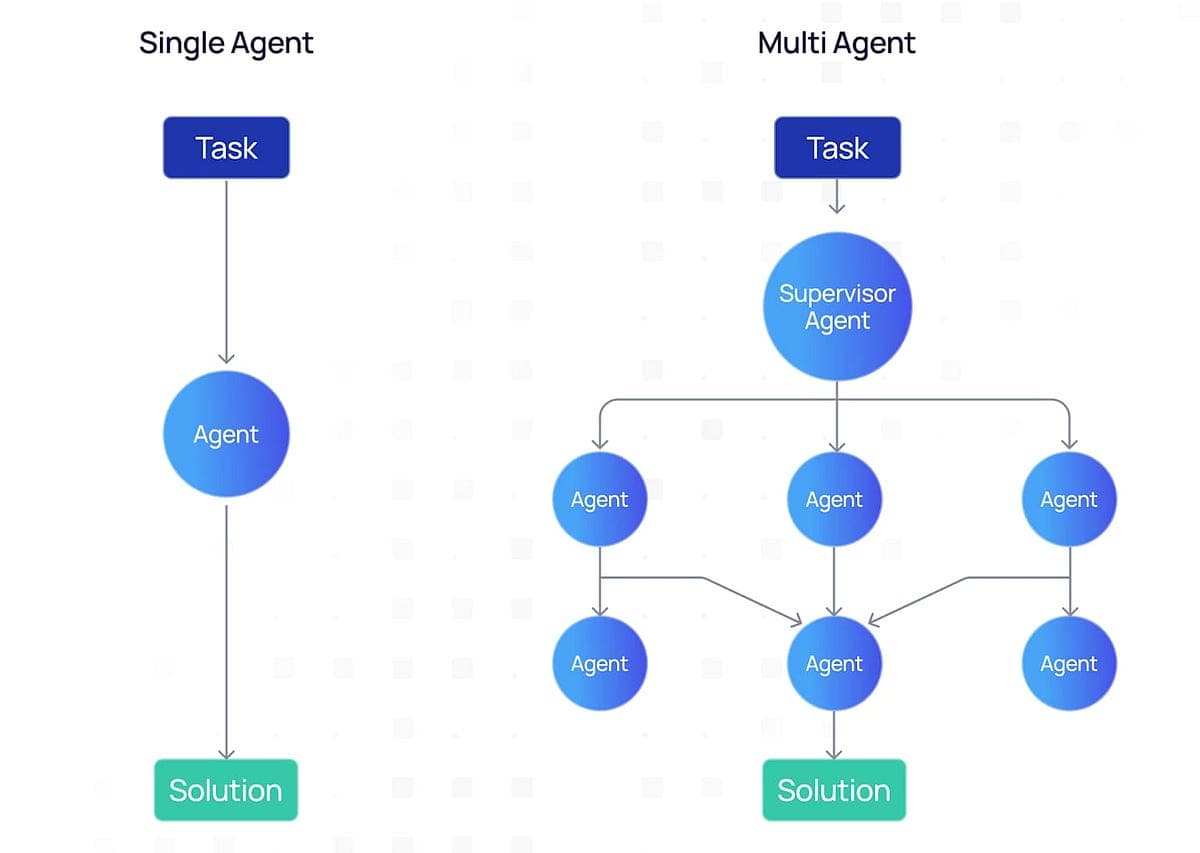
Recent research emphasizes **internal debate**, where **LLMs generate multiple perspectives** before concluding, **improving accuracy** on **complex, nuanced reasoning tasks**. This **multi-agent paradigm**:
- **Corrects errors** via internal cross-validation.
- **Supports nuanced judgments**, akin to **human deliberation**.
- **Increases transparency** by organizing **internal viewpoints**.
Paired with **external retrieval**, **internal debate mechanisms** help **validate fetched data** and **reduce hallucinations**, leading to **more trustworthy and explainable AI agents**.
---
## Practical Implications and Emerging Research Directions
### Orchestrated Workflow Architectures
The trend toward **integrated AI workflows**—merging **retrieval**, **internal reasoning**, **external knowledge**, and **persistent memory**—is accelerating. As described in **"From Wrappers to Workflows: The Architecture of AI-First Apps,"**, such systems enable:
- **Stateful, long-term interactions**.
- **Multi-step, complex reasoning**.
- **Continuous learning and adaptation**.
Recent articles like **"AI Workflow Orchestration — Move Beyond Simple Prompts"** showcase how **orchestrating diverse components**—retrieval modules, reasoning engines, memory layers—**creates resilient, scalable AI systems** capable of **long-term reasoning**.
### AI as a Microservice
Viewing **LLMs as microservices**—a perspective emphasized in **"Ep #85: The LLM as a Microservice (Part 1) — The Architect's Notebook"**—facilitates **modular, scalable architectures**. This approach **decouples reasoning, memory, and retrieval layers**, **simplifies system debugging**, and **supports enterprise-grade deployment**.
### Deterministic Context Management & Evaluation
Tools like **Tessl**—highlighted in **"Stop Guessing! Master Agentic Context Management & Deterministic Evals with Tessl"**—are **advancing the ability to manage context deterministically** and **perform reliable evaluations** of long-running, memory-rich agents. Such systems **ensure reproducibility**, **robustness**, and **trustworthiness**, which are vital for **production environments**.
---
## Recent Developments and Resources
In addition to foundational advances, several recent developments further accelerate the capabilities of memory and post-training techniques:
- **gpt-realtime-1.5 by OpenAI:**
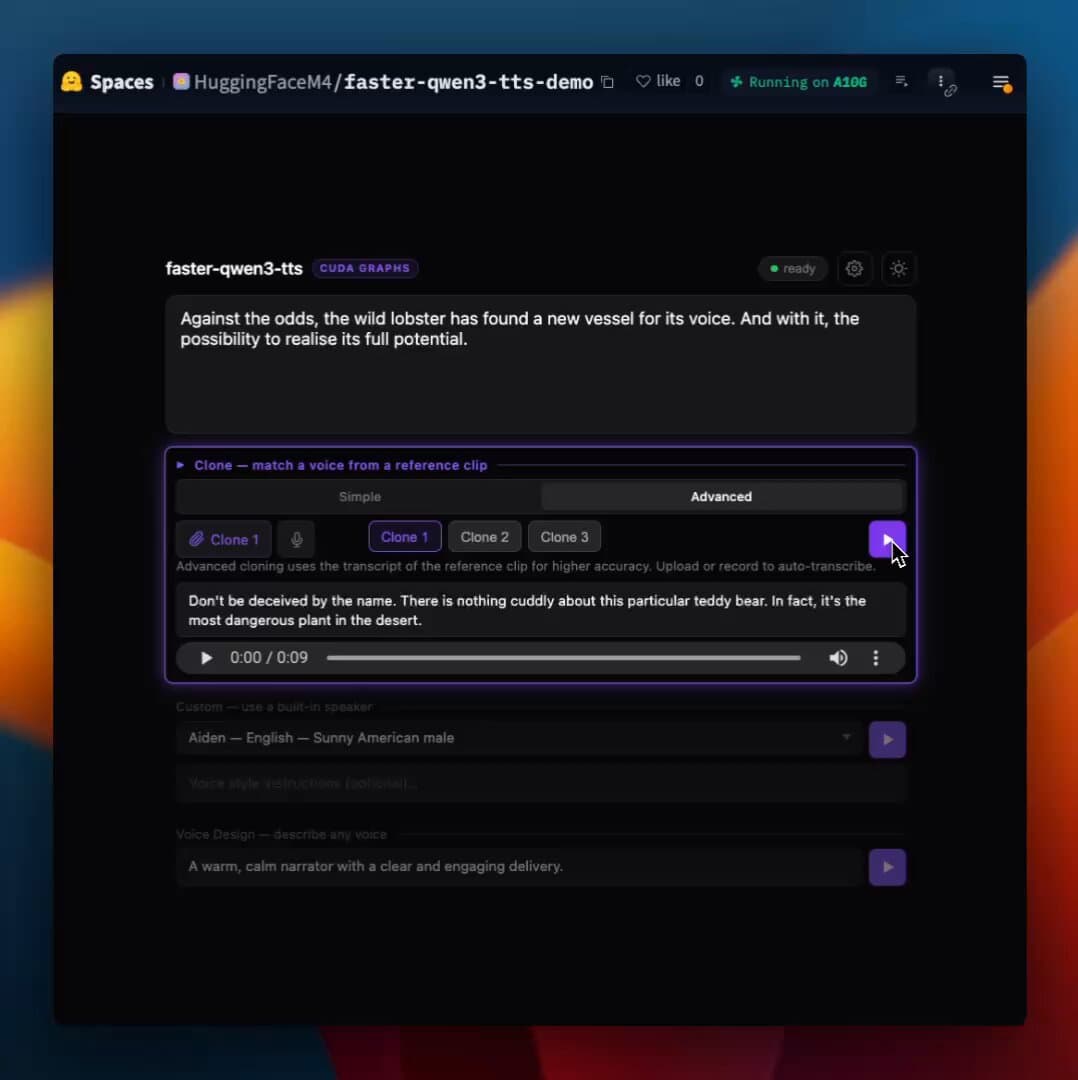
*Tighter instruction adherence in speech agents.* As described, **"Voice workflows just got stronger with gpt-realtime-1.5 in the Realtime API."** This model **improves reliability** in **real-time speech applications**, ensuring **instruction fidelity** and **robust interaction**.
- **Open-Source Operating System for AI Agents:**
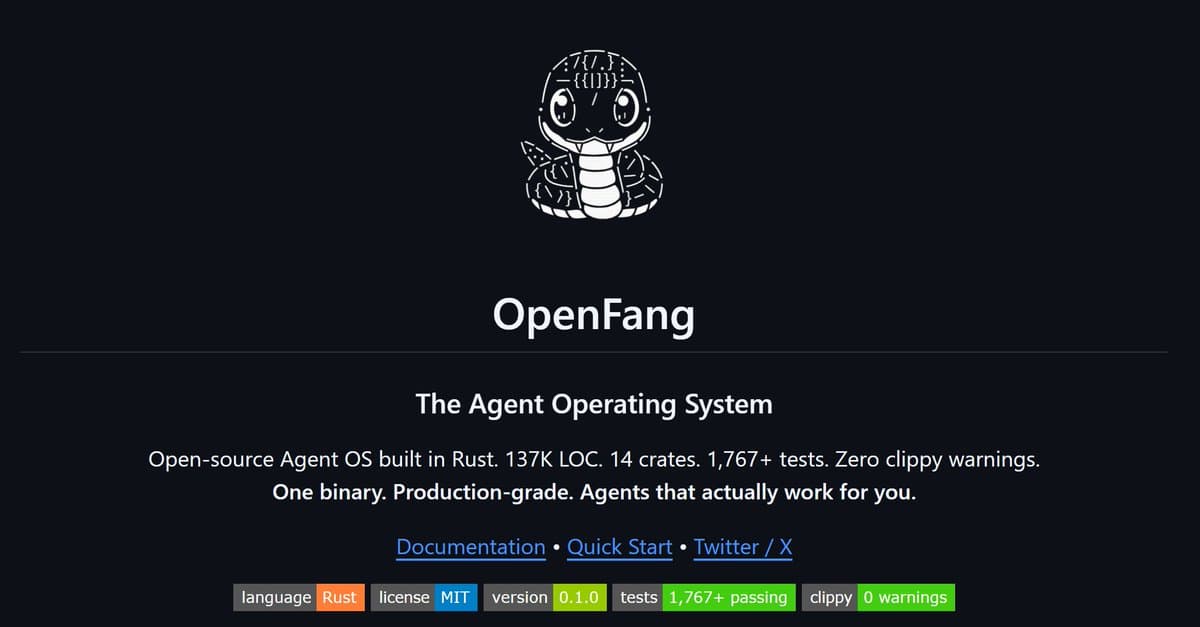
*@CharlesVardeman reposted* that **"We open sourced an operating system for AI agents"**—a **137k-line Rust project under MIT license**—aims to **provide a robust, production-grade infrastructure** for building persistent, resilient AI agents at scale.
- **Enterprise Use-Cases in Security:**
*Elastic’s Chris Townsend* discusses how **agentic AI** is **transforming threat detection and response**. As noted, **"Elastic’s Chris Townsend on agentic AI transforming threat detection and response"** emphasizes **real-time, adaptive security systems** that **leverage persistent memory and reasoning** to **detect, analyze, and respond to threats proactively**.
- **Local LLMs & Model Context Protocol (MCP):**
A **hands-on project** demonstrates **building full-stack Python applications** using **local LLMs** and **the MCP**—a **protocol** designed to **manage context and memory** efficiently. As detailed, **"I built a full-stack Python app using only local LLMs and the Model Context Protocol (MCP)"** showcases **local, self-contained reasoning systems** that **maximize privacy, control, and performance**.
---
## Current Status and Broader Implications
The **2025–2026 period** marks a **watershed in AI development**, where **memory systems** have transitioned from **internal static representations** to **hybrid, external, operational architectures** supporting **long-term recall, reasoning, and persistence**. Innovations like **internal debate mechanisms**, **semantic caching**, **FlashAttention 4**, **streaming inference engines**, and **orchestrated workflows** are **paving the way** for **more reliable, adaptable, and human-like AI agents**.
The integration of **systematic orchestration** and **deterministic evaluation tools** signals a maturation toward **enterprise-ready, safety-conscious AI systems** capable of **long-term reasoning over extensive knowledge bases**. These developments **bridge the gap** between **machine and human cognition**, enabling **AI systems that remember, learn, and reason over extended horizons**. As a result, **trustworthy, long-term reasoning AI** becomes increasingly feasible, with profound implications across **business**, **scientific discovery**, and **everyday life**.
---
## **Conclusion**
The **2025–2026 era** signifies a **paradigm shift** where **memory and reasoning** are no longer ancillary but **core to AI capabilities**. **Hybrid architectures**, **advanced retrieval techniques**, **systemic orchestration**, and **robust tooling** collectively **empower models to remember, learn, and reason over extended periods**—transforming AI from static knowledge repositories to **dynamic, persistent reasoning agents**.
These innovations **bridge the gap** toward **human-like cognition**, **trustworthy reasoning**, and **long-term adaptability**. As the field continues to evolve rapidly, the focus on **enterprise resilience**, **cost efficiency**, and **systematic evaluation** will determine how effectively these systems are adopted across industries, scientific research, and daily life.
The ongoing developments herald a future where **AI agents are not just intelligent but persistent, adaptable, and trustworthy companions**—a true revolution in artificial intelligence.
---
## **Recent Practical Insights and Resources**
Recent articles and case studies illustrate how these innovations translate into real-world systems:
- **Real-Time Speech Agents:**
*gpt-realtime-1.5 by OpenAI* enhances **instruction adherence** in speech workflows, critical for **interactive AI agents** operating in real-time scenarios.
- **Robust Agent Infrastructure:**
The **open-sourced OS in Rust** provides **production-grade infrastructure** facilitating **persistent, scalable, and resilient AI agents** capable of **long-term operation**.
- **Operational Use in Security:**
**Elastic’s threat detection** showcases how **agentic AI** can **transform security operations**, enabling **adaptive, persistent threat monitoring and response**.
- **Local Memory & Protocols:**
Projects implementing **MCP** demonstrate **local, privacy-preserving reasoning** with **efficient context management**, supporting **scalable, autonomous AI applications**.
---
As these developments unfold, the **future of AI** is clear: **more intelligent, persistent, and trustworthy** systems capable of **long-term reasoning** and **dynamic knowledge management** are becoming a reality. This revolution will fundamentally reshape how AI interacts with, supports, and enhances human endeavors across all domains.