53 min ago
PyTorch Powers Efficient LLM Fine-Tuning via LoRA/QLoRA
PyTorch enables the shift from full fine-tuning to parameter-efficient methods, letting individuals and small teams customize open models on consumer...

Created by CuratorMaster
Track the open source AI movement: Llama, Mistral, local deployment, fine-tuning, and the community democratizing AI.
Explore the latest content tracked by Open Source AI
PyTorch enables the shift from full fine-tuning to parameter-efficient methods, letting individuals and small teams customize open models on consumer...
Reflection's Beam is a 501B MoE with 23B active parameters, pretrained on 23.8T tokens for coding and agentic tasks.
Ollama allocates KV cache memory based on the full configured context window, not actual usage, often wasting several GBs on unused capacity.
Open models are moving past simple downloads into practical daily use.
Modeling LLMs as randomized oracles mapping bounded contexts to token distributions enables precise analysis of agentic algorithms via charges on calls, input/output tokens, and tools.
Token-saving context compaction may hurt agent speed more than it helps. UT Austin's study of nearly 35,000 runs found policies using one-third the...
Strata delivers an open-source engine for running massive AI models entirely on consumer hardware.
A hands-on experiment fine-tunes llama-3.1:8b-instruct via QLoRA on quotes from Dutch series Bassie en Adriaan, testing domain-specific adaptation and citation recall without RAG.
NeMo Gym pairs datasets, agent harnesses, and verifiers into reproducible environments that drive both evaluation and training from the same setup. It...
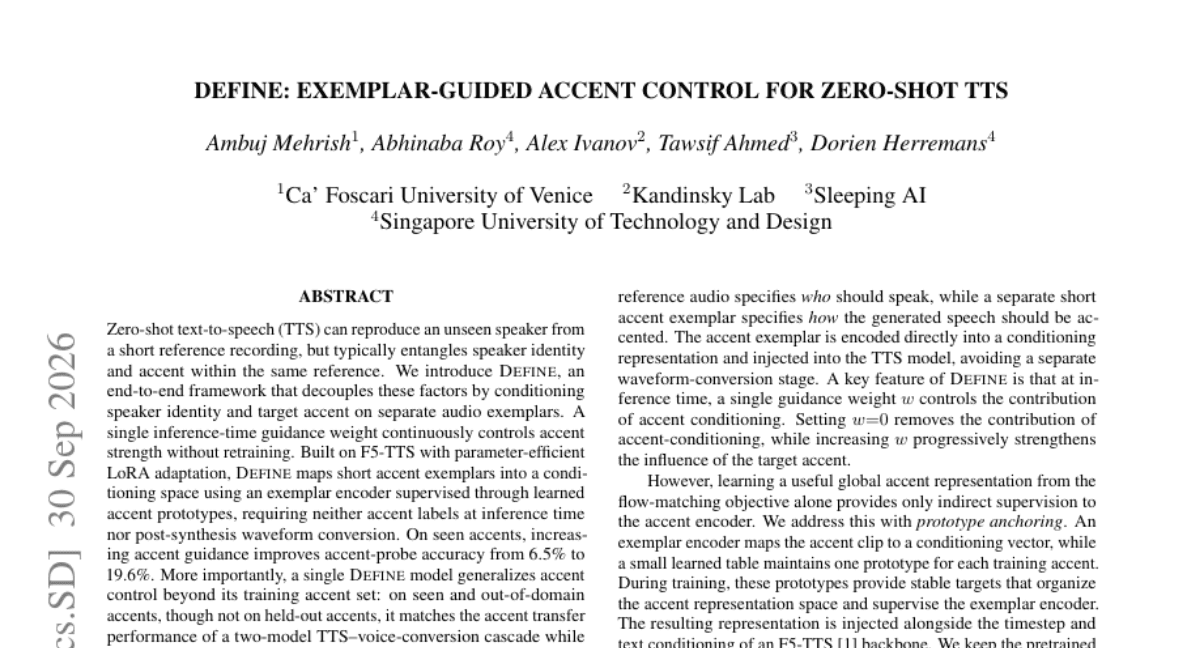
Controllable voice cloning requires disentangling who is speaking from how they speak, since standard zero-shot TTS typically entangles speaker...
LM-Kit One frames local deployment as a complete, privacy-preserving server where prompts, documents, and data stay on your hardware.
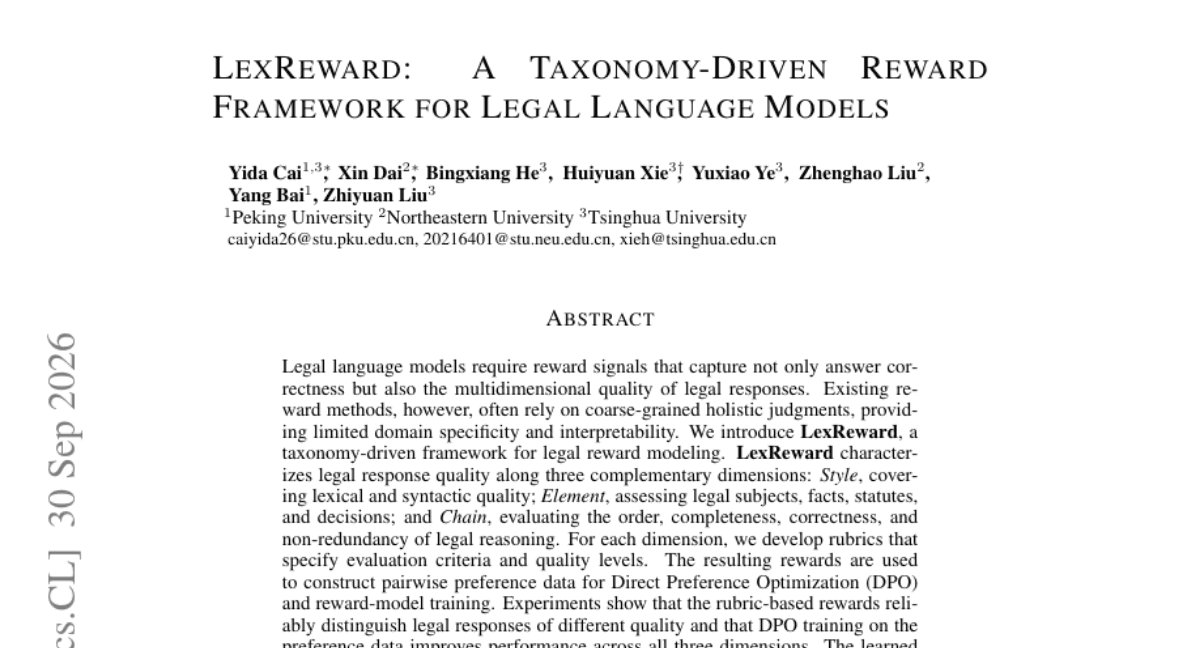
LexReward introduces a three-axis taxonomy—Style, Element, and Chain—to generate interpretable, domain-specific rewards that go beyond generic...
Chad Vocab turns local open models into a practical daily tool: Gemma via LM Studio handles fuzzy grading and textbook photo OCR, while Whisper...
Colibri proves local AI progress hinges on inference-engine breakthroughs, not model openness alone. This open research platform already runs today with a core focus on inference-side performance for massive models on consumer hardware.
Local Gemma 4 31B experiments show Chinese system prompts push CJK shares to 34-40% in reply layers 42-52, while English-only prompts trim them only modestly from 24.5% to 19.4%.
When customizing AI apps, start by identifying the core need rather than defaulting to complex techniques.
Key decision points:
Kolibri-1 reveals what 'local' really means for large MoE models: enterprise-grade GPUs, not consumer rigs.
Smaller projects fill practical gaps in local AI setups with targeted features beyond mainstream options.
Strata, an open-source local AI inference engine, enables running 125B-class models on consumer gaming hardware. This directly supports the push to democratize large-scale AI through accessible local deployment.
A clear progression from core concepts to deployable workflows for small language models.