# How the US–Iran War Reshapes Strategy, Alliances, and Diplomacy: A New Geopolitical Reality
The ongoing conflict between the United States, Israel, and Iran has entered a transformative phase, fundamentally altering the strategic landscape of the Middle East and impacting global power dynamics. Recent developments, particularly the escalation dubbed **Operation Epic Fury**, have underscored the profound shifts in military tactics, technological innovation, and diplomatic alignments. This evolving scenario reflects a new era where traditional notions of warfare are being replaced by complex, multi-layered confrontations driven by advanced technology, proxy networks, and great-power competition.
## Operation Epic Fury: A New Standard in Modern Warfare
The recent **Operation Epic Fury** marked a pivotal escalation, showcasing how the US and Israel are leveraging cutting-edge technology to target Iran’s nuclear and missile infrastructure. Over ten days, this meticulously coordinated campaign involved:
- **Precision airstrikes** on Iran’s nuclear research facilities, missile sites, and command centers, causing significant but not total destruction.
- Deployment of **AI-driven cyber tools** aimed at disrupting Iran’s command-and-control systems, thereby reducing its ability to retaliate or efficiently respond.
- **Real-time intelligence sharing** and adaptive targeting, exemplifying the integration of **autonomous systems** and **machine learning** in operational planning.
**Immediate consequences** included:
- A slowdown in Iran’s missile and nuclear development efforts, although Iran demonstrated resilience by quickly mobilizing to recover and adapt its defenses.
- Cyber disruptions that hampered Iran’s military coordination, exposing vulnerabilities in its layered defenses.
Analysts describe this as a **watershed moment**—not solely because of the military impact but due to the **technological paradigm shift** it signifies. It highlights the increasing importance of **AI and cyber warfare** in modern conflicts. However, the campaign also revealed **limitations**: Iran’s dispersed, proxy-backed defenses remain resilient against traditional air campaigns, underscoring the difficulty of neutralizing its asymmetric advantages.
## Iran’s Asymmetric and Proxy-Driven Response
Iran’s **"mosaic defense" doctrine**—centered on dispersal, layered fortifications, and proxy networks—continues to be its core resilience strategy. Its recent responses include:
- **Deployment of missile, drone, and cyber proxies** capable of launching retaliatory strikes across multiple fronts.
- Construction of **dispersed, hardened sites** designed to evade precision targeting.
- Maintenance of **extensive proxy networks** spanning Lebanon (notably Hezbollah), Iraq, Syria, and Yemen, which serve as force multipliers and regional leverage points.
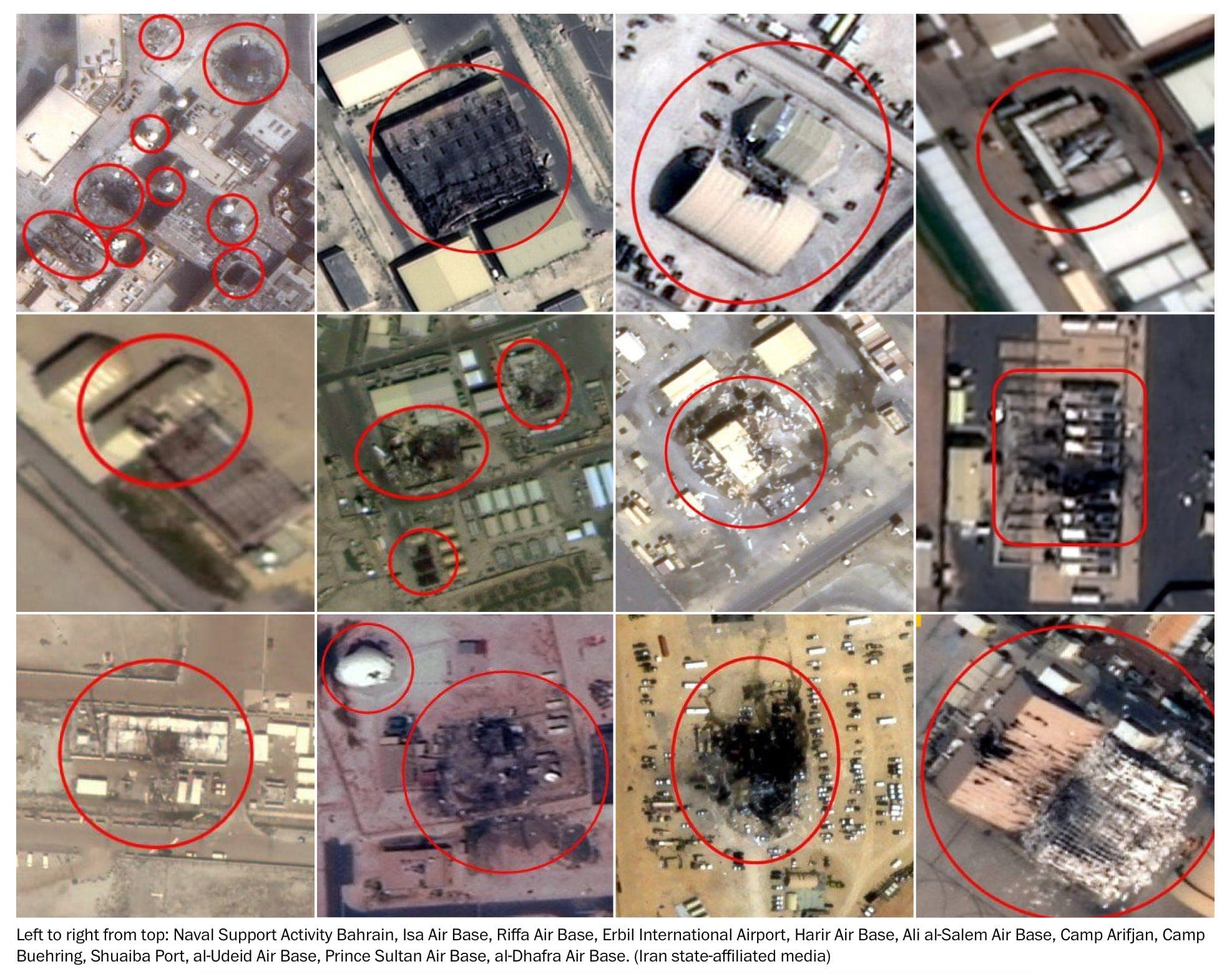
Recent assessments suggest that **air campaigns alone cannot neutralize Iran’s asymmetric defenses**. Its reliance on proxies and cyber capabilities allows it to **absorb shocks and prolong conflict**, turning regional skirmishes into a broader strategic contest. Iran’s **cost-imposition strategy**, which involves persistent low-cost attacks, has been effective in **deterring further strikes** while bolstering regional influence. This resilience complicates US and allied military efforts, which are increasingly strained by Iran’s relentless drone and missile barrage.
## The Technological Dimension: AI, Cyber, and Escalation Risks
The conflict has accelerated the integration of **‘AI-first’ warfare**, with both sides deploying:
- **Autonomous sensors and drone swarms** for surveillance and attack.
- **Cyber tools** designed to disrupt enemy systems and deceive autonomous targeting algorithms.
This technological evolution introduces **new vulnerabilities**:
- **Operational security weaknesses**, such as electronic signatures revealing deployment patterns.
- The emergence of **counter-AI tactics**, where both sides develop systems to **disrupt or deceive** autonomous targeting.
- **Cyber escalation risks**, including the potential for **misinterpretation or malfunctions** in autonomous systems, which could trigger unintended escalations—particularly in contested environments.
US defense officials emphasize that **AI and machine learning** are revolutionizing warfare but also **magnify the risks of miscalculation**. Cyberattacks aimed at autonomous systems could inadvertently escalate hostilities, making the conflict more volatile and unpredictable.
## Military Strain and Asymmetric Pressures on US and Allies
Iran’s **mass-produced drones and missiles** continue to challenge US and allied defenses, especially in regions like Iraq and Syria. The regime’s ability to **manufacture and deploy inexpensive yet effective weapons** has placed operational strains on US military assets:
- The proliferation of **swarming drones** capable of overwhelming defenses.
- Persistent **missile attacks** threatening US bases and regional partners.
- **Logistical challenges** in countering high volumes of small, fast-moving weapons, eroding technological superiority.
This **asymmetric threat** is pushing the US to adopt resource-intensive tactics, often requiring **heightened electronic warfare** and **counter-drone systems**. The ongoing **attritional phase** aims to wear down Iranian resilience while risking broader escalation.
## Political, Diplomatic, and Economic Fallout
### Domestic Political Dynamics in the US
Within the US, opinions are sharply divided:
- Some factions advocate for **further escalation** to decisively weaken Iran’s capabilities.
- Others call for **restraint and diplomacy**, wary of regional destabilization and broader conflict.
President Biden’s recent diplomatic outreach involved **engagement with European and regional leaders**, aiming to contain escalation and avoid broader war. Efforts focus on **diplomatic engagement, renewed sanctions, and strategic deterrence**, yet the divide remains significant.
### European and Regional Perspectives
European nations remain **reluctant participants** in direct military action, citing legal concerns and fears of escalation. Many favor **diplomatic measures**—maintaining sanctions and intelligence cooperation—while avoiding direct confrontation.
Regional flashpoints—including tensions in Azerbaijan, Gulf Cooperation Council states, and Iraq—are increasingly tense. Iran’s retaliatory strikes and proxy activities threaten to ignite **broader conflicts**, prompting heightened vigilance among regional actors and complicating US efforts.
### Energy Markets and Strategic Shifts
The conflict’s impact on global energy security is profound:
- The US is **pursuing energy diplomacy** with Venezuela, Saudi Arabia, and other producers to mitigate disruptions.
- **Oil prices** have surged, fueling inflation and economic instability worldwide.
- The **Strait of Hormuz** remains a critical flashpoint; threats or actions to **close or threaten** this vital passage could escalate the conflict significantly.
Recent strategic analyses emphasize that **Iran’s control over the Strait** could sustain its financial and strategic resilience, prolonging hostilities and complicating international efforts to de-escalate.
### Legal and International Considerations
Legal experts are scrutinizing the **legality of recent military and cyber operations**. While some actions may be justified under **self-defense**, the risk of **wider escalation** raises concerns about potential violations of international norms, which could undermine diplomatic efforts and fuel further instability.
## Great-Power Monitoring and Exploitation: Russia and China
**Russia** and **China** are closely observing the conflict, seeking to **exploit chaos for strategic gains**:
- **Russia** maintains support for Iran and regional proxies, aiming to **undermine US influence** and **expand its military footprint** in the Middle East. Reports indicate Russia is **exploiting the chaos** to **bolster its cyber and logistical capabilities** and to project power.
- **China** is **monitoring** the use of AI, cyber warfare, and autonomous systems—viewing the conflict as a **testbed for future military innovation**. Beijing aims to **develop countermeasures** and **expand its intelligence collection**, potentially challenging US technological dominance.
Both powers see the US–Iran confrontation as an **opportunity to reshape regional and global power balances**. However, concerns about **overextension** persist, with some analysts warning that **strategic overreach** could entrench Iran’s resilience and deepen rivalries.
## Recent Operational Developments and Media Insights
Over the past two weeks, the conflict landscape has evolved with notable events:
- The **strikes on Kharg Island**, a key Iranian naval base, demonstrated Iran’s efforts to **protect critical maritime assets** amidst ongoing US and Israeli strikes.
- Media outlets, including **"Operations Epic Fury and Roaring Lion,"** have detailed Iran’s adaptive tactics—dispersing assets, developing concealment techniques, and increasing cyber retaliations.
- Iran’s **cyber retaliations** have targeted US and allied infrastructure, escalating fears of **cyber warfare spirals**.
These developments suggest the conflict is **entering a phase of attrition**, with Iran leveraging **proxy networks and asymmetric tactics** to prolong hostilities while continuously adapting to technological advances.
## Current Status and Broader Implications
Iran remains **resilient**, having absorbed initial blows and begun **rebuilding and reinforcing** defenses. While **Operation Epic Fury** showcased the **technological prowess** of US and Israeli forces, Iran’s **dispersed, hardened sites** and extensive proxy networks **limit the effectiveness** of conventional air campaigns.
The conflict’s ongoing evolution is **reshaping regional alliances and strategic calculations**:
- Some regional actors are **reassessing their roles**, balancing cooperation with the US against their own national interests.
- Iran’s **growing proxy influence** and regional resilience could **entrench a protracted conflict**, complicating diplomatic resolutions.
On the broader international stage, the war exemplifies **great-power rivalry**, with the US seeking to **maintain technological and strategic dominance** while Russia and China **exploit the chaos for their own strategic gains**.
### **Implications for the Future**
The current phase underscores the **urgent need for**:
- **Strategic clarity** in US policy to avoid missteps.
- **Robust technological investments** to stay ahead in **AI, cyber, and autonomous warfare**.
- **Diplomatic agility** to prevent escalation while managing regional and global alliances.
As the conflict continues to evolve through **attrition, adaptation, and proxy warfare**, its **long-term consequences** will influence **regional stability, energy security**, and **international norms**. The US–Iran confrontation has transitioned from a regional skirmish into a **test of modern warfare’s capabilities and limits**, with far-reaching implications for **global order**.
**In summary**, this conflict has irreversibly reshaped the strategic landscape, emphasizing the importance of **technology, alliance management, and diplomatic skill** in navigating an increasingly complex and contested international environment.