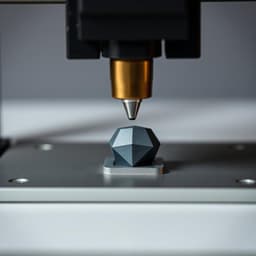
# The 2024–2026 Mid-Range FDM 3D Printing Revolution: Hardware Maturity, Ecosystem Expansion, and Surface Finish Breakthroughs
The landscape of mid-range Fused Deposition Modeling (FDM) 3D printers has undergone a seismic shift between 2024 and 2026. Once largely confined to hobbyists and educational settings, these machines are now rapidly evolving into **robust, multi-functional, near-industrial-grade systems**. Driven by **hardware innovations**, an **expanding ecosystem**, and **groundbreaking surface finish improvements**, desktop FDM is emerging as a **serious contender for professional manufacturing, rapid prototyping, and specialized applications**.
---
## Hardware Maturation: From CoreXY Foundations to High-Temperature, Modular Systems
### The Evolution of CoreXY and High-Temperature Capabilities
By 2024, **CoreXY architecture** had become the **standard design** for mid-range 3D printers, appreciated for its **speed**, **accuracy**, and **mechanical reliability**. Popular models like the **Prusa CORE One Plus**, **Kobra 2**, and **Creality K2 Pro** exemplified this trend, enabling **faster print speeds**, **less belt stretch**, and **smoother motion**—all critical for producing intricate, high-precision parts.
Recent developments have pushed these capabilities even further:
- **Heated chambers**, exemplified by the **Artillery M1 Pro S1**, create **ambient temperature stability** that significantly **reduces warping** and **enables printing with engineering plastics** such as **ABS**, **Nylon**, and **Polycarbonate**. These materials, once exclusive to industrial settings, are now accessible on mid-range models, **vastly expanding material options**.
- The adoption of **hardened, direct-drive extruders**—notably in the **Kobra X** and **Elegoo Neptune 3 Pro**—supports **abrasive filaments** and **high-temperature materials exceeding 300°C**. This **broadens multi-material workflows** and **multi-color printing** capabilities, transforming versatility.
### Modular, High-Performance Platforms Supporting Multi-Material and Multi-Color Printing
The integration of **direct-drive extruders** and **filament management modules** has revolutionized **multi-material and multi-color printing**:
- The **Artillery M1 Pro S1** combines **high-temperature capacity** with **multi-material readiness** on an **industrial-grade platform**.
- The **Anycubic Kobra X** features an **Automatic Material Switching (AMS)** system, enabling **seamless multi-material workflows** within a **compact footprint**.
- The **ACE Gen 2** introduces an **integrated, compact multi-color hotend**, allowing **precise filament changes** with **minimal waste**.
### Hotends Supporting Up to 500°C
A **milestone achievement** has been the advent of hotends capable of reaching **500°C**, exemplified by the **XMammal Bambu P1S Hotend Kit**. These hotends enable **printing with high-performance engineering plastics** like **PEEK**, **PPSU**, and **PCTG**—materials traditionally confined to industrial machinery. Such hotends **reduce maintenance costs**, **improve reliability**, and **expand complex workflows**, effectively **bridging the gap** between desktop and industrial manufacturing.
---
## Multi-Color and Multi-Material Printing: Now Mainstream
What was once a **prestige feature** reserved for high-end industrial systems has now become **standard** in mid-range models:
- **Integrated filament management**, **firmware routines**, and **hardware innovations** allow **clean, artifact-free color transitions** with minimal post-processing.
- **Automatic filament switching** and **optimized color change profiles** promote **precise and reliable** results.
- Systems such as **Bambu Lab's AMS** are designed to **minimize jams** and **prevent color bleed**, ensuring **high-quality outputs**.
- **Compact multi-material modules**, seen in **Anycubic Kobra X** and **ACE Gen 2**, **simplify complex workflows** while maintaining a **small footprint**.
### Filament Handling & Conditioning
Effective multi-material workflows depend heavily on **advanced filament management**:
- Devices like the **EIBOS Tetras AMS Dryer** address **moisture absorption** issues common in hygroscopic filaments such as **Nylon**, **PETG**, and **TPU**.
- However, recent research and community feedback highlight that **certain filament improvements**, including **additive formulations** and **aggressive drying**, can **inadvertently weaken filament strength**, leading to **brittle parts** and **print failures**.
> **"Many so-called filament ‘improvements,’ such as certain additives or aggressive drying, can inadvertently weaken filament strength, leading to brittle parts and increased print failures."**
This underscores the **importance of scientific filament conditioning**, involving:
- Use of **desiccant-based storage** and **drying chambers** that **balance moisture removal** with **preserving filament integrity**.
- Implementation of **moisture sensors** for **real-time filament condition monitoring**.
- Maintaining **strict storage protocols** to **prevent moisture-related issues**, ensuring **consistent print quality** and **desired mechanical properties**.
---
## Ecosystem Growth: Supporting Advanced Materials and Workflow Reliability
The **support infrastructure** surrounding mid-range FDM printers has expanded rapidly, facilitating the use of **high-temperature**, **composite**, and **industrial-grade** filaments.
### Enclosures, Fume Extraction, and Modular Peripherals
- **Modular enclosures** now feature **thermal insulation**, **active fume filtration**, and **warping mitigation**, essential for materials like **ABS**, **Nylon**, and **Polycarbonate**.
- **Active ventilation** and **air filtration units** are standard, creating **safer environments** and **more consistent print quality**.
### Hotends & Material Compatibility
Innovations such as the **XMammal Bambu P1S Hotend Kit**, supporting **temperatures up to 500°C**, broaden material compatibility to include **PEEK**, **PPSU**, and **PCTG**, **reducing maintenance** and **supporting complex workflows**.
### Large-Format, High-Temp Platforms
- The **QIDI Max4** exemplifies **large-format, high-temperature printing** with a **build volume of 300x300x400mm**, **auto-leveling**, and **hotend temperatures up to 370°C**, suitable for **engineering prototypes** and **small-batch manufacturing**.
- The **Creality K2 Pro** continues to excel with **multi-material support** and **high-speed capabilities**.
- The **Bambu Lab H2C**, launched in 2026, emphasizes **multi-material support**, **filament sensors**, and **modular hotends**, creating a comprehensive ecosystem optimized for **complex workflows**.
### Market Dynamics and Pricing Strategies
In 2026, **Prusa Research** notably **relaunches and lowers prices** for the **Prusa XL**, making **professional-grade features** more accessible. This move:
- **Increases competition** within the mid-range segment
- **Expands the user base** for advanced features
- **Stimulates ecosystem innovation**
---
## Maintenance, Workflow Optimization, and Critical Spare Parts
Reliability in high-quality production hinges on **proper maintenance** and **workflow management**:
- **Nozzle wear** and **clogging**, especially with abrasive filaments, necessitate **regular hotend upkeep**.
- **Hotend components** like **heater cartridges**, **thermistors**, and **fans** are **prone to failure**, underscoring the importance of **spare parts availability**.
- **Filament moisture sensors** and **drying chambers** help prevent moisture issues, but **overly aggressive drying** or **additive use** can **weaken filament strength**.
### Practical Maintenance Demonstration
A recent illustrative example is the **Prusa MK3S+** repair video titled **"Prusa MK3S+ Clogged extruder and Einsy board replacement"** (32:31). It details:
- **Diagnosing common issues** such as clogged extruders
- The **disassembly process**, including **hotend removal**
- The **replacement of hotend components** and **control boards**
This highlights **routine maintenance**, **spare parts stockpiling**, and **workflow preparedness** as **critical for reliable operation**. Community-driven modifications and peripheral upgrades, like **DIY filament runout sensors** (e.g., with the **Elegoo Centauri Carbon 2**), further demonstrate efforts to **enhance reliability** and **workflow robustness**.
---
## Surface Finish and Precision: Breakthroughs in Anti-Aliasing and Micro-Non-Planar Printing
A **major leap** in surface quality has been the adoption of **anti-aliasing techniques**, especially **micro-non-planar printing**. This approach **significantly reduces** **layer lines** and produces **surfaces** that **closer resemble** resin or powder-based parts.
- The resource **"Anti-Aliasing for FDM 3D Printing Is Finally Here (Micro-Non-Planar Printing)"** (16:35) has garnered over **145,000 views**, indicating widespread interest.
- The **German-language "Z Anti-Aliasing"** video (16:16, 2,869 views, 252 likes) demonstrates how **micro-non-planar toolpaths** profoundly **enhance surface finish** and **dimensional accuracy**.
These techniques **enable FDM parts** to feature **smooth surfaces**, **fewer visible layer lines**, and **aesthetic finishes** comparable to **resin** or **SLS** parts, effectively **narrowing the gap** with higher-end manufacturing methods.
### Guidance on Nozzle Selection and Fine Detail Printing
In addition to **anti-aliasing**, nozzle choice remains critical:
- **0.2mm nozzles** have gained popularity for **fine detail work**, offering **higher resolution** and **smoother surface finishes**.
- Recent tests, such as **"When to Use a 0.2mm Nozzle on the Bambu P2S"** (8:21), provide practical guidance on **optimal nozzle selection** for **miniatures** and **detailed prototypes**.
---
## The Creality K2 Pro Combo and Its Role in the Ecosystem
The **Creality K2 Pro** exemplifies the **industry shift** toward **multi-material and multi-color capabilities** in mid-range machines. It offers:
- A **large build volume** (up to 300x300x330mm)
- **Integrated multi-material handling** for **simultaneous or sequential multi-color printing**
- **High-speed, precise filament switching**
These features **affirm** the trend where **multi-material** and **multi-color printing** are **central**, supported by **hardware robustness**, **firmware routines**, and **peripheral tools**.
---
## The Latest Developments: All-in-One, Enclosed Combo Systems
Adding to the ecosystem diversity, **all-in-one enclosed systems** like the **Bambu Lab A1 Combo** have gained prominence. These systems **integrate**:
- **Modular enclosures** with **thermal management**
- **Automated multi-material hotends**
- **Preconfigured workflows** for multi-color and multi-material printing
The **Bambu Lab A1 Combo** exemplifies this trend, emphasizing **ease of use**, **reliability**, and **out-of-the-box multi-material capability**. Its rugged, modular design **minimizes setup time**, **enhances safety**, and **broadens accessibility** for both professional and serious hobbyist users.
---
## Current Status and Future Outlook
The **2024–2026 period** confirms that **mid-range FDM 3D printers** are **more capable than ever**. Hardware innovations—such as **hotends supporting 500°C**, **hardened CoreXY platforms**, and **multi-material modules**—are now complemented by a **growing ecosystem** of **enclosures**, **filament conditioning**, and **finishing solutions**.
Breakthroughs in **surface quality**, notably **anti-aliasing** and **micro-non-planar printing**, **close the gap** with resin and SLS systems, enabling **desktop FDM** to produce **high-precision, aesthetically refined parts** suitable for **professional applications**.
### Implications for Industry and Makers
These advancements position mid-range FDM printers as **indispensable tools** for **prototyping**, **small-batch manufacturing**, and **research environments**. The **DIY IDEX community** and **peripheral innovations** democratize **multi-material** and **multi-color capabilities**, making **complex, high-quality printing** more accessible and customizable.
**In sum**, the last two years have cemented the **mid-range FDM segment** as a **hotbed of innovation**. Hardware robustness, ecosystem maturity, and surface-finish breakthroughs are **transforming desktop 3D printing into a versatile manufacturing platform**—a trajectory poised to accelerate as **material science**, **firmware**, and **community-driven** developments continue to push boundaries.
---
## Recent Evidence and Practical Demonstrations
- The **Anycubic Kobra X** has been demonstrated as the **cheapest and best multi-color 3D printer in 2026**, with reviews showcasing its seamless multi-color performance and reliable operation (source: YouTube, 29:49).
- The **multi-material TPU 90A** printing video (source: YouTube, 24:44) highlights the **flexibility** of modern multi-material setups, including **printing with flexible filaments**.
- The **Prusa Core One Plus** with **MMU3** underscores **professional multi-material workflows** on a consumer system, with reviews emphasizing **ease of use** and **reliability** (source: YouTube, 26:45).
These recent demonstrations reinforce the **maturity and reliability** of **multi-material/multi-color ecosystems**, confirming their role as **key enablers** for **advanced manufacturing workflows**.
---
# Final Remarks
The **2024–2026 era** marks a **maturation phase** for mid-range FDM 3D printers. Hardware innovations such as **hotends supporting 500°C**, **hardened CoreXY platforms**, and **multi-material modules**, coupled with an **expanding ecosystem** of **enclosures**, **filament management**, and **finishing techniques**, are **elevating desktop FDM into a professional manufacturing platform**. These advancements democratize access to **high-quality, complex parts**, fueling **prototyping**, **small-batch production**, and **research**.
Surface quality breakthroughs—particularly **anti-aliasing** and **micro-non-planar printing**—**narrow the gap** with resin and SLS systems, enabling **desktop FDM** to produce **aesthetically refined, high-precision components** suitable for **professional use**.
As these trends continue, the future of mid-range FDM printing looks increasingly promising, driven by **material science**, **hardware innovation**, and a **vibrant community** shaping the next wave of capabilities.
---
## **Spielautomaten: High Performance Materials on Desktop Machines**
A notable recent development is the emergence of **"Spielautomaten"**, a term capturing **high-performance materials** like PEEK, PPSU, and PCTG being reliably printed on **desktop FDM systems**. These **sophisticated machines** incorporate **advanced hotends**, **heated chambers**, and **precise control systems**, enabling **engineering-grade plastics** to be used for **functional prototypes**, **medical devices**, and **aerospace components**.
This signals a **paradigm shift** where **desktop FDM** is not just for hobbyists but **mimics industrial processes**, **reducing costs** and **accelerating innovation cycles**. The trend underscores that **hardware robustness** and **ecosystem maturity** are **making high-performance materials accessible** outside traditional industrial environments, **democratizing advanced manufacturing**.
---
**In conclusion**, the **2024–2026 period** solidifies mid-range FDM 3D printers as **versatile, reliable, and capable** tools—equipped with **industrial-grade features** and supported by **a thriving ecosystem**—ready to meet the demands of **professional applications** and **advanced research**. The ongoing innovations promise a future where **desktop 3D printing** continues to **disrupt** and **democratize manufacturing** across industries.