# The 2026 Speech AI Ecosystem: From Core Models to Autonomous, Trustworthy Voice Systems
The year 2026 marks a watershed moment in the evolution of speech-centric artificial intelligence. Building upon rapid technological advances, expansive datasets, and innovative hardware, the landscape now features **natural, emotionally intelligent, and highly trustworthy voice ecosystems** that are revolutionizing human-machine interaction across industries. This transformation is driven by a convergence of **powerful core models**, **cutting-edge infrastructure**, and **robust security protocols**, enabling **autonomous, scalable, and secure voice AI systems** that serve enterprise needs with unprecedented precision and empathy.
---
## Continued Maturation of Core ASR/TTS and Audio Models
At the heart of this revolution are **state-of-the-art speech recognition and synthesis models** that have achieved new heights in accuracy, speed, and versatility:
- **Multilingual and Low-Latency Recognition**:
- **Voxtral by Mistral** has scaled to **4 billion parameters**, facilitating **instantaneous multilingual transcription** capable of operating effectively in noisy environments. Its ability to **seamlessly switch languages during live interactions** empowers global enterprises to deliver **unified customer experiences** without latency.
- **Covo-Audio from Tencent** has expanded to **7 billion parameters**, supporting **real-time, low-latency speech recognition** across dozens of languages. Its robustness makes it ideal for **mobile field operations**, **live broadcasting**, and **call centers** where rapid, accurate responses are critical.
- **Emotionally Aware and Domain-Specific Models**:
- **MOSS-Audio** now incorporates **emotion detection**, allowing AI systems to **respond empathetically**—a vital feature for sectors like **mental health**, **healthcare**, and **customer service**, where **trust and rapport** are essential.
- **Deepgram Nova-3** is optimized for **medical transcription**, providing **highly accurate, real-time healthcare documentation** through domain-specific linguistic tuning—reducing errors and streamlining clinical workflows.
- **Open-Source Frameworks Accelerate Deployment**:
- Open platforms such as **Whisper**, **Qwen ASR**, and **OpenClaw** continue to democratize access to **high-performance speech models**.
- Notably, **Qwen ASR** now enables **deployment times under one minute**, significantly **reducing time-to-market** for voice-enabled applications.
- Support for **multi-party diarization**, **emotion annotation**, and **factual grounding** fosters **nuanced, human-like conversational AI**, boosting **trust** and ensuring **regulatory compliance**.
**Significance**: These advancements are transforming voice interfaces into **emotionally aware, multilingual, and domain-adapted tools**, dramatically enhancing **user engagement**, **accuracy**, and **scalability** across sectors from healthcare to finance and customer support.
---
## Deployment Infrastructure: From Cloud to Edge and Silicon
Operationalizing these sophisticated models at scale necessitates **resilient, adaptable infrastructure**:
- **Edge and On-Device Inference**:
- Devices like **NVIDIA Jetson** and platforms such as **Sarvam Edge** now facilitate **offline inference**, essential for **privacy-sensitive applications**.
- A groundbreaking hardware development is **HC1**, a new AI inference chip from **Taalas**, capable of processing **up to 17,000 tokens per second**. This hardware signifies a leap toward **silicon-level real-time processing**, greatly **reducing latency**, **enhancing data privacy**, and **streamlining deployment** in enterprise environments.
- The recent release of **Mercury 2**, highlighted in discussions like "Mercury 2, Realtime Voice, and Why Your AI Stack Needs a Thicker Chip," exemplifies the hardware innovations vital for **scaling voice AI**. Mercury 2's ability to **speed around LLM latency bottlenecks** underscores its role in enabling **high-speed, real-time voice applications**.
- **APIs and Dialogue Systems**:
- Solutions such as **ElevenLabs Scribe v2** now deliver **latencies as low as 150ms**, supporting **live transcription** and **dynamic speech-to-speech interactions**.
- **NVIDIA’s PersonaPlex** enhances **multi-turn, full-duplex dialogues** with **customizable voices**, fostering **more natural, context-aware conversations**.
- **Validation and Testing Workflows**:
- Platforms like **"Test Your AI Voice Agent Like a Pro"** streamline **reliability validation**, integrating with **CRM systems** and providing **comprehensive testing playbooks** and **observability dashboards**.
**Engineering Challenge**: Despite these innovations, **achieving high accuracy combined with ultra-low latency** remains a **complex challenge**, often described as **"harder than it sounds"**. Continuous **model optimization** and hardware evolution are vital to bridge this gap.
---
## Building Trustworthy Ecosystems: Datasets, Annotation, and Factual Grounding
Trust in voice AI hinges on **high-quality, richly annotated datasets**:
- **Enhanced Annotation Techniques**:
- Datasets now encompass **speaker diarization**, **emotion labels**, and **domain-specific transcriptions**.
- The **"speaker-diarization" GitHub repository**, comprising over **228 repositories**, offers tools for **multi-party conversation parsing**, **speaker segmentation**, and **emotion annotation**—crucial for applications like **virtual meetings**, **call centers**, and **multilingual support**.
- **Factual Grounding and Retrieval**:
- Techniques such as **Retrieval-Augmented Generation (RAG)** are integrated to **ground AI responses in verified data**, significantly reducing **hallucinations** and **factual inaccuracies**.
- Real-time dashboards now monitor **system health**, **error rates**, and **factual correctness**, enabling **continuous learning** and ensuring **regulatory compliance**.
- **Localization and Cultural Sensitivity**:
- Initiatives like **Google’s WAXAL** have expanded datasets to include **regional dialects**, **cultural nuances**, and **local idioms**, supporting the development of **authentic, culturally resonant voice models** across diverse communities.
**Implication**: These advancements foster **domain adaptation**, **emotional intelligence**, and **trustworthiness**, making **voice AI systems** more **reliable**, **context-aware**, and **culturally sensitive**.
---
## Security and Deepfake Mitigation: Ensuring Voice Authenticity
As voice AI becomes embedded in critical enterprise systems, **security concerns**, particularly **deepfake impersonation**, have risen:
- **Offline and Edge Deployment for Privacy**:
- Platforms such as **OpenClaw**, **Ollama**, and **Sarvam Edge** now support **offline inference**, enabling **privacy-preserving applications** in sensitive sectors like **healthcare**, **finance**, and **government**.
- **Deepfake Detection and Biometric Verification**:
- Leaders like **Pindrop** and security experts such as **Sumant Mauskar** emphasize **biometric voice verification** combined with **deepfake detection algorithms**.
- Deployment includes **real-time anomaly detection**, **behavioral analytics**, and **robust biometric authentication** designed to **detect impersonation** and **prevent fraud**.
- **Multi-Layered Security Protocols**:
- Use of **TLS**, **SRTP**, and **end-to-end encryption** ensures **secure, private communication channels**, safeguarding against interception and manipulation.
**Emerging Risks**: The proliferation of **AI-generated deepfakes** underscores the urgent need for **technological** and **ethical frameworks**—including **regulations**—to **maintain user trust**.
---
## Transitioning to Autonomous Voice Ecosystems
The push toward **full automation** is accelerating, driven by **agentic AI** capable of **proactive, autonomous engagement**:
- **Agentic AI in Customer Support**:
- Examples like **Kalvo** now **automatically answer calls**, **schedule appointments**, and **manage workflows**, heralding a new era of **fully autonomous customer support**.
- Enterprises are adopting **pre-built platforms** like **Amazon Connect’s AI Agent Assist** for **rapid, scalable deployment**.
- **Integrated Workflows and Build-or-Buy Strategies**:
- Businesses increasingly leverage **CRM integrations** and **workflow orchestration** to enable **personalized, context-aware interactions**.
- The deployment of **AI-powered contact centers**, exemplified by **ABNB Federal Credit Union’s** use of **Eltropy’s AI Voice Digital Assistant**, exemplifies **full automation** in financial services.
- **Tools and Resources**:
- Industry events such as **"AI & the Next Era of Contact Centers"** showcase **best practices**.
- Tutorials like **"Build a Real-Time AI Voice Agent"** and **"Building a Custom AI Receptionist with VAPI"** facilitate **enterprise adoption** at scale.
---
## Recent Industry Momentum and Notable Deployments
The enterprise AI ecosystem continues to thrive through **strategic collaborations** and **innovative solutions**:
- **Zoom Virtual Agent 3.0**:
- Features **end-to-end automation**, **intelligent routing**, and **deep CRM integration**, reducing **customer effort** and **repeat contacts**.
- **Deepgram × IBM watsonx CX**:
- Integrates **Deepgram’s speech models** into **IBM’s watsonx platform**, delivering **enterprise-grade voice AI** with **security**, **factual grounding**, and **scalability**.
- **Cognigy.AI 2026.4**:
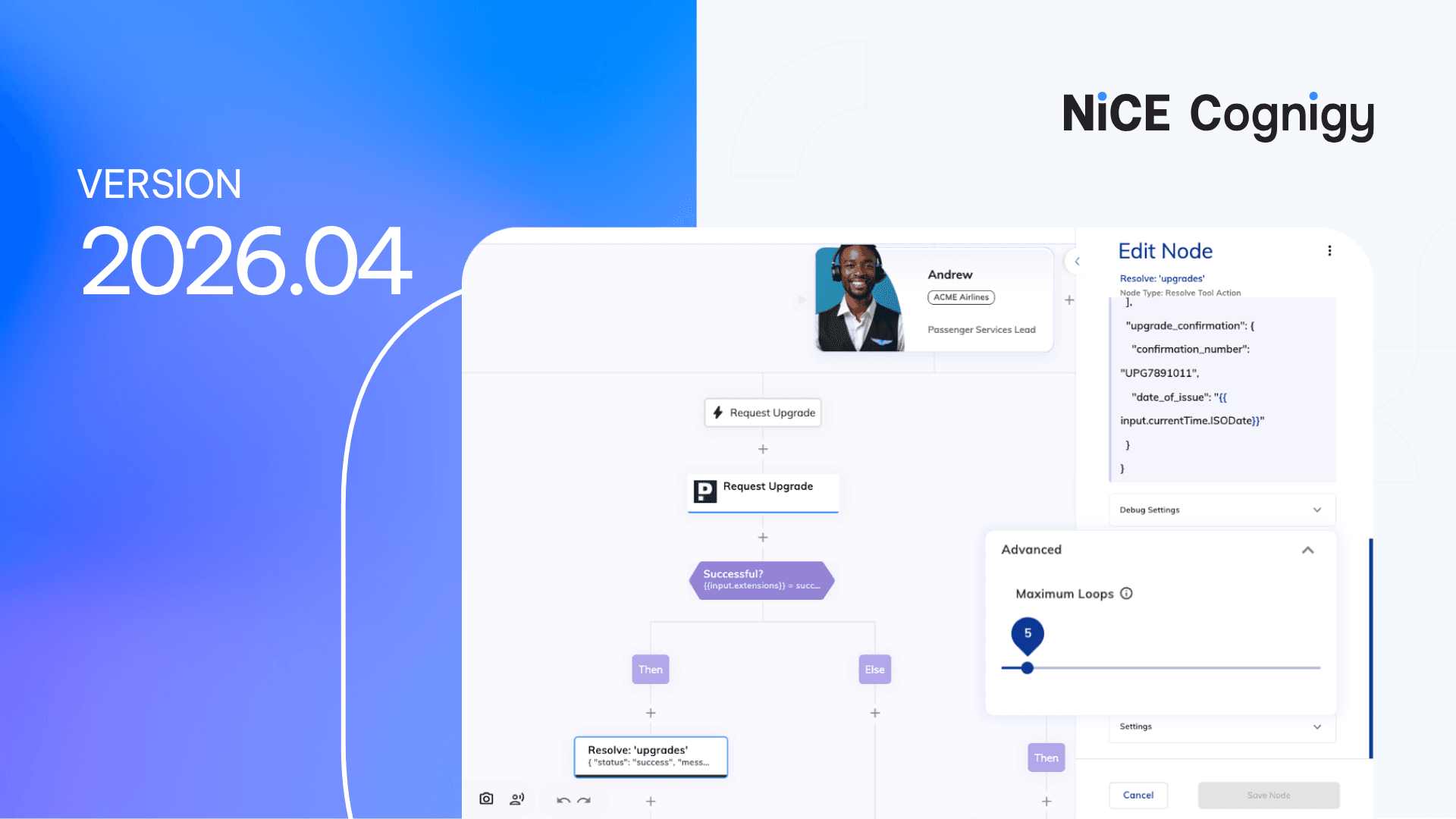
- Emphasizes **emotion-aware dialog management**, **agent orchestration**, and **multi-modal support**, simplifying **complex voice ecosystem creation**.
- **ElevenLabs AI Agents**:
- Now feature **emotionally aware, always-on conversational agents** capable of **de-escalation**, **trust-building**, and **faster issue resolution**.
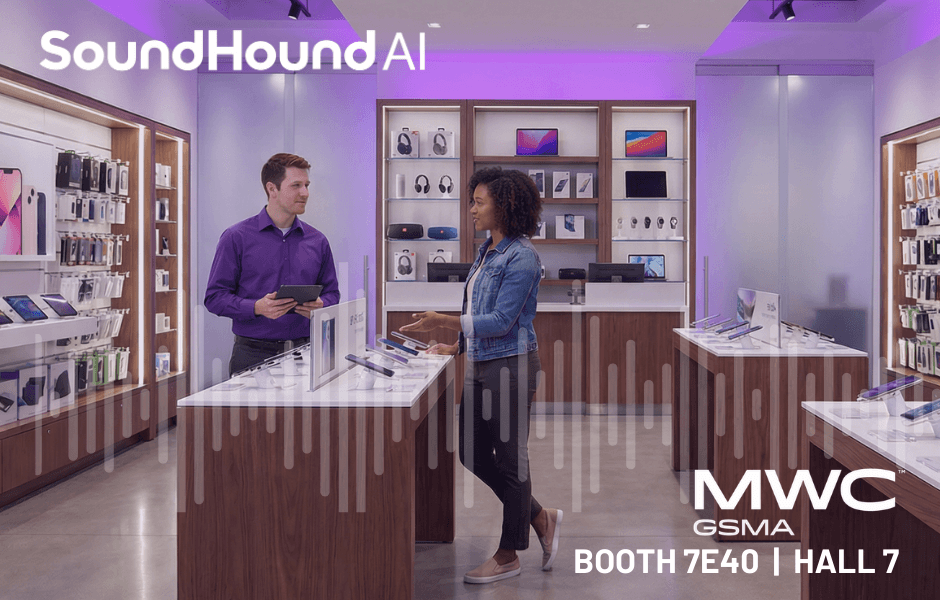
- **SoundHound AI Sales Assist**:
- Unveiled at **MWC 2026**, this **retail-focused voice AI** enables **proactive customer engagement**, **enhancing shopper experience** and **driving sales**.
---
## Hardware Innovations: Mercury 2 and the Future of Voice AI Processing
A pivotal development is **Mercury 2**, a new chip designed explicitly for **real-time voice AI inference**. As discussed in **"Inception’s Mercury 2 speeds around LLM latency bottlenecks"**, Mercury 2 demonstrates **peak parallel performance**, enabling systems to **bypass traditional latency bottlenecks** associated with large language models.
This hardware **accelerates inference speeds** and **reduces energy consumption**, making **silicon-level processing** a reality. Combined with advancements like **Taalas’ HC1**, these chips **pave the way for** **on-device, privacy-preserving voice AI** that operates **without reliance on cloud infrastructure**, **enhancing security**, **speed**, and **scalability**.
---
## Current Status and Forward Outlook
By 2026, **speech AI** has matured into a **trustworthy, scalable, and human-centric technology**. The **convergence** of **advanced core models**, **innovative hardware**, **rich datasets**, and **security protocols** facilitates the creation of **natural, secure, and autonomous voice ecosystems**.
**Key implications** include:
- **Widespread adoption** of **autonomous voice agents** across industries like **healthcare**, **finance**, **retail**, and **customer support**.
- **Enhanced trustworthiness** through **factual grounding**, **biometric verification**, and **deepfake detection**.
- **Rapid deployment cycles**, driven by **open-source frameworks** and **integrated enterprise platforms**.
**In essence**, 2026 marks a year where **voice AI** is no longer just an assistive technology but an **integral, autonomous component** of enterprise ecosystems—delivering **empathy, security, and efficiency** at scale.
---
## Notable Resources and Additional Developments
- The **"Whisper Vs WhisperX Comparison 2026"** offers insights into model performance benchmarks.
- The publication **"Voice AI and PCI Compliance: Where Enterprises Get It Wrong"** highlights critical security considerations, especially for **high-trust environments**.
- The release of **"Sinch expands its platform with agentic conversations"** underscores the move toward **proactive, autonomous customer engagement**.
- **"Securing High‑Trust Contact Center Journeys"** emphasizes **security best practices** for sensitive voice deployments.
- The deployment of **Mercury 2** demonstrates how **hardware innovations** directly address **LLM latency challenges**, enabling **real-time, high-quality voice interactions**.
---
**In conclusion**, the advancements of 2026 are transforming **speech AI** into **trustworthy, autonomous, and emotionally intelligent ecosystems** that are shaping the future of human-computer interaction—more natural, secure, and scalable than ever before.