# Worcester’s Evolving Approach to Services, Governance, and Community Growth: An Updated Analysis
Worcester continues to exemplify resilience and strategic civic leadership, navigating a complex landscape of challenges and opportunities with an increasingly transparent, community-focused approach. Recent developments across governance, public safety, urban development, and community services underscore a city actively shaping its future through innovation, accountability, and deep resident engagement. From advancing civic oversight to leveraging substantial state investments—and addressing legal disputes and safety concerns—the city remains committed to fostering trust, equity, and sustainable growth.
---
## Strengthening Transparency and Civic Engagement
Worcester’s dedication to open government has gained renewed momentum. The City Council’s ongoing efforts to enhance transparency and foster civic participation are particularly noteworthy:
- **Progress on the Rosen Proposal:** The Council is making significant strides in its initiative to **post comprehensive meeting records online**, including minutes, agendas, and recordings. This move aims to **improve accessibility** and **reinforce civic accountability**, ensuring residents can stay informed about municipal proceedings.
- **Recent Council Sessions Available to the Public:** As of late February 2026, recordings from **February 11, 12, 16, 17**, and **24** are accessible on YouTube. Notably, the **February 24 session**, which lasted over four hours, covered critical issues such as urban development updates, legislative debates, and key policy decisions—including the **$35 million sewage legal dispute** and **tax incentives for development projects**. These recordings demonstrate Worcester’s commitment to **transparency in decision-making**.
- **Enhanced Civic Outreach:** Leaders like **Councillor Lynn Denham** have increased grassroots engagement by **visiting community groups across Worcester**. Such efforts promote **meaningful dialogue**, gather **grassroots feedback**, and ensure residents’ voices influence policymaking—further solidifying Worcester’s reputation for **community-centered governance**.
- **Active Oversight and Community-Led Initiatives:** Committees such as the **Audit and Planning Committees** continue to serve as vital platforms for **public input**, hosting forums and hearings that promote **fiscal responsibility** and **urban planning transparency**. Civic organizations and local groups remain highly active, energizing participation through forums, endorsements, and outreach—highlighting a **city-wide commitment to inclusive governance**.
Recent agenda items reveal ongoing efforts to **balance growth and accountability**, including discussions around the **Holden lawsuit** and the granting of **tax breaks for development projects**. A notable example is the **committee’s decision to delay a tax incentive for a developer previously found to have violated city law**, emphasizing Worcester’s focus on **regulatory compliance** and **fiscal responsibility**.
---
## Public Safety, Civil Rights, and Community Reactions
The city’s public safety landscape remains multifaceted, with recent incidents prompting nuanced policy responses and community debates:
- **ICE-Related Incident and Civil Liberties:** The community responded strongly after **former city councilor Etel Haxhiaj** was convicted of **assaulting a police officer during an ICE operation**. In response, Worcester enacted a **policy banning ICE agents from staging or preparing on city property**, signaling a clear stance in **civil liberties leadership** within Massachusetts.
- **Community Reactions and Civil Liberties:** The incident ignited diverse debates:
- Advocates called for **greater accountability** and **law enforcement oversight**.
- Opponents pushed for **broader police reforms** and the establishment of **community oversight mechanisms** to prevent misconduct.
- **Law Enforcement Operations and Investigations:** Worcester Police have remained proactive:
- A **raid on Pilgrim Avenue** resulted in the seizure of **dozens of weapons**, believed to originate from a suspected home gun factory.
- Investigations continue into incidents such as a **$15,000 purse theft**, a **child endangerment and drunken driving arrest involving minors and alcohol bottles**, and a **suspected narcotics recovery during a police stop at 1:03 am on February 19**.
- The police department also issued a **public plea for help in locating Thomas Healey**, a 60-year-old resident missing since late February, reflecting ongoing community support efforts.
- **Police Union and Leadership Tensions:** The Worcester police union has called on **Mayor Joseph M. Petty** to **recuse himself from investigations related to the ICE incident**, citing **conflicts of interest** due to his support for Etel Haxhiaj. These tensions highlight ongoing **debates around civil liberties**, **political neutrality**, and **law enforcement accountability**.
- **Operational Resilience:** Despite operational challenges such as **power outages at police headquarters**, the department continues to operate effectively:
- Officers have been working on **generator power**, and the **Weekly Police Summary** remains current, detailing arrests and investigations.
- Police Chief **Steven Sargent** reaffirmed the department’s guiding principle: **“Public safety and civil liberties are not mutually exclusive. We are dedicated to enforcing the law while respecting individual rights.”**
---
## Housing, Development, and Fiscal Challenges
Worcester’s urban development remains vibrant, driven by significant state investments and local initiatives, even as legal and financial hurdles emerge:
- **State Investment in Housing:** Governor **Maura Healey’s administration** announced a **$140 million statewide fund** aimed at developing **over 1,300 homes**, including projects within Worcester. These investments seek to **enhance housing affordability** and **support sustainable growth**.
- **Major Redevelopment Projects:** Recent milestones include:
- The **former Fallon Office Building** receiving a **$3.6 million tax credit** for conversion into approximately **340 residential units**, transforming underused commercial space.
- The **regional office-to-housing grant of $4.9 million** supports Worcester’s efforts to convert commercial properties into residential units, addressing regional housing shortages.
- **Developer Activity and Proposed Large-Scale Projects:** Local developer **Ermani** has purchased **10 apartment buildings for $8.5 million** from Pars Realty, indicating investor confidence but raising concerns about **rent affordability** and **neighborhood character**.
- **Upcoming Developments and Community Responses:**
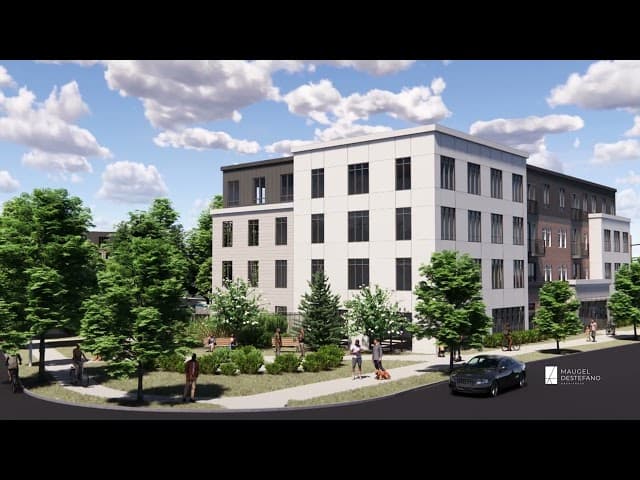
- A **48-unit residential complex on Plantation Street**, on a vacant 2.7-acre lot near the CSX Worcester Rail Yard, aims to bolster affordable housing.
- A **288-unit apartment complex proposal near Doherty Memorial High School**, from an Atlanta-based firm, has sparked community concerns about **traffic congestion**, **parking**, and **impact on local schools**.
- The **Corn Exchange project** continues to exemplify Worcester’s effort to blend **heritage preservation** with **economic revitalization**.
- **Resident Engagement and Neighborhood Planning:** The **Worcester Redevelopment Authority (WRA)** is actively seeking **resident input** on plans to **restore the Grand Hall inside Union Station**, transforming the historic space into a vibrant community hub.
- **Financial Support for Neighborhood Growth:** Worcester secured a **$38 million tax-exempt bond from MassDevelopment** to fund a **mixed-use project in Lakeside**, promising residential, commercial, and recreational facilities to stimulate neighborhood renewal.
### Market Trends and Affordability Concerns
Recent data reveal **median home prices rising to $525,000 in January 2026**, up **3.2% from December 2025**, reflecting sustained demand and raising ongoing **affordability debates**. The city faces the challenge of balancing growth with the need for **inclusive, affordable housing options**.
---
## Infrastructure Resilience and Storm Response
Worcester’s resilience is evident in its response to recent severe winter storms:
- **Enhanced Snow Removal and Community Reporting:** The Department of Public Works (DPW) has **updated snow removal protocols**, deploying additional crews, and launched a **new snow-reporting platform** allowing residents to **monitor snow clearance efforts** and **report issues** directly. These initiatives foster **transparency** and **community participation**.
- **Real-Time Alerts and Emergency Support:** Upgraded **alert systems** now provide **timely notifications** regarding **parking bans**, **weather warnings**, and **service disruptions**. During recent cold spells, Worcester activated **warming centers** and maintained a **45-bed overflow shelter** to protect vulnerable residents.
- **Major Snow Events and City Response:** On **Saturday, February 21**, Worcester declared a **winter weather emergency** due to over **18 inches of snowfall**. Subsequent storms resulted in **school closures**, **parking bans**, and ongoing **snow removal efforts**, demonstrating **proactive emergency management**.
- **Operational Challenges:** Salt shortages delayed snow clearance on main streets like **Main Street**, **Shrewsbury Street**, and **Lincoln Square**. The city prioritized **pothole repairs** and road safety amid these winter stresses.
---
## Legal and Financial Challenges
Legal disputes and fiscal hurdles continue to influence Worcester’s planning:
- **$35 Million Sewage Dispute:** The city faced a **major legal setback** when the **state’s highest court** upheld a **$35 million judgment** related to a contentious sewage and stormwater project. This ruling underscores the importance of **legal compliance** and prompts efforts to **reevaluate infrastructure funding strategies**. City officials are exploring **alternative funding sources** and **project restructuring** to move forward.
- **Negotiations with Holden:** Worcester remains engaged in **discussions with Holden** to resolve related legal issues, with potential implications for **city budgets** and **future development plans**.
---
## Community Services, Oversight, and Emerging Concerns
Beyond immediate emergency responses, Worcester emphasizes **resident support** and **community oversight**:
- **Behavioral Health Expansion:** The **Center for Applied Behavioral Instruction** announced a **$3 million expansion**, including a new facility in Auburn, to better serve children with autism and their families.
- **Smart City Initiatives:** Worcester’s **smart-city committees** are advancing projects in **renewable energy**, **digital infrastructure**, and **climate resilience**, positioning the city as a regional leader in **sustainable urban development**.
- **Leadership Transitions:** Former **City Manager Ed Augustus** announced his **resignation from Massachusetts Secretary of Housing & Livable Communities**, potentially impacting regional housing policies and prompting Worcester to adapt its strategies to sustain growth.
- **Healthcare Oversight and Financial Allegations:** A recent complaint revealed that **Jose A. Encarnacion**, a Worcester-based pastor, raised up to **$10 million from investors** since 2020 through Trinity Investments, allegedly using investor funds for **lavish trips**. The investigation raises questions about **financial transparency** and **regulatory oversight** of local figures involved in investment schemes.
- **City Council Investigations:** Councilor **Khadijah Harris** has called for a **formal city investigation into Saint Vincent Hospital** concerning **labor violations** and **healthcare compliance issues**, emphasizing the importance of **transparency and accountability** in local healthcare facilities.
- **Community Trust and Financial Integrity:** Amid these concerns, Worcester continues to address **local fraud allegations** and **financial transparency issues**, recognizing their impact on **community trust** and **civic confidence**.
---
## Current Status and Implications
Worcester’s recent initiatives and ongoing challenges reflect a city committed to **building trust through transparency**, **upholding civil rights**, and **fostering inclusive growth**. The infusion of significant state funding, community-driven projects, and adaptive policies position Worcester as a regional leader in **urban resilience**, **civil liberties**, and **sustainable development**.
However, legal disputes such as the **$35 million sewage judgment** and rising **housing affordability pressures** remain hurdles that demand **innovative solutions**. The city’s capacity to **navigate these issues**—through strategic funding, community engagement, and policy reform—will be pivotal in shaping a **more resilient, equitable, and sustainable future**.
Despite operational stresses from severe winter storms and legal uncertainties, Worcester demonstrates **resilience and adaptability**. Its ongoing efforts in **service delivery**, **public safety**, and **community oversight** underpin a vision of a city that prioritizes **resident well-being** and **civic trust** at every level.
Looking ahead, Worcester’s focus on **transparent governance**, **inclusive development**, and **innovative infrastructure** will determine whether it can sustain its trajectory as a vibrant, resilient urban hub—one that deeply values its residents’ quality of life and civic participation.