# The Accelerating Integration and Orchestration of Autonomous Agents in Enterprise Platforms: 2026 and Beyond
The enterprise AI landscape in 2026 is witnessing unprecedented transformation as autonomous agents evolve from experimental features into foundational components of enterprise operations. Driven by platform-level integrations, sophisticated orchestration patterns, and expanding ecosystems, these intelligent entities are revolutionizing workflows across industries. Recent developments underscore a trajectory toward more powerful, trustworthy, and scalable autonomous systems that are seamlessly embedded into core enterprise software, enabling organizations to achieve new heights of automation, efficiency, and strategic agility.
## Deepening Platform-Level Integrations by Major Vendors
Leading technology firms continue to embed autonomous agents and copilots directly into their platforms, enhancing usability and expanding capabilities for both technical and non-technical users.
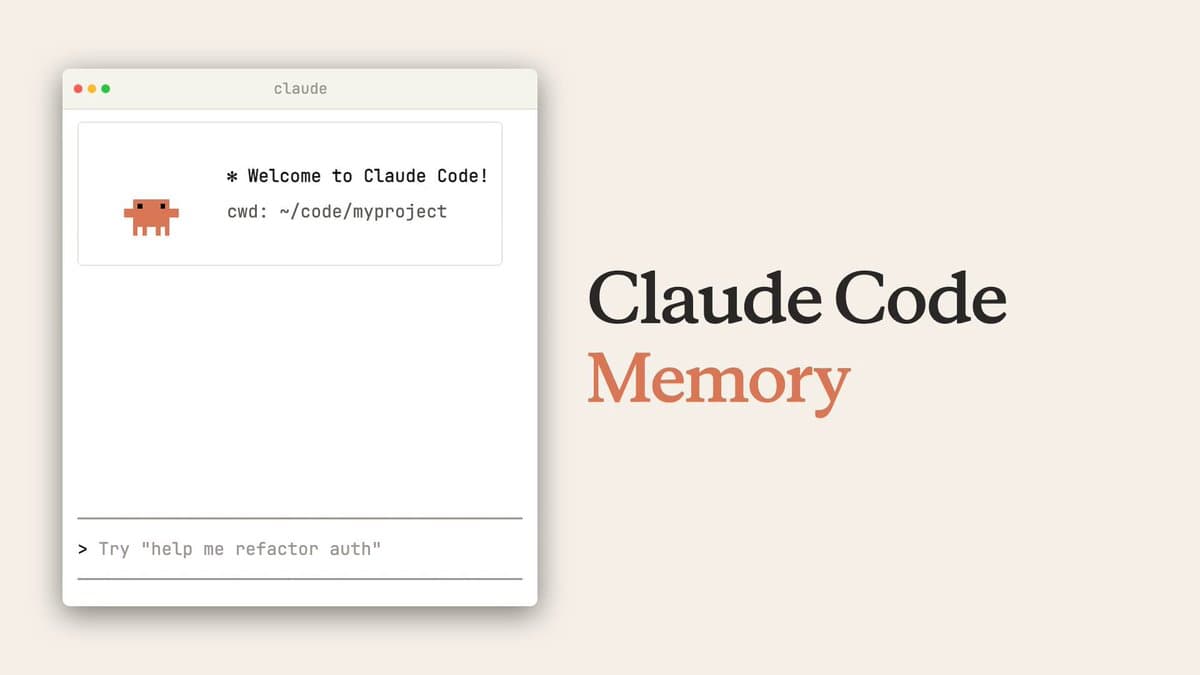
- **Anthropic** has advanced its flagship **Claude** with **sector-specific plugins** tailored for finance, engineering, and research, facilitating highly customized automation. Notably, the recent **Claude Remote Control** feature allows teams to **monitor, manage, and audit AI agents in real-time via mobile devices**, a significant boon for compliance-heavy sectors like finance and healthcare. Moreover, **Claude Code now supports auto-memory**, a groundbreaking feature that enables persistent context, drastically improving the agent’s ability to handle complex, multi-step tasks without losing track of prior interactions. As one user noted, "Claude Code’s auto-memory is huge—it transforms how we build long-term workflows."
- **Google** launched **Opal 2.0**, a **no-code mini-app builder** enhanced with **AI agent capabilities**. These agents can **dynamically select tools and models**, supported by **persistent memory** and **interactive chat**, democratizing automation for non-technical users. This accelerates enterprise adoption by reducing the barrier to deploying complex autonomous workflows.
- **Microsoft** continues integrating **copilots** across its productivity suites, with **Copilot Notebooks** now capable of **generating summaries and insights from large datasets**, empowering data-driven decision-making. The introduction of **Copilot Studio**, a **template-based environment**, allows organizations to **deploy autonomous workflows at scale** with minimal custom development, significantly reducing deployment time and cost.
- **Notion** has introduced **Custom Agents** that embed **autonomous AI assistants** into content management and knowledge workflows. These agents support **automation of repetitive tasks**, **decision support**, and **content curation**, embedding autonomous intelligence into daily enterprise activities.
- **New Relic** launched its **Agentic Platform**, a comprehensive environment for **building, deploying, and scaling autonomous AI agents** with **full observability** via **OpenTelemetry (OTel)**. This platform emphasizes **performance, security, and compliance**, setting new standards for **trustworthy AI operations at scale**.
## Ecosystem Maturation: Marketplaces, Reusable Skills, and Orchestration Frameworks
The autonomous agent ecosystem is rapidly maturing, with innovative marketplaces, open-source platforms, and orchestration frameworks bolstering interoperability, customization, and governance.
- **SkillForge**, a leading marketplace, is catalyzing **reusable agent skills** that enable organizations to **assemble plug-and-play multi-agent ecosystems** efficiently. This accelerates **prototyping and deployment** across diverse workflows, fostering a vibrant ecosystem of shared capabilities.
- Open-source platforms such as **OpenClaw** and **KiloClaw** are gaining traction. **KiloClaw**, a managed service, simplifies the deployment of **open-source autonomous agents**, making advanced AI solutions accessible even for organizations with limited infrastructure—**democratizing autonomous AI deployment**.
- Platform capabilities like **Perplexity’s "AI Computer"** now integrate research, coding, and project management into **seamless pipelines** supporting **enterprise-grade multi-model orchestration** with **provable provenance**. This ensures **complex, auditable workflows** necessary for regulated industries.
- **Google’s Gemini Enterprise architecture**, deployed on **GCP**, offers **scalable, multi-tenant autonomous SaaS solutions** that enable organizations to **manage complex, compliant workflows** with enhanced **auditability and operational transparency**.
- **Low-code/no-code tools**, including **Copilot Studio templates** and **Opal’s agent steps**, continue expanding adoption by **reducing technical barriers** and enabling **rapid customization** across sectors.
## Feature Maturation: Persistent Memory, Enhanced Observability, and Governance
Recent innovations have significantly advanced the capabilities of autonomous agents:
- **Persistent and auto-memory** features, exemplified by **Claude Code**, allow agents to **maintain long-term context**, facilitating **multi-step, complex workflows** without manual context re-establishment. As @omarsar0 remarked, “Claude Code now supports auto-memory. This is huge!”
- **Enhanced observability** tools like **OpenTelemetry** integrated into platforms such as **New Relic’s Agentic Platform** provide **real-time insights into agent performance, health, and behavior**, enabling **proactive management**.
- **Governance mechanisms**, including **role-based access controls (RBAC)**, **verifiable audit trails**, and **smart contract escrow models** like **"Claw & Order"**, embed **accountability and regulatory compliance** into autonomous operations, crucial for sensitive sectors.
## Industry Deployment, Edge Hardware, and Cost Optimization
Autonomous agents are now deeply embedded in real-world enterprise operations:
- **ServiceNow** reports that **90% of internal IT requests** are handled autonomously, with plans to extend these capabilities to client organizations, drastically reducing manual effort and resolution times.
- **Supply chain solutions** such as **project44’s AI Freight Procurement Agent** automate **carrier selection**, **rate benchmarking**, and **negotiations**, streamlining logistics and reducing costs.
- In healthcare, **Qventus’ autonomous EHR automation** reduces manual data entry and accelerates patient workflows, demonstrating potential for **significant efficiency gains** and improved patient outcomes.
- **Edge hardware innovations** like **Taalas HC1**, built on **hardwired Llama-3.1 8B**, enable **privacy-preserving, on-prem inference** for sensitive sectors such as healthcare and finance. Similarly, **Microsoft’s Maia 200** exemplifies **trusted hardware architectures** designed for **offline, high-security AI deployment**, ensuring **trustworthy autonomous agent operation** in environments with strict data privacy requirements.
## Governance, Monitoring, and Provenance at Scale
As autonomous agents proliferate, **trust, transparency, and oversight** have become paramount:
- **Real-time monitoring tools** integrated into platforms like **New Relic’s Agentic Platform** provide **performance insights** and **behavioral audits**.
- The adoption of **OpenTelemetry** across platforms ensures **performance tracking**, **security audits**, and **regulatory compliance**, reinforcing **enterprise trust**.
- **Governance frameworks**—including **RBAC**, **audit trails**, and **smart contracts**—embed **accountability** and **regulatory adherence** into autonomous systems, especially important in **regulated industries** like healthcare, finance, and logistics.
## Resilience, Cost Optimization, and Orchestration at Scale
Deploying autonomous agents at scale necessitates **cost-effective, resilient workflows**:
- Techniques such as **request routing** and **batching**—exemplified by **AgentReady**—have achieved **40-60% savings** in token and compute costs, making **mass interactions economically viable**.
- Advanced **orchestration frameworks** like **Temporal**, **ZaiNar**, **Jump**, and **Sphinx** support **multi-agent coordination**, **stateful workflows**, and **self-healing capabilities**, ensuring **robust, reliable enterprise operations**.
## Current Status and Future Outlook
The rapid adoption and maturation of autonomous agents continue, propelled by **platform innovations**, **ecosystem expansion**, and **real-world deployments**. The recent launch of advanced features—such as **Claude’s auto-memory**, **Perplexity’s "Computer"**, and **Research Solutions’ Scite MCP**—highlight a trend toward **more intelligent, transparent, and governable autonomous systems**.
The integration of **trustworthy governance mechanisms**, **cost-optimized workflows**, and **resilient orchestration architectures** suggests that autonomous agents are becoming **indispensable** across sectors—including healthcare, manufacturing, logistics, and finance. **Edge hardware** and **on-prem inference** will further embed these capabilities into **privacy-sensitive environments**, while **next-generation orchestration frameworks** will enable **more complex, self-healing workflows** with **decision provenance**.
**In summary**, 2026 marks a pivotal moment where autonomous agents are embedded at the platform level, orchestrated through sophisticated frameworks, and deployed across industries with measurable impact. Supported by a vibrant ecosystem and hardware innovations, these intelligent entities are set to become the backbone of **future enterprise operations**, transforming how organizations innovate, operate, and compete in an increasingly automated world.