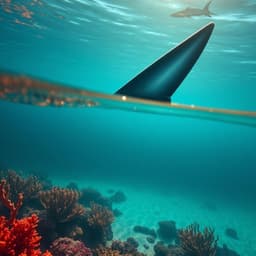
The accelerating climate crisis continues to exert profound and multifaceted pressures on coastal and coral reef ecosystems worldwide, driving rapid ecological shifts and testing the resilience of marine biodiversity and human communities alike. As 2026 unfolds, new scientific findings, technological breakthroughs, community initiatives, and governance developments have further illuminated both the scale of these challenges and the expanding arsenal of tools and strategies to address them. Recent observations—from unusual wildlife behaviors to ambitious geoengineering trials and remarkable human-ocean encounters—underscore the urgent need for integrated, inclusive, and adaptive ocean stewardship.
---
### Escalating Climate and Human Pressures Deepen Vulnerabilities of Coastal and Coral Reef Systems
The relentless degradation of coastal and coral reef systems continues unabated, with new data reinforcing alarming trends:
- **Fish biomass on coral reefs is plummeting globally**, with region-specific surveys confirming ongoing annual declines near 20% and cumulative losses exceeding 70%. This threatens not only reef ecological function but also the millions dependent on reef fisheries for food and livelihoods.
- **Marine heatwaves and bleaching events remain intense and frequent**, pushing iconic reefs such as the Great Barrier Reef and Pacific Island coral systems ever closer to ecological tipping points. These thermal stress events reduce recovery windows, exacerbate biodiversity loss, and weaken natural coastal defenses.
- **Sea-level rise and intensifying storms increasingly threaten culturally and ecologically vital coastal landscapes.** Pacific Island communities—including Hawai‘i and Guam—face worsening flooding risks that endanger sacred sites and traditional livelihoods. Recent studies link marine heatwaves with altered coastal rainfall patterns, compounding ecosystem stress and community vulnerability.
- **Plastic pollution and vessel traffic impose acute and chronic stressors on marine megafauna.** Seal strandings linked to marine debris along the Yorkshire coast have surged, overwhelming rescue efforts. Notably, increased whale entanglements during marine heatwaves have raised alarms, highlighting heat-induced shifts in whale distribution and behavior that increase vessel collision risks.
- **New observations reveal nuanced wildlife behaviors with potential ecological implications.** For example, footage of hawksbill turtles feeding calmly along Gorontalo’s coral-rich reefs demonstrates resilience and natural foraging behaviors amid changing conditions. Conversely, southern right whale populations are reproducing at lower rates—a worrying indicator linked to ocean warming—prompting calls for intensified conservation focus.
- **Human-ocean encounters continue to captivate public attention and highlight marine megafauna vulnerability.** British ski instructor Tom Waddington’s near-miraculous experience being surrounded by nearly a thousand whales during a solo rowing training trip off the Atlantic coast has energized public empathy and raised important questions about migration patterns and human safety during such rare, massive congregations.
Together, these developments paint a sobering picture: coastal and coral reef ecosystems remain under siege from escalating climate and anthropogenic pressures, demanding urgent, coordinated responses.
---
### Emerging Scientific Discoveries Deepen Oceanic Knowledge and Reveal Mysteries
Ongoing exploration continues to expand understanding of ocean complexity and vulnerabilities, with recent highlights including:
- The **Atlantic Meridional Overturning Circulation (AMOC)** shows ongoing signs of destabilization, reinforcing concerns about cascading impacts on global climate regulation and marine ecosystems.
- Oceanographers mapped a **massive 500-kilometer submarine canyon beneath the Atlantic**, revealing a geological feature critical in nutrient upwelling, carbon cycling, and modulation of marine heatwave dynamics threatening adjacent coral reefs.
- Deep-sea expeditions off Papua New Guinea uncovered a **previously unknown hydrothermal vent field** harboring unique life forms, while a **new deep-sea octopus species** was cataloged in Chilean waters. Additionally, the elusive **Ferreiraella populi**, a deep-sea chiton specialized in sunken wood habitats, was identified, enriching understanding of specialized deep-sea communities.
- The enigmatic phenomenon of **“dark oxygen” production at ocean depths** remains a critical scientific puzzle. An international consortium emphasized, “We just don’t know if this process is ecologically important or what’s causing it,” underscoring urgent research needs given its potential role in deep-sea carbon cycling and climate feedback loops.
- Antarctic marine research captured the **first-ever underwater footage of an elusive Antarctic shark species**, expanding knowledge of polar biodiversity and its sensitivity to warming oceans.
- Worryingly, **krill populations in both the Antarctic and North Atlantic continue to decline**, threatening foundational food webs that support fish, whale species, and Indigenous fisheries.
- In Puget Sound, divers documented what may be the **rarest fish species ever recorded in the region**, a discovery that both inspires conservation hope and reveals how much remains to be explored even in relatively well-studied waters.
- The recent Cayman deep-sea expedition, leveraging advanced underwater robots and autonomous vehicles, revealed complex seafloor habitats and rare species, underscoring the critical role of cutting-edge technology in exploring Earth’s final marine frontiers.
---
### Technological Innovations Transform Monitoring, Research, and Public Engagement
Rapid advances in technology are revolutionizing ocean observation, data collection, and societal involvement:
- The global expansion of **Argo and InfiniTE float networks**, integrated with satellite remote sensing, now delivers near-real-time data on ocean temperature, salinity, carbon content, and circulation patterns. This enhances early warning systems for marine heatwaves and acidification events.
- Breakthroughs combining **environmental DNA (eDNA) sampling with AI-enhanced hydrophone arrays** enable high-resolution, non-invasive biodiversity monitoring across vast marine areas. This facilitates rapid detection of species shifts and ecological disturbances essential for adaptive management.
- German engineers introduced **silent propeller technologies** for shipping vessels, significantly reducing underwater noise pollution—a critical step toward preserving acoustic habitats vital for marine life communication.
- The surge in **low-cost autonomous underwater vehicles (AUVs) and remotely operated vehicles (ROVs)**, especially in biodiversity hotspots like Indonesia and the Caribbean, has been heralded as the **“2026 Marine Revolution.”** This democratization of subsea technology accelerates biological discoveries and seafloor mapping.
- Antarctic marine science capabilities have been boosted by a mission doubling the number of scientific monitoring stations, enabling expanded data collection in vulnerable polar regions.
- Industry collaborations such as the strategic partnership between **Teledyne and M Subs** promise enhanced subsea robotics and sensor technologies, advancing exploration and environmental monitoring capabilities.
- The International Atomic Energy Agency (IAEA) recently conducted specialized training for early-career ocean scientists, equipping a new generation to assess the impacts of multiple ocean stressors, reflecting growing capacity-building efforts in marine science.
- In a landmark **ocean geoengineering trial**, researchers tested alkalinity enhancement approaches to counteract ocean acidification. Preliminary results report **no evidence of harm to marine life**, though experts emphasize the need for cautious, science-based scaling and robust governance frameworks to prevent ecological risks.
---
### Governance Dynamics: Rising Tensions, Diplomatic Advances, and Regulatory Challenges
The evolving governance landscape reflects mounting environmental, economic, and social complexities:
- **Protests in Guam against federal plans to fast-track deep-sea mining near the Mariana Trench have intensified**, with Acting Governor Josh Tenorio expressing deep concerns over the pace and adequacy of environmental safeguards. These tensions mirror broader Pacific Island debates balancing economic development against marine ecosystem risks.
- The United States and Tonga have deepened diplomatic ties concerning deep-sea mining interests, illustrating the intertwined geopolitical and economic intricacies of ocean resource exploitation.
- A significant milestone was achieved with the **ratification and incorporation of the Biodiversity Beyond National Jurisdiction (BBNJ) Treaty into UK law**, enhancing international cooperation to protect migratory species and habitats beyond national waters. This progress encourages other nations to strengthen ocean stewardship.
- Conversely, certain regions—including parts of Guam and the Atlantic—have experienced **regulatory rollbacks on pollution controls and habitat protections**, threatening prior conservation gains and exposing governance vulnerabilities to political and economic pressures.
- Bipartisan U.S. lawmakers introduced a new **ocean climate bill** aiming to expand investments in climate mitigation and adaptation research focused on ocean systems, signaling increased political consensus on ocean-centric climate policy.
- **Ocean geoengineering proposals**, including iron fertilization and alkalinity enhancement, continue to provoke controversy. Experts emphasize the need for transparent, science-based risk assessments and robust governance to avoid unintended ecological harm.
- Persistent **knowledge gaps in ocean carbon cycling, such as the dark oxygen production enigma,** intensify calls for coordinated global research funding and data sharing to inform effective climate strategies.
- Inclusive governance models embedding **Indigenous rights and traditional ecological knowledge** gain traction. Organizations like MarAlliance and the International Governmental Island Assembly (IGIA) promote participatory frameworks that honor cultural values and equitable resource management, setting precedents for respectful and effective stewardship.
---
### Scaling Restoration and Nature-Based Solutions with Inclusive Partnerships
Restoration efforts integrating cutting-edge science, nature-based approaches, and community engagement are growing in scale and ambition:
- The University of Hawai‘i and partners have advanced **coral in vitro fertilization (IVF) and larval reseeding programs** targeting heat-tolerant genotypes. A $4.6 million project in American Samoa and parallel initiatives on the Great Barrier Reef exemplify efforts to bolster coral resilience amid warming seas.
- Sydney is pioneering **nature-based shoreline mosaics** integrating artificial oyster reefs with mangrove plantings, delivering multifaceted benefits including coastal stabilization, water quality improvement, and enhanced blue carbon sequestration.
- Recognition of **blue carbon ecosystems—mangroves, seagrasses, and salt marshes—as critical climate mitigation assets** is growing within global sustainability frameworks.
- Co-management frameworks incorporating **Indigenous and local knowledge** are expanding. MarAlliance facilitates participatory monitoring, education, and stewardship across the Caribbean and Latin America, while IGIA champions governance models honoring cultural values and equitable resource sharing.
- Local community initiatives, such as the **Seacoast Science Center’s Marine Mammal Rescue team**, provide vital responses to increasing stress on marine wildlife, demonstrating effective grassroots conservation leadership.
- Academic collaborations, including efforts by the School of Marine and Atmospheric Sciences to rebuild hurricane-damaged marine laboratories in Jamaica, highlight the importance of scientific capacity-building in vulnerable coastal regions.
---
### Priority Actions to Foster Ocean Resilience and Sustainable Stewardship
Experts emphasize an integrated agenda to safeguard coastal and coral reef ecosystems amid accelerating environmental change:
- **Scale climate-smart restoration technologies**, including coral IVF, larval reseeding, oyster reef rehabilitation, and genetics-informed coral engineering to enhance reef adaptive capacity.
- **Address critical knowledge gaps in ocean carbon cycling**, particularly enigmatic processes like dark oxygen production, through increased research funding, international collaboration, and transparent data sharing.
- **Expand and enforce marine protected areas (MPAs)**, strengthen international treaties such as the High Seas Treaty and BBNJ, and reverse harmful regulatory rollbacks to protect marine biodiversity.
- **Maintain precautionary moratoria on deep-sea mining and ocean geoengineering** until comprehensive environmental assessments and robust governance frameworks are in place.
- **Embed inclusive, adaptive governance models** ensuring meaningful Indigenous participation and incorporation of traditional ecological knowledge, fostering equitable and culturally respectful stewardship.
- **Enhance monitoring and community engagement** by leveraging advanced sensor networks, eDNA and AI acoustic monitoring, autonomous underwater vehicles, and citizen science platforms to enable early detection of ecological changes and empower local management.
- **Leverage public education and immersive media** to boost ocean literacy, promote coexistence with shifting marine wildlife, and galvanize climate action across societies.
---
### Conclusion: Charting a Course Toward a Resilient Ocean Future
The convergence of climate-induced and anthropogenic threats continues to challenge the resilience of coastal and coral reef ecosystems worldwide. Yet, the latest scientific discoveries—ranging from vast submarine canyons and deep-sea vents to rare species sightings—and transformative technological innovations provide critical tools and hope for sustaining these vital systems.
Public-facing moments, such as extraordinary whale encounters and community-led coral discoveries, galvanize societal connection to the ocean, while ongoing governance debates around deep-sea mining and geoengineering highlight the imperative for precaution and equity. As blue carbon ecosystems gain deserved recognition and citizen science participation flourishes, the path forward demands sustained global commitment, precautionary policies, and empowered local and Indigenous communities to secure biodiversity and livelihoods dependent on healthy oceans.
The unfolding decade remains pivotal. The decisions and actions taken now will shape the ocean’s future resilience—and, ultimately, human well-being on a warming planet.