# The 2026 Revolution in Beginner-Friendly 3D Printing: Hardware, Software, Community, and New Frontiers
The year 2026 has cemented its place as a pivotal period in the evolution of accessible 3D printing. Building on the breakthroughs of previous years, recent developments have further democratized the technology, making it more intuitive, reliable, and versatile for hobbyists, educators, and small entrepreneurs alike. From cutting-edge hardware innovations to community-driven initiatives and new software workflows, 2026 marks a transformative era that continues to expand the horizons of what beginners can achieve.
---
## Hardware Innovations: Making 3D Printing Faster, Smarter, and More Affordable
### Integrated Scanning and Multi-Material Capabilities
One of the most exciting trends persists: **integrated 3D scanners** embedded directly into consumer-level printers. The **Creality Sermoon P1 Flywheel**, for instance, now features **high-precision built-in scanning**, allowing users to effortlessly digitize physical objects. A recent walkthrough, **"Creality Sermoon P1 Flywheel Scan: Workflow & Comparison"** (10:24 minutes), demonstrates how hobbyists can quickly capture real-world items and import them into free CAD software like **FreeCAD**. This **scanned-to-digital workflow** simplifies reverse engineering and customization, making these advanced techniques accessible even to beginners.
Alongside scanning, **multi-material printers** such as **Bambu Lab’s P2S Combo** have become mainstream, supporting **automatic filament switching** and **multi-color printing**. Review videos like **"Bambu Lab P2S Combo 3D Printer Review"** (17:53 minutes) showcase how users can produce **vibrant, complex models**—from artistic sculptures to functional prototypes—without manual filament swaps. **Affordable models like Creality’s K1**, introduced in early 2026 at just **$309**, exemplify how **high-speed, reliable, and beginner-friendly** printers now incorporate **fast print speeds** and **robust auto-leveling**, dramatically reducing setup time and learning curves.
### Reliable Auto-Leveling and Budget-Friendly Multi-Function Models
**Auto-bed leveling** remains a staple feature, ensuring **first-layer adhesion** and greatly simplifying calibration. The **Ender-3 V3 SE**, for example, now offers **advanced auto-leveling systems**, making setup straightforward and minimizing print failures. Tutorials emphasize that **automatic calibration** **saves time** and **increases success rates**, especially crucial for newcomers.
Budget models like the **Anycubic Kobra 3** have further cemented their popularity, supporting **multi-material handling**, **auto-bed leveling**, and **multi-color modes**. These features empower users to explore **more complex designs**—ranging from small functional parts to multi-color artistic objects—without a hefty investment.
---
## Software and Workflow: Making 3D Printing More Intuitive and Creative
### User-Friendly Slicing, CAD, and Scanned-to-3D Pipelines
**Bambu Studio** continues to be favored by beginners due to its **automatic support generation**, **intuitive controls**, and **optimized algorithms** that produce **high-quality prints** with minimal effort. The focus on **streamlined workflows** has been bolstered by new tools enabling **scanned-to-CAD** pipelines, greatly expanding creative possibilities.
A standout development is the widespread adoption of **mobile photogrammetry workflows**. Apps like **RealityScan**, a **completely free mobile app**, now enable users to generate **detailed 3D scans** from simple photographs. The recent tutorial **"100% Free Mobile Photogrammetry Workflow: RealityScan"** (10:15 minutes) demonstrates how hobbyists can convert captured images into usable models, which are then imported into CAD software such as **FreeCAD** for editing or reproduction. This **low-cost, accessible approach** significantly **lowers the barrier** for creating **personalized objects, replacement parts**, or **artistic pieces**.
The **scanned-to-CAD pipeline** now facilitates **restoration, customization**, and **reverse engineering**, empowering users to **convert physical objects into digital models** with ease. Tutorials continue to emphasize importing scanned meshes into FreeCAD, where **precise modifications** are straightforward—a powerful tool for digital design exploration.
### AI-Assisted Design and Rapid Prototyping
AI-driven workflows have gained remarkable traction. For example, the recent tutorial **"From AI Image to Printed 3D Figure"** (15:59 minutes) showcases how users can **convert AI-generated images or prompts** into **printable 3D models** rapidly. Leveraging **AI tools** that generate **3D meshes** from simple prompts or 2D images, hobbyists can now produce **custom figurines, prototypes**, or **decorative objects** with minimal effort. This opens **new creative avenues** for **personalized manufacturing** and **artistic experimentation**.
### Maintenance, Troubleshooting, and Spare Parts Planning
Ensuring consistent print quality continues to depend on **routine maintenance**. Recent guides emphasize **filament moisture control**, recommending **airtight storage with desiccants** to prevent **print defects** caused by filament degradation. Regular inspection of **hotend components**, **belts**, and **stepper motors** is advised, especially for those managing **multiple printers**.
As users scale operations, **component longevity** becomes critical. Experts suggest maintaining **spare parts** like **nozzles**, **belts**, and **hotend assemblies** to **prevent unexpected failures**. Guides such as **"This 3D printer part is a ticking time bomb—and you need a backup"** stress **preventative maintenance** for **smooth operation** and **cost efficiency**.
### Second-Hand Market and Informed Purchasing
Beginners increasingly explore **second-hand printers** for affordability. Updated advice, like **"Don't buy a cheap second-hand 3D printer until you've read this,"** highlights the importance of **thorough inspection**—checking **wear points**, **firmware status**, and **known issues**—to ensure **reliable performance** and **long-term satisfaction**.
---
## From Hobbyist to Entrepreneur: Small-Scale Manufacturing and Business Development
### Optimized Workspace and Print Farms
Recent videos, such as **"The New 3D Print Room Setup - 3D Print Business"** (15:33 minutes), showcase **organized print farms** designed for **scaling production**. Features include **workflow optimization**, **ventilation**, and **dedicated stations**, enabling **consistent output** and small-batch manufacturing—ideal for entrepreneurs and hobbyists aiming for **micro-scale production**.
### Managing Multiple Printers and Scaling Operations
Advances in **automation tools** and **network management systems** facilitate **efficient multi-printer coordination**. Demonstrations like **"Mi Nueva Granja de Impresoras 3D"** (11:32 minutes) illustrate strategies for **coordinating multiple units**, **optimizing print queues**, and producing **professional-grade items**—from **seedling trays** to **custom tools** and **decorative objects**. These setups **lower the barriers** for small-scale entrepreneurs seeking **business opportunities**.
### Practical Projects and Community-Driven Opportunities
Beginners are encouraged to start with **simple projects** such as **personalized keychains**, **household tools**, **miniatures**, or **DIY mounts**. Such projects serve as **excellent learning platforms** and often lead to **community sharing and collaboration**. The focus remains on **benign, creative, and educational** outputs, fostering a **positive, safe environment** for experimentation and innovation.
---
## Broader Implications and Recent Highlights
### February 2026 Community News and Product Highlights
A recent community news roundup **"Community News February 2026: New Products and News Updates!"** (10:00 minutes, 621 views) highlights several key product launches and updates, including **new budget printers**, **advanced filament options**, and **software improvements**. For example, **Qidi's new tank-style printer** has garnered attention due to its **robust build and user-friendly interface**, sparking interest among beginners looking for reliable, ready-to-use solutions.
### Filament Quality Tests and Practical Evaluations
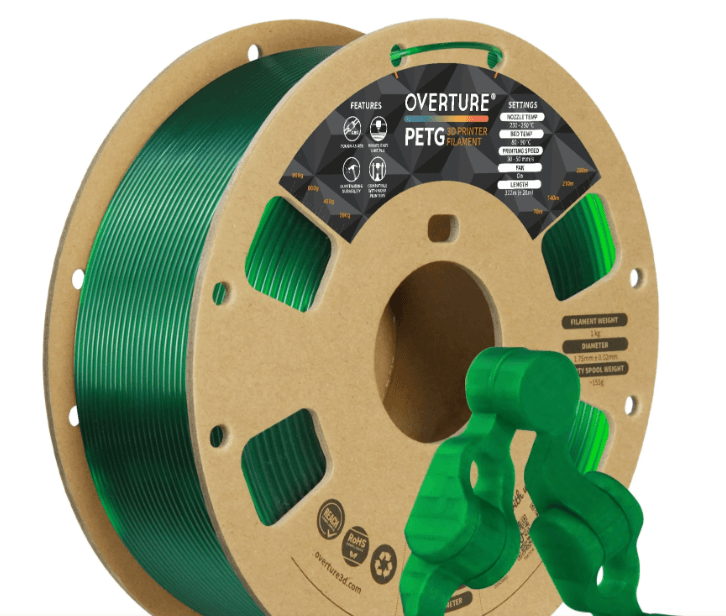
A notable video, **"激安検証】安すぎ注意!1269円フィラメントの弱点と意外な実力とは!"** (8:46 minutes), tests **super low-cost filament** priced at **1,269 yen (~$9)** per kilogram. The test reveals **weaknesses** such as **inconsistency and moisture absorption**, but also **surprising strength** in certain applications. Such insights guide **filament selection**, crucial for **tuning** and **material optimization**—especially for newcomers seeking **cost-effective solutions**.
### First Impressions of New Printers
A recent review, **"I Was Nervous To Test This Printer… Here’s Why"** (27:51 minutes), offers **cautious first impressions** on a newly released printer. The reviewer highlights **initial setup challenges**, **build quality**, and **performance expectations**, providing valuable guidance for beginners considering **their first purchase**.
---
## The Current Landscape and Future Outlook
**2026** continues to see **hardware breakthroughs**—such as **integrated scanners**, **multi-material capabilities**, **auto-leveling**, and **affordable high-speed printers**—paired with **software innovations** like **scanned-to-CAD pipelines**, **AI-assisted design**, and **mobile photogrammetry**. These advancements **empower beginners** and **small entrepreneurs** to **transform ideas into tangible objects** with unprecedented ease.
**Community initiatives**, including **maker labs** and **university maker spaces**, foster environments of **learning, sharing**, and **collaborative innovation**. The integration of **photogrammetry apps** like RealityScan exemplifies how **simple smartphone workflows** can produce **professional-grade models**, enabling **personalized restoration**, **art**, and **custom manufacturing**.
The trajectory suggests a future where **3D printing** remains **accessible**, **cost-effective**, and **limitless in potential**. As **tools and communities** evolve, **anyone** with curiosity and dedication can **bring ideas to life**, shaping a world where **creativity is democratized** and **the power to create is in everyone's hands**.
---
**In summary**, 2026 marks a year of **remarkable progress**—hardware that’s **faster, smarter**, and **more affordable**; software workflows that are **more intuitive** and **creative**; and vibrant communities driving **innovation and education**. The ongoing developments continue to **lower barriers**, **expand possibilities**, and **ignite passion** for all levels of 3D printing enthusiasts.