# 2026: A Pivotal Year in Climate Justice, Legal Battles, and Global Action — Updated Developments
As 2026 unfolds, the world finds itself at a critical juncture in the fight against the escalating climate crisis. This year has been marked by a remarkable confluence of legal victories, international negotiations, technological governance debates, and community-led resilience initiatives. Collectively, these developments underscore a growing global consensus: **climate justice must be rooted in human rights, scientific integrity, and equitable policies**. Yet, despite these positive strides, ecological emergencies continue to intensify, revealing systemic vulnerabilities and geopolitical tensions. The following updates synthesize the most recent events, illustrating both the promise of emerging progress and the profound challenges that remain.
---
## Strengthening Climate Accountability Through Legal and Rights-Based Victories
Legal systems worldwide are increasingly recognizing **climate rights as fundamental human rights**, setting powerful precedents that hold governments accountable.
- The **Dutch Supreme Court’s historic ruling on Bonaire** remains a landmark case. The court **explicitly acknowledged climate rights as integral to human rights**, compelling the Dutch government to **protect Bonaire’s residents from rising sea levels and coastal erosion**. This decision **raises the bar** for legal accountability, encouraging other small island nations and coastal regions to pursue similar litigation. Legal analysts suggest this **could catalyze a broader shift** toward integrating climate responsibility into **international law**, emphasizing that **states have an enforceable duty** to safeguard vulnerable populations and ecosystems.
- In the United States, courts **continue to uphold science-based policymaking**. Recent rulings **affirm the necessity of science in climate regulation**, notably **rejecting efforts to dismiss the endangerment finding**—a legal determination confirming that **greenhouse gases threaten public health and welfare**. These rulings **fortify the legal foundation** for future climate policies and **protect regulatory agencies** from politically motivated rollbacks. Dr. Maria Sanchez, a leading legal scholar, emphasized, *“Reaffirming the endangerment finding is fundamental; it anchors science at the core of climate law and policy. Undermining it jeopardizes decades of progress.”*
- **Implications**: These victories **strengthen the enforceability of climate commitments**, imposing **formal obligations** on governments to deliver tangible action. They foster a **culture of accountability**, inspiring further **legal pathways toward climate justice** and influencing international climate obligations.
---
## Progress and Challenges at COP30: Advancing Climate Justice and Financial Innovation
The **COP30 negotiations** have achieved notable breakthroughs in **loss and damage reparations**, **climate finance**, and **governance of emerging technologies**.
- **Financial commitments** have surged. **Regional development banks**, notably **BRICS’ New Development Bank** and **the Asian Infrastructure Investment Bank (AIIB)**, pledged substantial funds toward **locally-led adaptation projects**—focusing on **urban resilience**, **water security**, and **ecosystem restoration**—particularly in regions most impacted by climate disasters. These investments aim to **empower vulnerable communities** and **directly address local needs**.
- A **major breakthrough** involved **loss and damage reparations**, moving toward **climate justice on the global stage**. Negotiators worked diligently to **bridge the justice gap** by **securing tangible reparations** and **recovery support** for communities devastated by climate-related disasters. This signals a **paradigm shift**, acknowledging **climate justice as a global obligation**, with some nations proposing **new international fund mechanisms** dedicated to **supporting climate-vulnerable nations**.
- The **rollout of resilience bonds**, developed by the United Nations Office for Disaster Risk Reduction (UNDRR), is gaining momentum. These **innovative financial instruments** **shift risk from governments to private investors**, providing **upfront capital** for **climate resilience projects** such as flood defenses and drought mitigation. This approach aims to **encourage proactive adaptation measures**, especially as climate extremes become more frequent and severe.
- **Persistent gaps remain**. A recent report titled *“Climate Change: Emission Reductions to Limit Warming”* highlights that **current commitments are insufficient**—global emissions grew by **0.76% in 2022**—underscoring the **urgent need for more ambitious, enforceable policies worldwide**.
- **Emerging debates** focus on **marine carbon dioxide removal (CDR) technologies**. While promising, **scientific warnings emphasize** that **unregulated deployment could harm marine ecosystems** and **destabilize climate systems**. Advocates call for **international standards**, **impact assessments**, and a **precautionary approach** to prevent ecological damage.
- Additionally, the **“Climate Change Is Raising Sea Levels Faster Than You Think”** video underscores the **accelerating pace of sea-level rise**, emphasizing the **urgent need for adaptive infrastructure** and **community resilience**.
---
## Escalating Climate Impacts Drive Urgent Adaptation and Resilience Measures
The tangible effects of climate change have worsened, emphasizing the necessity of **adaptation alongside mitigation**.
- **2025** was the **third-hottest year on record**, with no signs of slowing. **Mega-droughts**, **coastal erosion**, and **flooding** threaten livelihoods and ecosystems globally.
- The **US West** faces **persistent megadroughts**, risking **water shortages** and **agricultural collapse**. Similarly, **New Zealand** confronts worsening **landslides**, **coastal erosion**, and **extreme flooding** driven by **heavy rainfall** and **melting permafrost**. These crises demand **integrated adaptation strategies**, including **innovative water management**, **ecosystem conservation**, and **community resilience initiatives**.
- **Locally-led resilience efforts** exemplify success. For instance, **Balochistan’s 2024 IWRM Policy** aims to **coordinate water use**, **improve infrastructure**, and **protect ecosystems**, serving as a model for **climate-induced water scarcity solutions**.
- The **“Miwatari” lake phenomenon** in Japan, characterized by irregular freeze-melt cycles, exemplifies **climate-driven ecological anomalies**, prompting **recalibrated disaster risk management** for **heavy rainfall**, **storm surges**, and **droughts**.
- **Climate migration** accelerates. Communities like **Tuvalu** are implementing **resettlement planning** and **local adaptation measures** that emphasize **equity and community participation**.
- The threat to **winter sports** highlights cultural impacts. The documentary *“Can the Winter Olympics Survive Global Heating?”* illustrates how **warming temperatures threaten winter event viability**, urging **urgent climate action** to **preserve cultural and economic traditions**.
---
## Sectoral Mitigation, Technology Governance, and Innovative Solutions
The governance of **emerging climate intervention technologies** remains a focal point, with a focus on **precaution and international standards**.
- **Marine CDR technologies** face **international scrutiny**. Their **potential benefits** are balanced against **risks to marine ecosystems**, necessitating **impact assessments** and **regulatory frameworks** before broader deployment.
- **Agricultural practices**, especially **rice farming**, are undergoing transformation through **altered irrigation techniques**, **low-emission rice varieties**, and **fertilizer management**. Supported by **climate finance**, these measures aim to **reduce methane emissions**, a potent greenhouse gas.
- The **energy sector** is transitioning rapidly. **Solar energy expansion** and **AI-driven data centers**—which are **energy-intensive**—are at the forefront. This has prompted **calls for sustainable management** and **renewable energy integration** in data infrastructure.
- **Aviation** faces new challenges as **warming temperatures** affect **aircraft performance**, notably **lower lift at higher temperatures**. This has led to **regulatory adjustments** and **new operational protocols** to ensure safety amid climate-induced conditions.
---
## Scientific Insights, Health Risks, and Biodiversity Conservation
Recent scientific advances deepen our understanding of **climate-related health risks** and **biodiversity threats**.
- **Attribution studies** increasingly link **extreme weather events** to **vector-borne diseases**, **heat-related illnesses**, and **mental health impacts**. This highlights the importance of **integrated disaster preparedness** and **public health strategies**.
- The **Delphi method** is now employed to **standardize definitions of climate change mortality**, facilitating more precise **policy development** and **resource allocation**. The *“Delphi Method to Determine a Case Definition of Climate Change Mortality”* video elaborates on these efforts.
- The spread of **parasites and diseases**, such as **malaria**, **dengue**, and **Lyme disease**, is facilitated by **rising temperatures** and **ecosystem shifts**, creating **new health threats** that require **enhanced public health responses**.
- **Ecosystem conservation** remains central to climate justice. The **Amazon rainforest**, especially **Peru’s largest trees**, continues to serve as a **crucial carbon sink** and **biodiversity hotspot**. **Deforestation** and **illegal logging** threaten these natural giants, risking **loss of vital carbon sequestration** and **species habitat**. Increasingly, conservation efforts incorporate **indigenous rights** and **ecosystem integrity** as **climate justice priorities**.
---
## Policy, Communication, and Geopolitical Dynamics
Effective **climate policy** faces persistent obstacles, including **misinformation**, **lack of transparency**, and **geopolitical tensions**.
- The documentary *“Government's Silence on Climate Change Raises Alarm Amid Extreme Weather Events”* emphasizes how **mistrust and misinformation** hinder **public engagement** and **emergency responses**. Experts advocate for **science-based, transparent communication** to **mobilize societal action**.
- **Geopolitical conflicts** and **resource disputes** complicate **multilateral cooperation**. Divergent national priorities undermine **collective efforts**, making **inclusive dialogue** vital.
- Notably, **South Africa** has introduced a **comprehensive national climate framework**—the **South African Climate Change Framework**—which emphasizes **science-based carbon budgets**, **equity**, **indigenous rights**, and **a just transition**. This approach exemplifies how **climate justice** can be embedded into national policies.
- **Bipartisan proposals**, like the recent **N3 initiative**, aim to foster **pragmatic approaches** that balance **economic growth** and **environmental sustainability**, seeking to **bridge ideological divides**.
- There is an increasing call for **a comprehensive global assessment of avoidable climate-change risks**, recognizing that **understanding what is truly preventable** is critical for **prioritizing actions** and **allocating resources** effectively.
---
## Emerging Factors: Air Quality, Inequality, and Infrastructure Footprints
Recent developments highlight systemic issues that threaten progress:
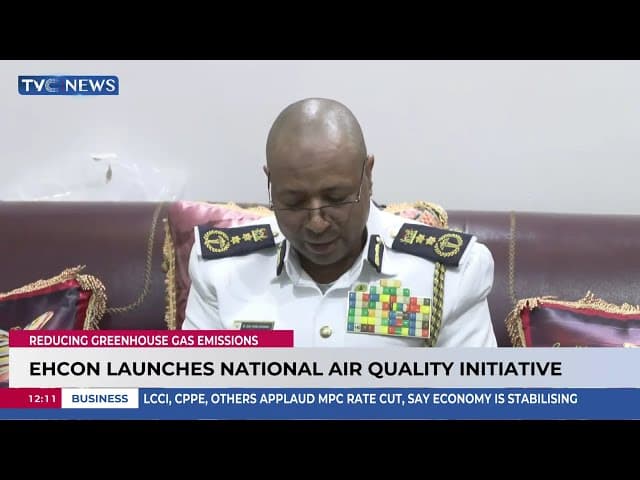
- The **EHCON’s National Air Quality Initiative** has launched a **comprehensive program** to **monitor and improve air quality nationwide**, aiming to **reduce pollution-related health disparities** and **advance climate justice**. The initiative includes **public awareness campaigns** and **regulatory reforms**.
- The **role of climate change in increasing global inequality** is increasingly evident. Vulnerable populations bear disproportionate burdens, facing **health risks**, **economic hardships**, and **displacement**. Addressing these disparities requires **integrated policies** that prioritize **equity and justice**.
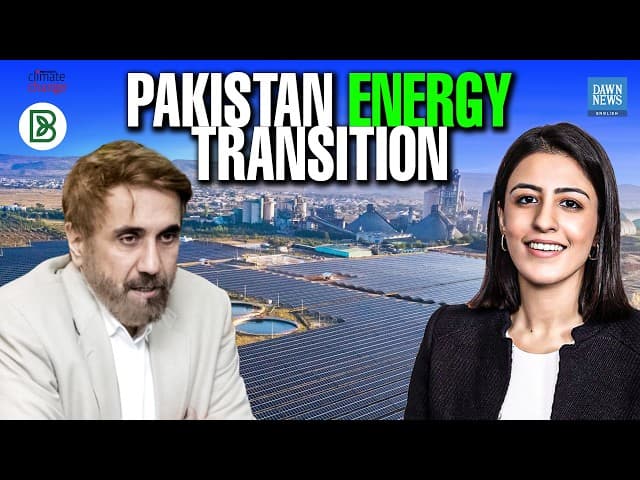
- **Pakistan** is making strides toward **renewable energy**, supported by **international aid** and **domestic reforms**. The **renewable transition** faces hurdles such as **infrastructure gaps** and **policy consistency**, but prospects remain promising, as detailed in Dr. Aazir Khan’s insights on *Dawn News*.
- **Data centers** are critical nodes in the digital economy but are **energy-intensive**. Experts like **Sumant Sinha** advocate for **integrating renewable energy** into data infrastructure, transforming India into a **potential exporter of clean energy**. This approach aligns with broader efforts to **reduce carbon footprints** of technological sectors.
---
## Current Status and Broader Implications
2026 remains a **pivotal year**—a moment of both **hope and urgency**. The **legal victories**, **international commitments**, **financial innovations**, and **community resilience efforts** collectively shape the trajectory toward **climate justice**. However, **systemic inertia**, **geopolitical tensions**, and **policy gaps** threaten to impede progress.
- The **breakthroughs at COP30**, especially regarding **loss and damage reparations** and **climate finance**, reflect a **growing global consensus** that **climate justice is an urgent, shared responsibility**.
- The **amplified impacts**—from **mega-droughts** and **coastal erosion** to **ecological anomalies** like the **Miwatari lake**—serve as stark reminders that **urgent, inclusive, and science-informed action** is imperative.
- Cultural symbols, such as the **viability of winter sports**, highlight how climate change endangers **societal traditions and economic stability**.
As humanity navigates this decisive year, **bold, transparent leadership rooted in justice and scientific integrity** is essential. The choices made now will **shape the future of our planet**, determining whether we steer toward a **sustainable, equitable world** or succumb to ecological decline. The path forward must prioritize **collective commitment**, **innovative solutions**, and **the protection of the most vulnerable**, ensuring a **just, resilient world for generations to come**.