# Guilty Verdict in High-Profile Brendan Banfield Murder Trial Marks a New Era of Justice and Transparency
The recent conviction of Brendan Banfield on multiple counts of murder marks a watershed moment in the evolution of criminal justice, illustrating how technological innovation, transparency, and community involvement are transforming investigations and prosecutions. This landmark case not only delivers long-awaited justice for the victims but also exemplifies a broader shift toward open justice principles that foster public trust, accountability, and collaborative problem-solving.
## A Landmark in Open Justice and Community Engagement
From the outset, the Banfield trial was a pioneering example of **"open justice"**, emphasizing transparency and active public participation. Authorities and media outlets leveraged digital platforms to provide **real-time updates**, setting new standards for high-profile cases nationwide.
One of the most notable initiatives was the release of **"Inside The Banfield Trial: Guilty Verdict,"** a 27-minute, 9-second documentary hosted on YouTube. This compelling visual content offered the public an **inside look** into various aspects of the case, including:
- Courtroom testimonies and witness statements
- Forensic analyses and investigative highlights
- Key video evidence, such as security footage and police interviews
This documentary quickly garnered over **1,500 views** and **137 likes**, reflecting a growing public appetite for transparency and understanding. Such efforts foster **active community participation**, with citizens engaging through social media, live updates, and community forums, thereby nurturing a collective sense of ownership over justice.
Adding to this, the trial was extensively **live-streamed**, with real-time coverage of key proceedings like the **"LIVE | Day 1 of Kouri Richins murder trial,"** which attracted over **31,200 views** and **767 likes** on YouTube. These efforts ensure that justice is not just a closed courtroom affair but a shared community experience, bolstering confidence in the legal process.
## Technological and Forensic Breakthroughs That Secured Justice
### The Power of Multimedia Evidence and Forensic Innovation
The Banfield case underscores the critical role of **multimedia evidence** and **cutting-edge forensic techniques** in modern investigations:
- **Bodycam footage** captured law enforcement responses, helping establish precise timelines and corroborate witness accounts.
- **Security camera recordings** from local businesses and public spaces traced Banfield’s movements, providing crucial links in the evidence chain.
- **Courtroom recordings** and **live updates** maintained public engagement throughout the trial.
### Cold Cases Resolved Through Persistent Effort and Advanced Technology
The conviction is part of a broader pattern where **relentless investigation combined with forensic advancements** has led to the resolution of long-standing cases:
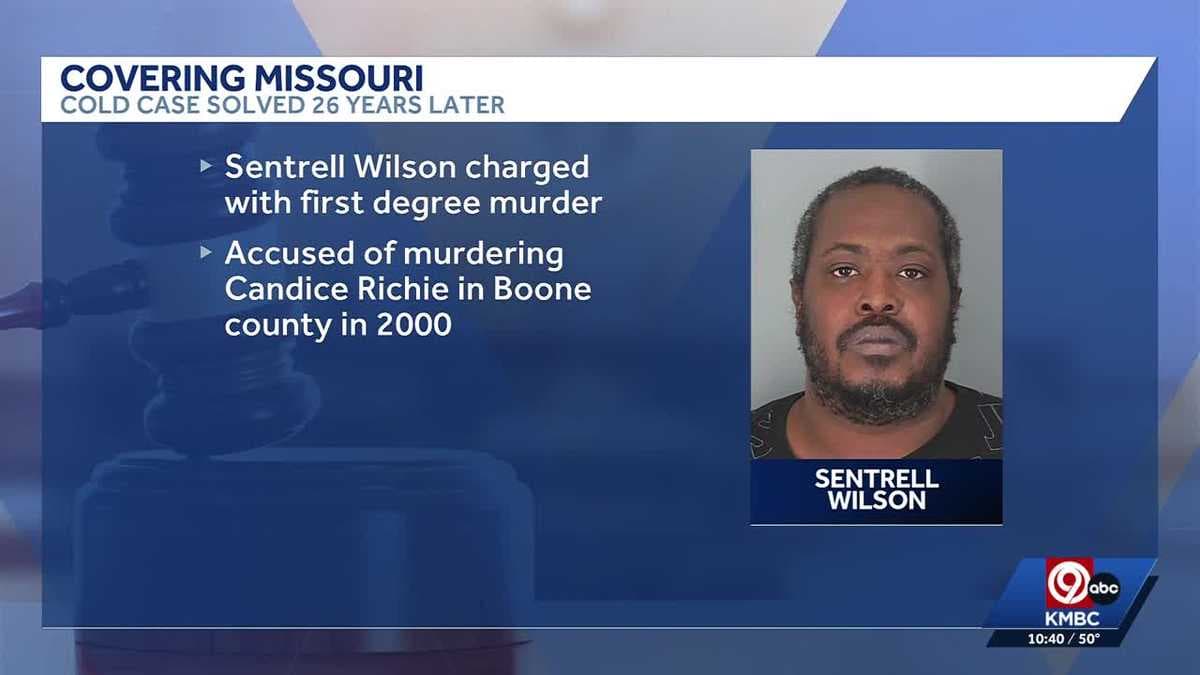
- The **26-year-long Suffolk County murder investigation** was solved after renewed forensic analysis identified a suspect responsible for a teenage victim.
- The **61-year-old Mary Theresa Simpson cold case** was reopened and cracked through collaboration with **Russell Sage College students**, exemplifying how academic partnerships can yield valuable insights.
- The **1969 Nebraska cold case** involving Mary Kay Hessey was resolved after over five decades, thanks to evidence reexamination and forensic reanalysis, demonstrated in a **"48 HOURS"** segment highlighting how buried truths can resurface.
### Recent Cold-Case Resolutions and Active Investigations
Ongoing efforts continue to leverage technology and community tips:
- The documentary **"Murder Investigation Uncovers Ricin Poisoning Attempt Years Later | The Fullbright Files"** revealed how decades-old evidence was revisited with modern forensic techniques, uncovering previously hidden details.
- **Genetic genealogy** remains a vital tool. Detective Shaun McCarthy of Los Angeles County explains that only **one homicide** has been solved via genetic genealogy in his jurisdiction, citing **legal, ethical, and resource limitations** that restrict wider application.
Recent breakthroughs include:
- The **nearly 30-year-old Battle Mountain murder** case, which led to the sentencing of the victim’s mother after her plea deal.
- The **1984 killing of a local resident** gained renewed attention after evidence was reanalyzed and previously unreleased footage generated new leads.
- The **Charlotte murder of Kim Gales** was solved after **DNA was identified on her body nearly 35 years later**.
- The **Sarasota 1999 murder** saw breakthroughs through evidence reexamination and community tips.
- Investigations into the **1991 murders of James Moore and Stella Bolton** in New Hampshire aim to utilize modern forensic tools and fresh witness statements.
Adding to these efforts, recent updates include:
- The **arrest of the husband of a beloved Ohio teacher in Tipp City**, earlier this week, charged with her murder. Investigators credited forensic reanalysis and community tips for this breakthrough.
- The **life sentence** handed down to the killer of Tara Baker, a University of Georgia law student murdered in 2001, exemplifies law enforcement’s long-term perseverance.
- The **Phoenix Canal murders cold case** saw a breakthrough with the arrest of **Bryan Miller**, owing to renewed evidence review, illustrating the vital role of technological reexamination.
- In Anchorage, Alaska, authorities recently released **surveillance footage of a person of interest** in a fatal assault last summer, actively encouraging community tips and maintaining investigative momentum.
## Expanding Resources, Ethical Challenges, and Community Collaboration
A notable trend is the increased use of **public rewards** to incentivize tips. For example, authorities increased the reward to **$14,000** in the **Lake Norman cold case** involving Peter Jordan, demonstrating effective community collaboration.
However, deploying **advanced forensic tools**—such as high-tech DNA analysis and genetic genealogy—often demands substantial resources. A homicide detective in California’s Central Valley last year faced **resource limitations** when attempting to reanalyze evidence from a decades-old murder, highlighting ongoing challenges related to **funding constraints** that can delay justice.
Remarkably, a California case involved **DNA recovered from a cigarette** that helped identify a teenager’s killer **44 years after her death**, underscoring the ongoing potential of forensic reanalysis to resolve cases long considered unsolvable.
## Broader Implications: Ethics, Policy, and Future Directions
The Banfield case and other breakthroughs raise critical societal questions:
- The expanding use of **multimedia evidence**—including bodycam footage, courtroom recordings, and real-time updates—has revolutionized case presentation but also prompts **privacy rights**, **evidence admissibility**, and **evidence integrity** discussions.
- The reliance on **forensic science**, particularly **DNA analysis** and **genetic genealogy**, sparks societal debates about **privacy**, **ethical boundaries**, and **resource allocation**. Detective McCarthy notes that **only one homicide** in his jurisdiction has been solved via genetic genealogy, partly due to these concerns.
- **Community involvement** and **academic partnerships** are increasingly vital. Initiatives like **family-led investigations** and **educational programs**, such as true crime classes at Christian Brothers University, actively generate leads and foster public trust.
- The release of **publicly accessible surveillance footage** and **community appeals** have proven effective in generating tips, exemplifying a **collaborative policing** approach that combines technology with citizen participation.
## Current Active Cases and New Developments
The pursuit of justice continues with several ongoing investigations:
- **Kentucky State Police** are probing a murder in Allen County, announced on **February 18, 2026**. While details remain confidential, authorities emphasize that **forensic reanalysis** and **community tips** are crucial.
- Police activity in **Port Elgin and Kincardine** culminated in a **fatal shooting**. The **Special Investigations Unit (SIU)** is examining the circumstances, including use-of-force concerns.
- In **Paisley, Ontario**, the SIU confirmed the death of a **48-year-old man** during a police shooting, with investigations focusing on the justification of force used. Community concerns and transparency remain central.
- The trial for an Anderson County woman accused of killing four family members has begun, with **Monday’s proceedings** carefully vetting jurors amid high public interest.
- Authorities are **reexamining evidence** from the **2002 Glasgow cold case**, where the murder of Alexander Blue remains unsolved after two decades. Modern forensic techniques and fresh evidence reviews aim to bring renewed hope.
- **Heather Turner’s death investigation** took a significant step forward with a **Paulding County Sheriff's news conference on February 20, 2026**, featuring a 42-minute YouTube update and renewed appeals for information.
- A **review of evidence** continues in the **unsolved murder of a Glasgow businessman**, with recent reports indicating that authorities are applying modern forensic techniques to uncover new leads and close a long-standing case.
## The Power of Live Streaming and Public Engagement
The trend toward **live-streaming major trials** continues to grow, significantly increasing public engagement and transparency. Examples include:
- The **"LIVE | Day 1 of Kouri Richins murder trial,"** which attracted over **31,200 views** and **767 likes** on YouTube, exemplifies how real-time broadcasting fosters transparency and collective responsibility.
- The **trial of the suspect in the Nashville body found at a former school** was briefly captured in a **0:18-minute** video, with **132 views** and **7 likes**, ensuring community awareness.
- The ongoing trial of an Anderson County woman accused of murdering four family members has garnered intense community interest, with live updates and social media coverage amplifying public involvement.
## Additional Notable Content: Alleged Victim's Family Testifies
In the latest developments, a poignant moment occurred during the Kouri Richins trial when **"People Loved Him": Alleged Victim's Father Testifies**, providing a powerful emotional perspective that resonates deeply with the community and underscores the human toll behind these cases.
## Conclusion: A Future Built on Innovation, Transparency, and Community Trust
The Brendan Banfield verdict exemplifies how **comprehensive, transparent, and technology-driven investigations** can deliver justice, even after decades. It demonstrates that with **perseverance, innovation, and community engagement**, cold cases can be solved, and justice can be restored.
Recent developments—including new arrests, long-term sentences, increased public rewards, and active cold case reviews nationwide—highlight a promising future where **cold cases are increasingly solvable**. These advances reinforce that **persistent effort, ethical use of technology, and robust community partnerships** are vital in the ongoing pursuit of truth.
As law enforcement continues to harness **multimedia evidence**, **forensic breakthroughs**, and **public engagement**, the justice system moves closer to a reality where **no mystery remains forever unresolved**—ensuring victims are remembered, justice prevails, and public confidence in the system grows.