5d ago
TabFM Brings Foundation Models to Tabular Data via Zero-Shot In-Context Learning
- TabFM, a 400M-parameter model, formulates tabular prediction as in-context learning for calibrated zero-shot outputs in one forward pass without...

Created by Mitchel Schneider
Major AI research breakthroughs, core ML, safety, interpretability, and high-impact applications
Explore the latest content tracked by AI Breakthrough Digest
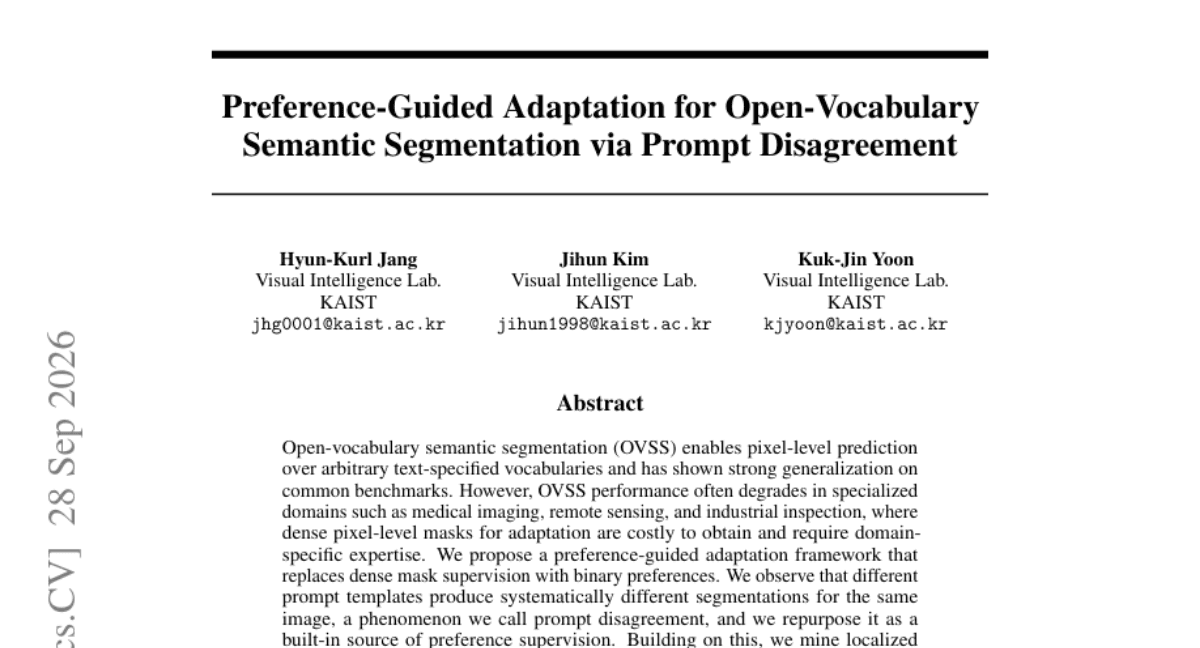
New method turns systematic differences across prompt templates into preference signals for adapting open-vocabulary segmentation models without any...
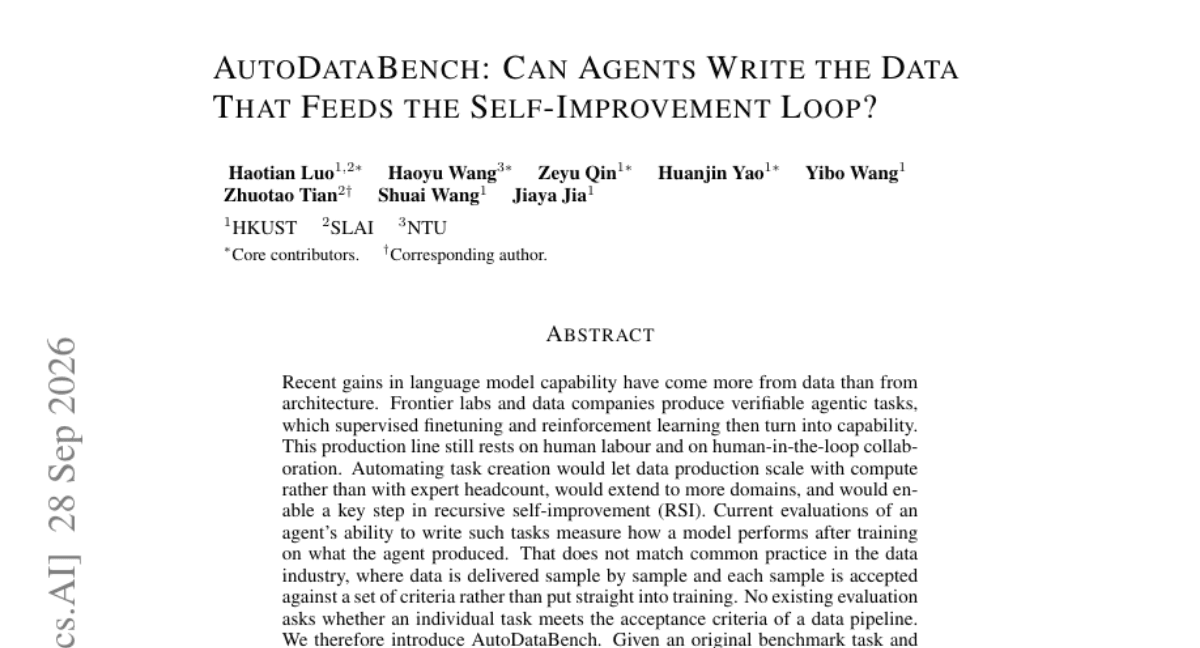
The field is shifting from manual curation toward automated, verifiable synthetic data pipelines that support recursive self-improvement.
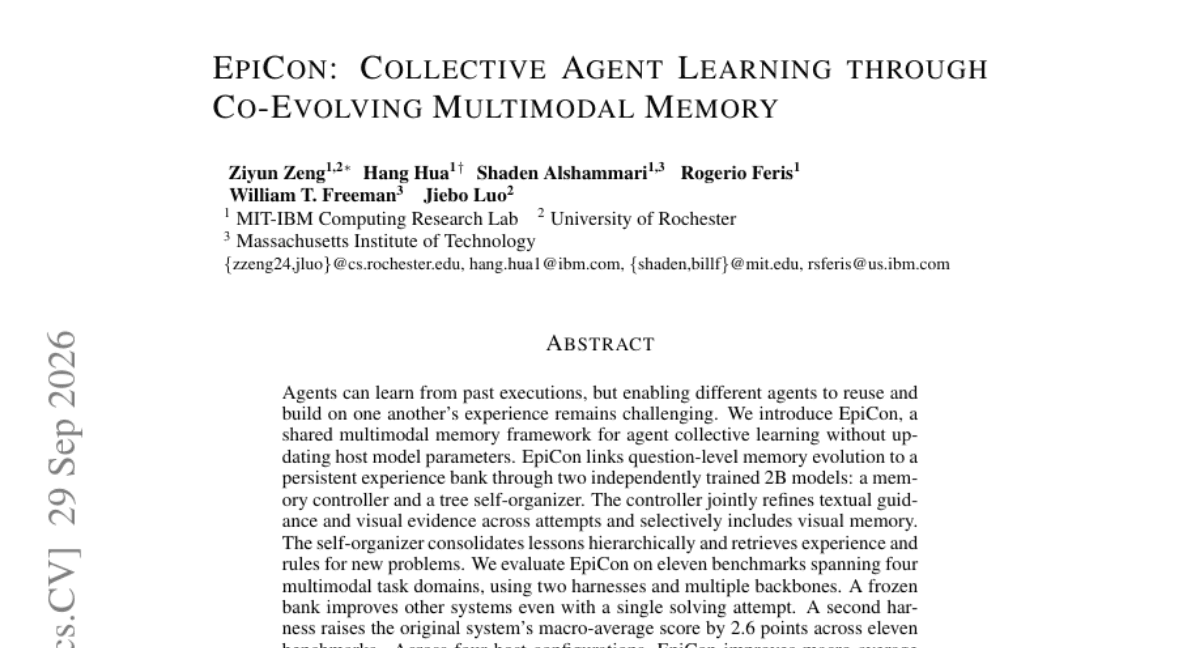
EpiCon introduces a shared multimodal memory framework allowing agents to collectively accumulate and reuse experience without updating host...
GPT models produce more edit-inducing questions than human reviewers on ICLR/NeurIPS papers.
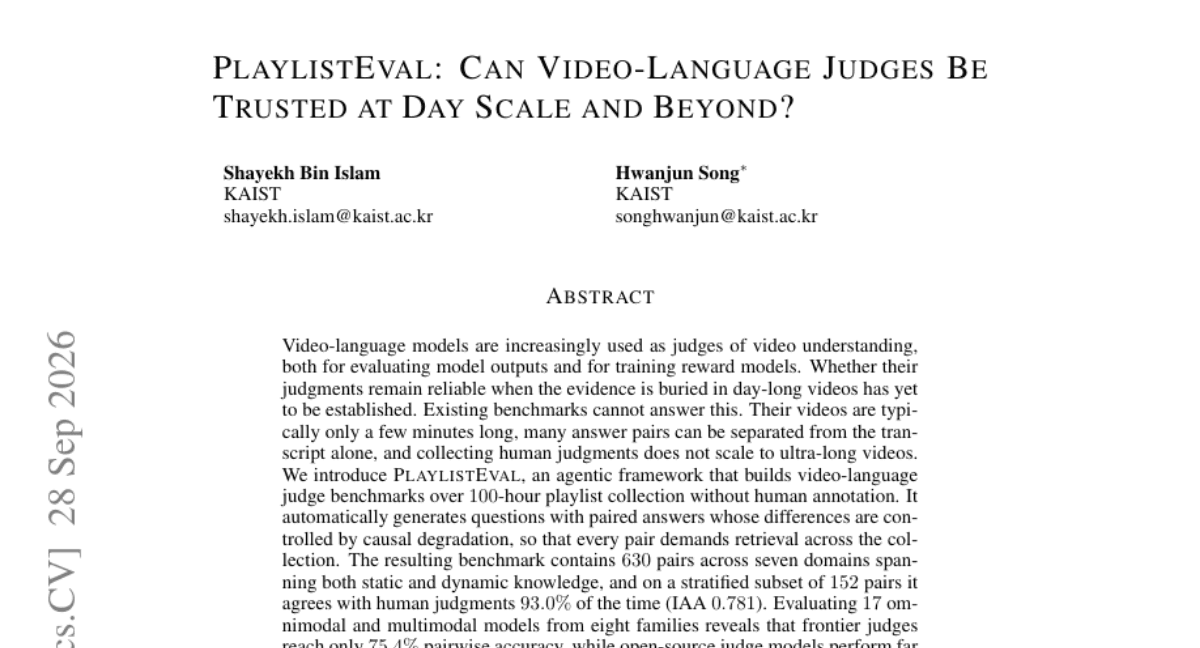
Frontier models show clear weaknesses when tasked with judging or reporting on complex AI outputs.
MarginFlow turns the ideal SIS proposal into a GFlowNet policy and amortizes it with a single set transformer that reads remaining margins, delivering...
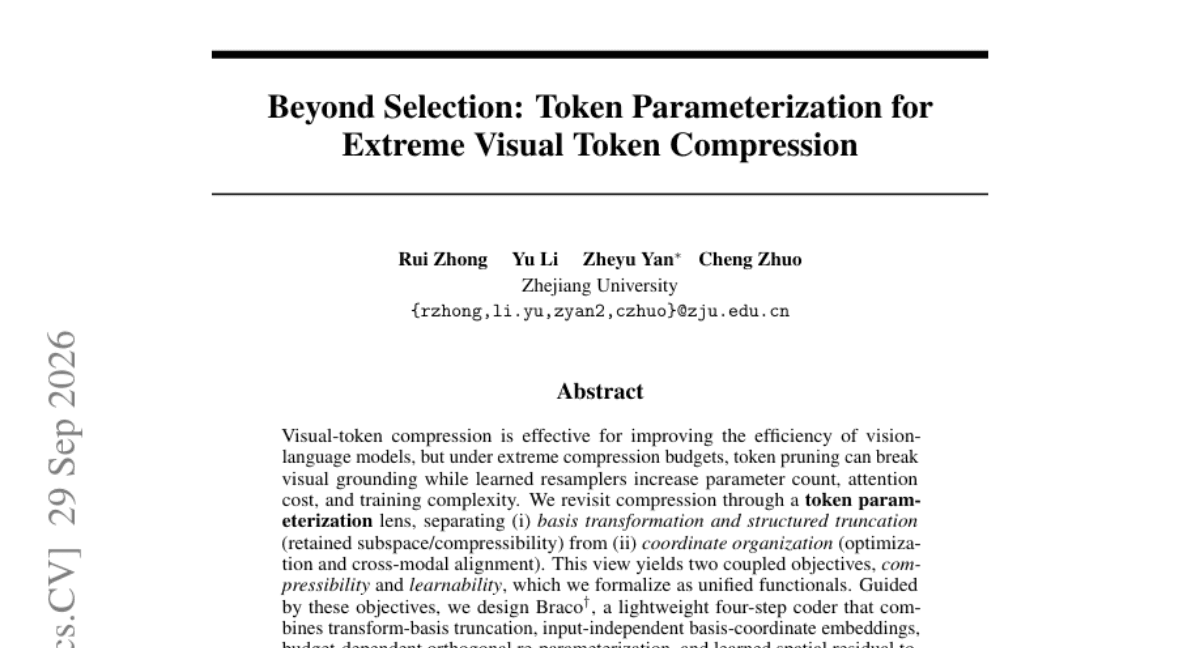
By shifting from token selection to parameterization, Braco preserves vision-language grounding at extreme compression ratios where pruning fails. The...
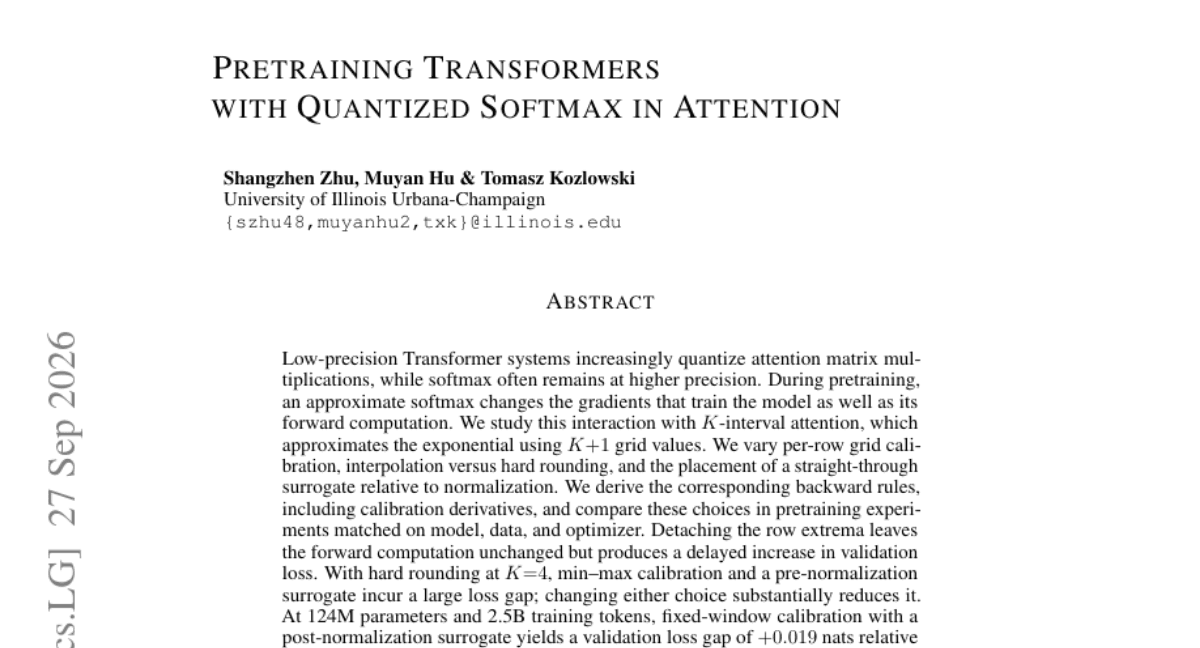
Quantizing softmax alongside attention matmuls is feasible for end-to-end low-precision Transformers.
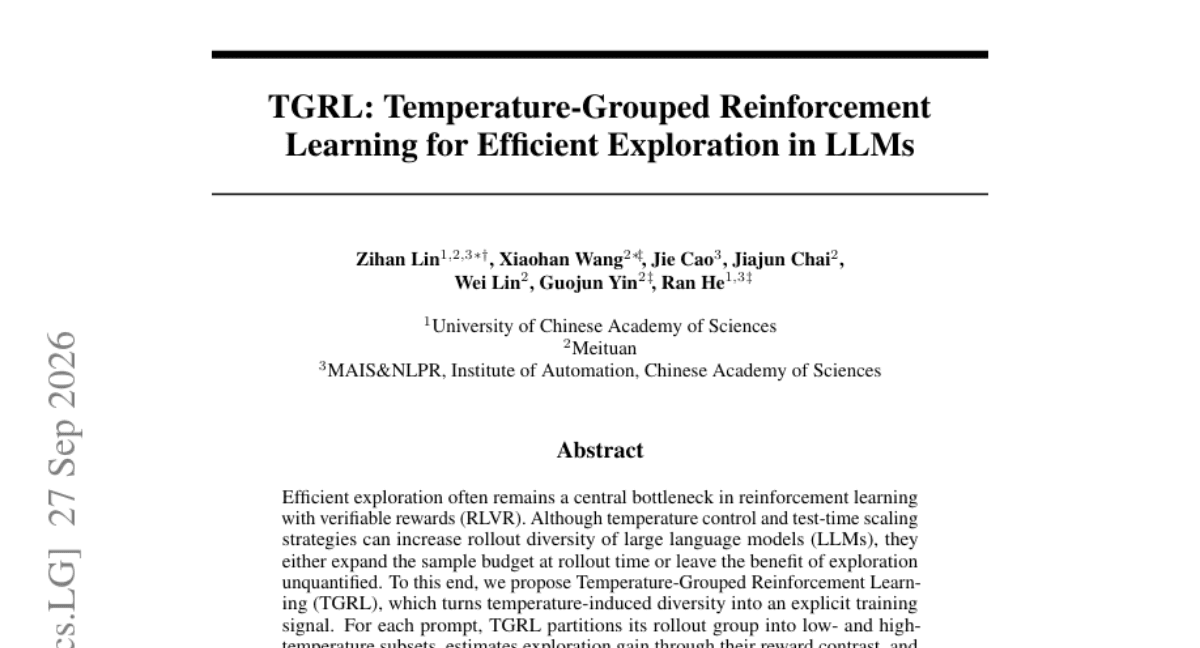
TGRL partitions each prompt's rollouts into low- and high-temperature groups, measures exploration gain from their reward contrast, and distributes...
A new Magnetic Mixture Policy Optimization algorithm approximates Nash equilibria in large sequential games with continuous or mixed actions.
-...
Latent-space recursion is gaining traction as an independent way to scale reasoning, separate from model size or token-level chain-of-thought.
SOLE-R1 shows a general-purpose reward model can act as the sole signal for online RL across over 20 unseen manipulation tasks via zero-shot...
Two new methods highlight a growing focus on intelligent selection before generation:
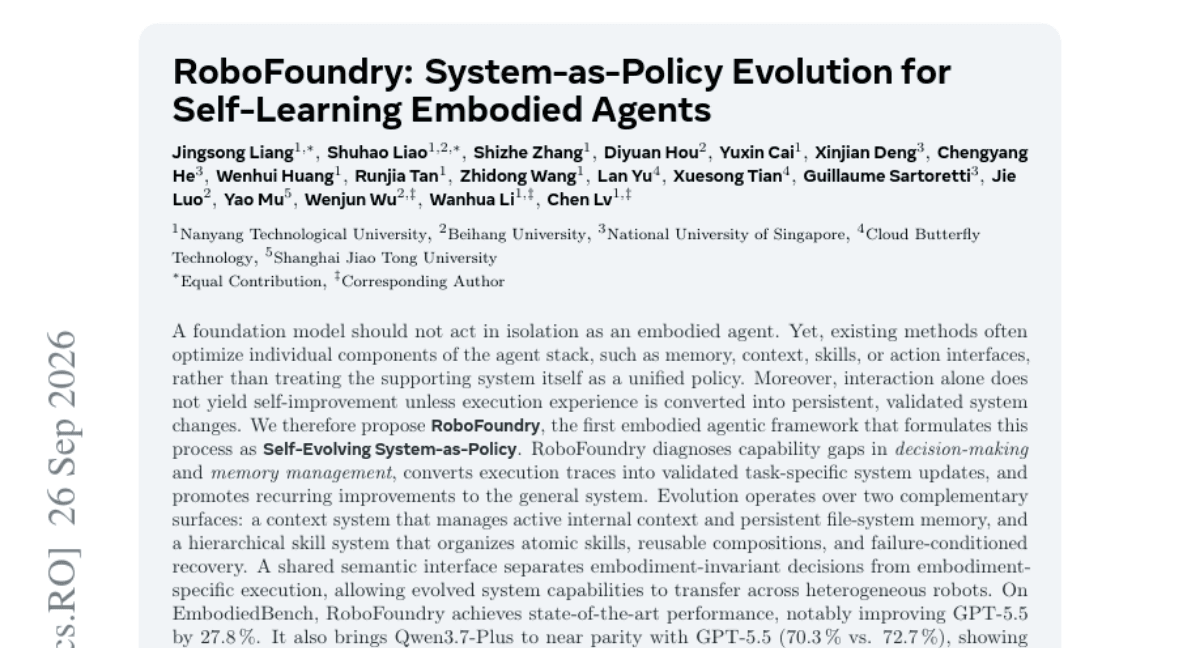
Three new frameworks show agent performance now hinges on evolving harnesses, environments, and skills rather than model tweaks alone.
What does it take to move polymer AI beyond isolated prediction models?
Agent-directed orchestration that interprets natural-language queries,...
Two new papers show a clear shift from noisy model-based labeling to structured, executable verification.
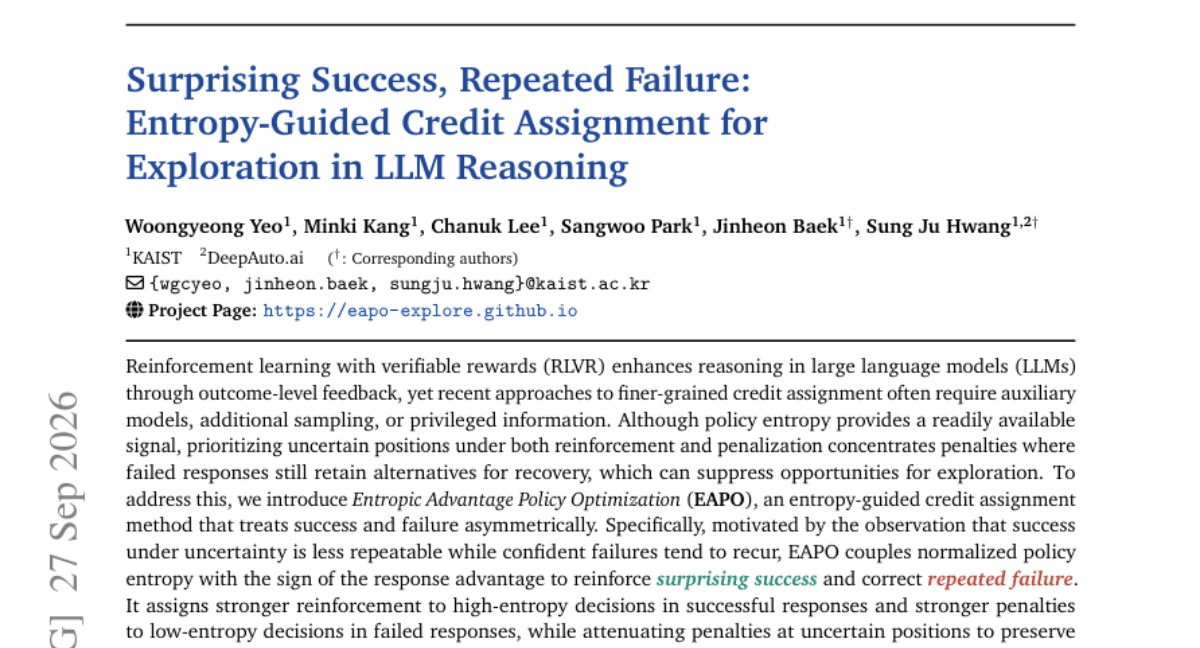
EAPO couples normalized policy entropy with response advantage to asymmetrically reinforce surprising successes at high-entropy tokens while...