# Scaling Solid-State Batteries from Lab Pilots to Gigafactory Production in 2026: A Landmark Year of Transformation
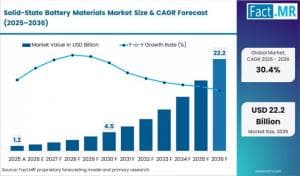
The landscape of energy storage is undergoing a seismic shift in 2026. Once confined to laboratory experiments and small-scale prototypes, **solid-state batteries (SSBs)** are now rapidly transitioning into large-scale manufacturing realities. Driven by technological breakthroughs, strategic investments, and expanding application domains, this year marks a pivotal milestone where the industry accelerates from pilot lines toward **gigafactory-scale production**, promising safer, higher-capacity, and more reliable energy solutions across sectors.
---
## Major Milestones Driving the Transition
### Gigafactory Construction and Industrial-Scale Deployment
A defining development is **ProLogium’s new gigafactory in France**, which is currently entering its construction phase. Once operational, this facility is expected to produce **high-volume solid-state cells** aimed at automotive, electronics, and grid storage markets. Its scale signifies a decisive move beyond pilot projects toward **mass manufacturing**, addressing previous bottlenecks in supply consistency and quality control.
Simultaneously, **QuantumScape**, a prominent name in the field, has made substantial strides in 2025, advancing its production capabilities and scaling processes in anticipation of full commercialization. QuantumScape’s progress complements these efforts, underscoring the global push toward gigafactory deployment.
### High-Capacity Cells and Production Targets
Industry leaders are pushing the envelope on cell capacity and manufacturing targets. **Dreame**, a Chinese battery innovator, announced the development of a **60 Ah solid-state cell**, a significant leap toward **large-format, high-energy-density batteries** suitable for electric vehicles and aerospace applications. Their goal to **begin mass production by 2027** signals a clear trajectory toward large-scale, high-capacity manufacturing.
In addition, **Critical Resources Ltd** shared insights into their advances in electrolyte stability and scalable production techniques, emphasizing the importance of electrolyte formulation improvements that are critical for achieving both high performance and manufacturability at scale.
### Pilot and Validation Line Deployments
Manufacturers like **Hana Technology** and **Boyee** are actively deploying **pilot and validation manufacturing lines**, demonstrating scalable solutions for key components such as **solid electrolytes, silicon-carbon (Si-C) anodes, and single-walled carbon nanotubes (SWCNTs)**. These innovations are vital to ensure **performance consistency, durability, and safety**—the trifecta necessary for industrial deployment.
### Technological Enablers: Laser Processing Advances
Innovations in **laser processing techniques**, particularly those led by **Fraunhofer ILT**, are instrumental in overcoming manufacturing bottlenecks. Breakthroughs in **laser welding and patterning** enable **high-precision, high-throughput fabrication**, significantly reducing defects and ensuring **reliable electrolyte integration, sealing, and cell assembly**. These technological enablers are critical for achieving **cost-effective, scalable production** with uniform quality.
---
## Validation, Safety, and Industry Confidence
### Customer Qualification and Broader Industry Adoption
**ION Storage Systems** has recently announced the **customer qualification** of its **Cornerstone™ solid-state cells**, making it the **first US-based manufacturer** to achieve this milestone. This process involved rigorous testing under **real-world conditions**, demonstrating **strict safety, longevity, and performance standards**—a necessary step before large-scale automotive and grid deployment.
### Safety Demonstrations and Public Confidence
Safety remains paramount. A compelling **nail-through test** on solid-state cells showed **no ignition or explosion** upon penetration, a demonstration that went viral as **“A Nail Through a Solid-State Battery — No Fire. No Explosion.”** in YouTube videos. Such vivid safety demonstrations greatly **alleviate concerns among manufacturers, regulators, and consumers**, bolstering public confidence in solid-state technology.
### Ongoing Durability Challenges
Despite these promising developments, **comprehensive qualification** remains complex. **Donut Lab**, a reputable research entity, released a revealing video titled **"STOP! 2 Big Problems We Almost Missed,"** highlighting persistent issues such as **long-term durability, thermal stability, and manufacturing consistency**. These challenges are delaying **widespread automotive adoption**, as extensive **durability testing, thermal management solutions**, and **regulatory approvals** are still in progress.
---
## The Path Forward: Challenges and Opportunities
### Persistent Challenges
While progress is accelerating, several hurdles must be addressed:
- **Extended qualification timelines** to ensure **long-term durability** and **thermal stability** suitable for automotive use.
- **Manufacturing consistency** at high volumes to prevent defects and maintain performance uniformity.
- **Regulatory approval processes**, which involve rigorous testing and certification, remain lengthy.
- **Thermal management** solutions are critical to prevent overheating during high-rate charging/discharging cycles.
### Materials Science and Intellectual Property Race
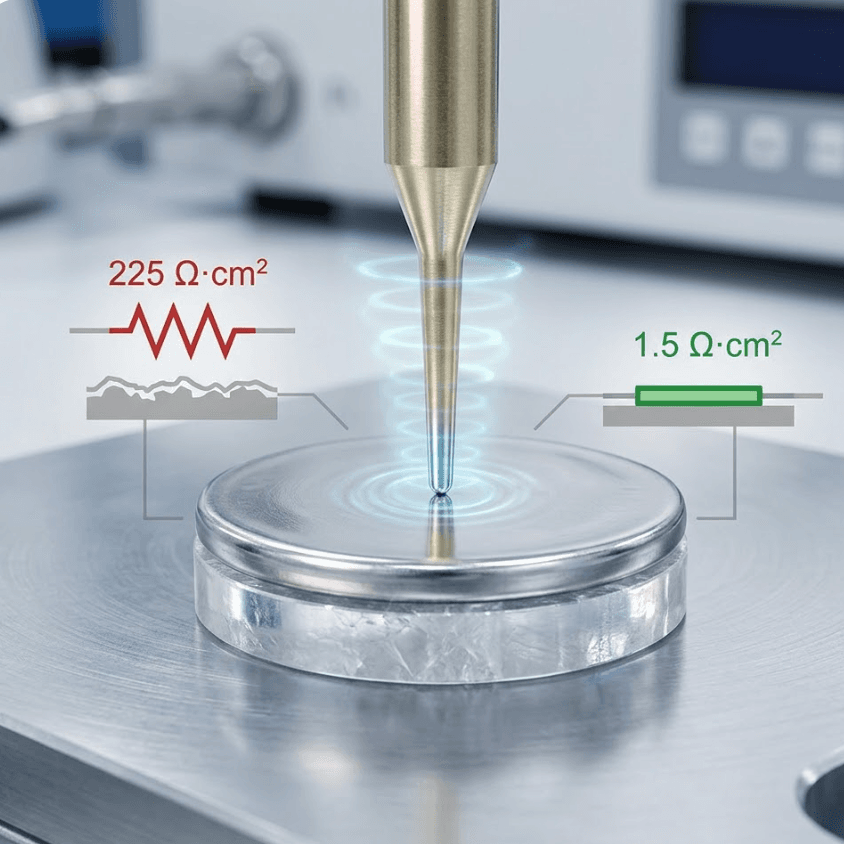
Advances in **materials science** continue to drive the industry forward. **Qkera** has developed **solid electrolyte sheets based on sulfide materials**, aiming to **replace traditional separators** and improve **durability and manufacturability**. Similarly, **Critical Resources Ltd** focuses on electrolyte stability, working toward **scalable production techniques** that can reduce costs and extend cell lifespan.
The **patent landscape** remains fiercely competitive. **CATL** and other giants are actively filing patents on **solid-state architectures and electrolyte chemistries**, signaling a strategic effort to **secure proprietary technology** and influence future standards. This patent activity indicates that **certain technological architectures** may dominate the market in the coming years.
---
## Policy and Technological Enablers
Supportive government policies and industry initiatives are catalyzing progress. **Shanghai Metals Market (SMM)** reports that efforts in developing **sulfide-based and oxide-based electrolytes** are moving the sector into the “deep water zone” of commercialization—where **cost-effective, large-scale production** becomes feasible.
Many governments are backing these efforts through **funded projects, industrial collaborations**, and **regulatory support**, particularly targeting **reducing manufacturing costs, improving electrolyte stability**, and **streamlining certification standards**. These initiatives are essential to translate laboratory breakthroughs into **commercially viable products**.
---
## Remaining Challenges and Sector Rollout
While **automotive deployment** remains **delayed** due to the extensive qualification process, other sectors are rapidly adopting solid-state batteries:
- **Aerospace** and **defense** sectors are adopting SSBs for their **priority on safety and high performance**.
- **Grid storage** projects are integrating solid-state cells to capitalize on their **long cycle life and thermal stability**.
- **Robotics and industrial applications** are early adopters, benefiting from the **safety and high energy density**.
### Key Barriers to Automotive Adoption
- **Extended qualification timelines** due to durability, safety, and thermal requirements.
- **Thermal management** solutions to prevent overheating.
- **Manufacturing consistency** at high volumes to ensure performance and safety.
Despite these hurdles, the industry remains optimistic about **progressing toward automotive commercialization** within this decade.
---
## Outlook Through the Decade: From Pilot to Mass Production
Looking beyond 2026, the convergence of **equipment innovations, validation successes, material breakthroughs**, and **policy support** suggests a **rapid scaling pathway**. Industry experts anticipate that **gigafactory-scale production of solid-state batteries** could be fully operational **by the early 2030s**, revolutionizing sectors such as transportation, aerospace, defense, robotics, and grid storage.
**By the early 2030s**, solid-state batteries are expected to **dominate high-performance energy markets**, offering **safer, higher-capacity, and more reliable solutions** that underpin technological progress across multiple domains.
---
## **In Summary**
2026 stands as a watershed year in the evolution of solid-state batteries. The industry is witnessing **gigafactory constructions underway**, **validation milestones achieved**, and **technological innovations accelerating** toward mass production. While some **challenges remain—particularly in automotive certification and manufacturing consistency—**the momentum strongly indicates that **gigascale production is imminent**. This transition promises to usher in a new era of **safer, more efficient, and versatile energy storage solutions**, fundamentally transforming mobility, energy management, and beyond for decades to come.
---
*This year’s developments exemplify the rapid, multi-faceted progress propelling solid-state batteries from promising research to mainstream industrial practice, setting the stage for a transformative energy landscape in the coming years.*