# Industry Evolution in SDDC, Telco Cloud, Fiber, and Hardware Economics: A Strategic Update
The digital infrastructure landscape is rapidly transforming, driven by relentless innovation in software-defined architectures, open hardware initiatives, advanced optical connectivity, and intelligent network management. As enterprises and telcos navigate this complex terrain, recent developments underscore a decisive shift toward flexible, scalable, and cost-effective solutions that empower new applications—from 5G and edge computing to AI-driven data centers. This update synthesizes the latest trends, technological breakthroughs, and market dynamics shaping this evolution at a pivotal moment.
## Continued Momentum in SDDC, Open Hardware, and White-Box Switching
**Software-Defined Data Centers (SDDC)** remain at the forefront of enterprise modernization efforts, enabling automation, agility, and unified resource management across compute, storage, and networking. Market analysts forecast sustained growth, fueled by organizations seeking to streamline operations and accelerate deployment in fiercely competitive sectors.
A notable trend is the **resurgence of white-box switching**, where open hardware initiatives and commoditized chip technology are democratizing network infrastructure. The *"White Box Switch Commercial Chips Market Outlook 2026-2034"* projects robust expansion, emphasizing innovation that reduces costs while offering programmability and customization. Industry leaders like **Arista Networks** are pushing the envelope by integrating **AI capabilities directly into networking hardware**, signaling a future where open, intelligent, and adaptable switching becomes standard.
The **chip market landscape** is shifting toward high-performance, energy-efficient chips tailored for **AI workloads**, **5G**, and **edge computing**. The proliferation of **open hardware platforms**, including open chip designs and flexible NICs, fosters a more competitive environment—reducing vendor lock-in and enabling networks to evolve dynamically with emerging demands.
## Deepening Focus on Telco Cloud, NFV/SDN, and Neutral-Host 5G
Major telco operators are rapidly deploying **cloud-native architectures** to support **5G**, **edge computing**, and **Internet of Things (IoT)** initiatives. At **MWC 2026**, Deutsche Telekom demonstrated how **cloud-native platforms** underpin **5G core** and **edge** deployments, enabling **smart city** applications and **massive IoT** solutions. These architectures leverage **cloud-native network functions (CNFs)** and **containerized services**, optimizing resource utilization and deployment speed.
**Network Function Virtualization (NFV)** continues to be a cornerstone technology, virtualizing traditional hardware network functions to reduce dependency on proprietary equipment. When combined with **Software-Defined Networking (SDN)**, NFV enhances **network control flexibility**, vital for **multi-operator indoor coverage** and **neutral-host models**. Recent demonstrations, such as the **neutral host 5G deployments**, showcase how these architectures improve **spectrum efficiency**, simplify urban deployments, and foster multi-tenant environments.
A recent deep dive into **Network Function Virtualization and SDN** emphasizes the evolution toward **advanced multi-cloud environments**, where **orchestration and automation** enable seamless service delivery across diverse infrastructures. This convergence supports **network slicing**, **edge computing**, and **multi-tenant operations**, vital for meeting diverse consumer and enterprise demands.
## Optical Infrastructure and Fiber: Advancements in Economics and Technology
**Fiber optics** continue their ascendancy as the backbone for high-capacity, low-latency networks, especially as AI-driven automation and data-heavy applications proliferate. Industry leaders like **Flexential** are investing heavily in **Fidium Fiber**, targeting edge workloads, cloud connectivity, and AI acceleration.
A persistent economic challenge—the **"Copper Problem"**—costs traditional copper cabling an estimated **"$500,000 per data center"**, prompting a strategic migration toward **fiber optic infrastructure**. The deployment of **high-speed optical transceivers** such as **QSFPs** and **SFPs** allows data centers and hyperscalers to expand bandwidth flexibly and cost-effectively, avoiding the complexities and expenses associated with copper cabling.
Recent technological advances include the development of **SuperNICs**, exemplified by **NVIDIA's ConnectX-9**, which significantly raise server networking capabilities. The **ConnectX-9 SuperNIC** enables **800G** connectivity per port, a leap forward in **server NIC technology**. By contrast, the **1×800G architecture** aligns more closely with **modern AI factory** requirements, providing **massive bandwidth** for data-intensive workloads. This evolution supports **multi-gigabit and multi-terabit** optical transceivers, facilitating **scalable, high-speed connections** across data centers and edge environments while reducing total ownership costs.
The trend toward **800G optics** and **SuperNICs** promises to revolutionize data center interconnects, enabling **faster, more efficient**, and **more flexible** network architectures—crucial for supporting the exponential growth of AI and cloud-native applications.
## Observability, Security, and AI-Driven Network Management
As networks become more distributed and complex, **observability platforms** such as **MonetX** are becoming indispensable. These platforms provide **unified monitoring** across hybrid, multi-cloud, and edge environments, ensuring **operational resilience** and **performance optimization**.
Security remains a top priority, especially as **software-defined** and **open hardware** solutions expand. Continuous efforts to patch vulnerabilities across enterprise software and hardware underscore the importance of **zero-trust security models** and **AI-powered automation**. Vendors like **Arista** are leading in **AI-enhanced network control**, enabling **predictive maintenance**, **auto-remediation**, and **dynamic resource allocation**—all critical for maintaining **network resilience** and **operational efficiency**.
A common operational challenge is **latency spikes at Kubernetes ingress controllers**, which can impair performance. Recent analyses, including the article **"Why Latency Spikes at Kubernetes Ingress Controllers Are Critical (And How to Fix Them)"**, highlight the importance of **advanced observability** and **automation** in troubleshooting and optimizing cloud-native network layers.
## Strategic Moves, Market Dynamics, and Operational Challenges
The industry continues to witness significant **mergers and acquisitions** that bolster open, software-defined infrastructure. Notably, **HPE's acquisition of Plexxi**, a prominent SDN startup, aims to enhance its **SDDC and enterprise networking** offerings, further consolidating the move toward open, programmable networks.
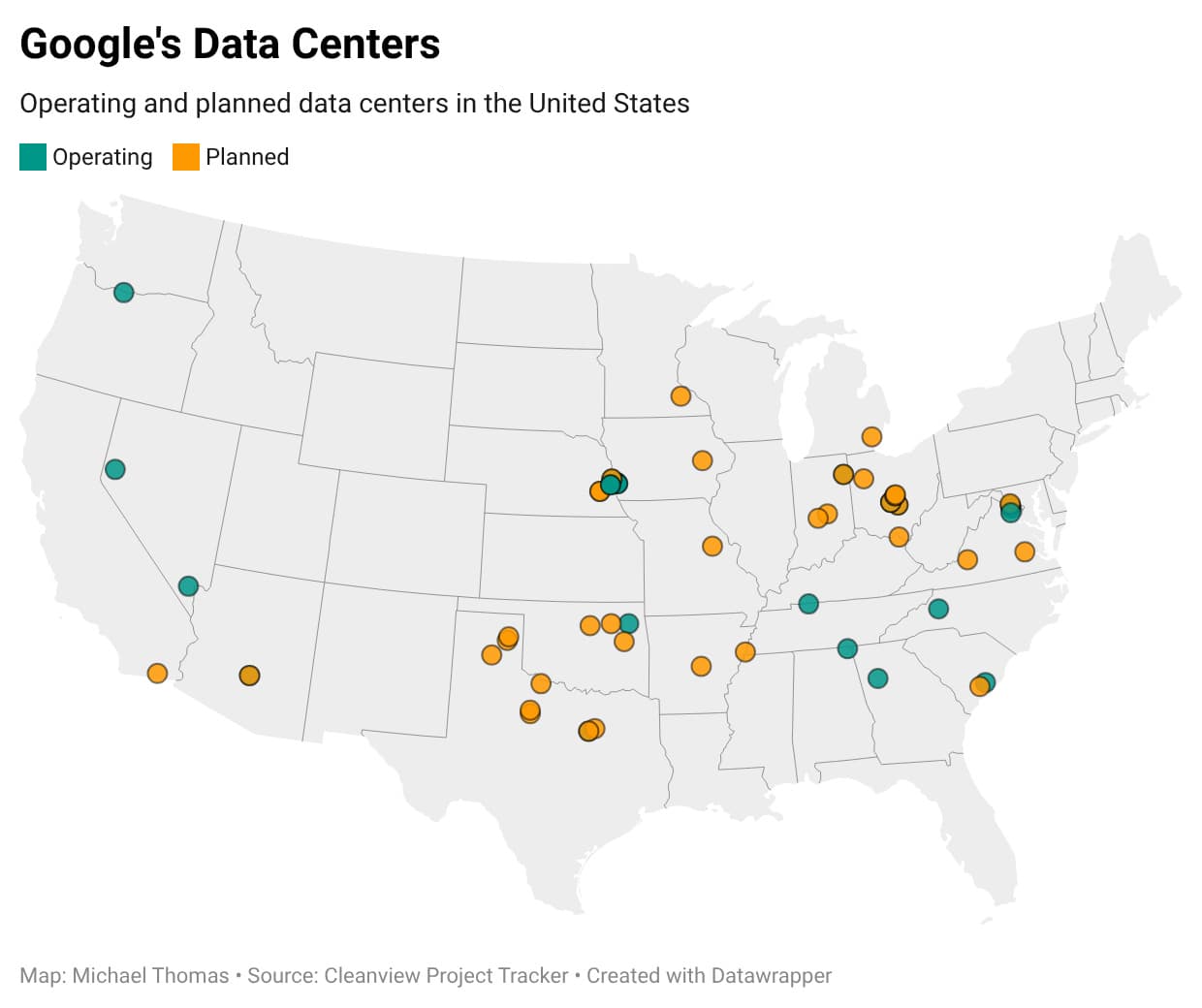
Meanwhile, **hyperscalers** like Amazon are investing heavily—recently announcing a **$12 billion data center expansion in Louisiana**—affirming confidence in these evolving architectures. Such investments signal strong market momentum and a collective shift toward **scalable, flexible, and open infrastructure** models.
Operational challenges persist, notably in **cloud-native environments**, where **latency management** and **observability** are critical. Addressing issues like ingress latency spikes and ensuring seamless multi-cloud orchestration remain priorities for vendors and operators alike.
## **Current Status and Future Outlook**
The convergence of **SDDC**, **open hardware**, **fiber optics**, and **cloud-native networking** is forging a **more cost-effective, flexible, and scalable ecosystem**. These advancements are enabling not only traditional data centers but also **edge deployments**, **5G networks**, and **AI-driven applications**.
**Key implications include:**
- A continued shift toward **software-centric, open architectures** that foster innovation and reduce costs.
- Increasing adoption of **fiber optics**, driven by economic pressures and capacity requirements.
- Emphasis on **observability, security automation**, and **AI-driven network management** to handle complex, distributed environments.
- Strategic investments by hyperscalers and telcos signaling confidence in these technological paths.
As these trends unfold, organizations that embrace open, intelligent, and high-performance architectures will be better equipped to meet the evolving demands of the digital age—ensuring resilience, agility, and competitive advantage.
---
**In summary**, the industry stands at a transformative juncture—where advancements in hardware economics, network virtualization, and open standards are shaping a future characterized by smarter, more connected infrastructures. This evolution promises to unlock unprecedented opportunities for innovation, efficiency, and scalability in the digital era.