Building stronger customer relationships through superior experience design remains an evolving imperative in today’s fast-paced digital ecosystem. The maturation of **Customer Experience Management (CXM)** is accelerating, driven by a potent convergence of **AI-powered real-time journey orchestration**, **enterprise observability**, **proactive accessibility enforcement**, and **privacy-first distributed architectures**. Recent developments amplify this transformation, underscoring the need for CX strategies that are not only **integrated, agile, and ethically grounded** but also **measurably tied to business outcomes**.
---
## AI-Enabled Real-Time Journey Orchestration: Cementing Its Role as a Business Imperative
The transition of **AI-powered, event-driven closed-loop journey orchestration** from promising innovation to indispensable business capability is now unmistakable. Leading platforms like **Medallia Experience ’26** and **Amplitude’s Agentic AI Analytics** have demonstrated how enterprises can:
- **Interpret live behavioral and contextual signals** to dynamically adapt customer journeys in real-time, maintaining relevance and reducing friction.
- Leverage **event-driven orchestration engines** that minimize customer effort by tailoring experiences instantaneously.
- Integrate siloed data into **unified, real-time customer profiles**, enabling a comprehensive 360-degree understanding.
- Move beyond vanity metrics towards **outcome-driven KPIs** such as churn reduction, increased customer lifetime value (LTV), and enhanced operational efficiency.
A notable case is **Majid Al Futtaim’s Lifestyle division**, which uses AI to decode streaming data and adjust experiences on the fly, achieving notable friction reduction and engagement uplift. This represents a clear shift where AI orchestration is no longer a technical curiosity but a **core competitive differentiator essential for sustainable growth**.
---
## Accessibility and Equity: Elevating Compliance to Strategic Differentiation
Accessibility is undergoing a profound evolution within CXM, transcending its traditional role as a compliance mandate to emerge as a **strategic brand differentiator**. This shift is fueled by:
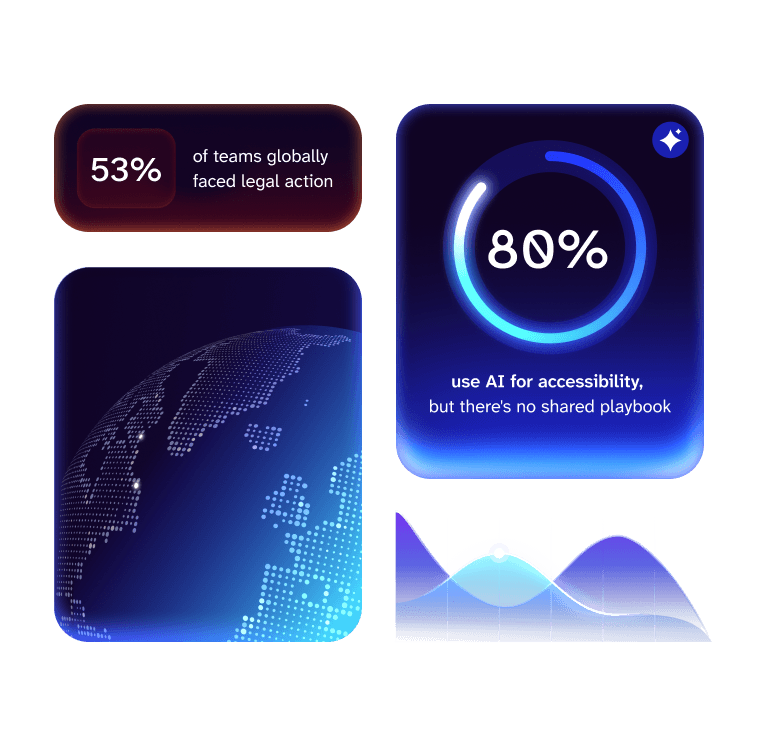
- Heightened enforcement by bodies like the **U.S. Department of Justice (DOJ)**, whose intensified website accessibility actions have heightened institutional focus.
- Leadership from organizations such as the **University of Alabama System** and the **Massachusetts Digital Accessibility and Equity Board**, which link accessibility directly to customer loyalty and brand reputation.
- Practical frameworks like **Oakland University’s ADA compliance initiatives**, which provide operational blueprints for embedding accessibility.
- The rise of **AI-powered accessibility tools** that enable:
- Automated, scalable audits to detect compliance gaps and usability issues.
- Prioritization of remediation based on severity and legal risk.
- Guided remediation workflows that accelerate fixes and sustain compliance.
Research such as *Harnessing AI to Detect and Enhance Website Accessibility Compliance* validates this AI-driven triage and remediation approach as best practice. Organizations adopting continuous AI monitoring integrated with performance and security metrics report **improved retention, reduced churn, and enhanced brand equity**, transforming accessibility into a **brand-defining advantage rather than a regulatory burden**.
---
## Enterprise Observability: The Operational Backbone Driving Consistent, Scalable CX
Enterprise observability has solidified its position as the **foundational operational capability** enabling reliable, scalable customer experiences. Recent advancements highlight this trend emphatically:
- **New Relic’s latest platform updates** integrate an AI agent focused on **site reliability engineering (SRE)**, bridging observability dashboards with direct business outcomes. This marks a pivotal evolution toward observability platforms that do more than monitor—they actively guide operational decisions.
- The insights from the event **"When Major Customers Quietly Disappear: Observability as an Early Indicator"** emphasize how hidden performance degradations can silently erode customer bases, making observability critical for early churn detection.
- Industry leaders like **Dynatrace**, reporting Q3 2025 revenues exceeding $515 million and over $1 billion in AWS Marketplace sales, confirm strong enterprise adoption driven by demand for AI-enhanced diagnostics and unified monitoring.
- **Datadog’s DASH 2026** showcased AI-driven observability and cloud-native security tools focused on proactive incident detection, root cause analysis, and prevention of CX disruptions.
- Analysts from **Intellectia.AI** recognize Datadog as a leader in Gartner’s digital experience monitoring quadrant, fueled by its comprehensive AI diagnostics and experimentation tooling.
Despite these advances, challenges persist in **integrating complex technology stacks, breaking organizational silos, and quantifying ROI**. Success hinges on **executive sponsorship, cross-functional collaboration, and explicit linkage of observability initiatives to business KPIs**. Mature observability capabilities empower teams to **detect and remediate issues proactively**, enhancing operational resilience and deepening customer trust.
---
## Generative AI and Agentic Analytics: Driving Autonomous Personalization with Ethical Governance
The proliferation of **generative AI and agentic analytics** within CXM is enabling unprecedented autonomous, real-time personalization and decision-making. However, this rapid innovation demands robust ethical governance:
- Building on Majid Al Futtaim’s success with AI-driven journey orchestration, independent research from **KPMG, Deloitte, and CX Today** confirms AI’s ability to automate complex experience adjustments that boost loyalty and reduce churn.
- Industry voices like **CSG** caution users to critically evaluate closed-loop orchestration claims, avoiding overhyped marketing narratives.
- The recent **Springer Nature study on AI-based user interfaces** underscores the necessity of **transparency, predictability, and user control** for adoption, leading to the introduction of the **AI Responsibility Framework for UX Researchers**, which codifies ethical AI integration principles.
- Platforms such as **Amplitude’s Agentic AI Analytics** facilitate autonomous decision-making while accelerating innovation and minimizing manual overhead.
The convergence of autonomous AI personalization with rigorous ethical frameworks ensures CX management respects **transparency, accountability, fairness, and user trust**, which are essential for sustainable AI deployment.
---
## Privacy-First Distributed Architectures: Enabling Compliance and Personalization in a Cookie-Less Era
The demise of third-party cookies and escalating privacy regulations have thrust **privacy-first distributed architectures** into the spotlight as critical enablers of compliant personalization:
- Adoption of **edge computing** and **federated data models** enables organizations to deliver precise, privacy-respecting personalization at scale.
- Engineering teams navigate a complex balance of optimizing performance, ensuring privacy compliance, and maintaining personalization efficacy—requiring advanced infrastructure and cross-disciplinary expertise.
- The imperative for **close collaboration among engineering, data science, legal, compliance, and marketing** teams has never been greater to deliver seamless, privacy-compliant CX.
This integrated approach elevates privacy-conscious personalization from a niche concern to a **core strategic priority** within CXM.
---
## Deep Interaction Analytics and Experimentation Tooling: Foundations for Continuous CX Optimization
Granular **interaction analytics** have become essential for continuous CX refinement:
- Detailed insights into customer journeys reveal friction points and root causes, enabling targeted interventions.
- These insights underpin both **real-time personalization** and **strategic CX optimization**, optimizing resource allocation.
- Investment in rigorous **experimentation frameworks** fosters a culture of data-driven innovation, allowing continuous validation and iterative refinement.
As noted in **Enghouse Interactive’s Digital CX Transformation Trends for 2026**, prioritizing experimentation tooling is vital for organizations seeking to sustain competitive agility.
---
## Frontend Performance and Core Web Vitals: The New Frontier in CX Investment
A significant recent development is the elevation of **frontend performance and Core Web Vitals** as foundational pillars of superior CX, corroborated by new case studies and research:
- The **Splunk migration to Adobe EDS**—completed in 80 days with a 100% Core Web Vitals score—illustrates the transformative impact of prioritizing frontend performance on user experience, SEO rankings, and brand perception.
- AI-driven continuous monitoring tools automate performance audits, detect regressions early, and provide actionable optimization recommendations, enabling proactive management of digital touchpoints.
- Prioritizing frontend performance demonstrably reduces bounce rates, increases engagement, and strengthens brand trust in competitive digital markets.
---
## Practical Investment Priorities for CXM Leaders
To harness these converging trends effectively, CXM leaders should:
- Ensure **compliance with Core Web Vitals and technical SEO** through AI-driven continuous monitoring and rapid remediation, as exemplified by Splunk’s successful migration.
- Scale **accessibility and equity initiatives** with AI-assisted audits and automated remediation to meet intensifying regulatory demands.
- Deploy **AI-powered, event-driven journey orchestration platforms** that tie personalization directly to measurable business KPIs.
- Expand **enterprise observability and experimentation tooling**, backed by strong executive sponsorship, to enhance operational reliability and foster innovation.
- Implement comprehensive **AI readiness programs** encompassing governance, workforce enablement, and ethical frameworks such as the AI Responsibility Framework.
- Adopt **outcome-driven KPIs** emphasizing revenue impact, retention, and operational efficiency.
- Strengthen **cross-functional collaboration** among engineering, data science, legal, compliance, and marketing teams to deliver privacy-first, performant CX strategies.
---
## Outlook: Toward an Inclusive, Agile, and Ethically Governed CXM Future
The trajectory of CXM maturity is unequivocal: future leaders will be those who seamlessly integrate **frontend performance excellence, mature observability, autonomous AI orchestration, and strategic accessibility** within their CX playbooks.
- Empirical evidence confirms that investments in observability and AI orchestration **reduce churn, increase revenue, and accelerate innovation**.
- Organizations that unify data insights, foster cross-functional collaboration, and embed rigorous governance frameworks secure **sustained competitive advantage**.
- The widespread adoption of AI personalization necessitates vigilant attention to **transparency, ethical governance, and vendor scrutiny** to mitigate risks and uphold customer trust.
- Accessibility and equity have transcended compliance checklists to become vital brand differentiators, propelled by regulatory momentum and elevated customer expectations.
- Sustainable, AI-powered CXM demands a harmonious blend of **people, processes, and technology**, grounded in ethical design principles to ensure enduring trust and brand integrity.
Organizations embracing these integrated capabilities as strategic imperatives will build **stronger, more resilient customer relationships**, positioning themselves decisively amid ongoing digital transformation.
---
In summary, CXM maturity is now defined by a comprehensive suite of capabilities:
- **Real-time AI-enabled journey orchestration linked to outcome-driven KPIs**
- **Proactive accessibility enforcement powered by AI**
- **Enterprise observability as the critical operational foundation**
- **Ethical, transparent AI governance frameworks**
- **Privacy-first distributed architectures integrating edge and federated models**
- **Deep interaction analytics coupled with rigorous experimentation tooling**
- **Frontend performance optimization through continuous Core Web Vitals monitoring**
This holistic approach empowers organizations to deliver experiences that are **personalized, performant, inclusive, trustworthy, and business-impactful**—ensuring sustained success in an increasingly dynamic digital economy.