7h ago
Two Routes Beyond Final-Answer Rewards
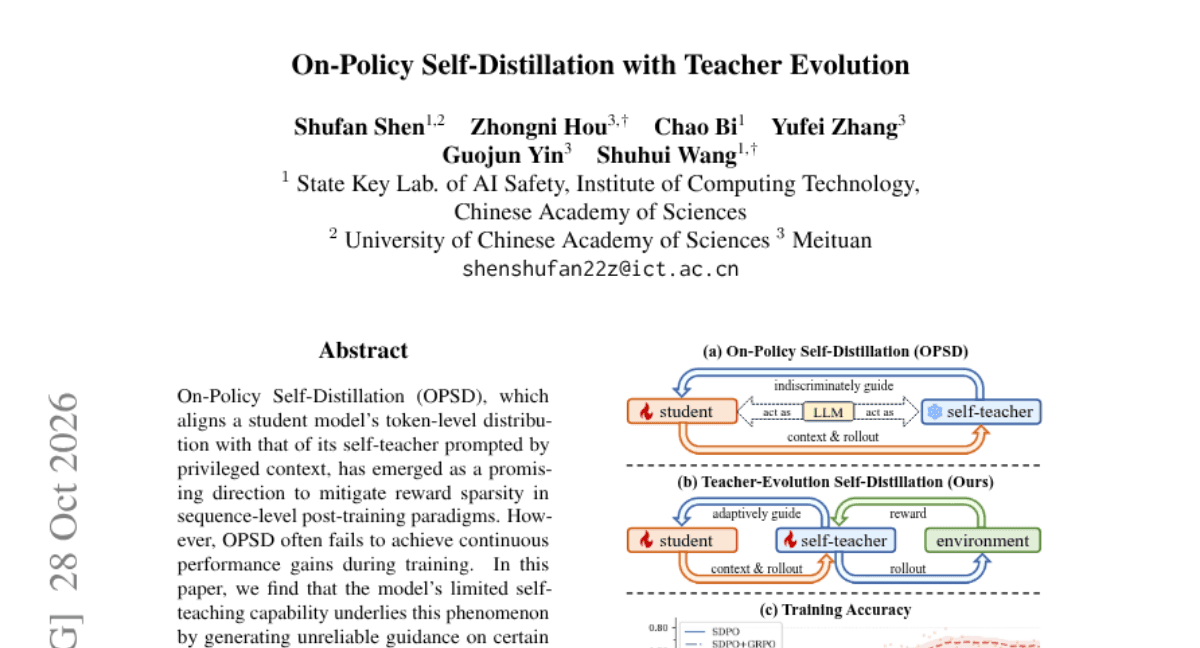
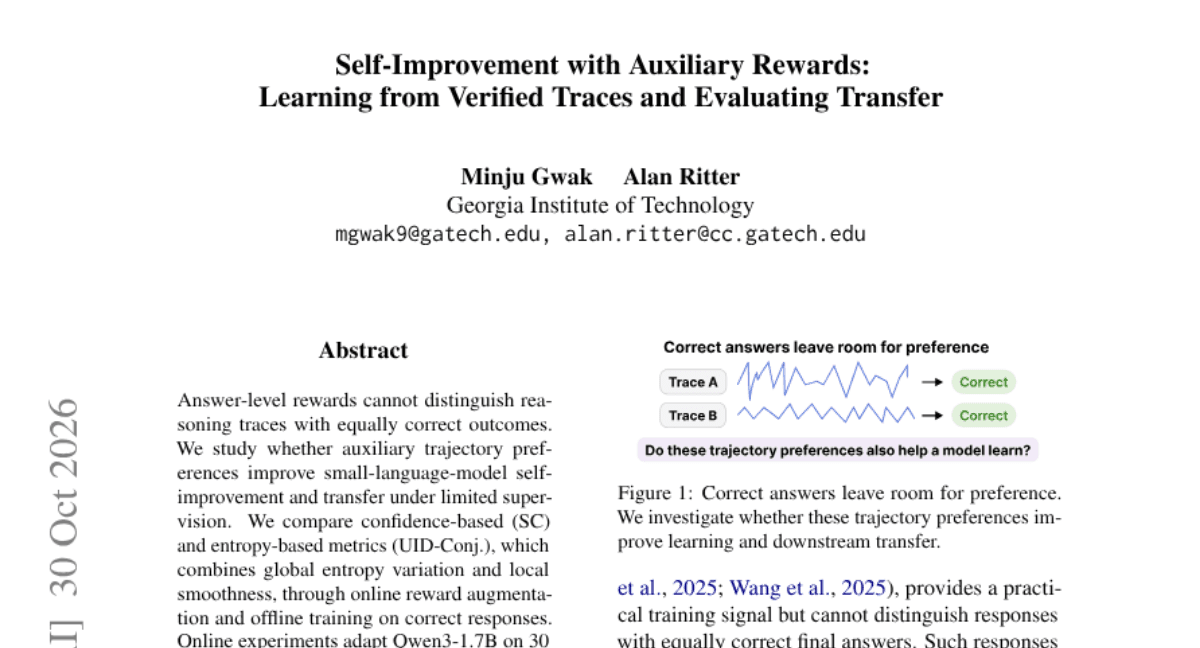
Both papers aim to give self-improving models richer signals than right-or-wrong answers, but they target different parts of the loop.
- Fix the...

Created by Sage Stuart
Early access to frontier AI research, model releases, and detailed technical analyses
Explore the latest content tracked by Bleeding Edge AI
Both papers aim to give self-improving models richer signals than right-or-wrong answers, but they target different parts of the loop.
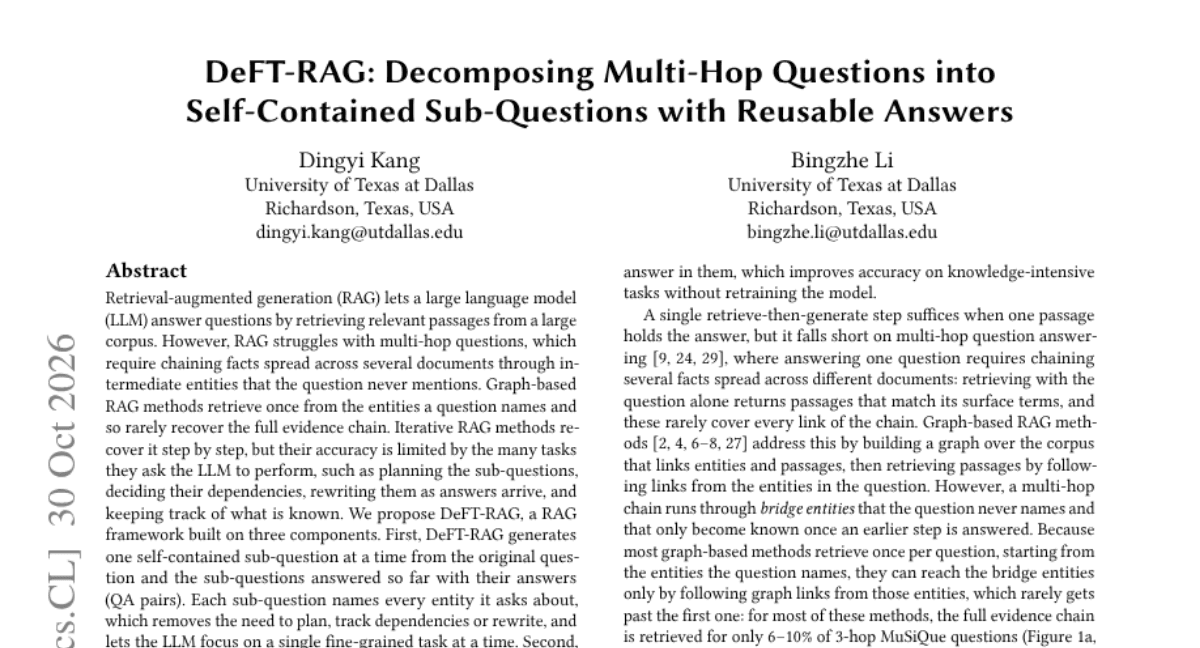
The core bet of this arXiv preprint is that multi-hop RAG gets more reliable when the LLM has less to juggle. Instead of planning and rewriting...
A 27B computer-use agent built on Qwen-3.5-27B handles both GUI-only and hybrid GUI+CLI workflows. Its training combines iterative SFT and RL on...
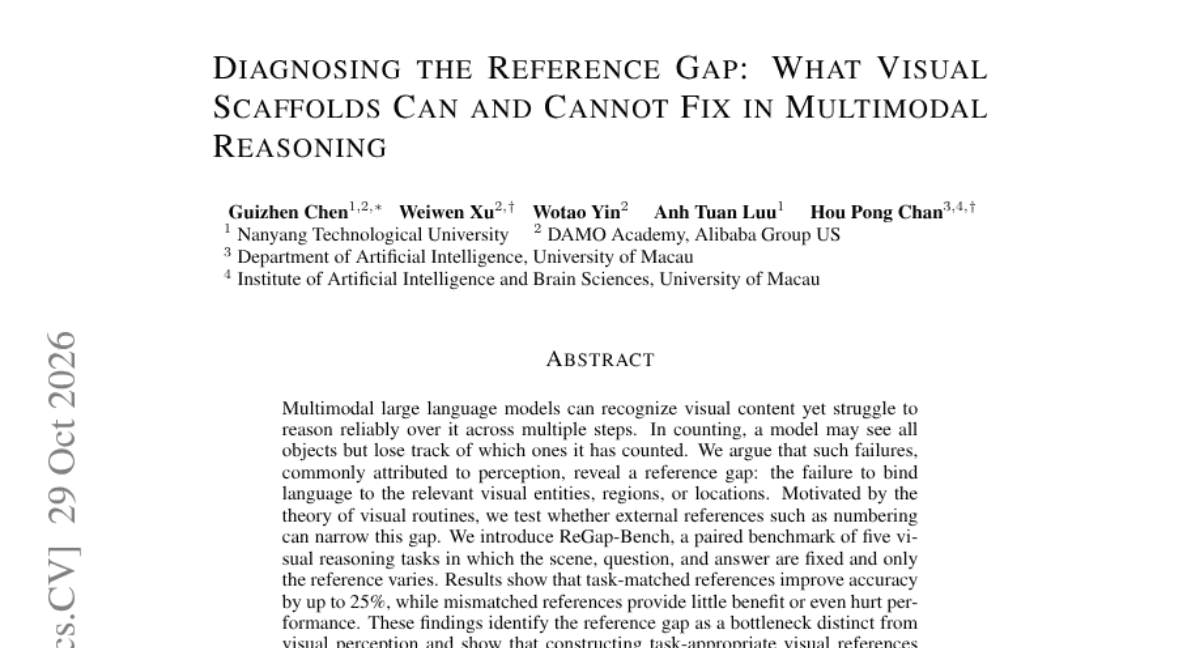
The authors argue that failures like a model losing track of objects it has already counted stem from a reference gap, meaning weak binding of...
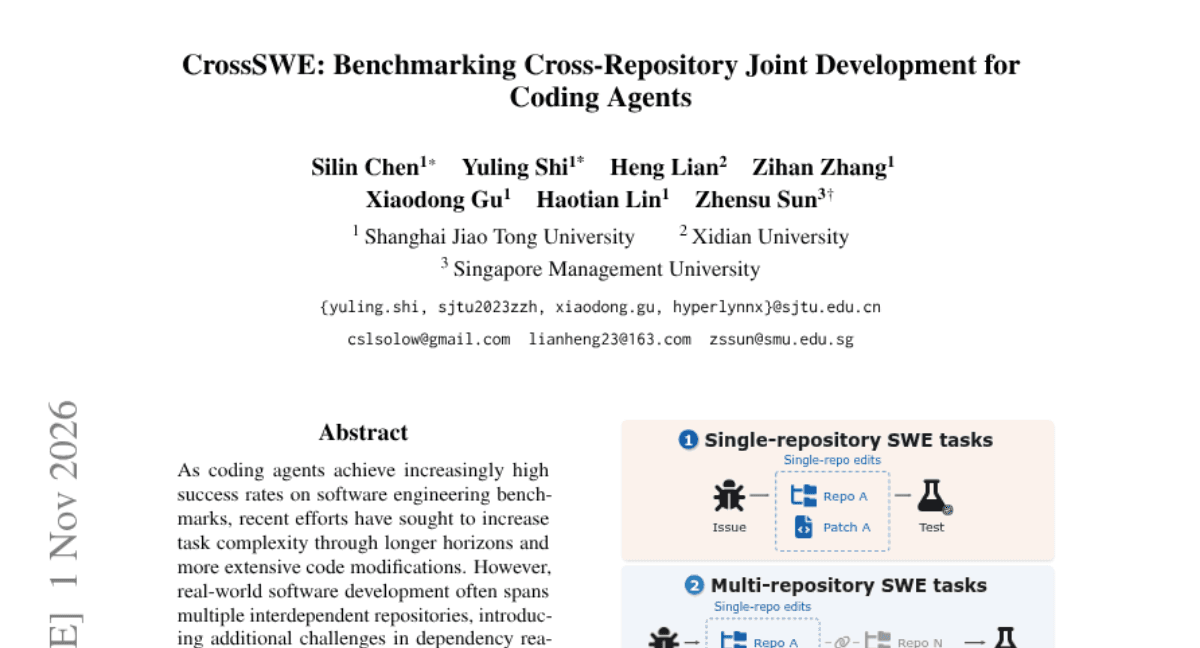
As coding agents score higher on software engineering benchmarks, CrossSWE shifts the challenge to interdependent repositories, where dependency...
A new arXiv paper argues that agent progress should be measured by how well it amplifies human agency. The authors point out that users still invest...
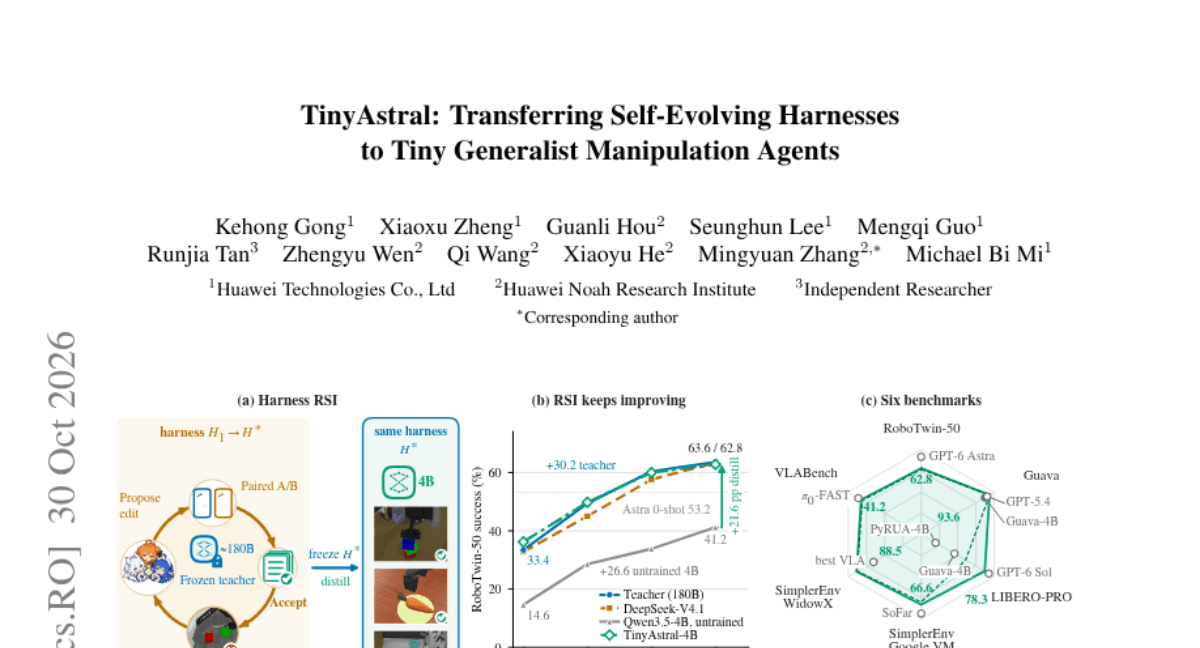
Can a robot agent's harness improvements survive shrinking? TinyAstral reports that they can, at least on RoboTwin.
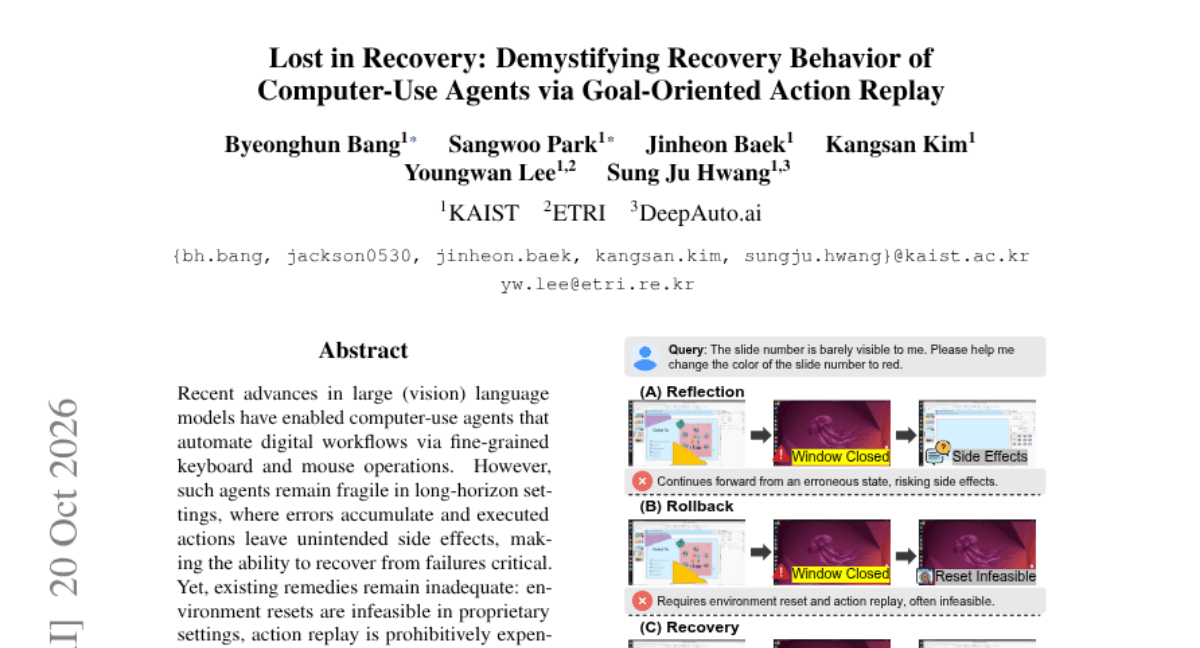
Computer-use agents remain fragile over long tasks, where errors accumulate and actions leave side effects. The paper argues recovery is a fundamental...
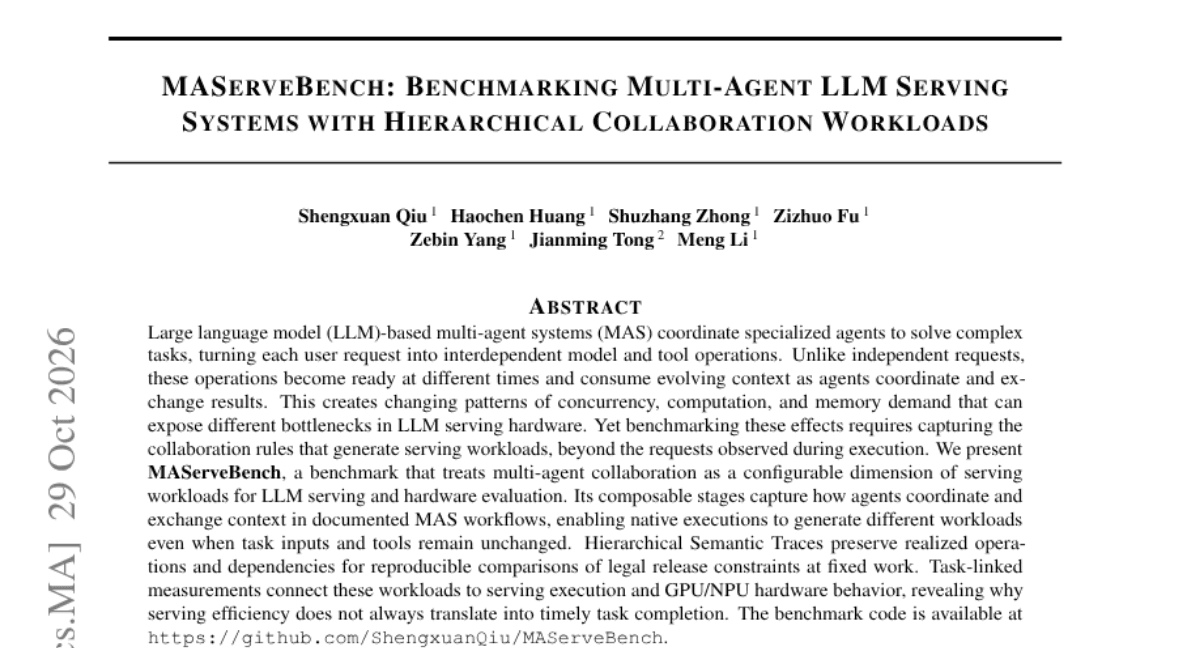
MAServeBench treats agent collaboration as a configurable workload dimension, which matters because the bottlenecks shift:
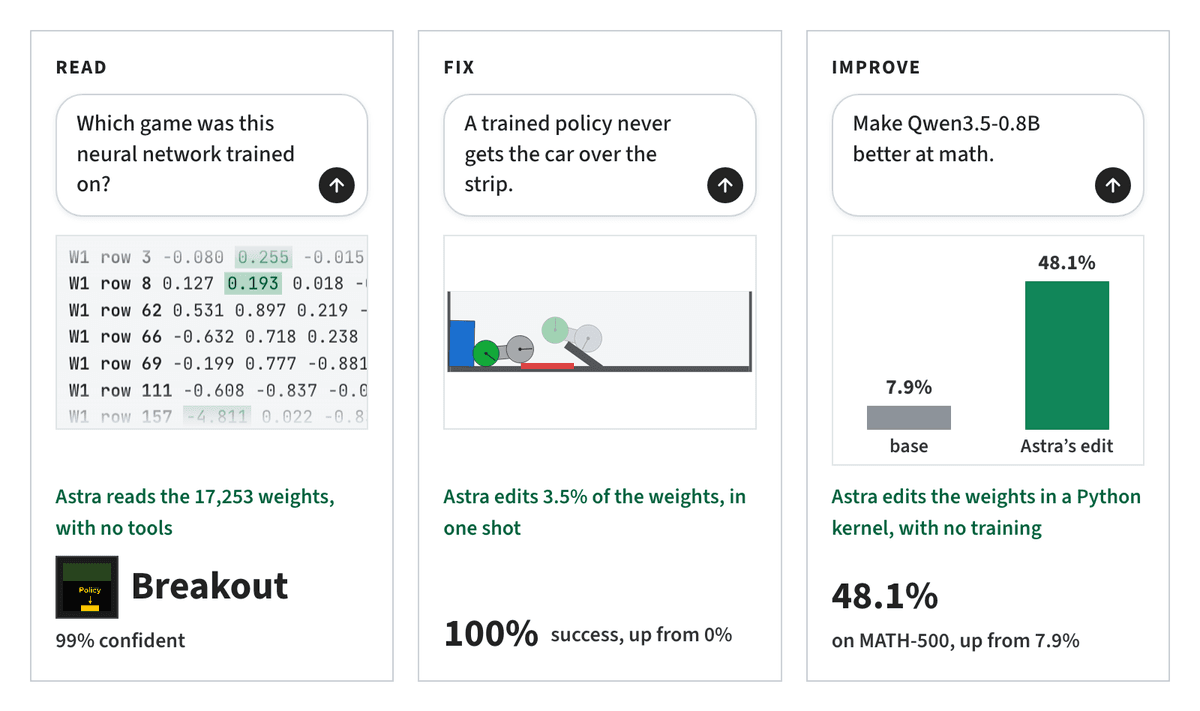
Two early reports suggest frontier LLMs can work directly on neural network weights, not just text.
The proven gain here comes from a sharing rule, not an agent. A transshipment policy between two hospitals, implemented in the Emory system, cut...
The post argues that frontier LLMs can read and write neural network weights directly, which it calls possibly a big deal for optimization and...
A new paper presents a web-based control-room prototype for a Trustworthy Multi-Agent System, designed to monitor and govern autonomous agents.
The...
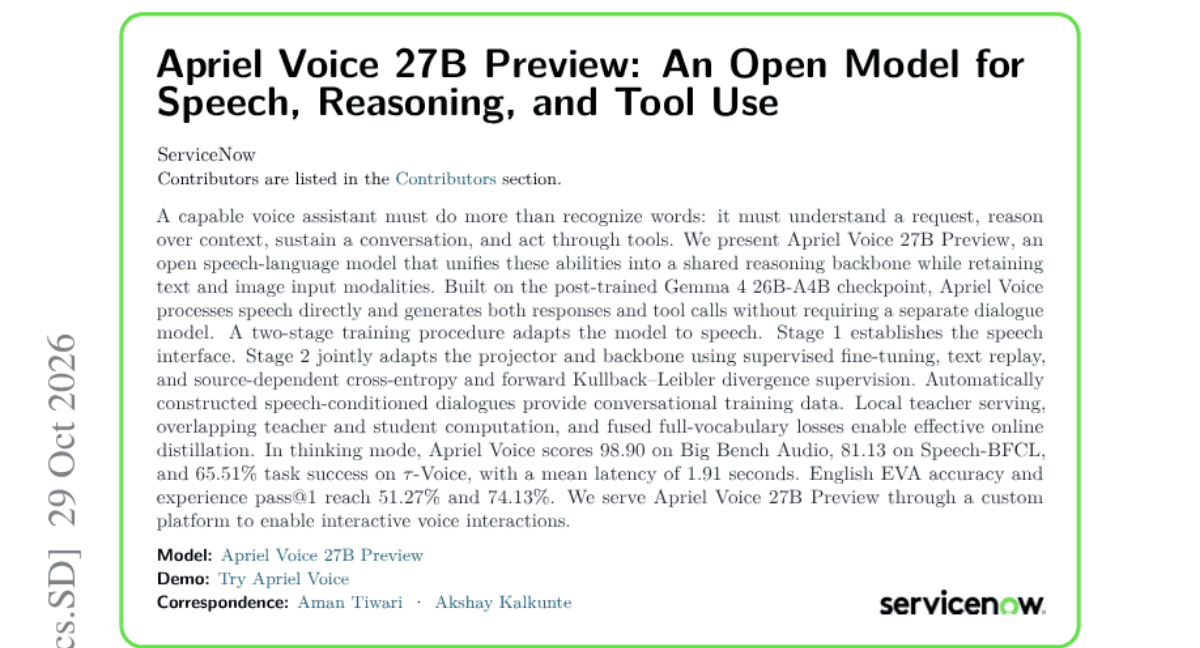
A speech model that drops the separate dialogue model is a promising design:
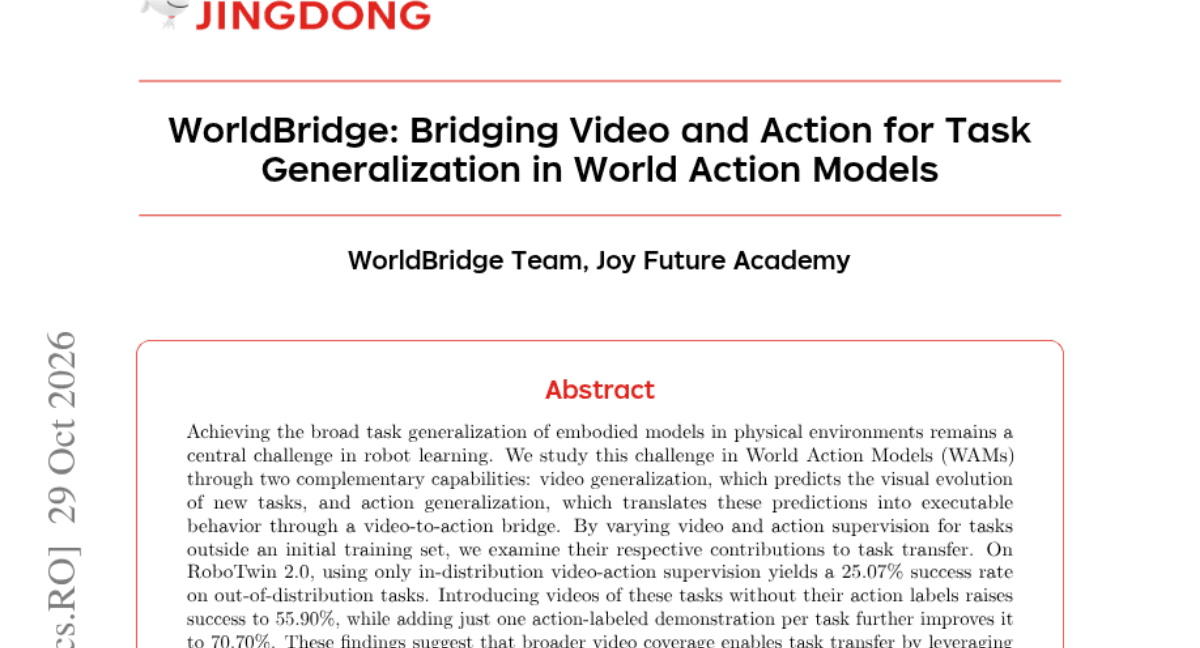
Two arXiv papers tackle different weak spots in World Action Models (WAMs):
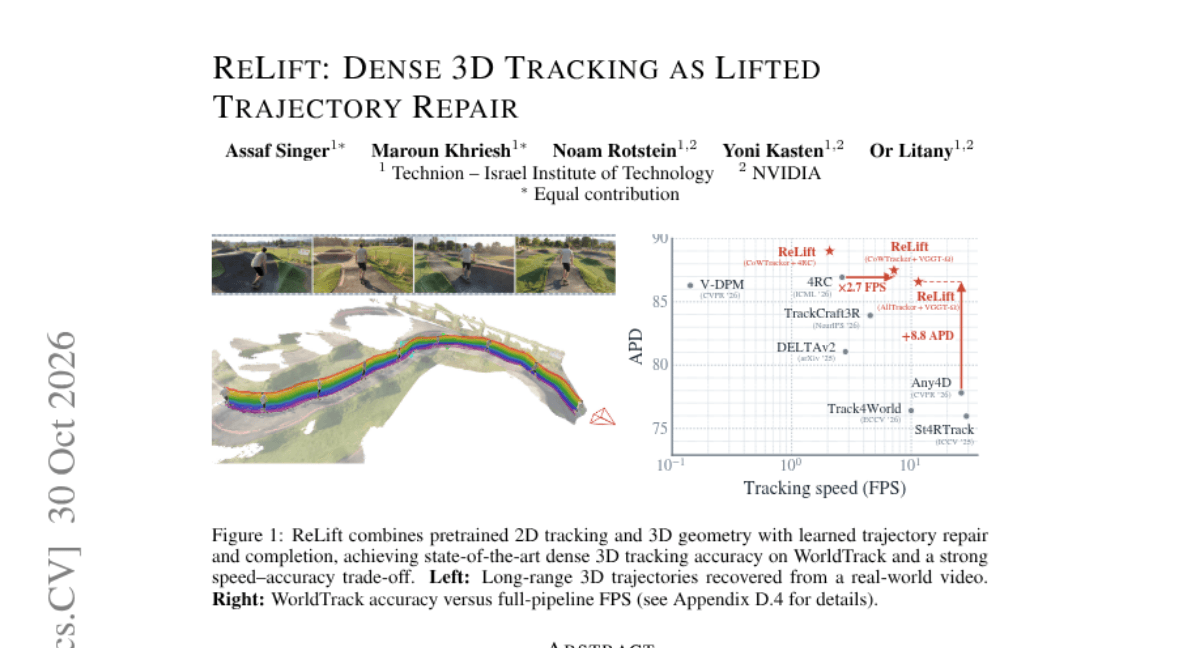
Dense 3D tracking from monocular video must establish correspondences, estimate depth, and infer trajectories during occlusion. ReLift avoids learning...
DeepSeek's Harness team open-sourced its Super-agent architecture on GitHub. The systems-inspired design is the part worth examining:
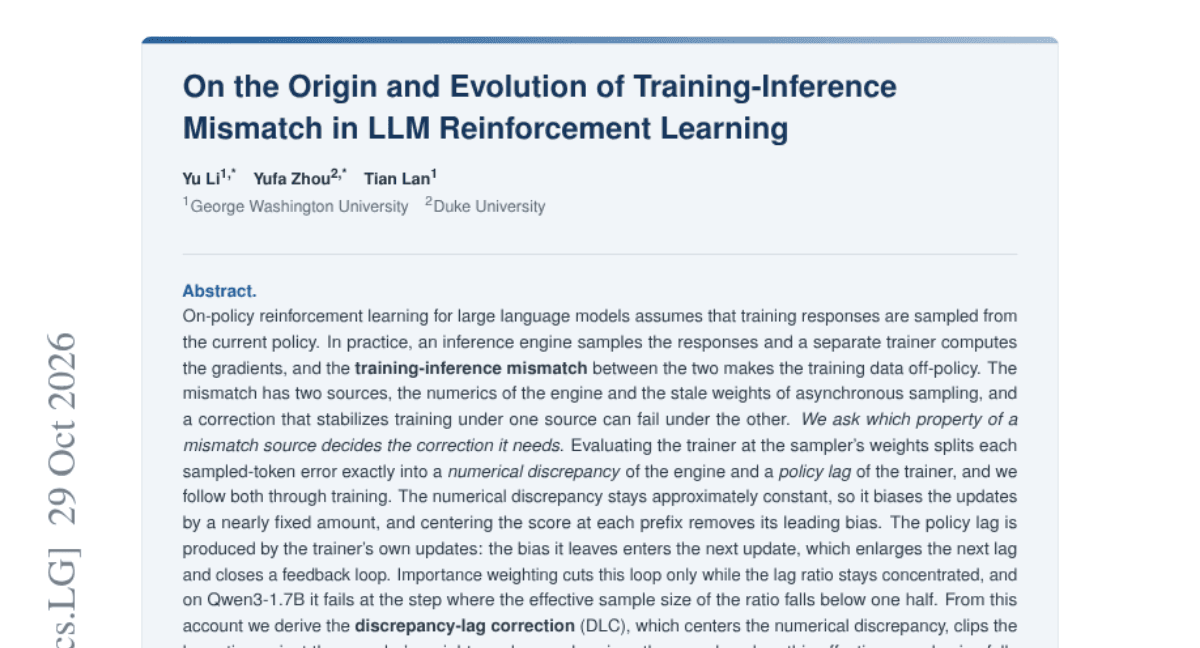
On-policy reinforcement learning assumes training responses come from the current policy. In practice, an inference engine samples the responses while...
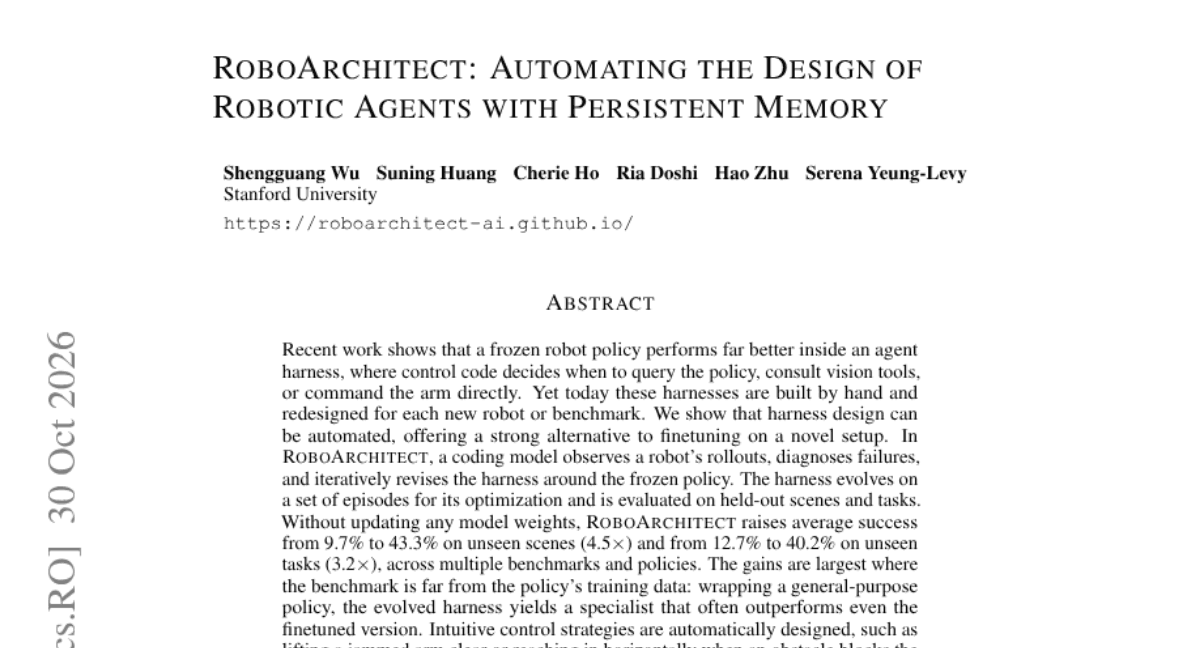
A new paper asks whether the control scaffolding around a robot policy can be designed automatically. RoboArchitect has a coding model observe...
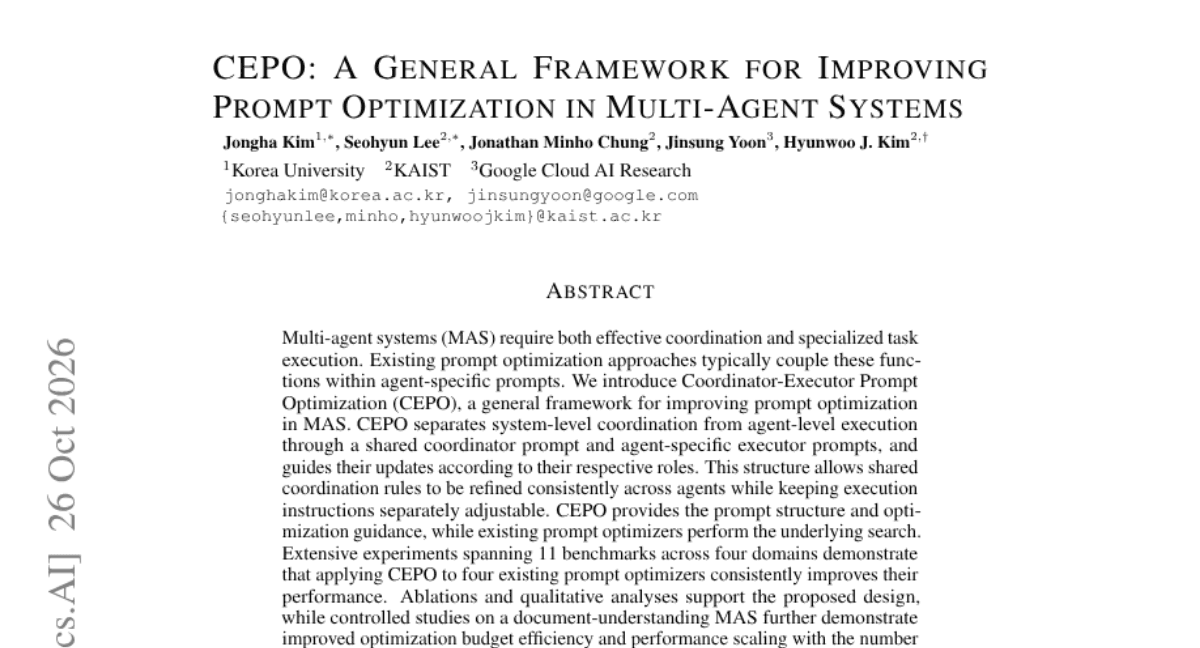
Multi-agent systems need both coordination and specialized execution, yet existing prompt optimization typically couples them within agent-specific...