May 6, 2026
AI Research Frontier · May 6 Daily Digest
Conference Developments
- 🔥 MLRC 2026 as Official NeurIPS Track: MLRC 2026 accepted reproducibility papers will be presented in person at NeurIPS...

Created by Guillermo Reyes
Peer‑reviewed AI papers, conference proceedings, and deep learning applications in healthcare, robotics, science
Explore the latest content tracked by AI Research Frontier
Rocket revolutionizes DL hyperparameter optimization:
Scaling laws enable optimal data amount and language model size selection, yet token impacts on this remain underexplored—Meta's new work on compute-optimal tokenization addresses this gap.
Emerging Nature-backed DL innovations advance medical diagnostics:
Emerging ICML robotics push toward practical AI:
Different language models exhibit convergent evolution, independently learning similar algorithms for 9-digit addition across multiple tokens—each output position computes a sum modulo 1000 to handle carries.
UniVidX generates buzz as a unified multimodal framework for versatile video generation via diffusion priors.
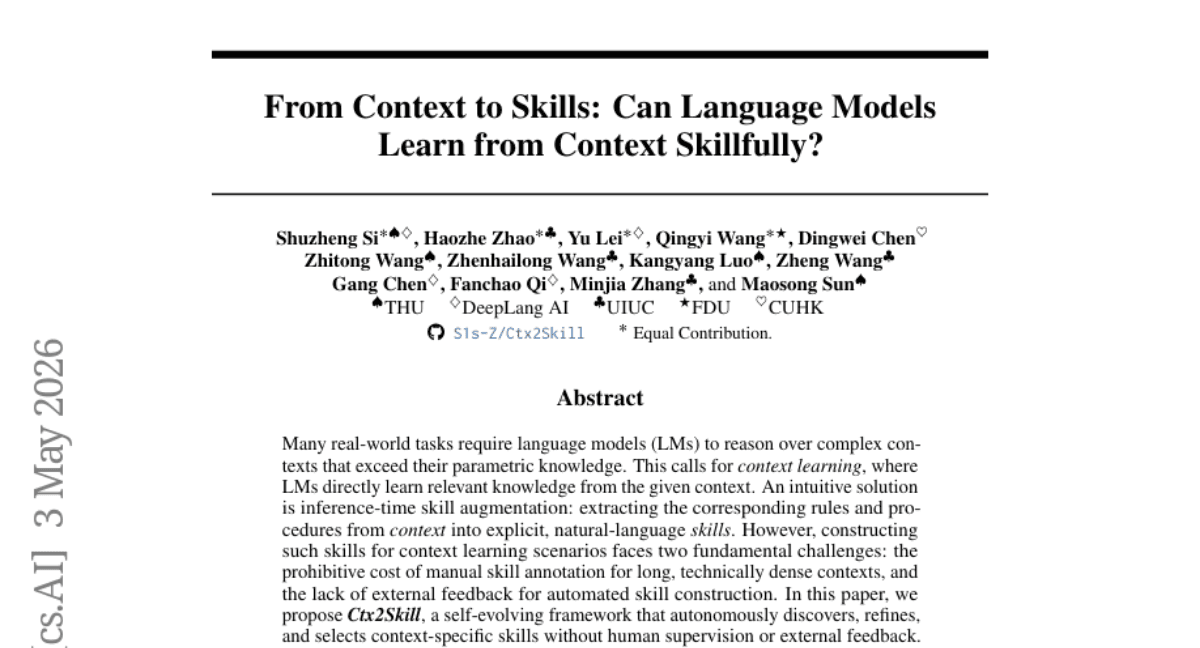
New paper probes whether language models can acquire skills skillfully purely from context. Join the discussion on this key question for LM limits.
TSP revolutionizes LLM parallelism by folding tensor and sequence strategies onto a single device axis, sharding weights and activations to slash...
MLRC 2026 marks a milestone: accepted reproducibility papers gain official in-person presentations at NeurIPS 2026 in Sydney, Australia (Dec 6–13), alongside main conference papers. This boosts rigor in ML research.
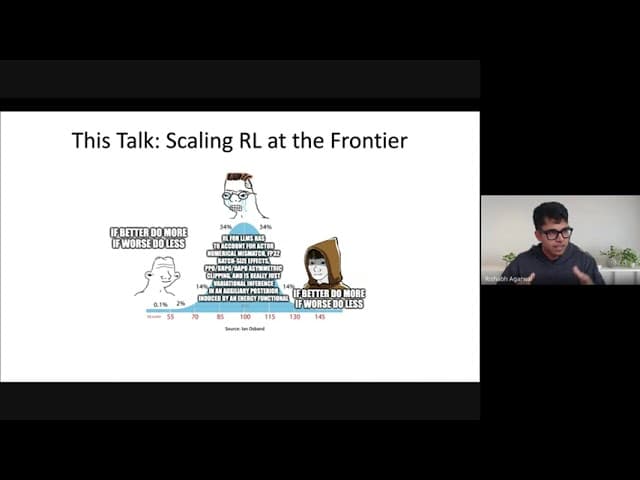
Key trend in RL for LLM agents:
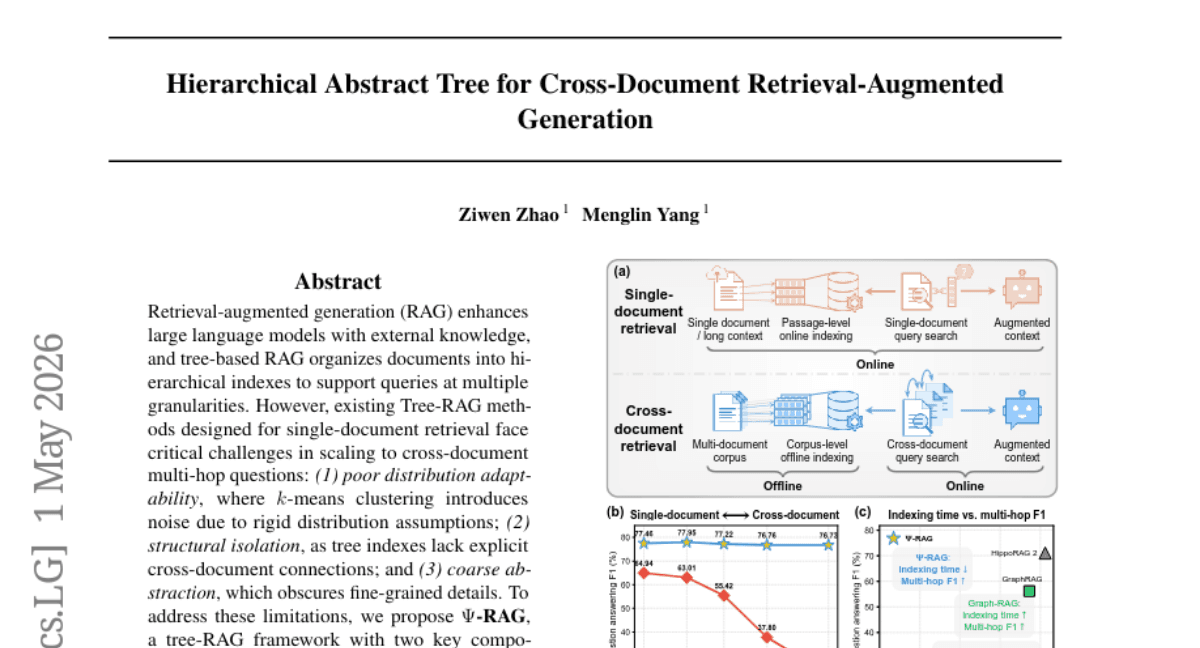
New paper introduces Hierarchical Abstract Tree for cross-document Retrieval-Augmented Generation, enabling tree-structured retrieval to enhance multi-doc generation. Join the discussion.
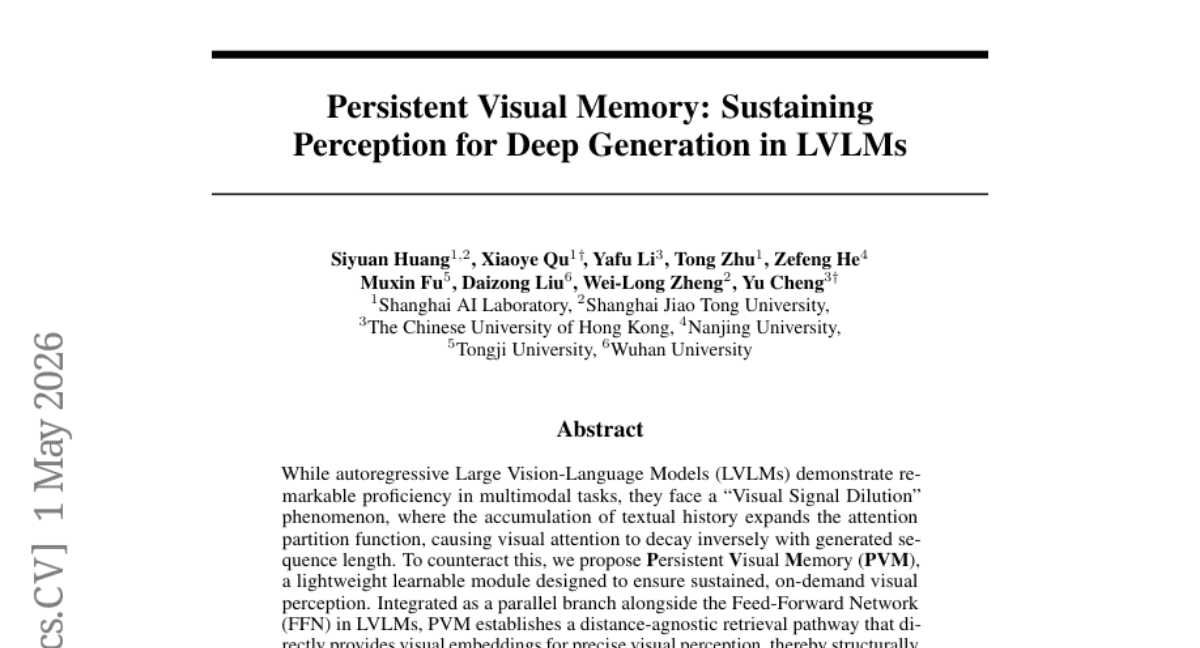
New paper introduces Persistent Visual Memory to sustain perception for deep generation in LVLMs, boosting long-generation stability.
New paper proposes motion-aware caching to enable efficient autoregressive video generation. Join the discussion on this breakthrough.
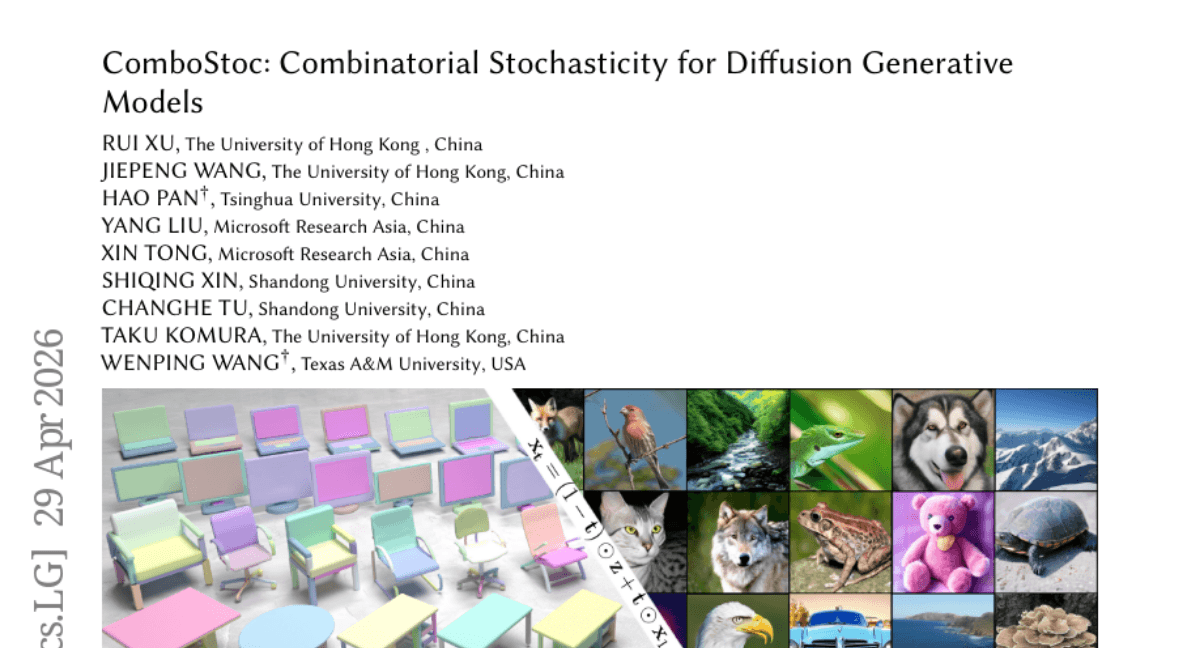
ComboStoc proposes combinatorial stochasticity for diffusion generative models. Join the discussion on this new paper page.
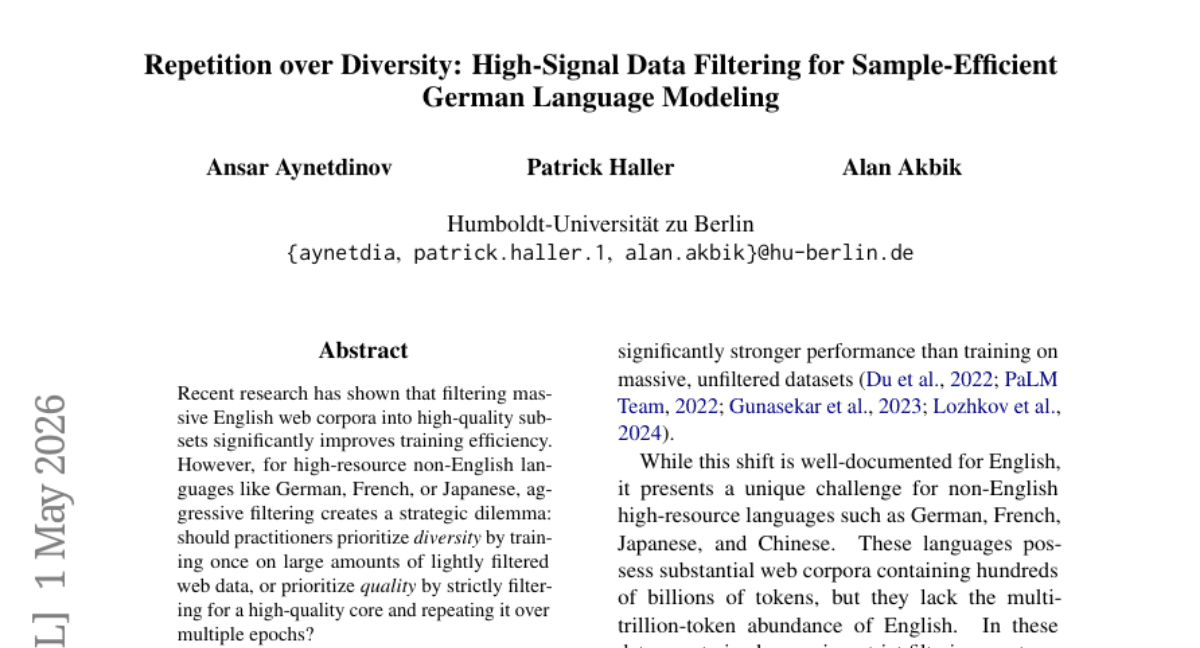
New paper shows repetition over diversity in high-signal data filtering drives sample-efficient German language modeling.
Trustworthy AI grapples with invariance conflicts, but causality emerges as the key solution. ML models excel in NLP, CV, and decision-making at scale, yet robustness demands causal insights.
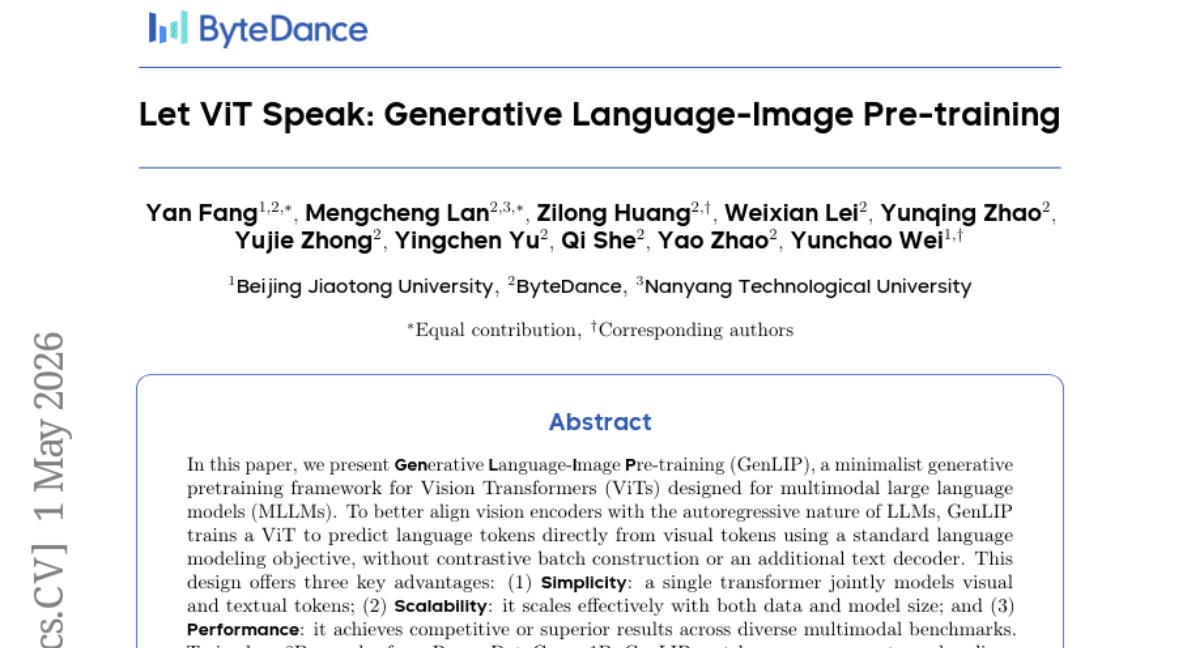
Let ViT Speak unveils generative language-image pre-training for Vision Transformers, empowering ViTs with multimodal generation. Join the discussion.
Key trend signals in deep learning and LLMs for diagnostics: