OpenClaw’s journey through 2027 continues to exemplify the robust evolution of an open-source AI agent platform from an innovative prototype to a **production-grade, enterprise-ready cornerstone** for intelligent agent orchestration. Building on its foundational architectural strengths, deployment versatility, and security rigor, recent developments have deepened its operational maturity, enhanced security defenses against emerging threat vectors, and refined governance and cost-control mechanisms—all while maintaining an engineering philosophy focused on maintainability and scalable production readiness.
---
## Strengthened Architecture for Production-Grade Stability and Scalability
At the core of OpenClaw’s platform is the **agent-as-resource paradigm**, which treats AI agents as dynamically managed computational entities. In 2027, this paradigm has become significantly hardened through key architectural advancements:
- The **OpenClaw Gateway daemon**, the critical orchestration backbone, now features **enhanced concurrency controls** and **advanced failover mechanisms**. These improvements ensure **high availability under heavy load and partial infrastructure failures**, minimizing latency spikes and sustaining throughput—vital for meeting stringent enterprise SLAs.
- **Dynamic routing algorithms** have been further optimized to orchestrate complex multi-agent workflows, balancing throughput, latency, and **strict cost controls**. This optimization mitigates resource contention, reduces unnecessary API calls, and improves efficiency across heterogeneous deployment environments.
- The **LanceDB memory plugin** has transitioned fully into production-grade status, introducing:
- **Multi-scope memory isolation**, preventing data leakage across user profiles and domains, safeguarding privacy and context integrity.
- **Noise filtering mechanisms** that prune irrelevant or spurious data, improving decision-making accuracy while curbing unnecessary API expenses.
- **Hot-plug memory modules** enable seamless upgrades and module replacements without downtime, facilitating continuous service availability in mission-critical scenarios.
Together, these refinements enable **stable, low-latency, and observable AI agent operations** that scale gracefully across cloud-native, on-premises, and Kubernetes infrastructures.
---
## Expanded Deployment Ecosystem: Enabling Diverse and Hybrid Production Scenarios
OpenClaw’s deployment ecosystem has grown more diverse and enterprise-friendly, lowering barriers and enhancing configuration flexibility:
- **Cloud Quick-Deploy remains foundational**, with Alibaba Cloud and Tencent Cloud providing streamlined one-click installation workflows supported by comprehensive tutorials such as:
- *“2026年阿里云新手用户极速部署OpenClaw(Clawdbot)喂饭级教程”*
- *“一文带你玩转OpenClaw,提升工作生产力 - CSDN博客”*
These guides emphasize automation, monitoring, and collaboration integrations (e.g., WeChat), enabling rapid scaling and operational oversight.
- Alternative gateway options like **Starlink 4SAPI** have matured, offering deployment flexibility and throughput enhancements. However, as documented in *“OpenClaw 架构进阶”*, these require nuanced management of session consistency, multi-agent coordination, and fallback security controls.
- Multi-IM and Telegram bot integrations on Tencent Cloud have expanded, allowing enterprises to deploy **intelligent assistants across multiple messaging platforms** with secure command execution, firewall configurations, and command whitelisting—mitigating security risks effectively.
- A notable innovation is the **hybrid private-cloud deployment model** that combines **Ollama-based local LLM inference on Windows** with **Alibaba Cloud’s OpenClaw orchestration**. Detailed in *“Windows+Ollama本地私有化+阿里云OpenClaw云端搭建(保姆级教程)”*, this approach supports extended context windows (up to 32,768 tokens) using Qwen series models—addressing enterprise demands for **data privacy, low latency, and large-context reasoning**.
- The newly surfaced tutorial *“OpenClaw部署踩坑实录-AlmaLinux9 原创 - CSDN博客”* provides practical, real-world insights into deployment pitfalls on AlmaLinux9, including dependency conflicts and system hardening best practices. This guide is an invaluable resource helping enterprises avoid costly trial-and-error cycles and ensuring **stable, production-grade installations**.
Collectively, these deployment expansions broaden OpenClaw’s applicability from rapid cloud launches to **sophisticated hybrid architectures** that balance privacy, scalability, and cost efficiency.
---
## Heightened Security Posture: From Incident Response to Proactive Defense Against Emerging Threats
OpenClaw’s security evolution is a case study in adapting to an increasingly complex threat landscape within decentralized AI ecosystems:
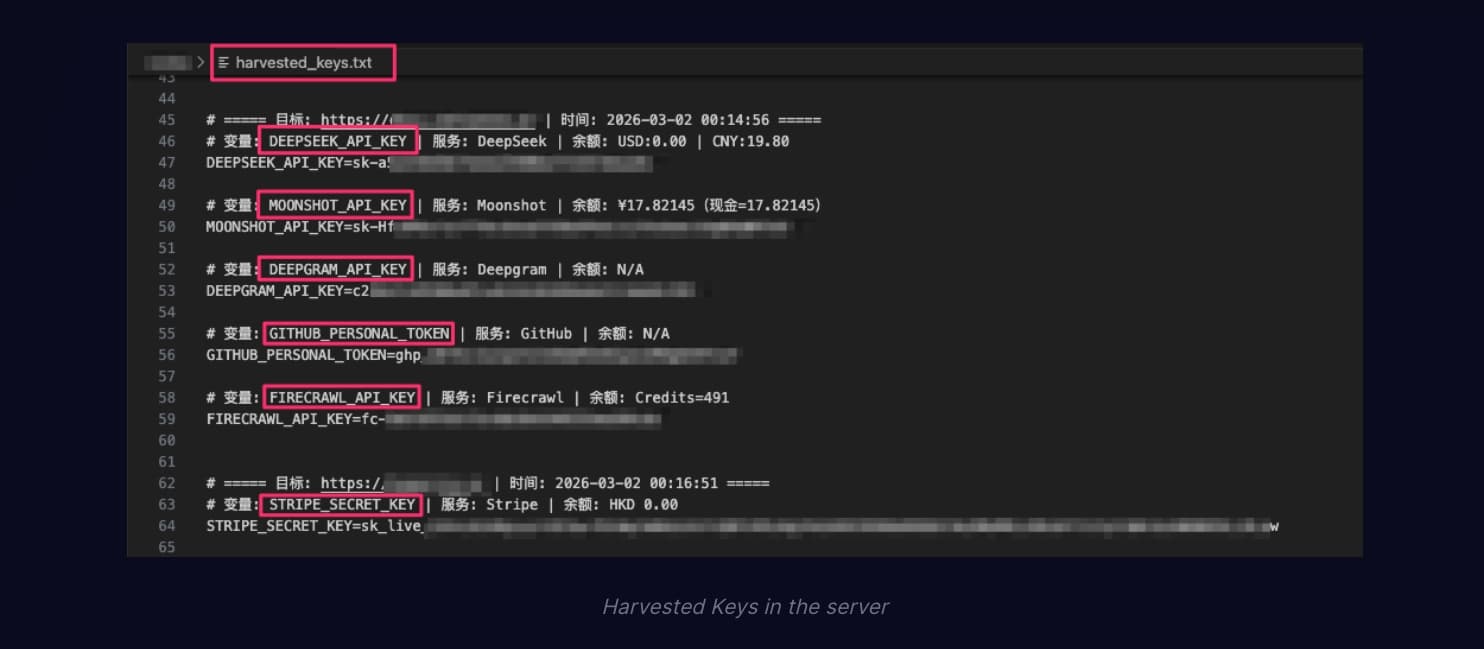
- The devastating **mid-2026 supply-chain incident**, which revealed over 341 vulnerabilities via malicious marketplace skills, triggered far-reaching reforms including:
- Strict **credential and API key isolation** enforcing least privilege to curb token misuse.
- Hardened **sandboxed runtimes** with behavioral anomaly detection for rapid quarantine of compromised components.
- A **multi-stage skill vetting pipeline** employing static/dynamic code analysis and community reputation scoring.
- The **critical CVE-2026 remote code execution flaw**, discovered early 2027, allowed token theft through crafted URLs bypassing API validation. OpenClaw responded with:
- Immediate patches to URL parsing and enhanced runtime token encryption/isolation.
- Ecosystem-wide advisories and deployment of enhanced monitoring for anomalous token usage.
- New revelations from recent reports such as *“Your personal OpenClaw agent may also be taking orders from malicious websites”* highlight a **critical new class of web-originated attacks**. This flaw permitted malicious websites to connect to locally running OpenClaw agents and brute-force password attempts, raising significant concerns about browser-based attack surfaces.
- Similarly, the article *“Destroyed servers and DoS attacks: What can happen when OpenClaw AI agents interact”* exposes risks of **DoS attacks and cascading failures** originating from AI agent interactions themselves. These emergent AI-specific threat vectors underscore the need for robust interaction safeguards, rate limiting, and resilient failover strategies.
- In response, OpenClaw has accelerated adoption of **human-in-the-loop oversight**, continuous behavioral monitoring, and layered defense mechanisms to counter increasingly sophisticated, automated, and hybrid cyberattacks.
Through these multi-layered defenses, OpenClaw maintains a **transparent, proactive security posture** that balances platform openness with rigorous protection—essential for sustaining enterprise trust in decentralized AI.
---
## Operational Sophistication: Advanced Skill Engineering, Cost Governance, and Resilience
OpenClaw’s operational ecosystem continues to mature, driven by community innovations and tooling advancements:
- **Skill engineering** has evolved with tutorials like *“🚀OpenClaw高级进阶技巧分享!”* showcasing:
- Dynamic model selection tailored to individual tasks.
- Automated bug detection and log-driven fixes that reduce manual intervention and increase agent autonomy.
- The *【2026唯①讲清楚】Agent Skills零基础工业级实战!* tutorial demonstrates:
- Hot-plugging skills, automatic skill generation, and autonomous iteration—streamlining management of extensive skill inventories.
- **Granular cost tracking and adaptive provisioning** empower enterprises to:
- Monitor API usage spikes, concurrency, and token consumption in real time, enforcing tight budget controls.
- Automatically scale compute resources in response to workload patterns, optimizing cost-performance tradeoffs.
- Expanded **telemetry and resilience mechanisms** provide detailed insights into latency, error rates, behavioral anomalies, and token usage, enabling proactive incident detection and rapid remediation. Workflow designs now embed fallback strategies and graceful degradation to ensure availability amid quota limits or partial failures.
These operational capabilities enable enterprises to **confidently manage complex AI workloads** with predictable costs, stable performance, and continuous service quality.
---
## Governance Evolution: Cryptographic Provenance, Reputation Systems, and Accountability
The decentralized **EvoMap network**, fostering vibrant community-driven innovation, also presents governance challenges:
- Marketplace fragmentation and lack of authoritative **skill provenance/version control** expose risks to quality and security consistency.
- Global distribution complicates coordinated incident response and enforcement of security policies.
- Growing demand exists for **transparent verification mechanisms** and formal governance structures that sustain trust without stifling innovation.
In response, maintainers and community leaders are advancing **layered governance models** featuring:
- **Cryptographic provenance tracking** to verify tamper-proof skill lineage.
- Enhanced **reputation systems** incentivizing quality, reliability, and responsible behavior.
- Structured **accountability processes** that balance autonomy with necessary oversight.
These governance measures aim to preserve OpenClaw’s vibrant ecosystem while bolstering security, reliability, and operational trust.
---
## Engineering Philosophy: Embracing Subtraction for Maintainability and Scalability
OpenClaw’s engineering ethos—highlighted in discussions like *“从pi-mono 到OpenClaw:源码拆解,21 万Star 背后的Agent 工程减法”*—prioritizes **engineering subtraction** as a foundation for sustainable growth:
- Favoring a **configuration-plus-skills paradigm** over heavy code customization enhances maintainability without sacrificing flexibility.
- Centering on **WhatsApp as the primary communication channel**, augmented with modular extensions (Telegram, Slack, etc.), balances broad user reach with manageable complexity.
- Removing non-essential features reduces bloat, improves scalability, and stabilizes production deployments.
This disciplined approach ensures OpenClaw remains sustainable, enterprise-ready, and scalable amid increasing complexity and user demand.
---
## Conclusion: OpenClaw as a Foundational Enterprise AI Agent Platform in Late 2027
By mid-to-late 2027, OpenClaw has firmly established itself as a **mature, resilient, and cost-efficient AI agent platform**, distinguished by:
- A **hardened architecture** with dynamic routing, resilient Gateway orchestration, and production-ready LanceDB memory.
- A **broad, flexible deployment ecosystem** spanning one-click cloud installs, alternative gateways, multi-IM integrations, and innovative hybrid private-cloud models combining Ollama local LLMs with cloud orchestration.
- A **proactive, multi-layered security posture** shaped by real-world breach remediation, rapid vulnerability patching, sandboxing, token isolation/encryption, and vigilance against emerging web-originated and AI interaction attacks.
- An **operational ecosystem** enriched by advanced skill engineering, granular cost governance, adaptive provisioning, telemetry-backed resilience, and human-in-the-loop safeguards.
- Evolving **governance frameworks** blending decentralization with cryptographic provenance, reputation mechanisms, and accountability structures.
- A guiding **engineering philosophy** centered on subtraction for maintainability, scalability, and stable production readiness.
- Practical deployment insights from *“OpenClaw部署踩坑实录-AlmaLinux9 原创”* that help enterprises navigate real-world installation complexities and hardening best practices.
With sustained community momentum, rigorous security vigilance, and versatile deployment strategies, OpenClaw is well-positioned to meet the evolving demands of **enterprise AI workloads worldwide**, trusted as a foundational platform for intelligent agent orchestration, innovation, and secure collaboration well into the future.