OpenClaw’s trajectory through 2027 exemplifies the evolution of an AI agent platform from promising prototype to **production-grade, enterprise-ready cornerstone**—a transformation marked by architectural hardening, expanded deployment versatility, fortified security, operational maturity, and refined governance. Recent developments further cement OpenClaw’s position as a robust, scalable, and cost-efficient platform adept at meeting the sophisticated demands of next-generation AI workloads.
---
## Architectural Maturity: From Flexible Agents to Hardened Production Reliability
OpenClaw’s **agent-as-resource paradigm** remains the architectural nucleus, ensuring AI agents are provisioned as first-class, dynamically managed computational units. This core design continues to deliver:
- **Robust concurrency and workload balancing** across heterogeneous environments including cloud-native infrastructure, on-premises clusters, and Kubernetes deployments.
- The **OpenClaw Gateway daemon** as a resilient orchestration backbone, which now features enhanced concurrency controls, API mediation with refined rate limiting, and advanced failover mechanisms that uphold system availability even under high load or partial failures.
- **Dynamic routing enhancements** that better orchestrate complex multi-agent workflows, optimizing throughput and latency while tightly controlling operational costs.
- The **LanceDB memory plugin** has fully matured into a production-grade component, boasting:
- **Multi-scope memory isolation** that prevents cross-contamination across user profiles, session data, and domain-specific knowledge, thereby preserving contextual integrity.
- **Noise filtering algorithms** that intelligently remove irrelevant or misleading data, boosting decision accuracy and reducing extraneous API calls.
- **Hot-plug memory modules** enabling seamless upgrades and replacements without downtime, supporting uninterrupted service continuity.
Together, these advances deliver **stable, low-latency AI agent operations** with high observability and maintainability, even as OpenClaw scales across diverse, demanding enterprise environments.
---
## Expanded Deployment Ecosystem: From One-Click Cloud Installs to Hybrid Private-Cloud Models
OpenClaw’s deployment landscape continues to broaden, lowering barriers and enhancing flexibility for developers and enterprises alike:
- **Cloud Quick-Deploy and One-Click Installation** remain vital entry points:
- The enduringly popular tutorial *“2026年阿里云新手用户极速部署OpenClaw(Clawdbot)喂饭级教程”* guides users through rapid, scalable Alibaba Cloud deployments using pre-configured containers and automation scripts with integrated monitoring.
- Tencent Cloud users benefit from streamlined one-click installs via *“一文带你玩转OpenClaw,提升工作生产力 - CSDN博客”*, which also incorporates enterprise WeChat integration for seamless internal collaboration.
- The comprehensive *“OpenClaw 完全指南 - CSDN博客”* remains a go-to resource for deep dives into configuration management, persistent memory design, and production-grade tuning.
- **Alternative Gateway Integrations** such as the **Starlink 4SAPI** have gained traction, offering enhanced throughput and novel deployment flexibility. However, as the guide *“OpenClaw 架构进阶:无缝接入星链4SAPI 替代官方网关的完整工程指南”* stresses, this path requires meticulous handling of session consistency, multi-agent coordination, and custom security/fallback strategies.
- **Multi-IM and Telegram Bot Integrations** on Tencent Cloud have expanded OpenClaw’s collaborative capabilities:
- *“教你轻松部署OpenClaw,打造自己的多IM 协同的智能办公助手 - 腾讯云”* walks users through secure command execution setups linked to Lighthouse instances, including command whitelisting to mitigate risks, enabling safe multi-IM intelligent assistant deployment.
- *“腾讯云部署OpenClaw并集成Telegram机器人- weiwei22844 - 博客园”* details firewall configuration for external access and seamless Telegram bot integration, extending agent reach into popular messaging platforms.
- **New Hybrid Private-Cloud Deployments**: A notable recent addition is the *“Windows+Ollama本地私有化+阿里云OpenClaw云端搭建(保姆级教程)”* guide, which pioneers a hybrid deployment model combining:
- **Ollama-based local private large language models** on Windows for on-premises inference, paired with
- **Alibaba Cloud OpenClaw deployments** for scalable cloud orchestration and agent management.
- This setup supports extended context windows (up to 32,768 tokens) via Qwen series models, addressing enterprise demands for privacy, latency, and large-context reasoning.
Collectively, these deployment innovations significantly **broaden OpenClaw’s applicability**, enabling enterprises to tailor deployments from rapid cloud launches to sophisticated hybrid architectures that balance privacy, scalability, and cost.
---
## Heightened Security Posture: From Incident Response to Proactive Defense
OpenClaw’s security evolution remains a prime example of responsive and adaptive defense in a decentralized AI ecosystem:
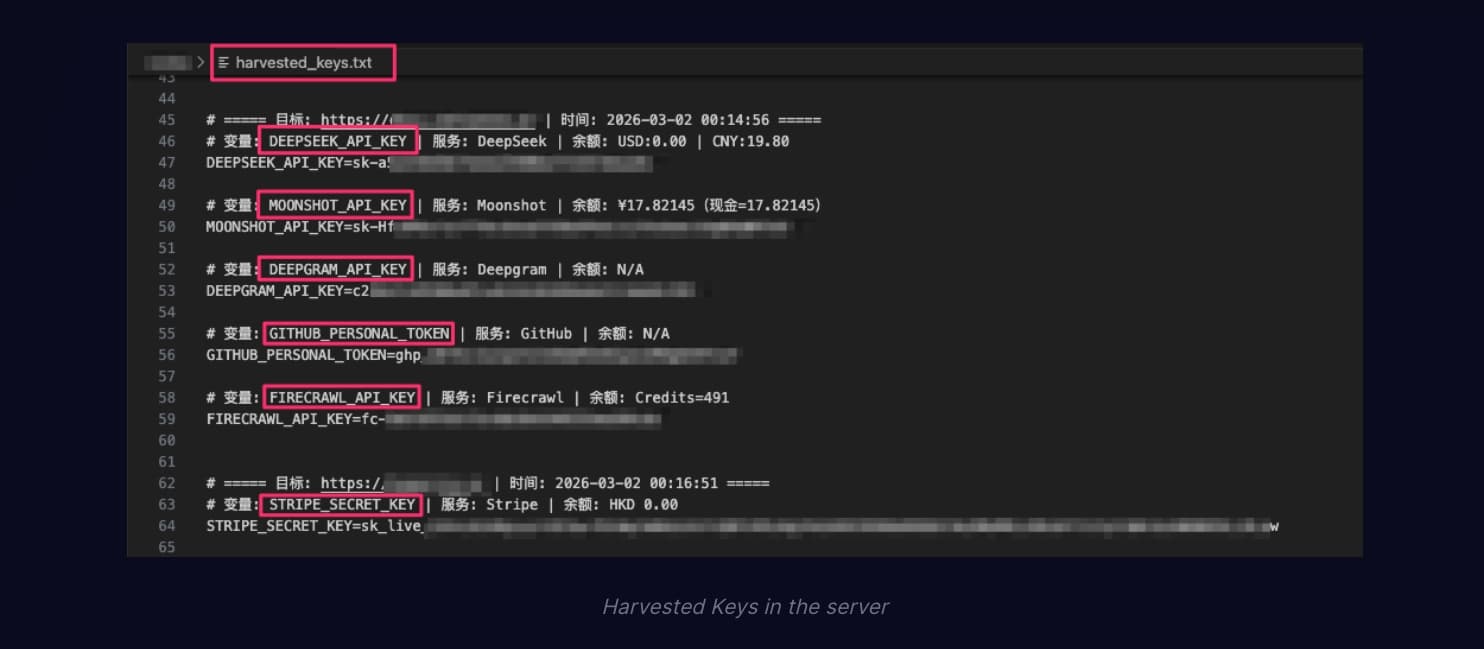
- The **mid-2026 supply-chain breach**, involving over 341 vulnerabilities exploited through malicious marketplace skills, prompted sweeping security reforms including:
- Credential and API key isolation with strict least-privilege principles to prevent token misuse.
- Hardened sandboxed runtimes paired with behavioral anomaly detection to rapidly quarantine suspect skills.
- A rigorous multi-stage skill vetting pipeline combining static/dynamic code analysis with community reputation scoring.
- The **early 2027 critical CVE-2026 remote code execution vulnerability**, disclosed by the Deep Priority Security Team, exposed a flaw allowing attackers to steal authentication tokens via crafted malicious URLs exploiting internal API validation errors. OpenClaw’s rapid response featured:
- Immediate patches closing the URL parsing loophole.
- Upgraded runtime token encryption and isolation layers.
- User advisories and ecosystem-wide monitoring to detect suspicious token usage patterns.
- **Ongoing Threat Landscape Awareness** is underscored by the recent episode *“Faster Cyberattacks, OpenClaw NPM Bypass, SkillsBench Human Guidance | Ep.52”*, which explores emerging attack vectors including NPM package bypass vulnerabilities and accelerated cyberattack methodologies targeting decentralized AI platforms. This episode highlights the necessity of continuous vigilance, rapid patching, and human-in-the-loop guidance to counter evolving threats.
These measures reflect OpenClaw’s **commitment to transparent, layered security**, balancing openness with rigorous defense to sustain trust in a complex, decentralized AI agent environment.
---
## Operational Sophistication: Skill Engineering, Cost Governance, and System Resilience
The OpenClaw operational ecosystem has matured significantly, driven by community innovation and tooling advancements:
- **Advanced Skill Engineering**:
- Tutorials like *“🚀OpenClaw高级进阶技巧分享!”* reveal techniques for dynamic model selection tailored per task, automated bug detection and log-based fixes, enhancing agent autonomy and reducing manual intervention.
- The *【2026唯①讲清楚】Agent Skills零基础工业级实战!* tutorial demonstrates hot-plugging, automatic skill generation, and autonomous iteration, streamlining management of extensive skill inventories.
- **Granular Cost Tracking and Adaptive Resource Provisioning**:
- Real-time cost monitoring now alerts users to API usage spikes, concurrency changes, and token consumption, enabling tighter budget control and resource optimization.
- Adaptive provisioning intelligently scales compute resources according to workload patterns, balancing cost efficiency with performance guarantees.
- **Comprehensive Telemetry and Resilience Patterns**:
- Expanded monitoring includes latency, error rates, behavioral anomalies, and token usage metrics, empowering proactive incident identification and rapid resolution.
- Workflow designs incorporate fallback strategies and graceful degradation to maintain availability even amid quota restrictions or partial system faults.
Together, these operational capabilities empower enterprises to **confidently manage complex AI workloads**, ensuring cost predictability, performance stability, and continuous service quality.
---
## Memory Management: LanceDB Plugin Achieves Production-Grade Excellence
The LanceDB memory plugin remains a pivotal element in OpenClaw’s contextual intelligence architecture:
- **Multi-scope memory isolation** safeguards against data leakage between user profiles, session histories, and domain knowledge stores.
- **Advanced noise filtering** enhances recall precision and reduces unnecessary API calls, driving down operational expenses.
- **Hot-plug memory modules** facilitate non-disruptive upgrades and maintenance, critical for production uptime.
This mature memory management framework significantly **improves agent reasoning quality** while optimizing resource consumption and cost.
---
## Governance Evolution: Layered Provenance, Reputation, and Accountability
OpenClaw’s decentralized governance via the **EvoMap network** continues to catalyze community-driven innovation, but also surfaces challenges:
- Marketplace fragmentation and inconsistent skill quality arise from complex **skill provenance and version control** issues.
- Global distribution complicates **incident response coordination** and enforcement of security policies.
- Increasing demand exists for **transparent verification mechanisms** and formal governance frameworks that sustain trust without stifling openness.
In response, maintainers and community leaders are advancing **layered governance models** combining:
- **Cryptographic provenance tracking** for tamper-proof skill lineage verification.
- Enhanced **reputation systems** to incentivize quality and reliability.
- Structured **accountability processes** balancing autonomy with oversight.
These initiatives aim to preserve OpenClaw’s vibrant ecosystem while bolstering security and operational reliability.
---
## Engineering Philosophy: Embracing Subtraction for Maintainability and Scalability
OpenClaw’s guiding engineering ethos remains clear from recent deep-dive discussions such as *“从pi-mono 到OpenClaw:源码拆解,21 万Star 背后的Agent 工程减法”*:
- Favoring a **configuration-plus-skills paradigm** over heavy code customizations enhances maintainability without sacrificing flexibility.
- Prioritizing **WhatsApp as the primary communication channel**, with modular extensions (Telegram, Slack, etc.) balances reach with engineering complexity.
- Embracing **engineering subtraction**—the deliberate pruning of non-essential features—reduces bloat, improves scalability, and stabilizes production deployments.
This disciplined approach ensures OpenClaw remains sustainable and enterprise-ready amid growing complexity and user demands.
---
## Conclusion: OpenClaw as a Cornerstone Enterprise AI Agent Platform in 2027
By mid-2027, OpenClaw stands as a **mature, resilient, and cost-efficient AI agent platform**, distinguished by:
- A **robust, hardened architecture** with dynamic routing, Gateway orchestration, and a production-ready LanceDB memory system.
- A **diverse and flexible deployment ecosystem**, spanning one-click cloud installs (Alibaba, Tencent), multi-IM and Telegram integrations, alternative gateways like Starlink 4SAPI, and innovative hybrid private-cloud models combining Ollama local LLMs with cloud orchestration.
- A **comprehensive and proactive security posture**, forged through real-world breach remediation, vulnerability patching, sandboxing, credential isolation, token encryption, and vigilant ongoing threat monitoring.
- An **operational ecosystem** enriched by advanced skill engineering, granular cost governance, adaptive provisioning, telemetry-backed resilience, and human-in-the-loop guidance against attack vectors.
- Evolving **governance frameworks** that blend decentralization with cryptographic provenance, reputation mechanisms, and accountability structures to sustain trust and quality.
- A **philosophy of engineering subtraction** that prioritizes maintainability, scalability, and stable production readiness.
With continuous community momentum, rigorous security vigilance, and flexible deployment strategies, OpenClaw is well-positioned to serve the evolving needs of **enterprise AI workloads worldwide**, trusted as a foundational platform for intelligent agent orchestration, innovation, and secure collaboration well into the future.