5h ago
Local Indexing and Workflow Controls Cut Agent Costs
- Local semantic indexes replace repeated grep loops in agents, delivering relevant files on first query via MCP and saving tokens across hundreds of...

Created by GrowthMasters Team
Scalable web retrieval architecture, code, and tooling for AI agents
Explore the latest content tracked by Nimble | Web Search Agents Radar
Meta's October 2026 launch of Muse Wonder and Wonder Full advances beyond Muse Spark (April) toward production-grade agents.
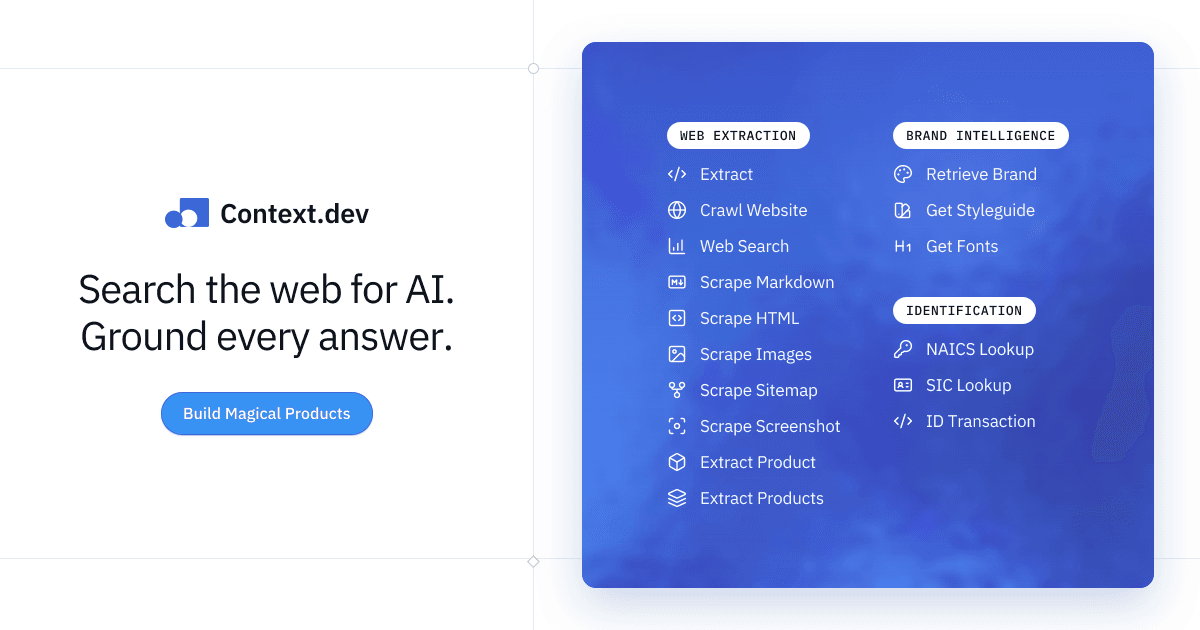
Context.dev positions its web search API as core infrastructure for AI agents, emphasizing citation-ready outputs and flexible economics.
-...
SubQ Snap delivers 384K context with constant compute per token via sparse attention, processing 100K tokens in ~1 second while scoring 96.3 on...
Reliable agentic RAG succeeds or fails on data foundations, not model choice.
Regulated sell-side firms face multi-asset fragmentation, margin pressure, and rules like MiFID II and T+1, driving them to replace legacy silos with...
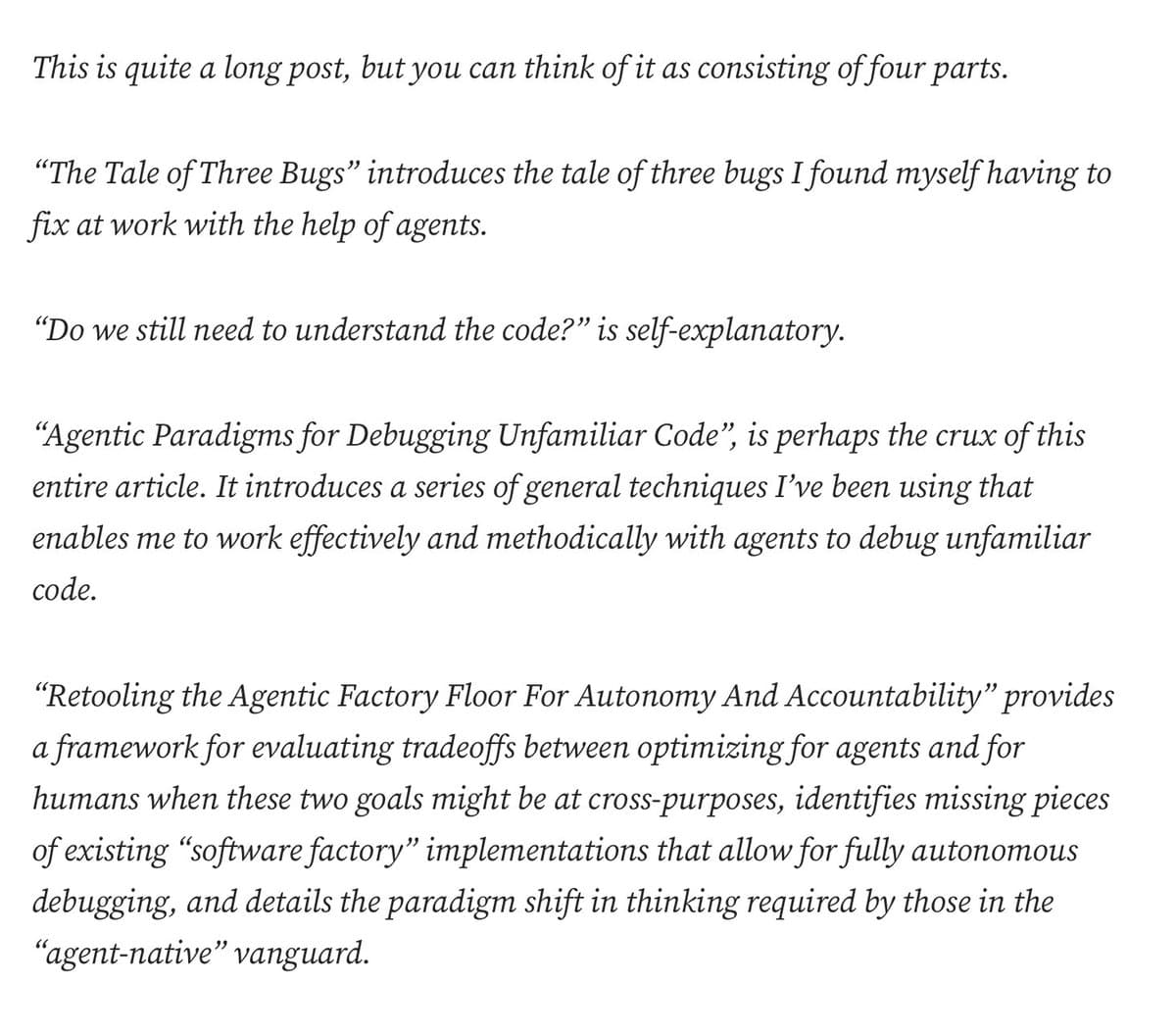
A debugging framework for agents identifies root causes in generated code without relying on human knowledge or reading of the implementation. Focus shifts from code familiarity to systematic root-cause discovery.
NumaClaw enables one-click setup of OpenClaw agents or Paperclip AI companies, complete with roles, budgets, and off switches running locally on your...
rGPU runs GPU work on a remote NVIDIA machine while the application stays on the client, exposing a PyTorch-compatible device abstraction for remote tensors.
Unreliable documentation stems from broken information lifecycles—source freshness, provenance checks, and weak maintenance incentives—rather than any...
EmbeddingGemma 2's compact on-device design lets developers run multimodal semantic search locally across text, images, video and audio, cutting cloud...
Aura presents a self-hosted multi-user AI agent using per-person graph memory to enforce natural identity separation in shared environments.
Google's FlowAgent succeeds not through autonomous generation alone, but via ReAct-style generate-and-validate loops paired with dual abstention filters (pre- and post-execution) that block weak fixes from developers.
Sub-1-bit LLM compression via latent factorization promises major memory savings but delivers huge quality loss, often proving less useful than...
Larger models deliver stronger domain-specific results, while practical tools emphasize flexible modality handling and task tuning.