# The 2024 AI Revolution: Multimodal Giants, Speed Demons, and Embodied Intelligence Accelerate
The landscape of artificial intelligence in 2024 continues its unprecedented surge, marked by groundbreaking models, rapid hardware innovations, and expanding real-world applications. This year stands out as a pivotal moment where AI systems are not only scaling in complexity but also achieving near-instantaneous performance, transforming industries from autonomous delivery to creative content generation and robotics. The convergence of these advances signals an era where AI becomes increasingly versatile, safe, and seamlessly integrated into daily life.
---
## Expanding Horizons: Multimodal, Long-Context, and Discrete-Token Large Language Models
2024 has witnessed foundational models shattering previous limitations, especially in the realms of context length, multimodal understanding, and token generation techniques:
- **Persistent Memory and Long Contexts:**
The introduction of models like **Claude V4** with **auto-memory features** (such as Claude's auto-memory capabilities) exemplifies this progress. These models can now handle **up to 1 million tokens**, enabling **deep cross-modal reasoning** across extensive documents, images, audio, and code. This leap allows AI to participate in **long-form research**, serve as **virtual companions**, and assist with **complex multi-turn interactions**—tasks that were previously infeasible due to memory constraints.
- **Open-Source and Flash Deployments:**
Initiatives like **Qwen3.5-397B-A17B** from @huggingface have made **fast, efficient multimodal models** accessible to a broad community. The recent launch of **Qwen3.5 Flash** on platforms like Poe underscores a trend toward **rapid deployment of lightweight, high-performance models** capable of processing text and images **in real-time**, boosting applications from **interactive AI assistants** to **creative tools**.
- **International and Competitive Dynamics:**
China’s **DeepSeek** is preparing for deployment, adding to the **multipolar AI landscape**. Industry commentators like @Scobleizer and CNBC highlight this intensifying global rivalry, driven by strategic investments, government backing, and cross-border collaborations.
- **Open-Source Ecosystem and Efficiency:**
Open models like **Qwen3.5-397B** and **MiniMax** are fostering innovation by enabling **discrete-token generation** and **long reasoning** while maintaining **resource efficiency**. Additionally, **distillation techniques** allow **sovereign and enterprise models**—such as those developed by Anthropic—to be **scaled efficiently** for deployment without overwhelming infrastructure.
- **New Innovations:**
The emergence of **DyaDiT**, a **multi-modal diffusion transformer**, marks a significant stride in **socially aware gesture generation**. This system enhances AI's ability to produce **natural, socially appropriate interactions**, crucial for **robotic companions** and **virtual agents**.
- **Knowledge Graphs and Code Reasoning:**
Startups like **Potpie**, which recently raised **$2.2 million in pre-seed funding**, leverage **knowledge graphs** to improve **code understanding** and **reasoning** capabilities. These advancements enable **more nuanced decision-making** and **complex problem solving** in AI agents.
- **Strategic Acquisitions:**
Companies are consolidating their capabilities; notably, **Anthropic** acquired **Vercept_ai**, a company specializing in **high-precision UI recognition**. This move enhances **Claude's visual and UI understanding**, positioning it as a leader in the **visual era of AI**.
---
## Hardware & Infrastructure: Powering the AI Speed Revolution
Speed and infrastructure continue to be key enablers:
- **Massive Chip Funding:**
**MatX**, an AI chip startup, secured **$500 million** in a Series B funding round led by an investment fund backed by the U.S. government, aiming to develop **specialized hardware optimized for large-model training**. This investment reflects the urgency to **disrupt Nvidia’s dominance** and **expand hardware alternatives** for AI workloads.
- **Inference Hardware and Cloud Optimization:**
Major efforts are underway to **accelerate inference speeds** and **reduce latency**. **Intel-backed SambaNova** attracted **$350 million** to develop AI hardware tailored for **large-model inference**. These innovations support **real-time applications** such as **autonomous vehicles**, **virtual reality**, and **robotics**.
- **Rapid Model Training:**
A breakthrough was reported by @LinusEkenstam: training a **full-motion transformer**—a model capable of processing **dynamic, continuous motion data**—was achieved in just **3 days on 128 GPUs**, representing a **10,000x speed improvement**. This shortens research cycles dramatically and accelerates deployment timelines across AI domains.
- **Emerging Disruptors:**
A new startup raising **$10.25 million** aims to **challenge Nvidia’s hardware monopoly** by developing **alternative data center solutions** for large-scale inference and training, signaling a potential shift in infrastructure dominance.
---
## Near-Instant Multimedia Synthesis: Discrete-Token and One-Step Generation
2024 marks a **paradigm shift** toward **discrete-token diffusion models** and **one-step synthesis techniques**, enabling **instantaneous multimedia content creation**:
- **Binary Visual Tokens & Flow-Map Synthesis:**
Systems like **BitDance** utilize **binary visual tokens** combined with **flow-map-based one-step synthesis** to generate **long videos and audio nearly instantly**. This capability transforms traditional content creation, allowing for **interactive narration**, **autonomous dialogue**, and **real-time multimedia editing** with vastly reduced resource demands.
- **Semantic Acceleration via Latent Space:**
Incorporating models such as **DINOv2** as **semantic anchors** accelerates reasoning and synthesis, making content creation more **interpretable** and **accessible**—even to non-technical users.
- **Language and Video Generation:**
Recent advancements in **continuous denoising methods** support **single-step language generation**, drastically reducing inference times. This unlocks high-fidelity, **real-time text, audio, and video synthesis**, opening new horizons for **interactive entertainment**, **education**, and **creative industries**.
- **Socially Aware Gesture Generation:**
The **DyaDiT** system further enhances AI’s ability to generate **socially nuanced gestures**, enabling **virtual and robotic agents** to behave in **natural, contextually appropriate ways**.
---
## Embodied AI and Robotics: From Labs to Widespread Deployment
Embodied AI continues its rapid move from experimental prototypes to **large-scale deployment**:
- **Autonomous Delivery Fleets:**
**Serve Robotics** has built **2,000 autonomous delivery robots**, creating the **largest sidewalk delivery fleet in the U.S.** The fleet’s active growth—twentyfold over the past year—demonstrates the **maturity and scalability** of industrial autonomous systems.
- **Large-Scale Robotics Deployment:**
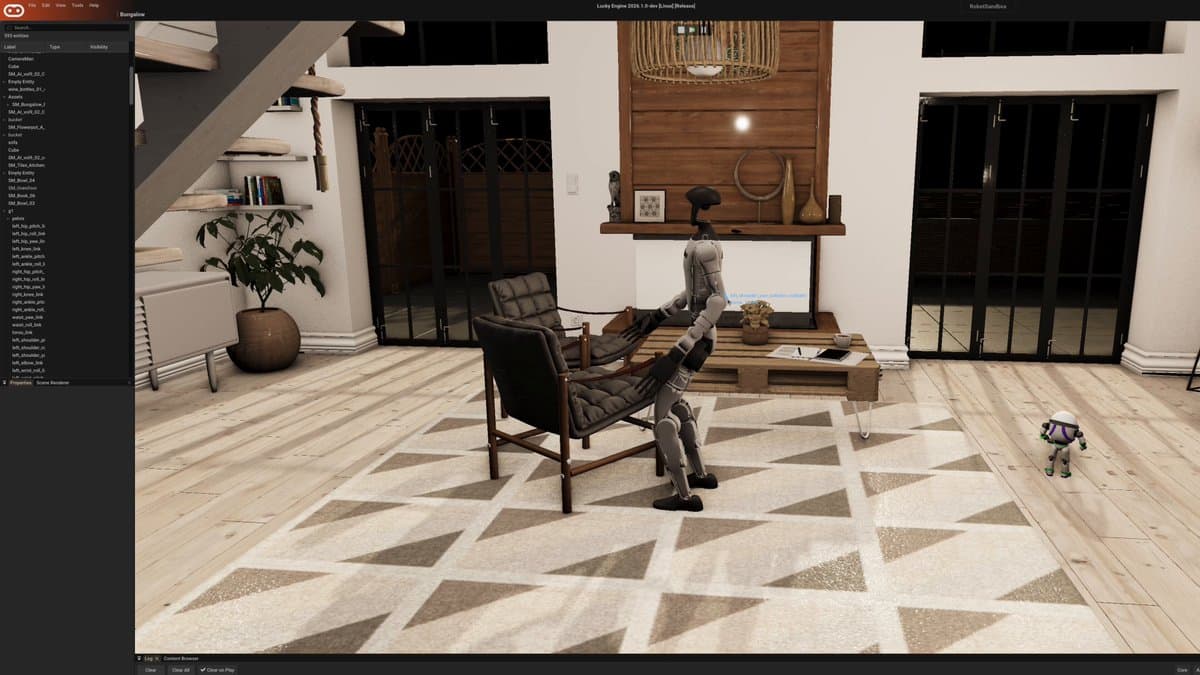
**Humanoid robots** are now shipping at scale, with several companies transitioning from prototypes to **commercial products**. This signifies a **turning point** for **embodied AI**, with applications spanning **industrial automation**, **public service**, and **hazardous environment exploration**.
- **Innovative Robots for Hazardous Environments:**
**Snake-like robots** from Bengaluru startups, funded with **$2.1 million**, are advancing **industrial inspection** and **disaster response**, navigating **dangerous terrains** with increasing autonomy and intelligence.
- **Multi-Agent Coordination:**
Tools like **Mato** enable **multi-agent reasoning and task orchestration**, essential for **collaborative robotics** in manufacturing and logistics.
---
## Policy, Ethics, and Corporate Stances: Navigating the New AI Landscape
As capabilities expand, debates around **ethics, safety, and regulation** intensify:
- **Corporate Ethical Stances:**
**Anthropic** publicly declared that it **"cannot in good conscience accede"** to Pentagon requests for certain AI capabilities, emphasizing a commitment to **ethical deployment** over commercial or military expediency.
- **Legislative Developments:**
The **Florida AI Data Center Regulation Bill** recently passed the state Senate, aiming to regulate **AI infrastructure** for **security** and **environmental concerns**. Meanwhile, international frameworks like the **EU’s AI Act** and the **New Delhi Declaration**—endorsed by **88 nations**—are working toward **global standards for AI safety and ethics**.
- **Industry Tensions:**
Some firms have **scaled back safety protocols** citing **competitive pressures**, highlighting ongoing tensions between **innovation speed** and **responsible deployment**.
---
## Building Responsible, Trustworthy AI
With AI deeply embedded in societal infrastructure, emphasis on **safety, fairness, and trust** remains paramount:
- **Bias Mitigation and Visual Security:**
Advances like **NeST (Neuron Selective Tuning)** provide **neuron-level safeguards** against **visual memory injection attacks**, ensuring **robustness against malicious data manipulation**.
- **Safety Standards:**
Integration of **high-assurance AI chips**, **rigorous testing protocols**, and **procedural fairness** are increasingly standard in **autonomous vehicles**, **medical devices**, and **critical infrastructure**.
---
## The Path Forward: Integration, Scalability, and Global Impact
A recurring theme in 2024 is **integration**—merging models, data sources, and systems into **cohesive AI ecosystems**:
- **Model Merging & Knowledge Graphs:**
Dynamic **model merging** allows for **on-the-fly capability expansion**, while **knowledge graphs** enhance **semantic understanding** for **more accurate and context-aware solutions**.
- **Scalable Infrastructure:**
Collaborations like **Intel and SambaNova** ensure **large-model deployment at scale**, supporting **speed**, **safety**, and **accessibility** across industries.
---
## Current Status and Broader Implications
The developments of 2024 underscore an era where **scale, speed, multimodality, and embodied intelligence** converge to produce **more capable, adaptable, and accessible AI systems**. These systems are transforming **industry workflows**, **consumer experiences**, and **research paradigms**—enabling **long-form reasoning**, **interactive multimedia**, and **autonomous agents**.
Simultaneously, a strong emphasis on **ethical considerations**, **regulatory frameworks**, and **trust-building** reflects a collective effort to **harness AI responsibly**. Initiatives like **DARPA’s high-assurance AI projects**, **trust layers from t54 Labs**, and **hallucination mitigation tools** exemplify this commitment.
The deployment of **large-scale autonomous fleets** and **commercialized robots** signifies that **embodied AI** is no longer confined to labs but is actively reshaping **urban, industrial, and hazardous environments** worldwide.
**In conclusion**, 2024 is shaping up as a transformative year—where **speed, multimodality, agentification, and safety** interconnect to drive AI into a new era of **powerful, responsible, and seamlessly integrated systems**. The challenge and opportunity lie in **harnessing these innovations** to benefit society broadly, ensuring AI remains a **force for good** while minimizing risks. As these systems evolve, we stand on the cusp of an era where **intelligent, trustworthy, and interactive AI** fundamentally enhances human capabilities and unlocks unprecedented avenues for innovation.