# Latino Communities in 2026: A Year of Resilience, Advocacy, and Strategic Shift
As 2026 progresses, Latino communities across the United States continue to demonstrate remarkable resilience, strategic activism, and cultural vibrancy. Their collective efforts are reshaping national conversations around immigration, civil rights, and social justice, while also challenging the evolving political landscape amid increased enforcement measures and opposition. This year marks a pivotal chapter in the ongoing movement for recognition, protection, and empowerment of Latino Americans—driven by grassroots mobilization, legal battles, cultural expression, and a surge in electoral influence.
## Continued Civic Activism and Electoral Powerhouse
Throughout 2026, Latino communities have maintained their momentum through large-scale protests, advocacy campaigns, and unprecedented electoral engagement. Cities such as **Las Vegas**, **Lindenwold**, **Spokane**, and others have witnessed thousands rallying to highlight stories of hardship, resilience, and hope under aggressive immigration enforcement policies. These demonstrations serve multiple critical purposes:
- **Resisting unjust policies**
- **Demanding dignity, respect, and fair treatment**
- **Raising visibility for families facing deportation and separation**
A cultural milestone was the **2026 Super Bowl halftime show**, featuring **Bad Bunny**, which became a landmark event celebrating Latino influence and resilience on a national stage. This performance not only showcased Latin music and artistry but also invigorated activism and pride nationwide, inspiring many to deepen their advocacy efforts.
Electorally, Latino voters are more mobilized than ever before. The recent **flip of a Texas Senate seat** from Republican to Democratic control underscored their growing political influence. Polling data reveal a significant shift: many Latino voters **oppose** current enforcement policies, perceiving them as harmful to community trust and cohesion. To harness this influence, organizations and political leaders are amplifying efforts, such as the **Hispanic Caucus’s new campaign**, which leverages social media influencers and peer networks to boost voter turnout. Recent outreach—through videos and community engagement—aims to combat misinformation and voter apathy, emphasizing that an engaged Latino electorate can determine key elections at local and national levels.
Furthermore, voices like **Congresswoman Ilhan Omar** have criticized Democratic complacency on immigration reform, pushing the issue into the forefront of political discourse. Advocates stress that electoral influence must translate into tangible policy changes that safeguard immigrant communities and uphold their rights.
## Local Policies and Community Protections
Local governments and advocacy organizations are innovating to create safer, more inclusive environments for immigrant families. Noteworthy initiatives include:
- **Montgomery County’s Trust Act**, facilitating access to essential services without fear of deportation.
- Outreach programs by groups such as **Progreso Latino** in Rhode Island and the **Central Oregon Latino Community Association**, which aim to shield residents from federal enforcement tactics.
- Major cities like **Los Angeles**, **Portland**, and **New Orleans** have further strengthened sanctuary policies—refusing cooperation with ICE unless legally compelled—thus fostering community trust, safety, and cohesion.
Community outreach efforts have expanded significantly with town hall meetings, Spanish-language informational sessions, and legal clinics. These initiatives help residents navigate increasingly complex immigration laws and enforcement actions more effectively, emphasizing the importance of local protections amid federal challenges.
In education, **San Diego Unified School District** recently approved an updated immigration enforcement policy, aiming to protect students and families from intrusive federal actions within educational settings, reinforcing the role of local institutions in safeguarding community rights.
## Enforcement Oversight, Legal Challenges, and Public Accountability
The enforcement landscape remains highly contentious, with courts increasingly demanding accountability from federal agencies. Recent developments include:
- **Court rulings** now require ICE officers to **identify themselves during arrests** and investigate misconduct allegations—measures aimed at curbing abuses and rebuilding community trust.
- **The 2026 DHS memo** has expanded detention powers, allowing for the detention of asylum seekers and invasive searches, provoking widespread backlash and protests.
- **Operations like "Operation Metro Surge"** in **Minnesota** have resulted in mass raids, family separations, and intense public outrage, highlighting the ongoing tensions between enforcement and community safety.
Polls indicate that roughly **two-thirds of Americans**, including many Latino voters, believe enforcement tactics **“have gone too far,”** fueling resistance and demands for greater oversight. Congressional oversight efforts are intensifying, with figures like **Senator Gutiérrez** publicly demanding answers from the **Department of Public Safety (DPS)** regarding their involvement in enforcement activities, signaling a broader push for transparency and accountability at multiple levels of government.
## Cultural Expression as a Catalyst for Unity and Visibility
Cultural activism continues to serve as a vital engine for unity, morale, and visibility. Highlights include:
- Celebrations at venues like **The Sheldon in St. Louis**, showcasing Latin music, dance, and art—serving as educational platforms that foster pride and promote cross-cultural understanding.
- Recognition of **Afro-Latino** identities through culinary ventures, publications, and media. For instance, chef **Nelson German** has gained prominence with his Afro-Latino cuisine and his recent book emphasizing the diverse histories within Latino communities.
- Media storytelling efforts, such as the PBS series **"Roots, Race & Culture | Utah's Latino Life and Legacy,"** continue to elevate Latino contributions, fostering greater recognition and empathy across diverse audiences.
Celebrity advocacy also plays a significant role; **Gloria Estefan**, for example, has publicly condemned immigrant persecution, inspiring community activism and solidarity across sectors.
## Organizational Support, Legal Aid, and Legislative Momentum
Organizations like **LULAC** and **NILC** remain pivotal in expanding legal aid, community outreach, and advocacy. They are actively defending against unjust enforcement, supporting legal challenges, and pushing for protective legislation. Their efforts include:
- Providing legal representation and resources to families facing deportation.
- Advocating for policies that protect immigrant rights.
- Mobilizing communities for electoral participation.
### Recent Policy Shifts and Public Opinion
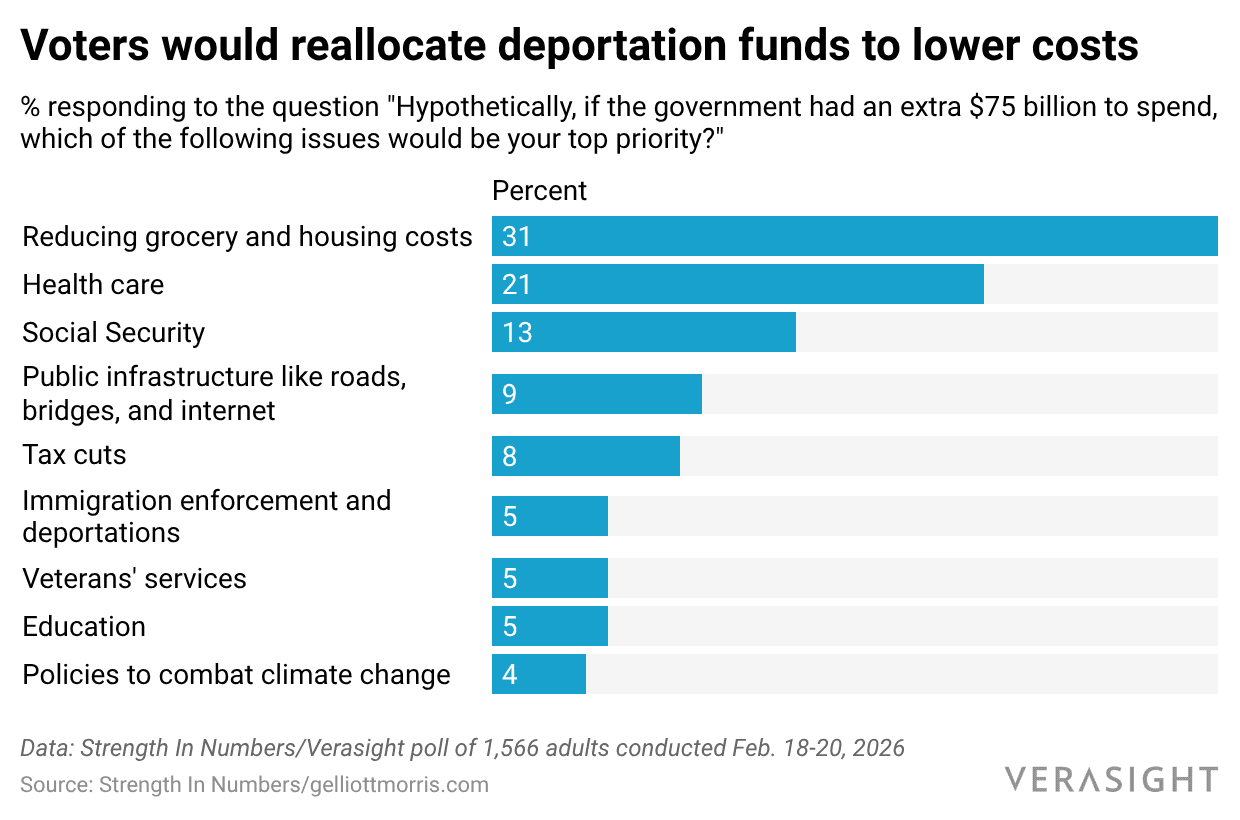
New polling underscores the shifting sentiments among voters. The **Strength In Numbers/Verasight poll (February 2026)** reveals widespread support for **pausing deportations** to address pressing issues like housing and food insecurity. Economic concerns are increasingly intertwined with immigration debates, positioning enforcement policies as a contentious issue influencing voter preferences.
The **Hispanic Federation’s analysis** criticizes the **State of the Union** address, asserting that its rhetoric and policies **diverge from the realities faced by Latino families**. The report emphasizes the disconnect between national leadership and community needs, reinforcing calls for policies rooted in compassion, justice, and inclusivity.
## Recent Developments and Broader Implications
### Reshaping Refuge: The New Era of United States Refugee Admissions
The Biden administration has announced a significant overhaul in refugee policy, emphasizing **humanitarian priorities** while increasing refugee admissions. This "Reshaping Refuge" initiative aims to restore America’s reputation as a refuge for those fleeing persecution, aligning with community advocacy calls for more compassionate and equitable refugee policies amid global crises.
### Las Vegas Community Amid Unrest in Mexico
The Las Vegas Latino community is navigating heightened concerns due to unrest in Mexico, which impacts family travel ties and safety. Members are adjusting travel plans and daily routines, emphasizing the importance of community networks and local support systems to manage uncertainty and maintain ties with loved ones across borders.
### San Diego Unified School District’s Enforcement Policy Update
San Diego Unified recently approved a new enforcement policy that limits how federal authorities can interact with students and families within schools, aiming to protect minors from intrusive enforcement actions and foster a safe learning environment. This move reflects growing local resistance to federal immigration enforcement measures.
### Honoring Afro-Latinos During Black History Month
In February, educational institutions and cultural organizations celebrated **Black History Month** by highlighting Afro-Latino contributions. Initiatives like special exhibits, community events, and publications—such as **"A Black History Month Tribute to Often Overlooked Afro-Latinos"**—serve to recognize the rich diversity within Latino identities and uplift narratives of Afro-Latino heritage.
### Educational Content on Documented vs. Undocumented Immigrants
Educational efforts, including online resources like **"Documented vs. Undocumented Immigrants | Law & Social Stability,"** aim to clarify misconceptions about immigrant statuses. These efforts seek to foster informed discussions on immigration law, social integration, and the importance of fair treatment for all residents, regardless of documentation status.
## Current Status and Future Outlook
Today, Latino communities stand at a defining crossroads—resilient, increasingly influential, and strategically organized. Their activism continues to challenge unjust policies, broaden civic participation, and reshape societal narratives. The developments of 2026 exemplify a movement deeply rooted in **cultural pride, strategic advocacy, and electoral mobilization**—elements that are fundamentally transforming America’s social fabric.
Recent advancements, including **bipartisan oversight efforts**, **legal victories demanding accountability**, and **growing voter engagement**, suggest a future where **protective policies** are reinforced, **federal enforcement practices** become more transparent, and **Latino electoral influence** continues to expand. The interplay of cultural expression and political activism is fueling a collective sense of empowerment, positioning Latino communities as central actors in shaping the nation’s trajectory.
As they mobilize, advocate, and celebrate their rich heritage, Latino communities are asserting their rightful place at the heart of America’s evolving democracy. The momentum of 2026 signals an ongoing push toward **justice, recognition, and inclusion**, promising a future where **equality and cultural pride** are integral to the nation’s identity and progress.