# 2026: The Era of Trustworthy, Physics-Integrated LLM-Augmented Diffusion for Scientific and Factual Multimedia Creation
The year 2026 marks a transformative milestone in artificial intelligence and multimedia generation, where **Large Language Model (LLM)-augmented diffusion, flow, and autoregressive models** have reached a level of maturity enabling **trustworthy, scientifically accurate, and verifiable multimedia content**. This evolution is fundamentally reshaping how we visualize, explore, and communicate complex scientific phenomena, setting new standards for **factual integrity, transparency, and interactive engagement** across research, education, journalism, and public outreach.
---
## The Paradigm Shift: From "Direct Prediction" to "Think-Then-Generate"
In previous years, diffusion models primarily relied on **direct pixel or feature prediction**, capable of producing impressive visuals but often plagued by **semantic inaccuracies and hallucinations**—a critical flaw when visualizing scientific data. Recognizing these limitations, researchers in 2026 have pioneered a **"Think-Then-Generate"** framework that **integrates reasoning, physical laws, and knowledge verification** directly into the content creation pipeline.
This innovative approach involves several groundbreaking techniques:
- **Factual Blueprints via Multimodal LLMs:** Cutting-edge models like **Qwen3.5 (397B parameters)** serve as **deep reasoning engines**, generating **structured, evidence-based descriptions** across scientific disciplines. These blueprints act as **semantic guides** for visualization.
- **Guided Diffusion & Flow Models:** Leveraging these blueprints, diffusion, flow, or hybrid models are **steered to produce images, videos, and narratives** that **adhere to physical principles**.
- **Verification Modules:** The integration of **rule-based or learned verification steps** ensures **outputs conform to physical laws and factual data**, drastically reducing hallucinations and misinformation.
> *"By embedding reasoning and physical laws directly into the generation pipeline, we are achieving unprecedented levels of fidelity and trustworthiness,"* states Dr. Lisa Chen, a leading researcher in scientific visualization.
---
## Key Technological Advances in 2026
### 1. **Multimodal LLMs as Factual Blueprints**
Models like **Qwen3.5** have been **trained extensively on scientific, technical, and domain-specific datasets**, enabling **deep cross-disciplinary understanding**:
- **Multimodal reasoning:** Integrate text, images, and videos to generate **structured, evidence-based blueprints**.
- **Enhanced inference speeds:** Achieve **8 to 19-fold faster inference**, facilitating **real-time content creation**.
- **Scientific accuracy:** Their **deep reasoning capabilities** greatly minimize misinformation, fostering **trust in generated visualizations**.
### 2. **Physics-Constrained Diffusion & Scene Coherence**
Embedding **physical laws directly into diffusion processes** has become standard practice:
- **Physics Infusion:** Incorporates **lighting, gravity, material interactions**, and **dynamics** into models.
- **Physics-Constrained Frameworks:** Tools like **PhyRPR** enable **physics-aware video synthesis** that maintains **temporal and scene coherence** aligned with **Newtonian physics**.
- These innovations underpin **interactive, scientifically accurate simulations** in domains like fluid flow, astrophysics, and mechanical systems.
### 3. **Physics-Aware Video Synthesis: PhyRPR**
**PhyRPR** exemplifies **state-of-the-art physics-aware video generation**:
- Uses **LLM-guided physics constraints** to create **dynamic, believable videos**.
- Ensures **scene and temporal coherence** consistent with **physical laws**.
- Enables **interactive demonstrations** across **fluid dynamics, astrophysics, and mechanical simulations**, increasing scientific trustworthiness.
### 4. **Multimodal Synchronization & Audio-Visual Fidelity**
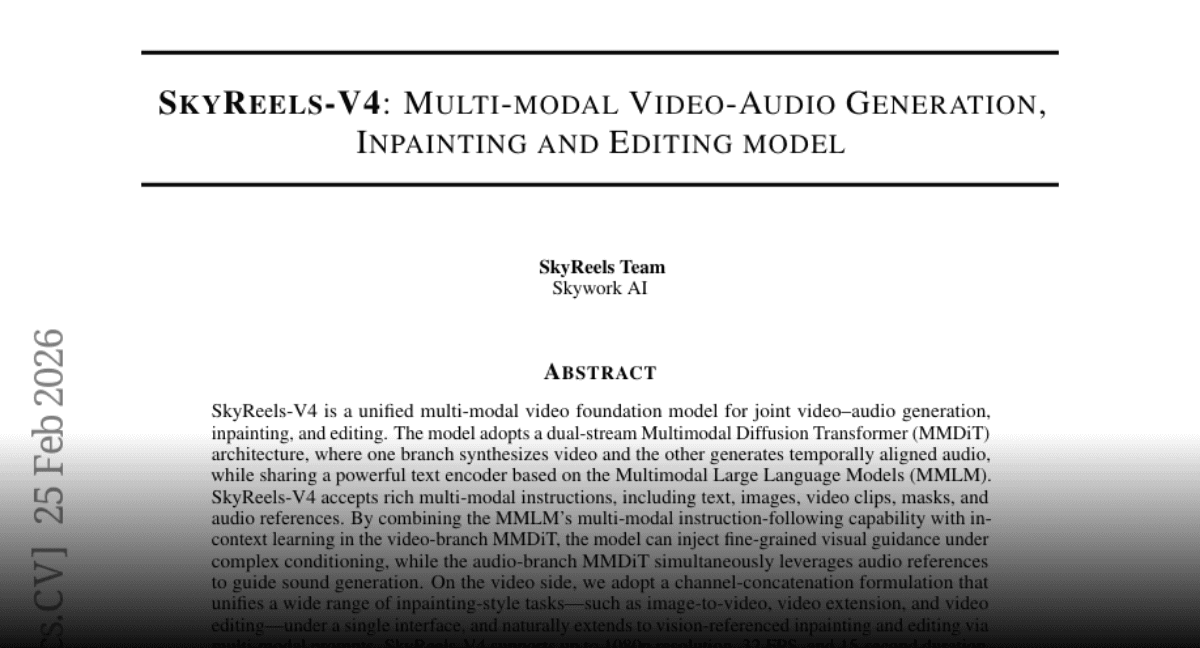
Advances such as **SkyReels V3** and the latest **SkyReels-V4** now support **audio-to-video (A2V)** workflows within **ComfyUI**, facilitating:
- **Lip-syncing**, **narration**, and **multimedia storytelling**.
- Creation of **immersive, scientifically accurate visualizations** that **enhance public engagement** and **comprehension**.
- **SkyReels-V4** extends these capabilities with **multi-modal video-audio generation, inpainting, and editing**, broadening **scientific storytelling** and **interactive visualization** opportunities.
### 5. **Structured Scene Management & Multi-Actor Content**
Tools like **SemanticGen** enable **organized scene creation** from **structured prompts**, ensuring **factual scene representations**. Innovations such as **CoDance** and **OmniTransfer** facilitate:
- **Choreography** and **appearance/motion consistency** across sequences.
- These are **crucial for scientific animations**, **educational visualizations**, and **multi-actor simulations** requiring **factual accuracy**.
### 6. **Efficiency & Real-Time Capabilities**
Breakthrough methods such as **CacheDiT**, **Light Forcing**, **Latent Forcing**, and **Causal Forcing** have made **instantaneous scientific visualization** a reality:
- **Single-step, high-fidelity generation** suitable for **interactive, live applications**.
- Support **real-time exploration** and **dynamic updates**, empowering **scientists and educators**.
### 7. **Unified Multimodal Architectures & Multi-Task Learning**
Platforms like **OpenVision 3** now support **classification, detection, segmentation, synthesis, and editing** within a **single unified framework**, crucial for **scientific domains** involving multiple data modalities.
### 8. **Multi-Turn Video Editing & Memory Modules**
Systems such as **Memory-V2V** introduce **long-term memory** capabilities, enabling **multi-turn, iterative editing**—ideal for **complex scientific simulations**, **educational content**, and **narrative consistency over time**.
---
## Recent Groundbreaking Innovations
### **Latent Forcing: Reordering Diffusion Trajectories**
Introduced in early 2026, **Latent Forcing** **reorders diffusion processes within latent spaces**:
- **Enhances synthesis stability and efficiency**.
- **Reduces artifacts** in scientific images.
- Facilitates **real-time, reliable content creation** with high fidelity.
### **FireRed-Image-Edit-1.0**
This **hybrid diffusion-transformer** enables **interactive, factually consistent image editing**, especially suited for **dynamic diagrams and interactive visualizations**, marking a significant advance in **scientific diagramming**.
### **Ensembles of Diffusion Scores**
Combining **multiple diffusion outputs** has been shown to **improve robustness and fidelity**, especially in **multi-modal scientific data visuals**.
### **Adaptive Matching Distillation (Feb 2026)**
This **training technique** aligns **model outputs with target distributions**, enabling **fewer diffusion steps** for **fast, high-quality generation**. It **detects and corrects errors dynamically**, greatly **minimizing hallucinations** and **enhancing factual accuracy**.
### **thu-ml/Causal-Forcing**
A recent GitHub project, **Causal Forcing**, advances **autoregressive diffusion distillation** for **interactive, high-fidelity video synthesis**:
- Supports **real-time scientific demonstrations**, **live training**, and **visualization of complex phenomena**.
- Represents a **major step toward verified, factual video content**.
---
## The Return of Variational Autoencoders (VAEs) and Latent Space Approaches
2026 has seen a **resurgence of VAE-like methods**, driven by **co-training diffusion priors with encoders**. Researchers like **@jon_barron** and **@TimSalimans** emphasize that **"VAEs are back"**—these **jointly trained models** offer **enhanced controllability, efficiency**, and **interpretability**. This **unified latent approach (UL)** is especially valuable in **scientific contexts**, where **accuracy and transparency** are paramount.
---
## Bridging Physics and Rendering: A New Frontier
A pivotal arXiv preprint titled **"Bridging Physically Based Rendering and Diffusion Models"** explores **integrating physically based rendering (PBR)** techniques with diffusion:
- **Improves realism** by combining **accurate lighting/material models** with **generative flexibility**.
- **Enhances scene consistency** in **complex environments** like **astro-physical simulations** and **material science visualizations**.
- Demonstrates that **diffusion models** can be **rendering-aware**, leading to **more trustworthy scientific imagery**.
### **Perceptual 4D Distillation**
Complementing physics-aware video synthesis, **Perceptual 4D Distillation** bridges **3D structure** with **temporal dynamics**, enabling:
- **Factual consistency** across **space and time**.
- **Enhanced scene understanding** critical for **scientific visualization**.
---
## The Current Status and Future Directions
Recent evaluations, such as **"I tested every major AI video model so you don't have to,"**, compare **fidelity, speed, and factual accuracy** of the latest models, offering practical guidance for practitioners seeking **trustworthy tools**.
The integration of **distilled diffusion methods**, **autoregressive diffusion distillation**, and **factual reasoning via LLMs** now makes **interactive, real-time, scientifically accurate content generation** feasible at scale.
### **Implications:**
- These models **embed reasoning and physical laws**, drastically reducing hallucinations.
- **Real-time visualization** and **interactive demonstrations**—enabled by **CacheDiT**, **Light Forcing**, **Latent Forcing**, and **Causal Forcing**—empower **scientists, educators, and communicators**.
- They facilitate **visualizing complex phenomena** with **unmatched fidelity and verifiability**.
Looking ahead, ongoing research aims to:
- **Further reduce hallucinations**,
- **Integrate physics-based simulators directly into generative pipelines**,
- **Strengthen verification and factual consistency**,
- Develop **trustworthy, science-aligned media pipelines**.
---
## The Significance and Future Outlook
2026 has solidified itself as a **watershed year** where **LLM-augmented, physics-aware diffusion and autoregressive models** set **new standards for trustworthy multimedia creation**. These systems **embed reasoning, physical laws, and verification** into the generation process, **minimizing hallucinations** and **maximizing trust**.
They **transform how we visualize, explore, and explain** complex phenomena—enabling **interactive, accurate scientific visualizations** that are **accessible, reliable**, and **trustworthy**. The **revival of VAE approaches**, **advances in physics-integration**, and **real-time synthesis techniques** collectively forge a future where **science-informed, verifiable media** become ubiquitous.
---
## Practical Resources and New Content
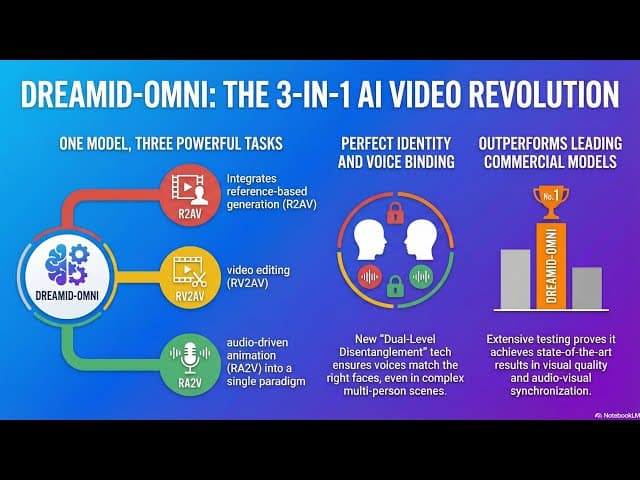
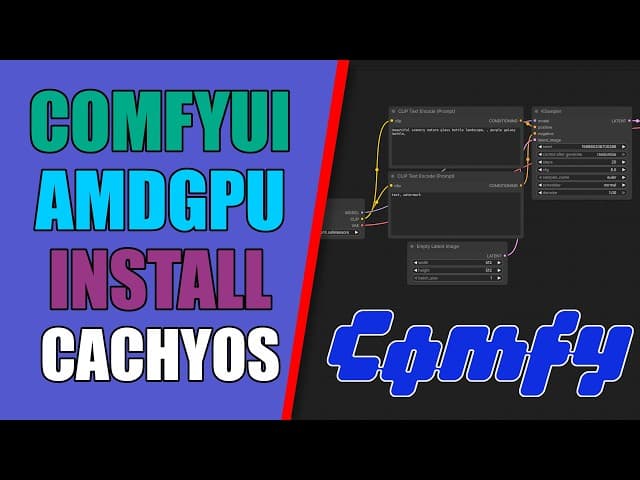
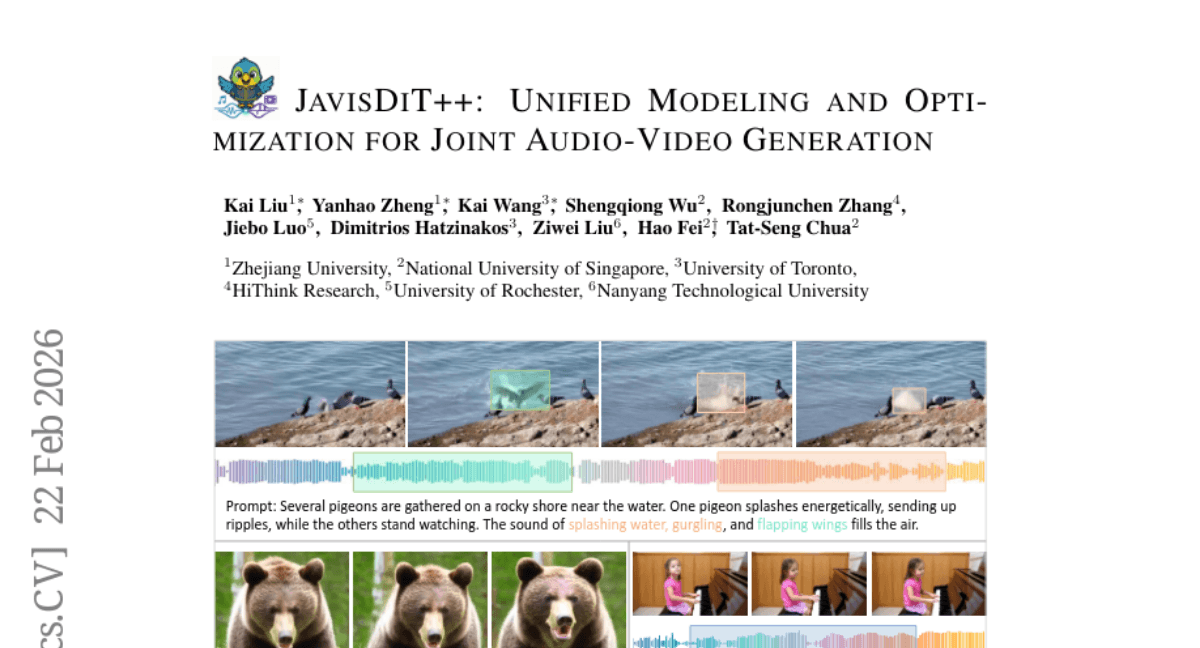
Recent additions include **"DreamID-Omni"**, a **unified framework for human-centric audio-visual generation**, illustrating how **multi-modal AI can produce immersive, scientifically relevant content**. The **"How to Install ComfyUI on Arch Linux"** guide offers practical deployment steps, supporting reproducibility and custom setup for researchers and practitioners.
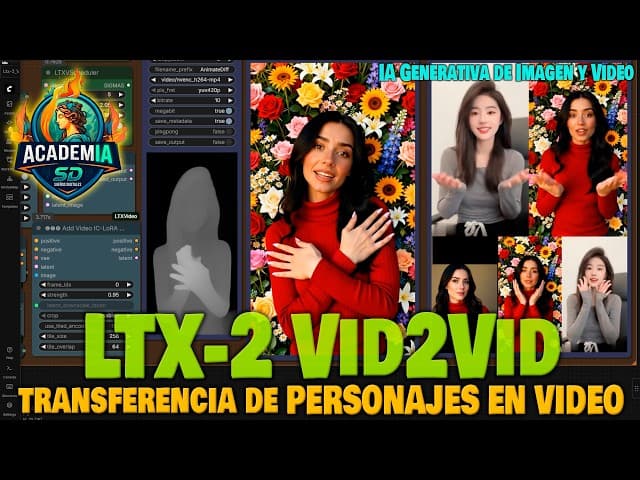
Additionally, the **video titled "LTX-2 VIDEO A VIDEO"** demonstrates a workflow that leverages **video-to-video translation** to transfer motion dynamics and scene attributes, further enhancing **factual accuracy and fidelity** in scientific visualizations.
---
## Final Reflection
The developments of 2026 establish **trustworthy, physics-aware, LLM-augmented diffusion models** as central tools in **scientific visualization, education**, and **public engagement**. By **embedding reasoning, physical laws, and verification** directly into content creation pipelines, these systems **minimize hallucinations** and **maximize trustworthiness**. They **empower scientists, educators, and communicators** to **visualize, explore, and explain** phenomena with **unprecedented accuracy and immediacy**—ushering in a future of **science-informed, interactive digital media** that is **accessible, reliable**, and **trustworthy**.
---
## In Summary
The year 2026 has established a **new standard** in AI-driven scientific multimedia, driven by **LLM-augmented diffusion, physics integration, and advanced verification techniques**. These innovations **embed reasoning and physical laws** into the generative process, **minimize hallucinations**, and **foster trust**. As a result, **interactive, verifiable, and science-consistent visualizations** are now within reach—redefining how humanity explores, understands, and communicates the universe’s wonders.
---
## Notable New Content Highlight
A significant recent contribution is the article **"LTX-2 VIDEO A VIDEO"**, which showcases how **video-to-video workflows** transfer motion and scene attributes, ensuring **factual consistency in dynamic scientific demonstrations**. Available on YouTube, this exemplifies how **video translation techniques** support **real-time, factually aligned content**, further enriching the toolkit for **interactive scientific visualization**.
---
## Final Thoughts
The trajectory of 2026 underscores a future where **trustworthy, physics-aware AI multimedia systems** are **integral to scientific discovery and communication**. By **embedding reasoning, physical laws, and verification mechanisms** into generative models, we are progressing toward a digital ecosystem where **visualization and understanding** are **more accurate, interactive, and accessible** than ever before.