3h ago
Kimi K3.1 Pro's Finance Score: What It Shows and What It Doesn't
Moonshot's open-weight Kimi K3.1 Pro scored 58.6 to OpenAI's GPT-6 Astra's 45.0 on a finance agent test, but the result is narrower than the headline...

Created by Connor Parish
Core and applied AI breakthroughs from top labs and conferences
Explore the latest content tracked by AI Breakthrough Digest
Moonshot's open-weight Kimi K3.1 Pro scored 58.6 to OpenAI's GPT-6 Astra's 45.0 on a finance agent test, but the result is narrower than the headline...
The core bet is that existing data is the bottleneck. Most AI drug discovery labs build on the Protein Data Bank, which Helal argues is too small....
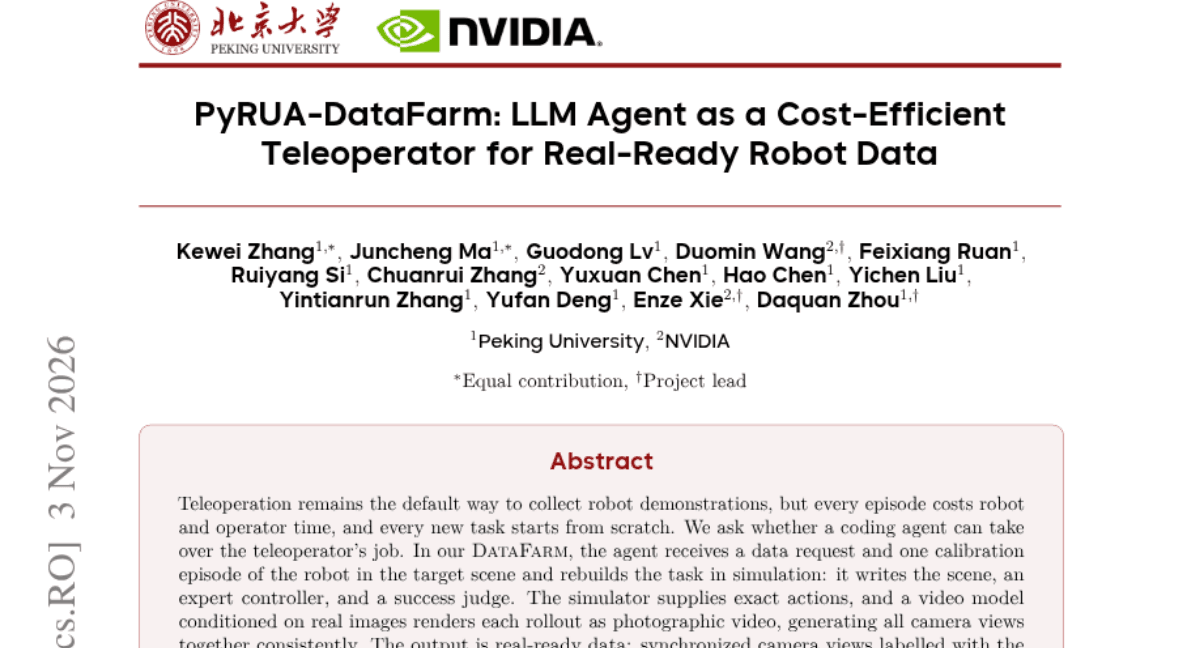
Two preprints tackle the same bottleneck from different sides: making robot training data cheaper to get.
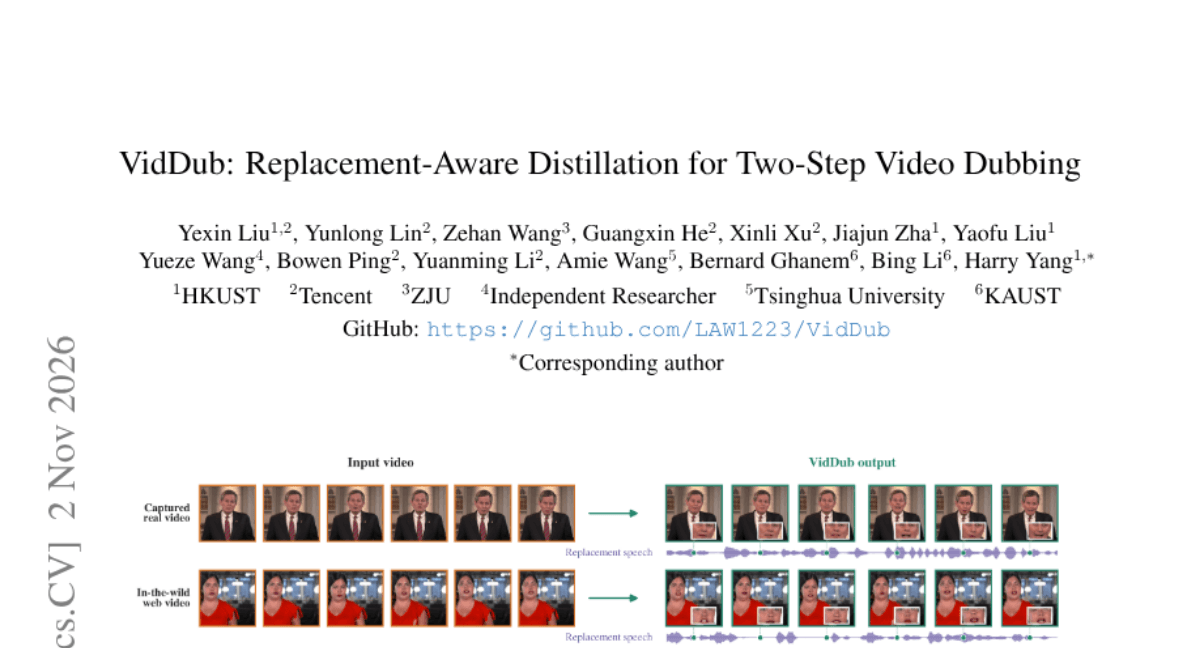
Dubbing has a conflict problem: existing editors train by reconstructing the original paired audio, so the source mouth becomes a conflicting target...
LLM agents in social simulations can change their behavior under meaning-preserving prompt variations. One study reports cooperation rates shifting by...
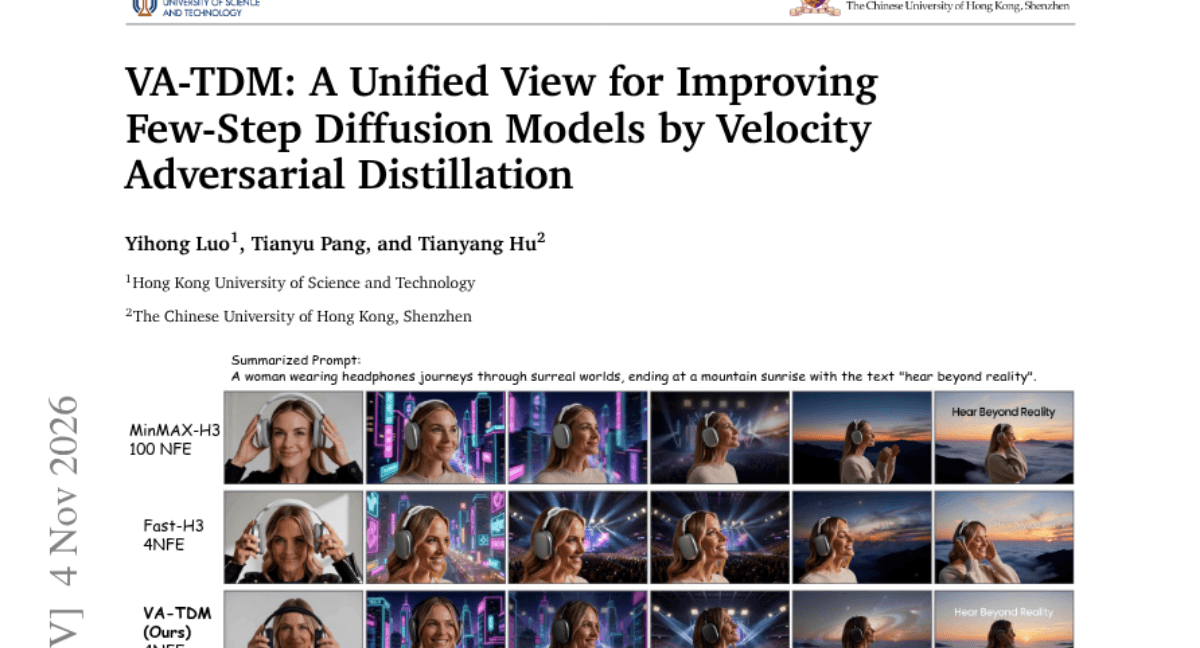
Cutting sampling steps usually costs quality, and this work targets that trade-off directly. Few-step distillation offers efficient generation, but...
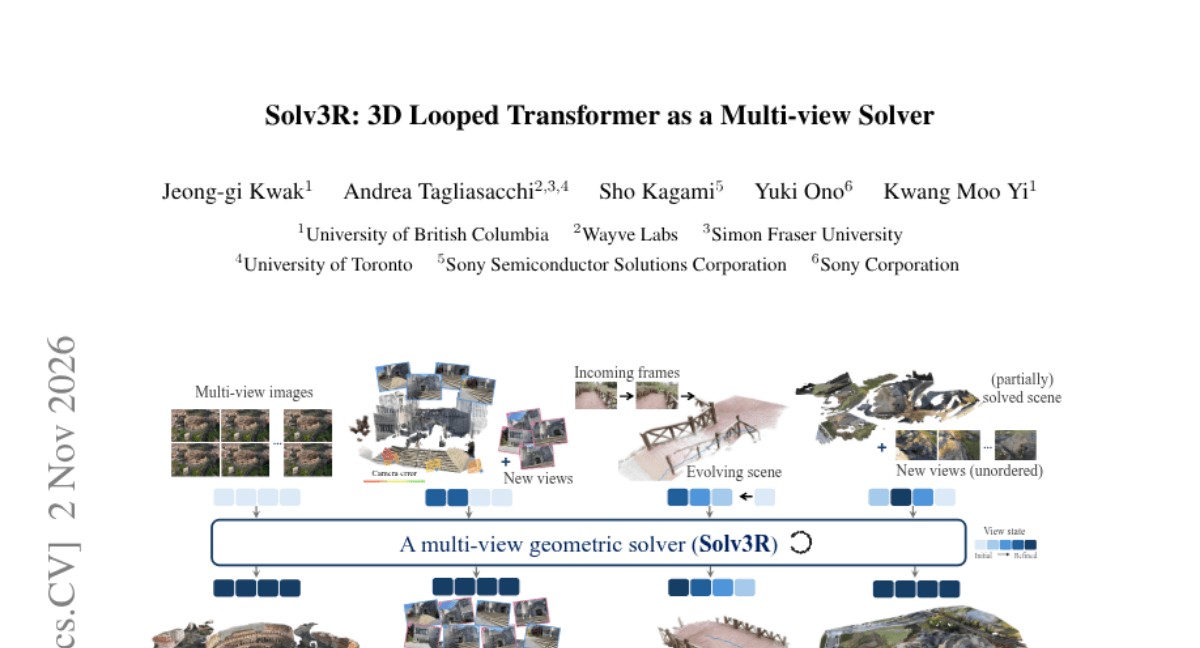
Classical structure-from-motion refines camera poses and geometry iteratively, so maps can grow without recomputing solved views.
A shared post reports on ~150 async RL runs, finding score centering (SC) is enough as long as the trainer stays close to the sampler.
The core idea is that CALM AI should be nearly invisible. Its designers aim to integrate it into PACS and reporting systems without extra steps or...
The paper argues that fixed rewards for visual quality, motion, and text alignment poorly capture emotional intent and can invite reward hacking.
-...
A report on AI R&D automation, as relayed by Ryan Greenblatt, says recursive self-improvement is already speeding up AI progress by around 2x....
Researchers frame a dilemma: two companies want a joint model on their users' private data, yet don't want to share it just to learn it's...
The chapter argues ML should go beyond offline analysis. Key points:
Optical hardware could reduce the computation physics-based AI needs, but the evidence so far is early.
The author argues that for most use cases, you want both, with each tool doing what it does best.
DACS serves cached blob chunks from inside a Kubernetes cluster and falls back to Azure Blob Storage on a miss. It suits large, immutable or versioned...
An upcoming ISPOR Europe short course on Sunday, 8 November 2026 covers LLM fundamentals for regulated real-world evidence and HEOR work. Its listed...
Identical overall eligibility labels can hide real differences. Across 200 synthetic patient-study assessments, OpenAI and Mistral produced the same...
Agentic systems alternate between GPU-based reasoning and CPU-based execution, which is why the CPU matters alongside the GPU. NVIDIA pitches Vera as...