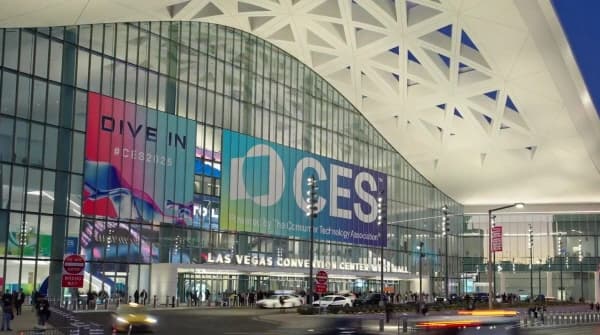
CES 2026 has unequivocally marked a watershed moment in the evolution of physical AI, transitioning the field from isolated prototypes to a **commercially viable, ethically governed, and globally scalable ecosystem of embodied intelligence systems**. This transformation is powerfully embodied by South Korea’s pavilion, which continues to set a global standard for ethical, scalable commercialization, supported by breakthrough robotics, sensor innovations, semiconductor platforms, and dynamic locomotion demonstrations. New insights from industry leaders and market analyses further illuminate how physical AI is reshaping labor, supply chains, and system architectures, heralding a new era of integrated, trustworthy, and practical AI-physical systems.
---
### South Korea’s Pavilion: A Blueprint for Ethical, Scalable Physical AI Commercialization
South Korea’s pavilion remains the most strategically coordinated and well-funded national showcase at CES 2026, demonstrating how **sustained public investment, cross-sector collaboration, and principled governance** accelerate physical AI commercialization on a global scale:
- With **over US$550 million in public funding**, the pavilion supports more than **1,000 exhibitors** across core components, AI-enhanced semiconductors, software platforms, and end-user physical AI solutions.
- Pavilion participants garnered **200+ CES Innovation Awards**, including multiple **Best of CES honors**, highlighting both technological excellence and readiness for market deployment.
- Collaborations with semiconductor titans **AMD and Intel** have driven the development of **privacy-preserving, ultra-low latency edge AI chips**, crucial for real-time autonomy in healthcare, manufacturing, and smart city infrastructure.
- South Korea’s leadership in **ethical AI governance** continues to shape international AI ethical frameworks alongside Siemens and global regulators, emphasizing transparency, accountability, and privacy-first principles.
- In a recent Aving TV interview, **Siwan Lee, CEO of LBS Tech**, emphasized how the pavilion’s ecosystem effectively converts cutting-edge research into commercially viable physical AI products, creating a sustainable innovation pipeline.
This model presents South Korea’s pavilion as a **scalable global hub** balancing rapid technological advancement with societal trust and robust governance—an increasingly influential paradigm in physical AI’s global adoption.
---
### Market-Ready Robotics and Sensor Innovations Expand Physical AI’s Footprint
CES 2026 and post-event developments reveal a robust portfolio of physical AI technologies that have crossed the commercialization threshold, impacting diverse sectors from healthcare to consumer markets:
- **N1 Robotics’ humanoid platform** introduced **on-device continual learning**, enabling robots to dynamically adapt during human interactions—critical for frontline healthcare, retail, and service applications.
- Building on N1’s success, the **N2 Robotics system** advances labor and supply chain automation by integrating adaptive manipulation and real-time decision-making, signaling a new class of **system architectures** that blend AI with physical workflows at scale.
- **Sharpa’s CraftNet VTLA model** redefined autonomous manipulation precision, poised to revolutionize manufacturing automation with unprecedented dexterity.
- **Leopard Imaging’s multimodal camera modules** integrate advanced computer vision with embedded privacy safeguards, enabling safe navigation in complex, human-populated environments.
- **Haply Robotics’ multisensory fusion** combines visual, tactile, and auditory sensing, significantly enhancing operational reliability in unpredictable conditions.
- Consumer robotics made notable strides with **Lenovo’s Qira Robot** and **LG’s CLOiD robot butler**, both embedding privacy-first AI frameworks for naturalistic, trust-enhanced home and office interactions.
- Democratizing development tools, the **Anisoptera.io Dragonfly Platform** introduced a **no-code environment** that empowers rapid deployment of autonomous robot behaviors without traditional programming expertise.
- Educational robotics took a leap with the **Lego Smart Play system**, blending AI-enabled adaptive bricks with interactive learning environments.
- Mission-critical autonomy was vividly demonstrated by the **iGarden M1 Pro Max**, a CES Innovation Award winner simulating complex ocean rescue operations via autonomous robotic helicopters.
- Household robotics innovation featured the **Dreame Pool Zircon 2 Ultra robotic cleaner**, lauded as “Digital Trends Top Tech of CES 2026” and the “TWICE Best of CES Award” winner, signaling growing consumer adoption.
- The **Sleepal AI Lamp**, winning **three CES Innovation Awards** across health and smart home categories, epitomizes the fusion of physical AI with personalized wellness technologies.
- Industrial safety innovations include **Oshkosh Corporation’s collision avoidance mitigation system**, recipient of the **2026 CES Picks Award from TWICE**, highlighting mission-critical autonomy’s growing role in safety and industrial applications.
---
### Dynamic Locomotion and Athleticism: Robots Achieve Unprecedented Physical Mastery
Demonstrations at CES 2026 and subsequent events showcase a quantum leap in robotic agility and dynamic locomotion, pushing embodied AI from static automation toward **fluid, human-like physical versatility**:
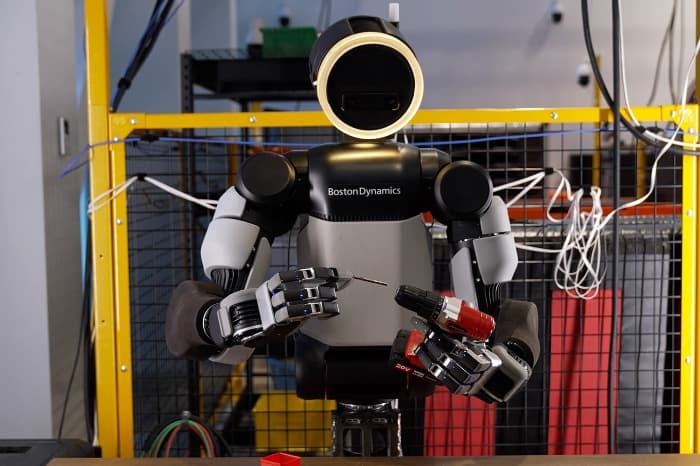
- **Boston Dynamics’ Atlas humanoid** captivated global audiences with viral videos showcasing flawless gymnastics routines—including backflips, vaults, and dynamic balancing—signaling readiness for imminent commercial deployment. CEO **Marc Raibert** emphasized that these breakthroughs unlock new applications in industrial automation, disaster response, and service robotics.
- South Korea’s **Hyundai Motor humanoid robot** performed a perfect cartwheel during CES, contributing to a notable rise in Hyundai’s stock price and reinforcing South Korea’s integrated leadership in hardware innovation and locomotion expertise.
- U.S.-based humanoid robots demonstrated similarly complex backflips and cartwheels, underscoring intense international competition to master dynamic motion.
- China’s **X-Humanoid**, dubbed the “Half-Marathon Champion,” showcased endurance and versatility by seamlessly transitioning between athletic feats, industrial tasks, and household assistance, reflecting China’s accelerating embodied AI capabilities.
These dynamic locomotion advancements represent a new class of robots capable of **complex, agile physical interaction with real-world environments**, broadening commercial applications across challenging operational settings.
---
### Semiconductor and Software Platforms: The Nervous System Powering Physical AI
CES 2026 witnessed pivotal developments in integrated semiconductor and software platforms, forming the **nervous system of scalable, privacy-first physical AI ecosystems**:
- **Nvidia’s Alpamayo platform**, unveiled by CEO **Jensen Huang**, establishes a **foundational framework for physical AI and autonomous driving**, focusing on ultra-low latency, privacy-preserving edge AI, and seamless semiconductor-to-cloud integration. Huang described Alpamayo as “a foundational framework set to revolutionize edge robotics and mobility worldwide.”
- Leading semiconductor firms **AMD, Intel, and Nvidia** are advancing strategic alliances to accelerate AI-optimized edge computing innovation, addressing the pressing demands of real-time autonomy.
- The **QNX Alloy Kore platform**, developed in partnership with Vector, was spotlighted as a foundational software solution tailored for **Software-Defined Vehicles (SDVs)**. Alloy Kore integrates physical AI capabilities with next-generation vehicle architectures, exemplifying the convergence of embodied intelligence and autonomous mobility.
- These platforms collectively enhance interoperability, accelerate innovation cycles, and broaden application domains, catalyzing global physical AI adoption.
- Complementing hardware-software advances, **Kedar Kondap, SVP & GM of Computing at Lenovo**, highlighted the rise of **AI PCs**—edge compute devices optimized for physical AI workloads—underscoring how future computing is inseparable from embodied AI applications.
---
### Enterprise Impact: Physical AI Reshaping Operations, Workforce, and IT Ecosystems
Physical AI commercialization is transforming enterprise landscapes across industries, redefining operations, workforce dynamics, and IT infrastructures:
- Adaptive robotics are improving **operational efficiency** in logistics, facilities management, and frontline customer service through flexible, modular deployments.
- Collaborative robotics foster **workforce upskilling and reskilling**, creating new roles and boosting productivity via enhanced human-robot collaboration.
- The proliferation of edge AI robotics demands robust frameworks for **cybersecurity, regulatory compliance, and IT interoperability**, ensuring secure data handling and seamless enterprise integration.
- Industry thought leaders, including noted analyst **Shawn DuBravac**, emphasize that success hinges on **strategic, ethical, and agile approaches** balancing innovation speed with governance, workforce readiness, and infrastructure modernization.
---
### Ethical Governance and Privacy: Foundations for Trust and Adoption
CES 2026 reinforced that **ethical governance and privacy-first edge AI architectures** are indispensable for scalable physical AI adoption:
- South Korea’s transparent AI decision-making protocols and leadership in harmonizing international AI regulations have earned global recognition.
- Multisector panels highlighted the urgent need for **cross-industry collaboration and international regulatory alignment** to address data rights, algorithmic bias, and societal impacts.
- Privacy-first edge AI architectures emerged as critical enablers, reconciling innovation in embodied intelligence with individual rights and societal values.
These initiatives underpin the **public trust necessary for responsible, wide-scale physical AI integration**, ensuring that technology advances align with ethical imperatives.
---
### From Virtual Screens to Embodied Intelligence: A Paradigm Shift Confirmed
Industry analyses, including Yole Group’s market report *“CES 2026: Physical AI moves from concept to system architecture,”* and FSP Invest’s *“CES 2026: The Moment AI Stopped Being a ‘Screen Thing,’”* capture the event’s transformative impact: AI has transcended its virtual, screen-bound origins to become a **commercially viable, scalable technology embedded in everyday machines and environments**. This paradigm shift redefines human-machine interaction, operational workflows, and societal frameworks globally.
---
### Current Status and Outlook: Physical AI’s Transformative Promise Realized
Post-CES 2026 developments continue to confirm physical AI’s accelerating momentum and expanding commercial footprint:
- **Boston Dynamics** maintains leadership with humanoid robots demonstrating full-body acrobatics, signaling readiness for imminent commercial deployment.
- The **QNX Alloy Kore platform** roadmap underscores the automotive sector’s pivotal role in adopting embodied AI, integrating physical AI with Software-Defined Vehicle architectures.
- Consumer physical AI’s rise continues with award-winning products like the **Dreame Pool Zircon 2 Ultra robotic cleaner**, the **Sleepal AI Lamp**, and **Oshkosh Corporation’s collision-avoidance system**, recently honored with the **TWICE 2026 CES Picks Award**.
- South Korea’s integrated national approach remains a cornerstone anchoring the global surge, while emerging leaders in China, the United States, and multinational technology giants expand geographic reach and applications.
- Thought leaders urge enterprises, policymakers, and digital leaders to **develop bold, ethical, and agile strategies** to unlock physical AI’s transformative potential.
As robots evolve into **continuous learners and trusted collaborators**, the coming decade promises to fundamentally reshape workflows, urban infrastructure, emergency response, consumer experiences, and societal norms worldwide—ushering in the full integration of AI not just as software but as **embodied intelligence physically interacting with the world**.