The global semiconductor industry remains a crucible where technological innovation, economic security, and geopolitical power converge, with recent developments intensifying the stakes. As **advanced semiconductors underpin critical capabilities in artificial intelligence, communications, and defense**, the control over their design, production, equipment, and raw materials now decisively influences global power dynamics. The evolving landscape highlights an increasingly complex web involving Taiwan’s foundry dominance, U.S. export controls, Big Tech’s strategic shifts, China’s resource leverage, and Europe’s emerging vulnerabilities.
---
### Taiwan’s Semiconductor Industry: The “Silicon Shield” Strengthens but Risks Persist
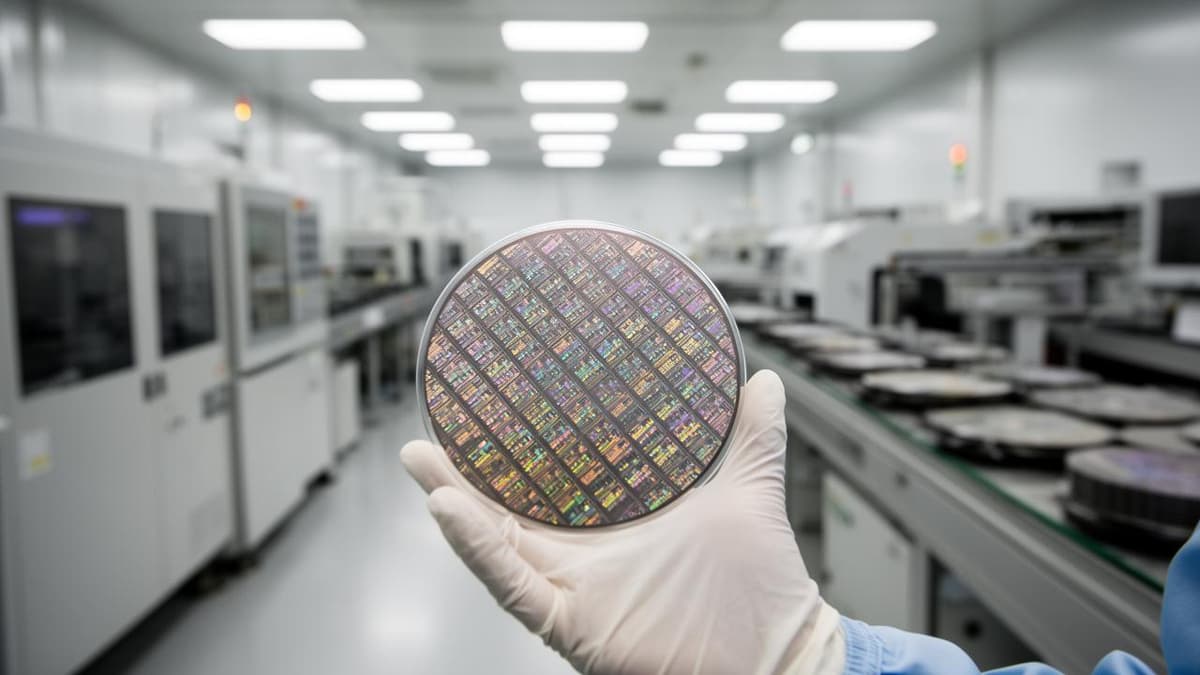
Taiwan continues to be the **indispensable backbone of global advanced semiconductor manufacturing**, with Taiwan Semiconductor Manufacturing Company (TSMC) producing over 90% of the world’s most sophisticated chips using cutting-edge process nodes. This unparalleled foundry dominance reinforces Taiwan’s role as a **“silicon shield”**—a strategic asset that deters aggression by linking global tech supply chains to the island’s stability.
Recent developments underscore Taiwan’s expanding production capabilities:
- TSMC is aggressively ramping up its **3-nanometer (nm) node fabrication**, aiming to reach approximately **190,000 wafers per month by the end of 2024**. This capacity expansion signifies the company’s commitment to maintaining technological leadership amid rising global demand.
- The **Chip-on-Wafer-on-Substrate (CoWoS)** advanced packaging technology, integral to high-performance chips, is central to TSMC’s production plans, further cementing Taiwan’s pivotal role.
Despite these strengths, Taiwan remains a **single point of failure** in global semiconductor supply chains, a vulnerability exacerbated by ongoing cross-Strait tensions. In response, Taiwanese policymakers and industry leaders are deepening domestic debates on chip legislation, focusing on:
- **Safeguarding intellectual property and sensitive semiconductor technologies** against espionage and unauthorized foreign influence.
- **Promoting indigenous semiconductor R&D and manufacturing investments** to diversify technological capabilities.
- Balancing **openness to foreign investment** with safeguarding national security interests.
The outcome of these legislative efforts will critically shape Taiwan’s semiconductor ecosystem and its geopolitical posture for years to come.
---
### U.S. Export Controls Tighten, Supply Chain Security Intensifies
In parallel with Taiwan’s internal developments, the United States has escalated its efforts to curb China’s technological ambitions through **stricter export controls and supply chain oversight**. Key recent measures include:
- **Enhanced restrictions on AI-capable chips and advanced manufacturing equipment**, targeting hardware integral to artificial intelligence and military applications destined for Chinese entities.
- Increased scrutiny to ensure that chips shipped to China do not incorporate **restricted Taiwanese components or U.S.-origin technologies**, effectively extending control beyond direct U.S. exports.
- Substantial **government incentives and investments to boost domestic semiconductor fabrication**, aiming to reduce reliance on foreign manufacturing and secure a resilient supply base.
These policies reflect a strategic calculus to slow China’s chip industry progress without provoking direct military confrontation in the Taiwan Strait.
---
### Big Tech’s Strategic Supply Chain Diversification Accelerates
In acknowledgment of geopolitical risks, leading technology companies are actively diversifying their semiconductor sourcing and manufacturing footprints:
- **Apple has committed to purchasing over 100 million chips from TSMC’s new Arizona fab by the end of 2024**, marking a significant shift toward U.S.-based production to mitigate reliance on Taiwan.
- Other industry giants are pursuing partnerships and expansions in **South Korea, Japan, and the United States**, balancing cost, technological access, and geopolitical risk.
- This diversification trend reflects a broader industry imperative to prioritize **supply chain resilience alongside efficiency**, ensuring operational continuity amid escalating global tensions.
TSMC’s capacity expansion at its Taiwanese and overseas sites, especially the CoWoS packaging and 3 nm node production, is a critical enabler for these strategic moves.
---
### China’s Expanding Leverage: Rare Earths and Targeting Critical Equipment
China continues to wield its dominant position in **rare earth elements (REEs)**—vital for chip manufacturing and various high-tech applications—as a potent geopolitical tool:
- Recent export restrictions and quota reductions on rare earth shipments to certain countries signal China’s readiness to leverage resource control for political and economic influence.
- Diplomatic pressure campaigns target European and U.S. companies entrenched in semiconductor supply chains, seeking to sway industry behaviors and regulatory responses.
A notable escalation is China’s intensified focus on **ASML**, the Dutch manufacturer of the world’s most advanced photolithography machines necessary for producing cutting-edge chips:
- ASML’s extreme ultraviolet (EUV) lithography equipment represents a critical chokepoint, with no viable global alternatives in the near term.
- China’s efforts to **limit ASML’s access or influence** threaten not only European semiconductor manufacturing capabilities but also the broader **$300 billion European tech sector**, exposing new vulnerabilities beyond the traditional U.S.–Taiwan–China axis.
This expansion of the geopolitical front underscores the rising importance of securing not just chip production and raw materials, but also the **highly specialized equipment essential to semiconductor fabrication**.
---
### Europe’s Emerging Semiconductor Vulnerabilities
Europe, home to key semiconductor equipment manufacturers like ASML and a significant tech industry, faces increasing pressure from the geopolitical semiconductor contest:
- The region’s dependence on ASML’s machines for advanced chip production creates a strategic bottleneck that China’s diplomatic and trade tactics aim to exploit.
- European governments and companies are now grappling with how to **strengthen supply chain resilience and technological sovereignty** amidst intensifying U.S.-China competition.
Europe’s semiconductor ecosystem is thus becoming a new frontline, requiring coordinated policy responses and investment to safeguard its critical technology sectors.
---
### Outlook: An Era of Intensified Chip Geopolitics and Supply Chain Realignment
The semiconductor industry’s transformation into a **strategic arena for global power** shows no signs of abating. Key implications and emerging trends include:
- **Semiconductors are unequivocally strategic assets**—their control underpins economic strength and military capability.
- Taiwan remains the **indispensable “silicon shield”**, but its single-point vulnerability drives urgent diversification and legislative action.
- The United States and allied nations are **deepening coordination on export controls and supply chain security**, aiming to contain China’s technological rise while bolstering domestic capabilities.
- China is broadening its geopolitical toolkit by exploiting **rare earth supply dominance and targeting critical semiconductor equipment providers**, complicating containment strategies.
- Europe faces a new set of challenges as a **critical equipment supplier and tech hub**, necessitating accelerated efforts toward supply chain resilience and innovation independence.
- Industry players, including Big Tech and leading foundries, are **investing heavily in diversification and advanced capacity expansions**, such as TSMC’s 3 nm ramp and U.S.-based fabs, to navigate uncertainty.
In this rapidly evolving context, **control over semiconductor design, manufacturing, equipment, and materials will shape the architecture of global power for decades**, compelling governments and corporations alike to pursue resilient, secure, and sovereign supply chains as a matter of strategic imperative.