# Industry Competition and Core Architectural Patterns for AI Agent Platforms: The Latest Developments
The race to define the future landscape of AI agent orchestration and platform ecosystems is more dynamic than ever. Driven by unprecedented technological breakthroughs, infrastructural innovations, and a vibrant ecosystem of hardware, protocols, and standards, industry leaders—from established tech giants to ambitious startups—are shaping the evolution of scalable, secure, and interoperable AI deployment solutions. As these advancements unfold, the focus increasingly centers on building resilient architectures capable of supporting **long-term, enterprise-grade AI systems** across diverse environments—from data centers and hybrid clouds to edge devices and web browsers.
## Reinforcing the Pillars of Industry Leadership
At the heart of this competitive ecosystem are three strategic pillars that underpin the development and deployment of advanced AI agent platforms:
- **Security Primitives:** Tools like **AlignTune** and **NeST** continue to play a crucial role in post-training safety adjustments, behavioral fine-tuning, and ensuring AI agents remain trustworthy, compliant, and aligned over extended periods. Recent innovations have integrated these safety layers more deeply into the AI lifecycle, making them integral to enterprise deployments.
- **Advanced Orchestration Frameworks:** Protocols such as **A2A (Agent-to-Agent)**, **ADP (Agent Data Protocol)**, and **MCP (Model Context Protocol)** are rapidly evolving to support complex multi-agent workflows, long-horizon planning, and intricate coordination. The emergence of **protocol-driven architectures** now facilitates **multi-week planning horizons**, enabling more autonomous and resilient multi-agent systems capable of sustained operation.
- **Interoperability and Open Standards:** Initiatives like **VLANeXt recipes**, **open-weight architectures**, and **standardized container formats** continue to promote transparency, modularity, and cross-platform compatibility. These standards are crucial for creating **resilient AI ecosystems** that can adapt, scale, and evolve organically, fostering a collaborative environment for innovation.
These pillars transcend mere technical features; they serve as **strategic enablers** positioning firms as **industry leaders** in the ongoing wave of AI commercialization and deployment.
## Infrastructure and Deployment Milestones: From Hybrid Clouds to On-Device AI
### Hybrid Cloud and Deployment Standards
Recent milestones underscore the importance of flexible deployment architectures. Notably, **Red Hat** announced a **metal-to-agent hybrid cloud stack** designed to **bring enterprise-grade AI into hybrid environments**. This infrastructure supports **secure, compliant, and scalable deployment** across on-premises data centers and multiple public clouds, effectively bridging the gap between cloud scalability and local control. Such standards are especially vital for sectors with stringent compliance needs, including finance, healthcare, and government agencies.
### On-Device and Browser-Native AI
Edge AI innovations are gaining rapid momentum:
- The integration of **MLC Large Language Models (LLMs)** with **React Native** demonstrates the **feasibility of running large models directly on mobile devices**, reducing latency, enhancing privacy, and supporting real-time applications. This development is crucial for **sensitive or time-critical use cases**, such as personal assistants or mobile health diagnostics.
- **TranslateGemma 4B by Google DeepMind** exemplifies **browser-native AI models** executing entirely within browsers via **WebGPU**. This approach democratizes AI deployment, making **high-performance models accessible without specialized hardware or cloud infrastructure**, thus broadening AI’s reach to a wider user base.
### Inference Serving: Standards and Engines
The ecosystem for inference continues to mature, emphasizing **portability, efficiency, and interoperability**:
- Packaging models into **OCI-compliant containers** has become commonplace, ensuring **ecosystem compatibility** and simplifying deployment workflows.
- Open-source inference engines like **ZSE** have demonstrated **remarkably low cold start times (~3.9 seconds)**, significantly reducing latency and enabling **real-time, multi-agent AI applications** in dynamic environments.
## Hardware and Model-Efficiency Trends: The Inference Chip Wars
The hardware landscape remains fiercely competitive, reflecting AI’s strategic importance:
- **MatX**, founded by ex-Google engineers, recently secured **$500 million** in funding, signaling a strong push toward **specialized inference hardware** designed to optimize cost, latency, and energy efficiency.
- The industry is shifting from traditional GPU-centric systems to **dedicated inference chips** from startups like **MatX** and established players such as **Taalas**, focused on **multi-agent reasoning** and **long-horizon planning**.
- **NVIDIA’s Blackwell Ultra GPUs** now deliver up to **50x performance gains** for reasoning and multi-agent tasks, enabling **long-horizon, multi-step reasoning** previously impractical at scale.
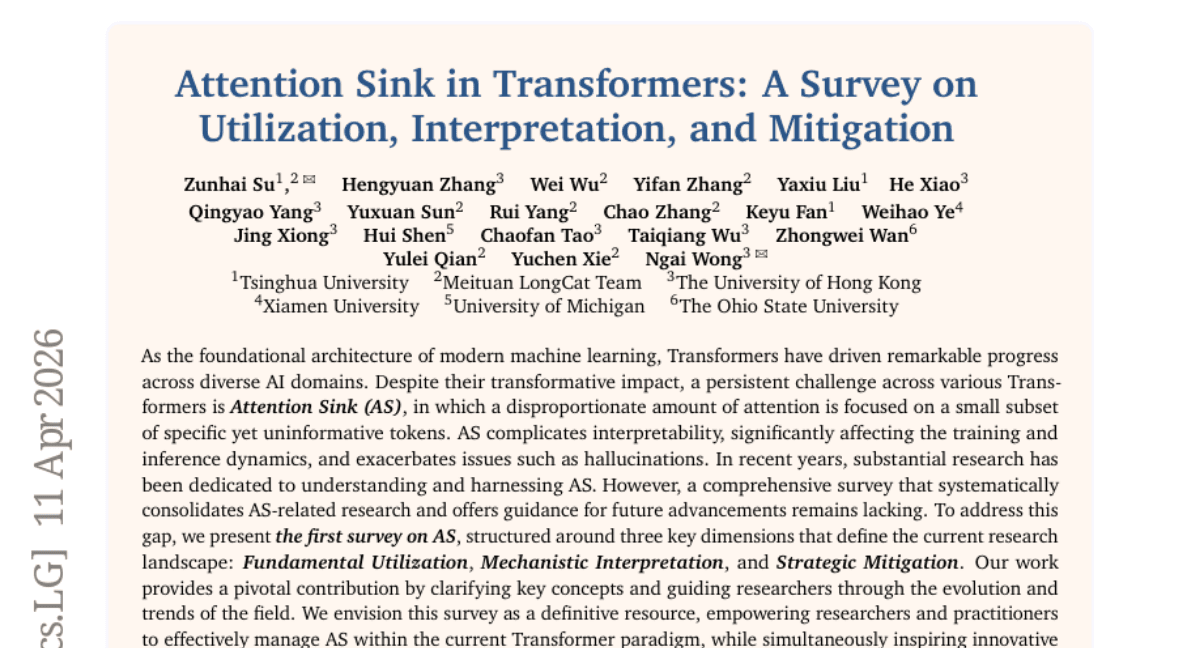
- Techniques like **Sink Pruning** and **COMPOT** have achieved **up to 75% reductions in model size**, facilitating deployment in resource-constrained environments and improving overall compute efficiency.
This **hardware evolution** underpins the ability to deploy **large, complex models** in diverse settings, from data centers to embedded devices.
## Enabling Long-Term, Enterprise-Grade Deployment
### Memory and Context Management
Supporting **multi-week or multi-month reasoning cycles** necessitates advanced **memory and context management**:
- **Retrieval-Augmented Generation (RAG)** systems leverage **vector databases** like **Weaviate.io** to **dynamically fetch real-time data**, significantly reducing hallucinations and inaccuracies.
- Solutions such as **DeltaMemory** provide **fast, persistent cognitive memory**, enabling AI systems to **maintain continuity and coherence** over extended periods—crucial for enterprise applications like strategic planning or scientific research.
- **MemU** and **MemAlign** offer **durable storage and efficient context management**, ensuring **long-term reasoning and decision-making** over multi-week or multi-month horizons.
### Evaluation and Safety Frameworks
Robust evaluation frameworks are essential for trustworthy enterprise deployment:
- The **"DREAM" (Deep Research Evaluation with Agentic Metrics)** framework assesses **goal achievement, safety, and adaptability** during prolonged operations.
- Techniques like **"Untied Ulysses"** employ **headwise chunking** to **scale context windows efficiently**, supporting **multi-agent, long-horizon reasoning** without excessive computational costs.
- Safety tools such as **AlignTune**, **NeST**, and **InferShield** embed **behavioral safety, anomaly detection, and hallucination mitigation**, ensuring **predictability and reliability** over extended periods.
### Formal Verification and Certification
In safety-critical sectors, **formal verification tools** like **EVMbench** are increasingly employed to **certify models’ security, correctness, and safety**, fostering **trust** in autonomous systems operating in fields like healthcare, aerospace, and industrial automation.
## Architectural Frameworks for Multi-Week Reasoning
The architectural landscape is increasingly favoring **modular, hierarchical, and protocol-driven systems**:
- Frameworks such as **LangGraph** and **LangChain** dominate **orchestration**, managing **multimodal data streams** and **dynamic task adaptation**.
- Protocols like **A2A**, **ADP**, and **MCP** facilitate **inter-module communication** and **workflow coordination**, supporting **multi-week planning** and **multi-agent collaboration**.
- Safety and goal alignment are being **integrated into architecture layers**, enabling **sustained goal orientation** and **safe operation** over long durations.
### Notable New Architectural and Design Patterns
Recent contributions include:
- **Agentic AI Design Patterns**, exemplified by Kevin Dubois’ insightful video, which explores **how autonomous agents can pursue long-term goals with adaptive behaviors**.
- The **GABBE (Neurocognitive Swarm Architecture)** paper introduces a **swarm-inspired architecture** for **agentic AI software engineering**, emphasizing **distributed cognition** and **collective problem-solving**.
- **Gateway API** and **Load Balancer guidance** for LLM inference address **scalability and reliability**, ensuring **robust high-concurrency deployments**.
## Community and Ecosystem Developments
Community-driven initiatives continue to promote **openness, transparency, and collaboration**:
- The **"A Dream of Spring for Open-Weight LLMs"** advocates for **modular, trustworthy architectures** suitable for **collaborative AI development**.
- The **2nd Open-Source LLM Builders Summit** showcased projects like **Z.ai**, emphasizing **open-weight models** and ecosystem expansion—fueling the movement toward **open, collaborative AI ecosystems**.
- Surveys such as **"A Survey on Large Language Model based Multi-Agent Systems"** offer comprehensive overviews of **paradigms, applications, and challenges**, guiding future research endeavors.
- Practical guides, including **"Designing a FastAPI + LLM System for 10K Concurrent Users"**, provide **scaling strategies** for high-concurrency RAG deployments.
### Recent Additions in the Ecosystem
- **Agentic AI Patterns by Kevin Dubois**: A detailed exploration of **how autonomous agents can pursue goals over extended periods**, emphasizing **adaptive, self-directed behaviors**.
- **GABBE: A Neurocognitive Swarm Architecture for Agentic AI**: This paper proposes a **distributed swarm architecture** inspired by neurocognitive principles, aiming to **enhance flexibility and robustness** in agented systems.
- **Por qué tu Load Balancer no sirve para LLMs**: A practical discussion on **limitations of traditional load balancers** for large language models and the **necessity of specialized inference extensions** like **Gateway API**.
## Recent Innovations and Practical Applications
### Realtime Speech Agents: **gpt-realtime-1.5 by OpenAI**
OpenAI’s latest release of **gpt-realtime-1.5** enhances **instruction adherence** in speech agents, resulting in **more reliable voice workflows** via the Realtime API. This advancement improves **accuracy and responsiveness**, fostering **more natural and trustworthy voice assistants**.
### Persistent Memory and Long-Term Context: **DeltaMemory**
**DeltaMemory** addresses the critical challenge of **AI agents "forgetting" between sessions**. It offers **fast, durable cognitive memory**, enabling agents to **retain knowledge and context over weeks or months**, crucial for **multi-week reasoning and operational decision-making**.
### Operating System for AI Agents: **Open-Source Rust-Based OS**
An **open-source operating system** for AI agents, comprising **137,000 lines of Rust code**, has been released, providing a **robust platform** for **building, managing, and scaling autonomous AI agents** with **enhanced security, modularity, and performance**.
### Full-Stack Local AI Applications: **MCP-Driven Python Apps**
Developers have demonstrated a **full-stack Python application** utilizing **local LLMs** and **Model Context Protocol (MCP)**, illustrating the potential for **privacy-preserving, self-contained AI solutions** that operate without reliance on cloud APIs—a significant step toward **secure, customizable AI deployments**.
### Security and Attack Testing: **Open-Source Attack-Test Tools**
An open-source **attack-testing framework** has been developed to **expose vulnerabilities** in LLMs, facilitating **robustness evaluation** and **improvement of safety measures** as models become embedded in mission-critical systems.
## Current Industry Status and Future Implications
The confluence of these technological, infrastructural, and community-driven advancements signals a **mature, resilient ecosystem** poised to support **enterprise-grade, multi-month autonomous AI deployments**. These innovations **lower barriers to adoption**, **enhance safety**, and **accelerate deployment** across sectors such as manufacturing, scientific research, healthcare, and finance.
**In essence**, the industry is swiftly progressing toward **powerful, secure, and interoperable AI agents** capable of **multi-week reasoning, long-term planning, and complex multi-agent collaboration**. The emphasis on **long-horizon planning, safety assurance, scalable infrastructure, and openness** ensures these systems transition from experimental prototypes to **integral components of enterprise operations and societal evolution**.
---
**Looking ahead**, hardware advances like **MatX’s specialized inference chips**, **browser-native models**, and **persistent memory solutions**, combined with mature standards such as **OCI containers** and **protocol frameworks**, establish a **solid foundation for long-term, autonomous enterprise AI**. These developments promise a future where AI agents **seamlessly support complex reasoning, strategic decision-making, and operational tasks over extended periods at scale**, ultimately transforming organizational workflows and fostering innovative societal progress.