# 2026: The Pinnacle of Open-Weight Frontier Models, Multimodal World Understanding, and Autonomous Reasoning
The year 2026 has unequivocally cemented itself as a watershed moment in the evolution of artificial intelligence. Marked by the widespread deployment of **frontier open-weight models**, **sparse Mixture-of-Experts (MoE)** architectures, and **multimodal world models**, this year has ushered in an era where AI systems are more capable, accessible, and trustworthy than ever before. These advancements are transforming research landscapes, industrial applications, societal integration, and autonomous ecosystems—paving the way for AI agents capable of **long-horizon reasoning**, **causal understanding**, and **real-time multimodal perception**.
---
## Democratization and Scalability: Making AI Accessible and Efficient
A defining feature of 2026 is the **democratization of AI**, driven by **open-weight models** that challenge traditional proprietary dominance. These models emphasize **cost-effectiveness**, **flexibility**, and **scalability**, enabling broader participation across academia, industry, and individual innovators:
- **MiniMax M2.5** exemplifies this shift. Utilizing **linear attention** and **sparse routing**, it achieves **near-SOTA performance** at **about 1/20th the cost** of high-end models like **Claude Opus 4.6**. Its **lightweight architecture** allows **local deployment**, fostering rapid experimentation and customization in domains ranging from education to scientific research.
- **Qwen3.5-397B-A17B** from Alibaba marks a **multimodal breakthrough**. Supporting **text, images, and audio inputs**, it offers **8 to 19× inference efficiency improvements**, enabling **real-time multimodal reasoning directly on-device**. This capability broadens applications from **multimedia analysis** to **autonomous control systems** that demand **instant perceptual and contextual integration**.
- **Seed2.0**, developed by ByteDance, underscores a focus on **long-horizon reasoning** and **grounded perception**, tailored for **autonomous robotics** and **scientific exploration**, where decision-making spans extensive datasets and temporal horizons.
- The **Arcee Trinity**, a **400-billion-parameter sparse MoE**, demonstrates **dynamic sparse routing** across diverse domains—**language understanding**, **multimodal reasoning**, and **autonomous navigation**—while maintaining **compute efficiency** through **scaling strategies**. Its versatility exemplifies how **multi-domain models** are becoming **the new norm**.
---
## Long-Horizon, Complex Reasoning Becomes Mainstream
Handling **multi-million token contexts** has transitioned from experimental novelty to essential capability, enabling AI to **comprehend**, **plan**, and **reason** over **vast datasets**:
- **KLong** and **2Mamba2Furious** utilize **linear attention techniques** to process **multi-million token sequences** efficiently. These models are vital for **scientific literature analysis**, **legal document interpretation**, and **autonomous planning** that requires **deep, extended reasoning**.
- **Ulysses** introduces **memory-efficient context parallelism** via **headwise chunking**, allowing models to **maintain and reason over continuous streams** such as **research datasets** or **multi-turn dialogues**. This innovation addresses hardware constraints, making **persistent reasoning** and **long-term memory** feasible across real-world applications.
These systems empower AI to **integrate and utilize information across extended timescales**, enabling **autonomous agents** to operate reliably amidst **complex, dynamic environments**.
---
## Architectural Innovations, Safety, and Explainability
Trust in AI remains paramount, driving significant breakthroughs in **model architecture**, **interpretability**, and **training stability**:
- **Object-centric** and **causal models** like **Causal-JEPA** and **Moonlake** excel at **predictive environment modeling** and **causality understanding**, allowing **autonomous agents** to **anticipate future states** and **interact dynamically** within complex systems.
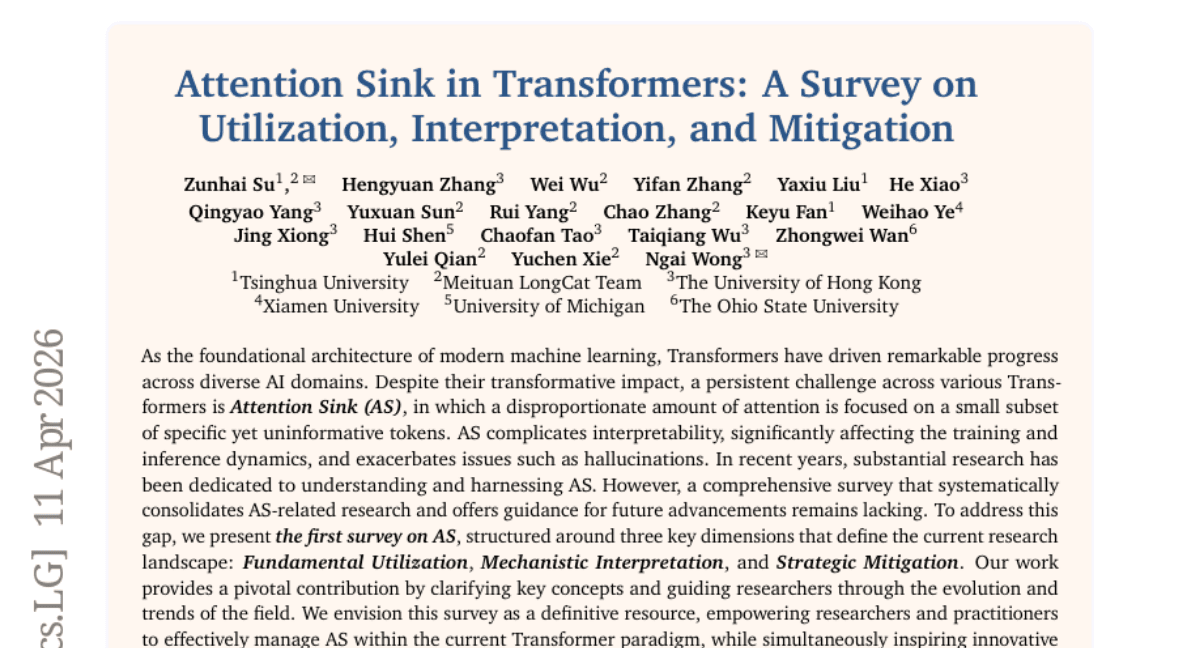
- **Interpretability tools** such as **Neuron Selective Tuning (NeST)** and **attention message passing** enhance **model transparency**, making **decision processes** more **explainable**. Initiatives like **AlignTune** and **Steerling-8B** foster **factual grounding** and **reasoning clarity**, which are essential for **safety-critical applications**.
- **Training stability** has advanced with innovations like **"Adam Improves Muon"**, a variant employing **orthogonalized momentum**, enabling **faster convergence** and **more robust training** of large models. This reduces **training instability risks** and accelerates **development cycles**.
---
## Multimodal Tokenization and Language Modeling Innovations
At the core of AI's 2026 revolution are **robust multimodal understanding** and **predictive environment modeling**:
- **UniWeTok**, a **unified discrete tokenizer**, encodes **visual**, **textual**, and **auditory data** into a **single token space** through an **extensive codebook of 2^128 tokens**. This **cross-modal encoding** significantly **enhances scene comprehension**, **multimedia summarization**, and **multimodal dialogue**, enabling models to **perceive and reason** seamlessly across modalities.
- **Diffusion-based language models** like **LaViDa-R1** utilize **diffusion processes** for **language generation**, offering **uncertainty estimation** and **layered inference**. Such models are particularly suited for **autonomous reasoning agents** that require **trustworthy, multi-step inference**.
- **World models** such as **Moonlake** and **Causal-JEPA** are advancing **predictive environment modeling** and **causal reasoning**, empowering AI to **simulate future states** and **understand causality**—crucial for **autonomous navigation**, **scientific discovery**, and **strategic planning**.
---
## Infrastructure and Deployment: Scaling AI for Real-World Use
Supporting **long-horizon reasoning** and **large-scale inference** hinges on **innovative infrastructure**:
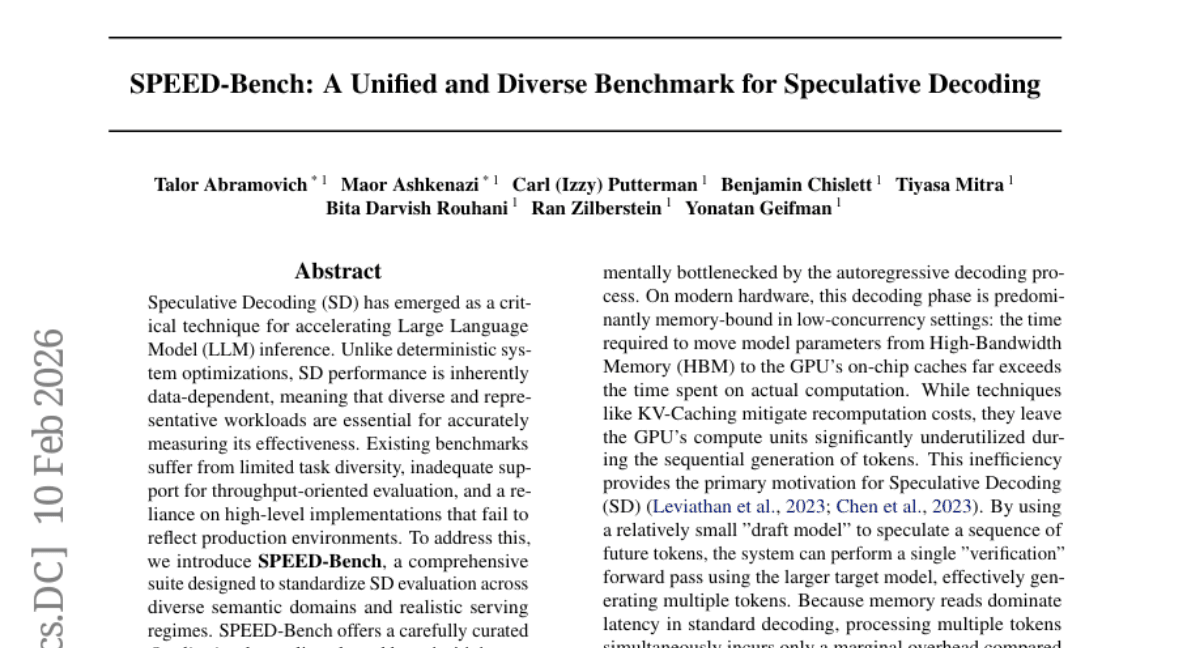
- **Extended contexts** are now enabled via **test-time training with KV binding**, leveraging **secret linear attention** to **expand reasoning horizons** without retraining.
- **Multi-layer MoE scheduling frameworks** facilitate **layer-wise routing** and **load balancing**, optimizing **computational efficiency** during inference. Recent research has established **best practices** for **scalable routing** in **multi-layer MoE systems**.
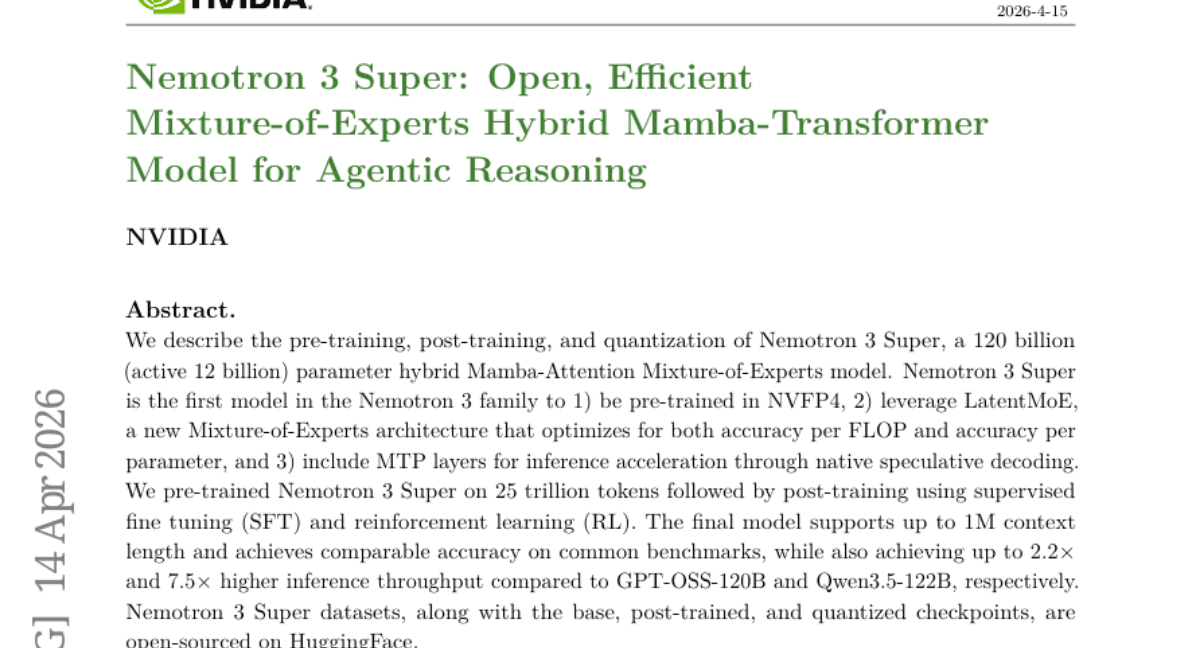
- **Inference engines** like **Zyora-Dev/zse** exemplify **ultra-memory-efficient inference**, allowing models to run on **commodity hardware**. **Nemotron**, an **open-source scientific literature AI**, demonstrates high performance in **processing complex documents** on **Hugging Face**, supported by **inference servers** and **vLLM**.
- Deployment workflows are further streamlined through **OCI-compliant containers**, as detailed in publications such as "[Inference serving language models in OCI-compliant model containers](https://example.com/pdf/inference-serving-oci)", promoting **standardized, scalable deployment**.
- **Evaluation benchmarks** like **RE‑Bench**, **METR**, and **SAW‑Bench** now rigorously assess **factual accuracy**, **long-horizon reasoning**, and **causality understanding**, ensuring models meet **trustworthiness standards** vital for **real-world deployment**.
---
## Hardware and Ecosystem Accelerators
Hardware and ecosystem innovations continue to **catalyze AI progress**:
- **NVIDIA’s Blackwell Ultra** and **MatX** accelerators have achieved **up to 50× performance improvements**, enabling **real-time multimodal inference** at scale.
- **Browser-based inference** has become mainstream, exemplified by **TranslateGemma 4B**, which **runs entirely within browsers via WebGPU**. This **privacy-preserving, low-latency deployment** democratizes AI access, reducing reliance on cloud infrastructure.
- Open-source frameworks like **ggml.ai** and **L88** demonstrate that **retrieval-augmented systems** can operate efficiently on **just 8GB VRAM**, lowering barriers for **small organizations** and **individual researchers**.
---
## Evolving Ecosystem and Research Paradigms
The AI ecosystem now emphasizes **multi-agent workflows** and **automated research pipelines**:
- Platforms such as **Tavily**, **LangGraph**, and **Flyte** facilitate **multi-agent orchestration**, **automation**, and **self-managing pipelines**, **reducing development overhead**.
- **Safety frameworks** like **StepSecurity** and **multi-agent safety protocols** are critical for **industrial automation** and **autonomous systems**, ensuring **reliable, secure operation** in complex multi-agent environments.
- **Vision-language-action frameworks**, exemplified by **VLANeXt** and **K-Search**, integrate **visual perception**, **linguistic reasoning**, and **autonomous decision-making**. These **holistic AI agents** can **perceive**, **reason**, and **act** seamlessly, heralding a new era of **autonomous, multi-modal intelligence**.
---
## Noteworthy New Developments
Recent months have introduced several key innovations that further accelerate AI capabilities:
- **gpt-realtime-1.5 by OpenAI** enhances **speech agent instruction adherence** and **voice workflows**, delivering **more reliable and responsive speech-based AI interactions**.
- **DeltaMemory** offers **fastest cognitive memory** for AI agents, addressing **forgetting between sessions**. Its **persistent memory** enables agents to **retain knowledge over time**, facilitating **long-term autonomy**.
- An **open-source operating system for AI agents**—reposted by @CharlesVardeman—comprises **137k lines of Rust code** under MIT license, providing a **standardized, flexible platform** for **agent development and management**.
- Developers have built **full-stack Python applications** utilizing **local LLMs** and the **Model Context Protocol (MCP)**, demonstrating that **complex AI-powered apps** can operate **entirely locally**, reducing **external API dependency**.
- Discussions highlight that **test-time compute scaling** now allows **4B models** to **match the performance of larger models** like Gemini, emphasizing **efficiency and accessibility**.
- **Multi-agent readiness guides** and **multi-agent OS platforms**—supported by partnerships such as **AMD–Nutanix**—are establishing the **infrastructure and best practices** for deploying **robust multi-agent systems** at scale.
- The recent release of **Grok/Perplexity Alternative (Open Source)**, a 24-second YouTube video titled "Barongsai is an open," signals ongoing efforts to develop **community-driven, open-source AI tools** that rival commercial solutions, further democratizing AI development.
---
## Current Status and Implications
The developments of 2026 herald a **new epoch** where **scalable, open, multimodal AI systems** are **more accessible**, **more capable**, and **more trustworthy** than ever. The integration of **long-horizon reasoning**, **causal environment modeling**, **multimodal perception**, and **scalable deployment** enables **autonomous agents** to operate reliably across **complex real-world scenarios**.
While challenges such as **physical grounding** and **multi-agent safety** persist, the **pace of innovation**—bolstered by **hardware breakthroughs**, **open architectures**, and **community collaboration**—provides confidence that **AI will become seamlessly embedded** into societal decision-making, scientific discovery, and everyday life.
**2026** stands out as the year when **frontier open models and multimodal world models** became **cornerstones of AI**, heralding a **springtime of open AI** that promises **greater accessibility, safety, and capability for all**. The continuous evolution points toward a future where AI systems are **not only tools** but **integral partners** in shaping a smarter, safer world.