# 2026: A Year of Turbulence and Transformation in Global Oil, Commodities, and Climate Policy — The Latest Developments
The global energy and commodities landscape in 2026 continues to be one of profound upheaval, driven by a complex interplay of divergent macroeconomic policies, geopolitical tensions, rapid technological advances, and climate-induced disruptions. As markets grapple with escalating volatility, strategic shifts are evident across industries, governments, and investors who seek resilience amid unprecedented uncertainty. Recent developments underscore the importance of agility and foresight in navigating this evolving environment.
---
## Deepening Macro Policy Divergence: Navigating Uncertainty
### The Federal Reserve’s Internal Dispute on Policy Timing
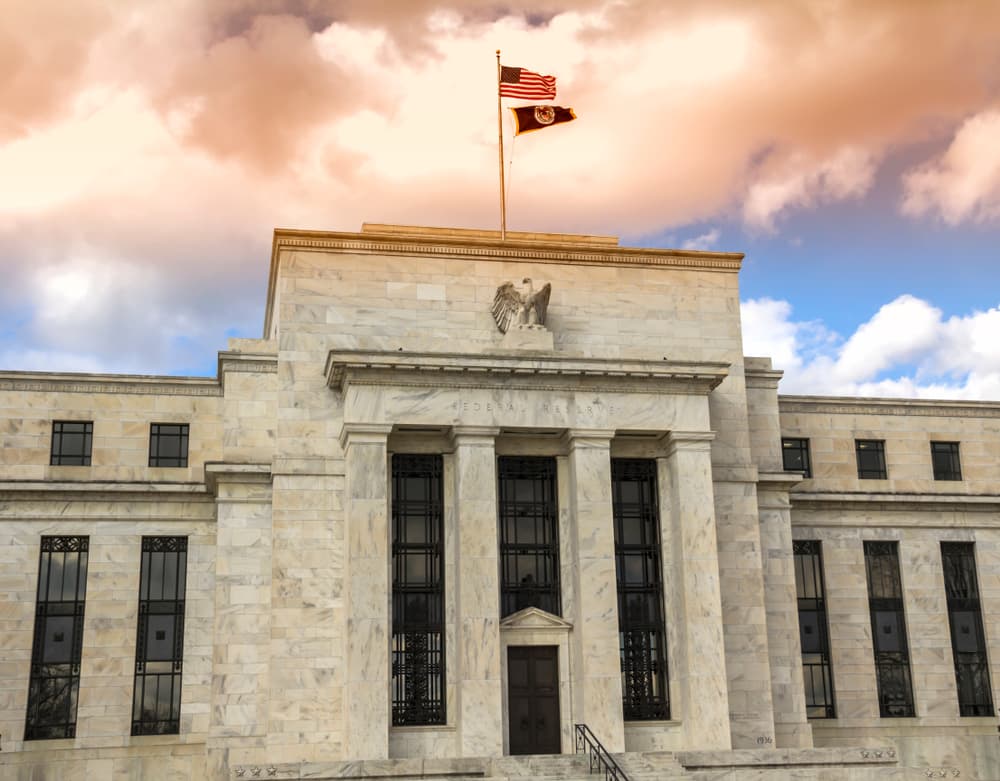
The **U.S. Federal Reserve** remains divided over the appropriate interest rate trajectory. The **latest Federal Open Market Committee (FOMC) minutes** reveal a **notable split**:
- **Lorie Logan**, Dallas Fed President, advocates for **patience**, citing **easing inflation pressures** and suggesting that **current policies may suffice** without immediate rate cuts.
- Other FOMC members express caution, emphasizing the need for **more data** to confirm inflation is under control. Some warn against **premature easing**, fearing a resurgence of inflation.
**Austan Goolsbee**, Chicago Fed President, summarized this cautious stance: *"Before we cut rates more, we need to see sustained evidence that inflation is firmly under control."* This **internal discord** injects uncertainty into markets, influencing **bond yields** and the **dollar**, which in turn supports **rising energy and metals prices**. The ambiguity around policy direction complicates **risk management** for investors and corporate strategists alike.
### The Bank of England’s Tilt Toward Easing
In Europe, the **UK** has seen a **significant deceleration in inflation**—January inflation fell to **3%**, the **lowest in ten months**, primarily driven by declines in **food and gas prices**. This development has **fueled expectations** that the **Bank of England (BoE)** may **accelerate easing measures**:
> *"The decline in inflation provides room for the BoE to ease,"* noted **Economist John Smith**.
Market models now **anticipate** a **rate cut possibly as early as March**, leading to **FX volatility** and a **weaker pound**, which ripple through European markets and commodities, especially **metals and energy sectors**. These policy signals influence **trade flows** and **investment sentiment** across the continent.
### AI’s Emerging Role in Policy Expectations
Artificial Intelligence continues to **reshape policy narratives**. A **recent statement by a prominent Fed nominee** highlighted AI’s **potential productivity gains**:
> *"If AI enhances productivity, it could help reduce inflation and support lower interest rates,"* the official said.
While **market participants** remain **cautious** due to **uncertainty about AI’s actual impact** and **timing**, this **narrative** increasingly influences **market expectations** for inflation and policy moves. The **AI trade barometer**, exemplified by **Nvidia’s recent earnings**, underscores **AI’s dual role** as a **market driver** and a **policy influence**.
---
## Market Fragility and Fiscal Risks: The Underlying Tensions
### Challenges to Federal Reserve Independence
A **recent Supreme Court ruling** concerning tariffs has **raised concerns** over **potential political interference** in the Federal Reserve’s decision-making process:
- The **tariff dispute** involves trade measures imposed by the current administration, leading to fears that **judicial and legislative actions** could **undermine Fed autonomy**.
- Experts warn that **external political pressures** might **distort monetary policy**, risking **market instability**.
**Jane Doe**, an economist, warned: *"If political influence begins to encroach on the Fed’s independence, it could lead to unpredictable policy shifts, undermining market confidence."*
### Microstructure Fragility and Elevated Risks
Markets remain **fragile**, with **interest rate derivatives open interest** reaching **record levels**, indicating **active hedging** but also **heightened tail risks**. **Liquidity conditions** are **delicate**, and **large unwinding of positions** could **trigger volatile reversals**.
The **VIX index** stays **elevated**, reflecting **investor nervousness** amid **geopolitical conflicts**, **supply disruptions**, and **climate shocks**. This **confluence of uncertainties** and **over-leveraged markets** raises the risk of **sudden corrections** that could **destabilize financial systems**.
### Rising Debt Servicing Costs and Fiscal Concerns
A **recent Congressional Budget Office (CBO)** report warns that **interest payments on U.S. federal debt** could **surpass economic growth** within a few years:
> *"If debt servicing costs grow faster than GDP, it could crowd out productive investments and threaten fiscal stability,"* said CBO Director Jane Miller.
With **federal debt nearing critical levels**, **interest costs** are projected to **outpace growth**, risking a **debt spiral** that might **push interest rates higher** and **further fuel inflation**—conditions that support **commodity prices** and exert downward pressure on currencies.
### The Threat to Fed Independence and Market Confidence
Adding to the fragility, **recent legal developments**, including the **Supreme Court ruling on tariffs**, have **heightened fears** of **political meddling** in monetary policy. Such interference could **undermine the credibility of the Fed**, leading to **volatile market reactions** and **loss of investor confidence**.
---
## Commodities and Market Fundamentals: Resilience Amid Disruption
### Currency Movements and Record-High Prices
Diverging policies and geopolitical tensions continue to **fuel extreme currency volatility**:
- The **South African rand** surged past **16 per dollar**, driven by **risk-on sentiment** supported by **robust commodity prices**.
- **Gold** prices **exceeded $5,000 per ounce**, reaching **historic highs** amid **geopolitical tensions** and **climate shocks** as investors flock to **safe havens**.
- **Copper** remains **firm** within **$13,200–13,500 per ton**, underpinned by **strong demand** from **electrification** and **renewable energy sectors**.
### Sector Resilience: Earnings and Operational Stability
Despite turbulence, **energy** and **mining sectors** demonstrate **notable resilience**:
- **Southern Company** reported **Q4 earnings** of **$416 million**, reflecting **operational stability**.
- **NextEra Energy (NEE)** increased its **quarterly dividend** from **$0.5665 to $0.62**, signaling **confidence** in **green infrastructure investments**.
- **Williams Cos.** posted **solid results**, driven by **natural gas infrastructure expansion**.
- **Barrick Mining** announced **Q1 earnings** that **beat estimates**, supported by **record-high gold and copper prices**.
### Barrick’s Q1 Performance and Strategic Positioning
**Barrick Mining**’s **Q1 earnings** exceeded expectations, driven by **record-high revenues** from **gold and copper sales**:
- **Revenues** surged as prices for **precious and base metals** remained elevated.
- **Cost controls** and **efficiency improvements** enhanced **profitability** amid inflationary pressures.
- Their **expansion into green metals** aligns with **demand from clean energy infrastructure**, positioning the company favorably in markets characterized by **persistent supply constraints**.
### Climate-Driven Disruptions and Geopolitical Risks
Recent **severe winter storms** across the U.S. caused **damage to infrastructure**, disrupting pipelines, offshore rigs, and natural gas facilities. These **climate shocks** have **pushed energy prices higher** and exposed **systemic vulnerabilities**.
**Climate expert Dr. Maria Lopez** emphasized: *"Investing in climate-resilient infrastructure is imperative to prevent future disruptions and ensure energy security."*
### Maritime and Geopolitical Risks
The **Red Sea**, a vital maritime route for **oil**, **LNG**, and raw materials, remains **unstable** due to regional unrest and **piracy**, leading to **delays** and **higher transportation costs**. Stakeholders are **considering alternative routes** like **the Cape of Good Hope** and **enhanced maritime security** measures.
### Russia’s Floating Crude Stockpile: A Market Wildcard
A **noteworthy recent development** involves **Russia’s floating crude oil stockpile**, a **massive accumulation** at sea resulting from **reduced Indian refinery imports**, sanctions, and geopolitical tensions. Analysts warn:
> *"The floating stockpile could lead to sudden releases, causing sharp price swings,"* potentially **disrupting supply chains** and **heightening volatility**. Shipping bottlenecks and **policy shifts** could exacerbate **market instability**.
---
## Strategic Supply Risks and Global Mineral Dynamics
### China’s Dominance and Diversification Strategies
China maintains **dominance over critical minerals**:
- Its control over **rare earth elements (REEs)** and **copper** remains unchallenged.
- Efforts continue to **expand shipments from Venezuela** as part of **geopolitical diversification**.
- Heavy investment in **domestic mineral processing** and **renewable energy projects** aims to **reduce reliance** on foreign supplies.
**Global supply chain concerns** persist, especially for **REEs** and **copper**, underscoring the **urgency for diversification**—through **onshoring**, **recycling**, and **alternative sourcing**—to bolster resilience.
### Emerging Players: India and Brazil
- **India** is **building domestic exploration** and **recycling capacities** for **lithium**, **nickel**, and **REEs**.
- **Brazil** is **expanding renewable infrastructure**—solar, wind, and storage—aiming to position itself as a **renewable energy hub**.
These developments are **reshaping global supply chains**, offering **resilience benefits**, yet introducing **geopolitical complexities**.
---
## Financial Markets and Market Sentiment: Navigating Uncertainty
On **February 24, 2026**, markets closed **lower**, amid **policy uncertainty** and **AI sector volatility**. The **VIX index** remains **elevated**, reflecting **investor nervousness**.
### The AI Sector’s Continuing Influence
The **AI industry**, exemplified by **Nvidia’s record earnings**, remains a **key market driver**:
- **Nvidia (NVDA)** posted **earnings** that shattered previous records, fueled by **widespread AI adoption**.
- The **AI trade barometer** indicates **widespread optimism**, but also **heightened speculation**, leading to **intraday swings**.
**Market analysts** warn that **AI’s rapid advancement** could **generate both unprecedented growth and volatility**, with regulatory debates on **productivity gains**, **inflation impacts**, and **market stability** intensifying.
---
## **Implications and Strategic Outlook**
The convergence of **diverging policies**, **climate shocks**, **geopolitical tensions**, and **technological innovation** necessitates **strategic agility**:
- **Supply Chain Diversification**: Seek alternative maritime routes, **onshore critical mineral processing**, and **recycling**.
- **Climate-Resilient Infrastructure**: Prioritize investments in **weather-resistant energy systems** and **distributed networks**.
- **Policy Monitoring**: Stay vigilant on **central bank signals**, **legal rulings**, and **political developments** that could **alter market trajectories**.
- **Risk Hedging**: Proactively hedge against **interest rate**, **currency**, and **commodity price** swings to manage **ongoing volatility**.
---
## Current Status and Broader Outlook
2026 exemplifies a **year of profound transformation**, driven by **policy divergence**, **climate-related disruptions**, and **geopolitical unrest**. The recent **fiscal warnings** underscore the **urgent need for coordinated policy responses**, while **climate risks** and **supply chain fragility** highlight the importance of **building resilience and diversification**.
The overarching lesson remains that **adaptability, innovation, and strategic diversification** are essential. Governments, industries, and investors must **act with agility** to **mitigate risks** and **capitalize on opportunities** amid these profound shifts.
As the year progresses, **market participants and policymakers** should remain **vigilant**, **well-informed**, and **strategic**—balancing immediate risks with the imperative for **long-term resilience** in a rapidly evolving global landscape.
---
## **Latest Market Signals: Pre-Market Briefs**
**5 Things to Know Before the Stock Market Opens**
- Stock futures are **little changed** after **two days of gains** for major indexes; **Nvidia shares** are trending higher amid **robust AI earnings**.
- **Energy and metals markets** are supported by **policy divergence** and **geopolitical tensions**.
- **Currency markets** show **extreme volatility**, with the **rand** strengthening and the **pound** weakening.
- **Commodity prices** remain elevated, with **gold** at **historic highs** and **copper** holding steady.
- Investors are closely watching **fiscal developments**, **climate resilience investments**, and **geopolitical risks** as key market drivers today.
---
**In summary**, 2026 is proving to be a pivotal year—marked by **strategic shifts**, **market resilience amid turbulence**, and **urgent calls for diversification and adaptation**. The coming months will test the resilience of global systems, demanding **vigilance** and **innovative solutions** to secure stability and sustainable growth.