# The 2025 AI Video Revolution: Foundations, Innovations, and Industry Maturation
The year **2025** stands as a watershed moment in the evolution of AI-driven video creation, marking the transition from experimental research to widespread commercial and creative adoption. Building upon the foundational breakthroughs of recent years, this era witnesses **mainstream deployment of high-fidelity, long-form, and highly controllable AI-generated videos**, reshaping industries, creative workflows, and everyday media consumption. The confluence of **advanced models**, **hardware accelerations**, **refined algorithms**, and **industry collaborations** has propelled AI video synthesis into a new realm—one where **cinematic quality, real-time processing, and democratized content creation** are no longer aspirational but achievable realities.
---
## The Rise of Multimodal Foundation Models: Enabling Rich, Long-Form Content
Central to this revolution are **next-generation multimodal foundation models** such as **Veo 3 / Veo 3.1**, **Sora 2**, **LTX-2**, and the **Grok Imagine API (N1)** developed by X.ai and Kling. These models have scaled dramatically—reaching **up to 19 billion parameters**—and now excel at **integrating multiple sensory modalities** to generate **cinematic-standard content**. Their capabilities include:
- **Fusing text prompts with video, audio, environmental cues, and scene semantics**, leading to outputs **rich in detail, highly customizable, and contextually coherent**.
- Supporting **long-form, narrative videos** spanning several minutes, enabled by **advanced scene understanding** and **temporal control modules** that maintain **story coherence across scenes**.
- Facilitating **cinematic storytelling**, **virtual characters**, and **interactive narratives** with **consistent behaviors** and **multi-modal synchronization**.
For instance:
- **Veo 3 / Veo 3.1** can generate **20-second 4K videos in under 20 seconds**, exemplifying **professional-grade throughput** that **reduces production timelines from days or weeks to seconds**.
- **Sora 2** and **LTX-2** continue to push **fidelity and control**, empowering creators to produce **complex, large-scale content** with minimal manual effort.
- The **Grok Imagine Video (N1)** now supports **multi-modal, long-form video generation** with **synchronized audio**, enabling **immersive storytelling** and **cinematic sequences** that are **highly engaging**.
**Recent advances** in **scene understanding** and **story coherence modules** mean AI can now generate videos where **visual fidelity and narrative flow** are seamlessly integrated. This marks a significant stride toward **AI-driven cinematic storytelling**, blurring the lines between machine-generated and human-directed content.
---
## Hardware and Algorithmic Breakthroughs Powering Real-Time, On-Device Synthesis
Complementing model advancements are **hardware innovations** that enable **interactive, real-time synthesis directly on consumer devices**:
- The **NVIDIA Rubin architecture**, paired with **RTX GPUs**, now supports **real-time 4K video synthesis**, drastically reducing latency and unlocking **instantaneous editing and generation capabilities**.
- Techniques such as **TurboDiffusion** have achieved **speedups exceeding 200x**, transforming workflows from **hours or days into seconds**.
- **Edge inference platforms** like **Wan-NVFP4**, **LightX2V**, and **HiStream** facilitate **low-latency, high-fidelity synthesis locally**, making **professional-grade AI video tools accessible on smartphones, tablets, and low-power devices**.
This **hardware-software synergy** has **lowered barriers to entry**, democratizing high-quality AI video creation and fostering innovation across sectors—from **entertainment and marketing** to **education**, **virtual reality**, and **live broadcasting**.
---
## Advancing Cinematic and Physics-Integrated Content
AI models are now **capable of producing longer, highly coherent videos** that meet **cinematic standards**:
- Frameworks like **StoryMem (ByteDance)** and **Motive** enable **character behavior consistency**, **scene transitions**, and **motion pattern control**, edging closer to **film-quality storytelling**.
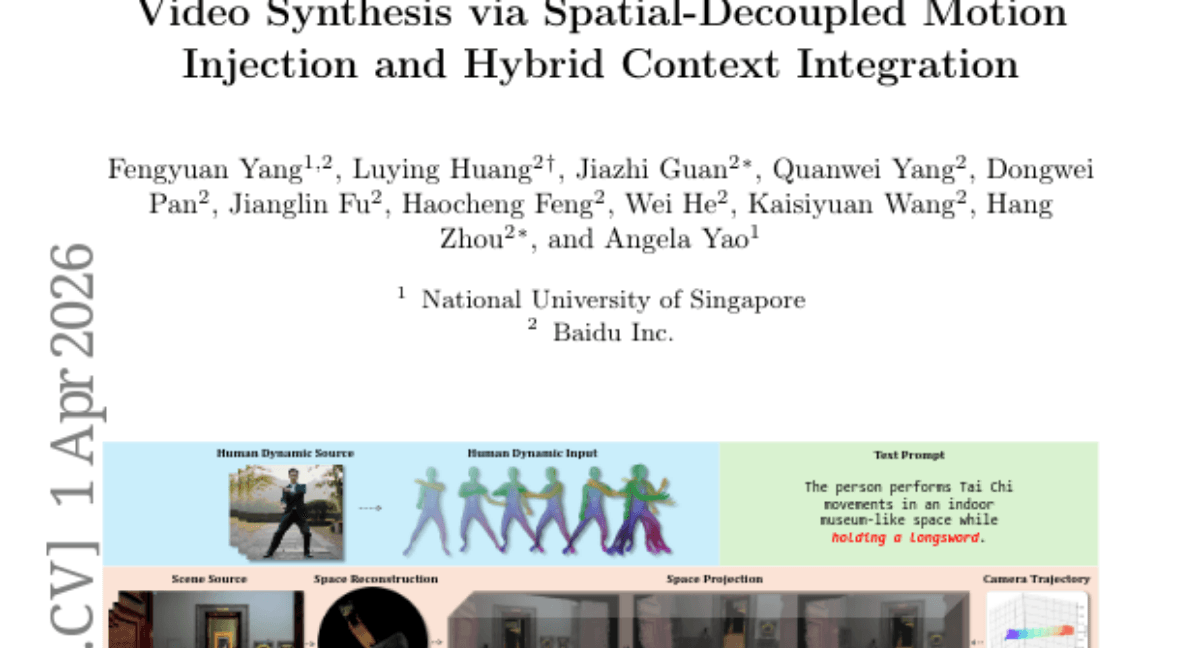
- Tools such as **Wan 2.6** and **Over++** allow **finer control over lighting, atmospheric effects**, and **scene compositing**, elevating **virtual environments** to near-photorealism.
- The incorporation of **Physics-Aware Reinforcement Learning (PhysRVG)** ensures **motions**, **lighting**, and **environment interactions** adhere to **real-world physics**, critical for **virtual production**, **gaming**, and **simulation** applications.
Recent practical demonstrations include:
- **AI-driven character animation tutorials** showcasing **total character consistency** and **lip-syncing**—for example, videos titled *"create ai animation total character consistency and lip sync"* illustrate these capabilities.
- **Scene editing frameworks** like **ReCo** and **MoCha** support **targeted modifications**—such as **object replacements**, **color adjustments**, or **scene retouching**—with **minimal artifacts**.
- **Sparse-Diffusion camera control** techniques enable **dynamic, user-driven camera movements** based on **keyframes** and **diffusion rendering**, enriching **AR/VR experiences** and **virtual cinematography**.
---
## Cutting-Edge Research and Optimization Techniques
The rapid progress is underpinned by **innovative datasets**, **benchmarking**, and **control methods**:
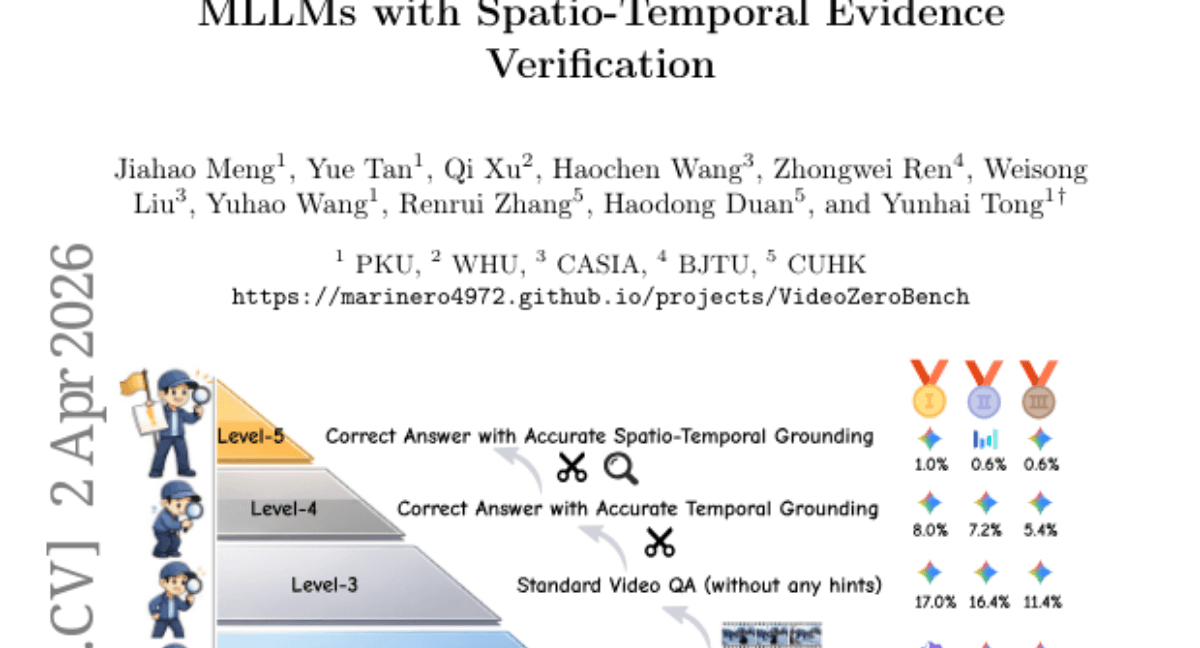
- **Action100M** dataset enhances **action-conditioned video synthesis**, supporting **complex motion modeling**.
- **FlowAct-R1** and **DrivingGen** improve **humanoid motion control** and **long-driving scene synthesis**, vital for **interactive environments**.
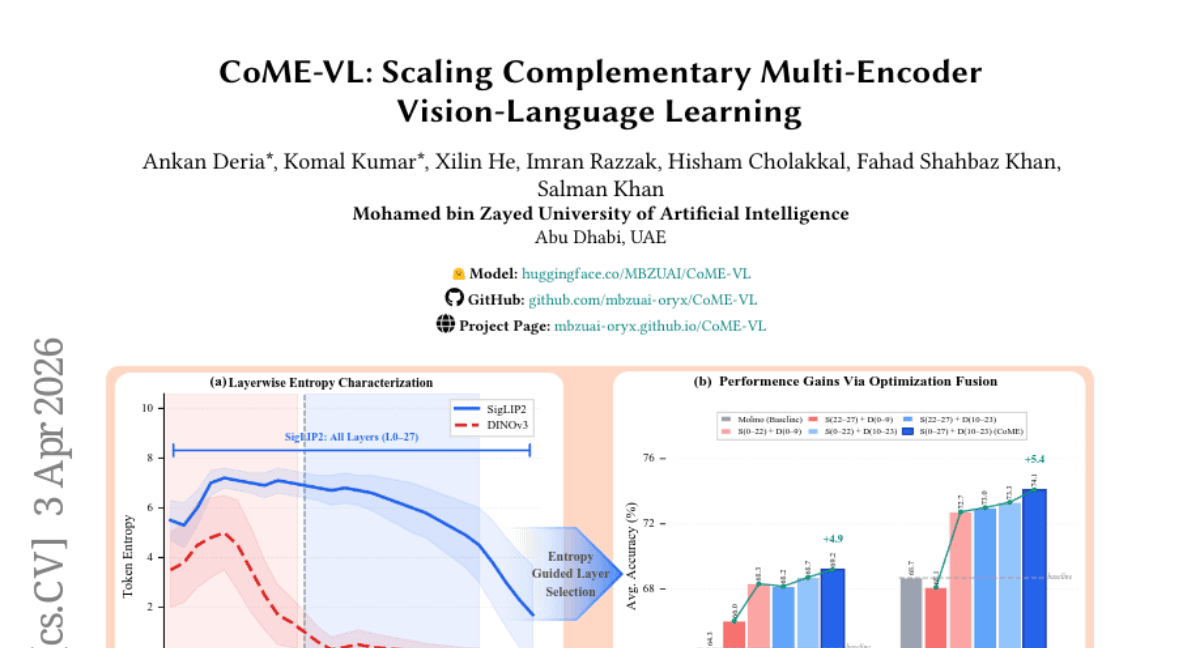
- **V-JEPA** advances **scene interaction understanding** and **explicit 3D reasoning**, essential for **metaverse development**.
- The **SALAD** (High-Sparsity Attention via Efficient Linear Attention Tuning) introduces an **attention mechanism** that **reduces computational costs**, allowing **longer and higher-resolution videos** without sacrificing quality—making **scaling diffusion models** more practical.
- **Memory-V2V** augments **video-to-video diffusion models** with **explicit memory modules** to **maintain temporal coherence** across multiple editing passes, supporting **complex scene management**.
- From a **systems engineering perspective**, models are increasingly regarded as **world models**, capable of capturing **environment physics**, **interactions**, and **temporal dynamics**, enabling **more controllable and believable content**.
---
## Industry Demonstrations and Practical Adoption
The **industry ecosystem** supporting AI video creation has matured rapidly:
- **Seedance 2.0** by ByteDance exemplifies **state-of-the-art AI video tech**, showcasing **local editing**, **multi-modal integration**, and **scalability**. Its recent demo, *"Seedance 2.0 Is Peak AI Video. We Tested It. Send Help."*, highlights **advanced capabilities**.
- **Veo 3.1** has been demonstrated extensively, illustrating **improved speed, fidelity**, and **enhanced user control**.
- **Grok Imagine Video (N1)** offers **long-form, multimodal content creation** with **synchronized audio**, enabling **cinematic storytelling** at scale.
- **Kling 3.0** has emerged as a **multi-shot, multi-scene video + audio generator**, aligning with foundational model trends for **interactive, cinematic content**.
- Tutorials like **"Make UNLIMITED & CINEMATIC AI Videos in Bulk with Veo3 & Sora 2"** have expanded **accessibility** for **amateurs and professionals**, emphasizing **automation** and **quality**.
Recent innovations such as **Picsart’s Aura tool** further demonstrate **voice-to-video capabilities**—turning voice prompts into social videos—highlighting the **growing toolkit** available to creators.
---
## Ethical Considerations and Responsible Development
While technological advancements are impressive, they also raise **ethical concerns**:
- **Fidelity and control** improvements heighten risks of **deepfakes**, **misinformation**, and **misuse**.
- The proliferation of **free, open-source tools** like **Veo**, **Sora**, **Grok API**, and **Kling 3.0** democratizes creation but necessitates **robust content verification** and **privacy safeguards**.
- Industry leaders advocate for **trustworthy AI practices**, emphasizing **content authenticity**, **user privacy**, and **preventative measures** against **malicious applications**.
---
## Current Status and Future Outlook
The **2025 AI video landscape** is **mature and dynamic**:
- **Foundational models** support **high-fidelity, long-form, controllable content**.
- **Hardware innovations** enable **real-time, on-device synthesis**.
- **Control frameworks** and **research breakthroughs** foster **cinematic coherence**, **physics-aware interactions**, and **targeted editing**.
- **Practical tools** and **industry demonstrations** illustrate the **rapid adoption** and **broad applicability**.
Looking forward, innovations like **Code2Worlds**—which translate **natural language into interactive, physics-based 4D worlds**—and **OneVision-Encoder**, designed to optimize multimodal representations, promise to **further democratize** virtual content creation. These advances are poised to **shape a future** where **virtual environments** are as **believable**, **interactive**, and **dynamic** as the physical world—unlocking **new creative frontiers** and **immersive experiences**.
---
## Notable Recent Developments and Community Demos
- **Grok Imagine Video (N1)**: Demonstrates **long-form multimodal videos** with **synchronized audio**, pushing the boundaries of **virtual storytelling**.
- **Kling 3.0**: Supports **multi-scene, multi-shot video + audio generation**, aligning with foundational model trends for **cinematic and interactive content**.
- **LTX-2 Quick Start and ComfyUI**: Offer **user-friendly interfaces** for **accessible, customizable video generation** without subscriptions.
- **Tutorials** such as **"create ai animation total character consistency and lip sync | dzine"** exemplify **practical, high-quality character animation workflows**.
---
## Conclusion: A New Era of Virtual Creativity
The **2025 AI video revolution** is not merely an incremental step but a **transformation**—where **fidelity**, **control**, and **speed** converge to **democratize content creation** and **expand creative horizons**. From **cinematic storytelling** and **virtual worlds** to **interactive media**, the innovations emerging this year are **poised to redefine** how humans **visualize**, **interact with**, and **generate** content. As **ethical practices** evolve alongside technological capabilities, society stands at the cusp of an era where **AI-generated videos** are **indistinguishable from reality**, **more accessible than ever**, and **fundamentally transformative** for industries and individual creators alike.