# The AI-Driven Shift in Data Engineering Practices Accelerates with New Innovations and Strategies
The landscape of data engineering is undergoing a profound transformation—powered by advances in artificial intelligence, automation, and modular architectures. What once depended heavily on manual scripting, static workflows, and siloed systems now pivots toward **autonomous, interconnected, and resilient ecosystems**. This evolution is reshaping how organizations build, maintain, and optimize their data pipelines, driving efficiency, cost savings, and faster experimentation. Building upon foundational discussions from **Small Data SF 2025** and Joe Reis’s keynote, **"The Great Data Engineering Reset,"** recent developments reveal an accelerating momentum fueled by practical innovations, protocols, and emerging best practices.
---
## The Evolution from Manual Pipelines to Autonomous, AI-Enhanced Workflows
Reis’s core thesis—that **manual, siloed data pipelines are becoming obsolete**—continues to resonate strongly. Industry leaders are increasingly deploying **AI-powered automation tools**, adopting **interoperable, modular architectures**, and designing **adaptive systems** capable of responding dynamically to evolving data streams and business needs.
### Key Themes Driving the Transformation
- **AI-Powered Automation:** Platforms like **n8n**, **DuckDB**, and specialized feature stores are now enabling **automatic error detection, real-time pipeline optimization, and self-healing workflows**. These tools reduce manual intervention, improve reliability, and facilitate **continuous adaptation**—embodying the vision of **AI-driven, autonomous data pipelines**.
- **Evolving Roles for Data Professionals:** As routine tasks are automated, data engineers are shifting toward **system architecture, data governance, AI/ML integration, and feature management**. Skills in **interoperability, schema evolution, debugging, and orchestration** are now critical, fostering **more strategic, adaptable data teams**.
- **Modular, AI-Friendly Architectures:** Moving beyond monolithic data warehouses, organizations are embracing **scalable, modular data lakes** such as **Apache Iceberg**, **cloud-native data warehouses** like **Snowflake**, and embedded analytics solutions. These architectures enable **real-time analytics, predictive modeling**, and **adaptive workflows**—all essential for **AI applications** and complex enterprise ecosystems.
---
## Recent Innovations Reinforcing the AI-Centric Paradigm
Over recent months, a series of practical projects, research efforts, and demonstrations exemplify how organizations are operationalizing this shift, pushing the frontiers of **AI-driven data engineering**:
### Building Reliable, Versioned Data Pipelines with n8n and DuckDB
Nikulsinh Rajput’s recent Medium article illustrates how **automation platforms like n8n** can be leveraged to **construct robust, high-quality data pipelines**:
- Focuses on **data quality and feature reliability**, critical for **AI and ML workflows**.
- Demonstrates **feature versioning** using **DuckDB** and **Parquet**, supporting **reproducibility** and **experiment tracking**.
- Implements **automatic error detection and pipeline tuning**, aligning with **Reis’s vision of AI-automated workflows**.
This approach highlights the importance of **version control, data integrity**, and **automation** as the bedrock of **trustworthy AI pipelines**.
### DuckDB’s Extensibility and Performance Gains
In a recent presentation, **Sam Ansmink** from DuckDB Labs emphasized **DuckDB’s flexible architecture**:
- Its **extensibility** allows seamless integration with various data formats and systems.
- Capable of **real-time querying** on data stored in **Iceberg**, **Parquet**, and other formats, making it ideal for **streaming, embedded analytics, and feature engineering**.
- Supports **low-latency data transformation** and **live analytics**, which are vital for **AI workflows** requiring immediate insights.
### Querying Snowflake-Managed Iceberg Tables
Recent demonstrations reveal **DuckDB’s ability to query Snowflake-managed Iceberg tables**, exemplifying **interoperability**:
- Connects **cloud data lakes** with **embedded analytics engines** effortlessly.
- Enables **faster insights**, **low-latency data access**, and **efficient model iteration**.
- Supports **scalable, AI-ready data pipelines** across distributed sources, reducing operational complexity and costs.
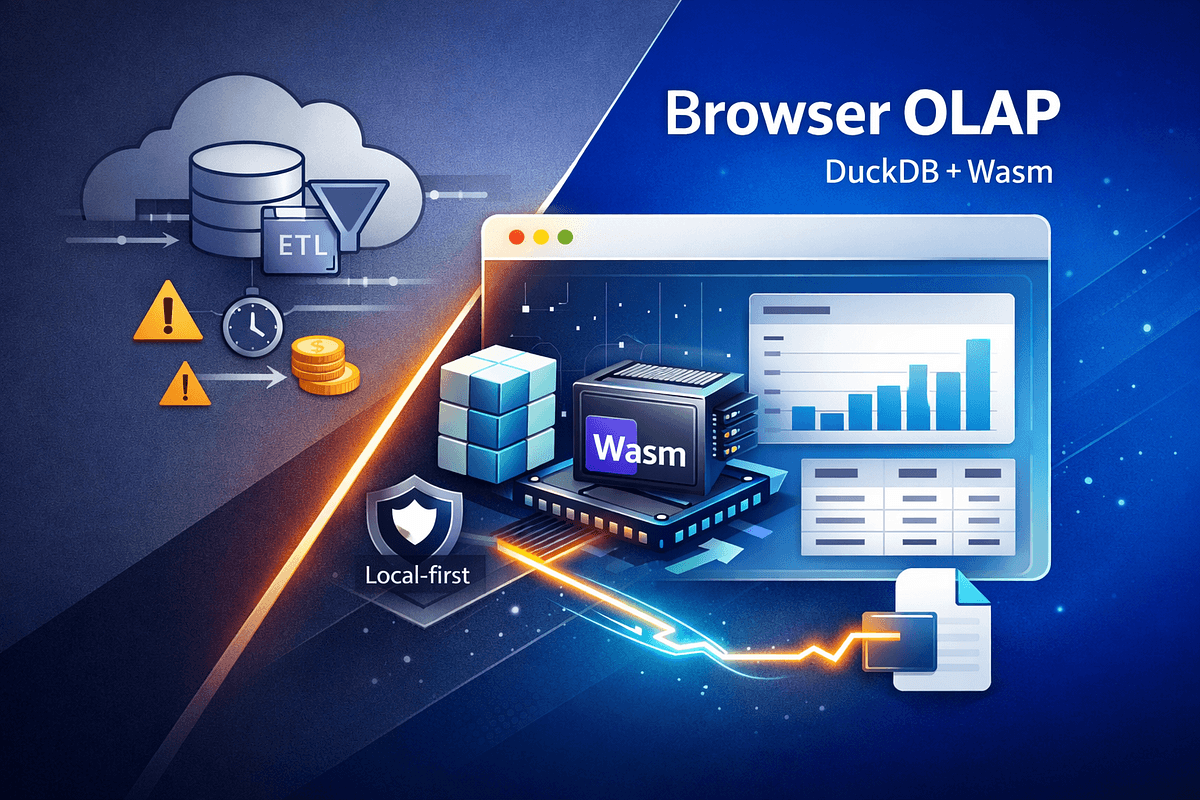
### SQLRooms: Collaborative, Local-First Analytics
At **FOSDEM 2026**, **SQLRooms** was showcased as an innovative **local-first, collaborative analytics environment**:
- Combines **DuckDB**, **CRDT-based Loro synchronization**, and a **collaborative SQL interface**.
- Enables **real-time teamwork** on shared datasets while maintaining **privacy and consistency**.
- Serves as a **scalable platform for AI experimentation** and collaborative analytics across distributed teams.
### Visualizing Mobility Data with DuckDB and Flowmap.gl
Teams are leveraging **DuckDB** for **efficient data processing** and **Flowmap.gl** for **interactive visualization**:
- Handles **large-scale, real-time mobility data** effectively.
- Supports **urban planning**, **logistics**, and **smart city initiatives**.
- Demonstrates **scalability and responsiveness** in AI-driven data pipelines that process and visualize data dynamically.
### Cost and Performance Insights: BigQuery vs DuckDB
A recent article titled **"BigQuery vs DuckDB for JSON: When Semi-Structured Data Is Cheaper Locally Than in Your Warehouse"** (Yamishift, Feb 2026) offers vital insights:
- **Main finding**: For many semi-structured JSON workloads, **local processing with DuckDB** proves **more cost-effective and performant**.
- **Implication**: Reinforces the trend toward **embedded, low-latency data processing** for **AI feature engineering**, debugging, and exploratory analysis.
- **Details**:
- DuckDB’s **efficient JSON handling** makes it ideal for **model features, validation, and iterative workflows**.
- Organizations are **reducing cloud costs** and **accelerating experimentation** by shifting semi-structured data processing locally.
---
## Enhancing Resilience and Experimentation: Practical Frameworks and Protocols
Parallel to technological advancements, recent publications provide **practical guides** for **pipeline resilience** and **robust experimentation**:
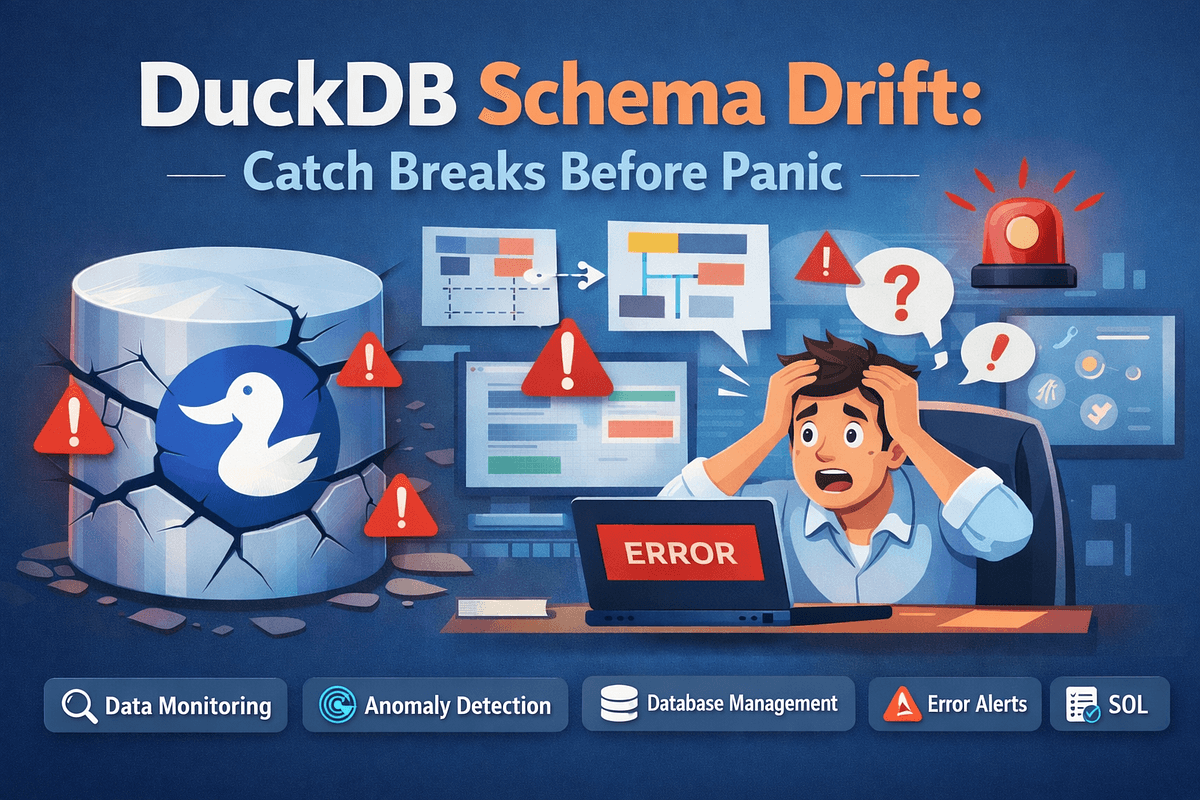
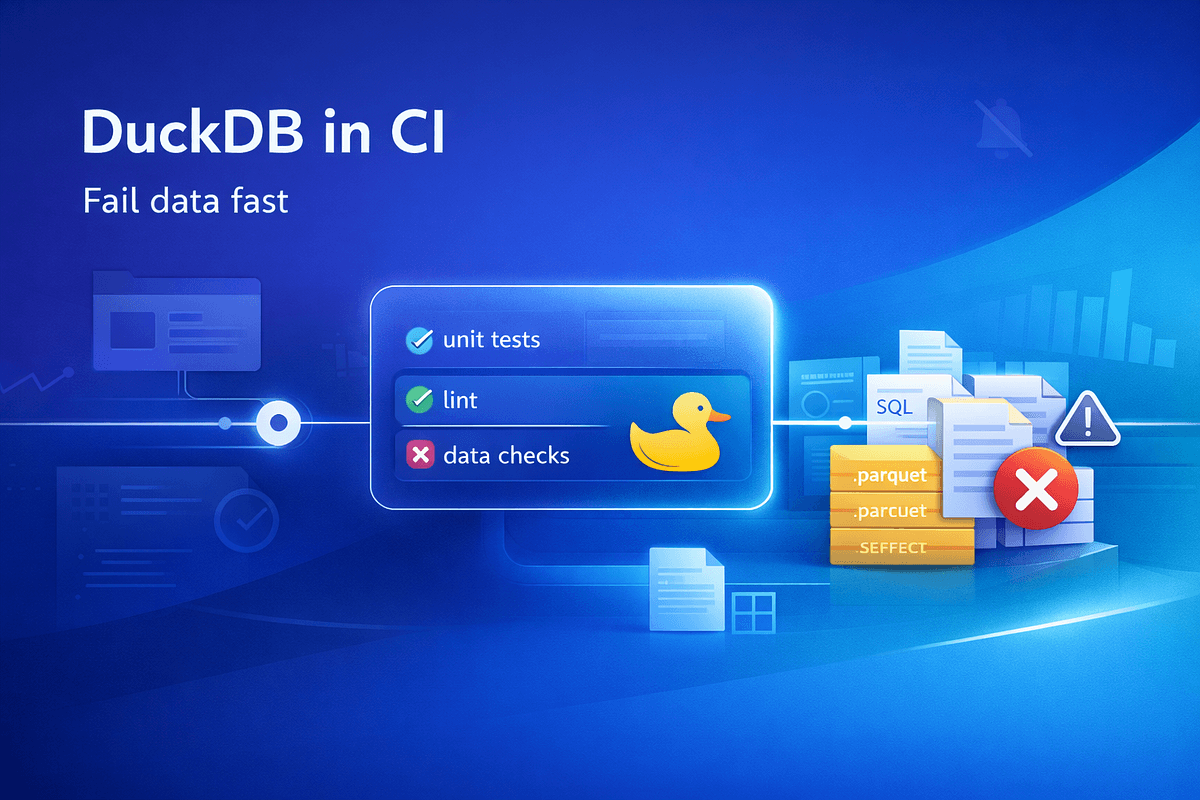
### **DuckDB Schema Drift Playbook** (Vectorlane, Feb 2026)
- **Purpose**: Enables data teams to **detect and manage schema drift proactively**.
- **Approach**:
- Utilizes **DuckDB’s schema inspection capabilities**.
- Implements **alerts** and **automated responses** for **schema inconsistencies**.
- Facilitates **regression testing** and **version-controlled schema validation**.
- **Significance**: Ensures **pipeline resilience**, minimizes downtime, and maintains **model reliability** amid changing data sources.
### **Feature and Version Management Best Practices**
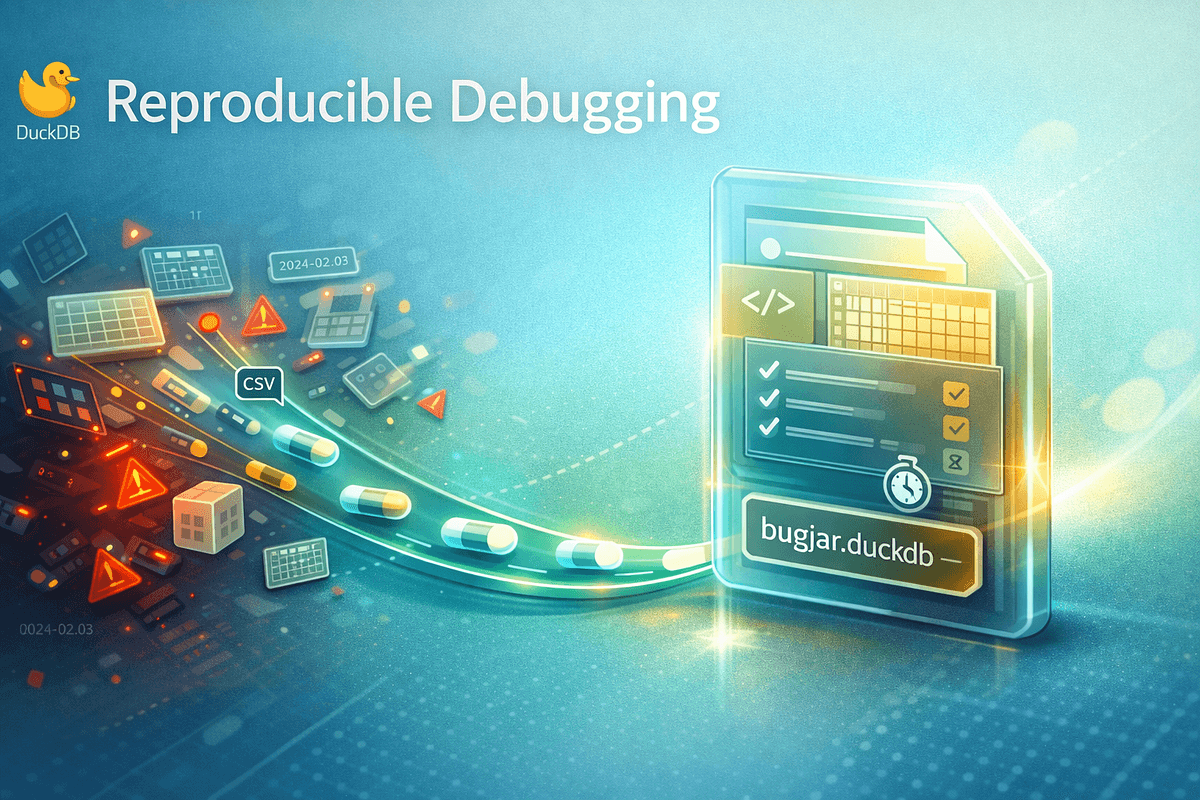
- Emphasizes **comprehensive feature pipelines** with **version control**, **metadata management**, and **debugging techniques**.
- Supports **reproducibility**, **trustworthiness**, and **auditability** for AI models.
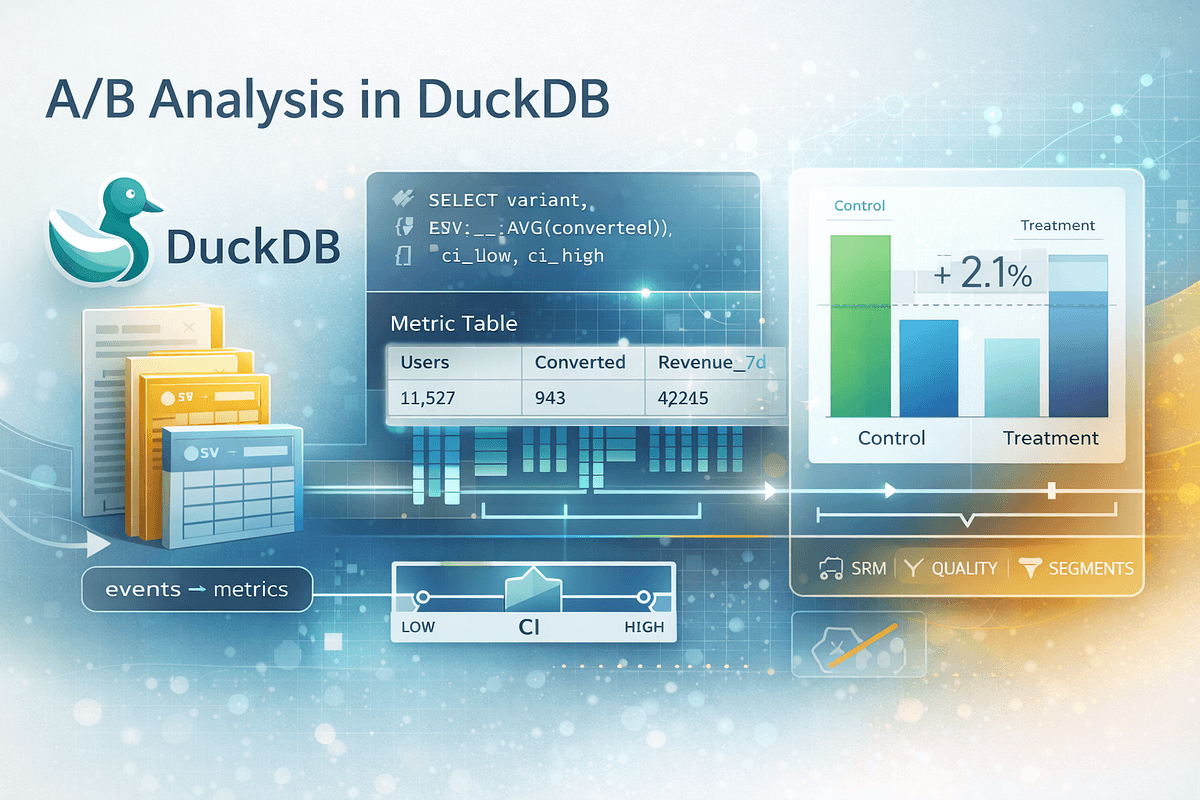
### **Defensible A/B Testing within DuckDB** (Quellin, Feb 2026)
- Demonstrates **rigorous experimental analysis** directly inside **DuckDB**:
- Provides **methods for statistically sound** A/B testing.
- Ensures **reproducible and defendable** results.
- **Impact**: Empowers data scientists to **trust their experimental outcomes**, reinforcing **data-driven confidence**.
---
## Autonomous Data Orchestration and LLM Protocols
A groundbreaking recent development involves **agent/LLM protocols**, exemplified by **MCP** (Multi-Chain Protocol), which **redefine how AI orchestrates workflows**:
- **"MCP: The Protocol That Changes How AI Uses Your Tools"** (YouTube, 9:10 min) discusses how **large language models (LLMs)** and **multi-agent systems** can **autonomously control and coordinate data workflows**.
- **Enables** **AI-driven tool invocation, API management**, and **pipeline orchestration** without extensive human oversight.
- This **autonomous orchestration** accelerates automation, creating **self-managing, resilient systems** that adapt in real-time.
---
## The Growing Role of Pandas: Why It’s No Longer Enough
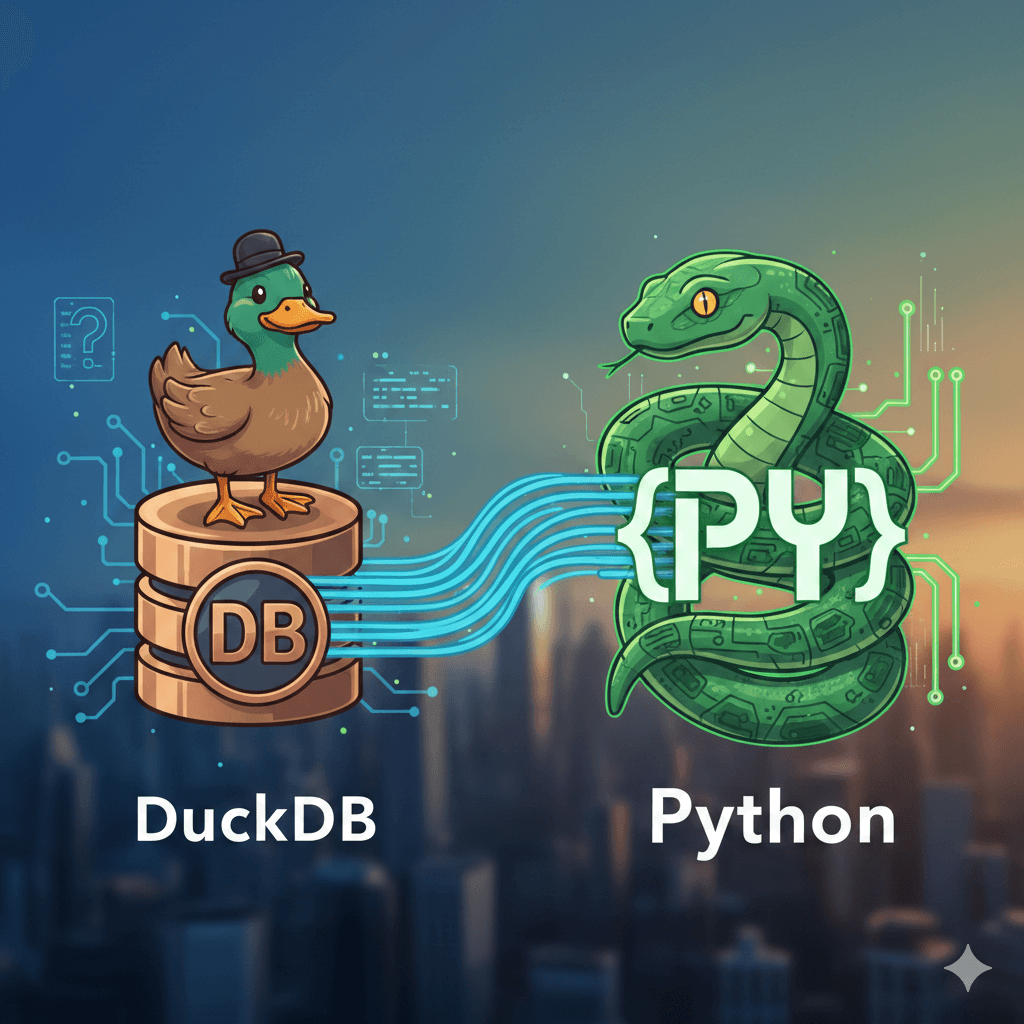
A recent article titled **"Why Pandas is No Longer Enough: Accelerating Python Data Pipelines with DuckDB"** by Ibrahim Chaoudi (Feb 2026) underscores a critical shift:
- **Main argument**: **Pandas**, while historically the go-to for Python data manipulation, **struggles with larger, semi-structured, or complex workloads**.
- **Key points**:
- Pandas’s **memory-bound nature** limits scalability.
- **DuckDB’s integration with Python** allows **out-of-core processing**, **faster execution**, and **better handling of semi-structured data**.
- **Replacing Pandas with DuckDB** significantly accelerates Python data pipelines, especially for **feature engineering**, **data validation**, and **large-scale transformations**.
- **Implication**: This trend reflects a move towards **more scalable, efficient, and AI-friendly data processing** within Python environments.
---
## Current Status and Future Outlook
The **AI-powered revolution in data engineering** is firmly underway, with multiple layers of technological innovation:
- **Tools like DuckDB** are central to **developing AI-ready pipelines**, supporting **real-time analytics, debugging, and collaborative experimentation**.
- **Interoperability solutions** such as **Snowflake Iceberg tables** paired with **DuckDB** facilitate **cost-effective, flexible environments** for complex AI workloads.
- The emergence of **agent/LLM protocols** like **MCP** heralds a future where **AI autonomously manages, orchestrates, and repairs data workflows**—**self-healing, self-optimizing systems**.
Organizations that leverage these innovations—focusing on **automation, interoperability, and operational resilience**—will be better positioned to **innovate rapidly, reduce costs, and deliver smarter insights**. The **Great Data Engineering Reset** is in full swing, establishing **modular, AI-enabled ecosystems** as the new standard for data-driven enterprises.
---
## The Latest Technical Enhancements and Patterns
### Streaming Data Integration: PySpark to DuckDB via Apache Arrow
A recent article, **"Beyond toPandas(): Stream PySpark Data to DuckDB via Apache Arrow,"** illustrates how **streaming data from PySpark into DuckDB** can be achieved efficiently:
- **Overcomes driver memory limitations** by **bypassing pandas** and leveraging **Apache Arrow** for **zero-copy data transfer**.
- Enables **low-latency, high-throughput streaming pipelines**, critical for **real-time AI applications**.
- Supports **seamless integration** between distributed processing and embedded analytics.
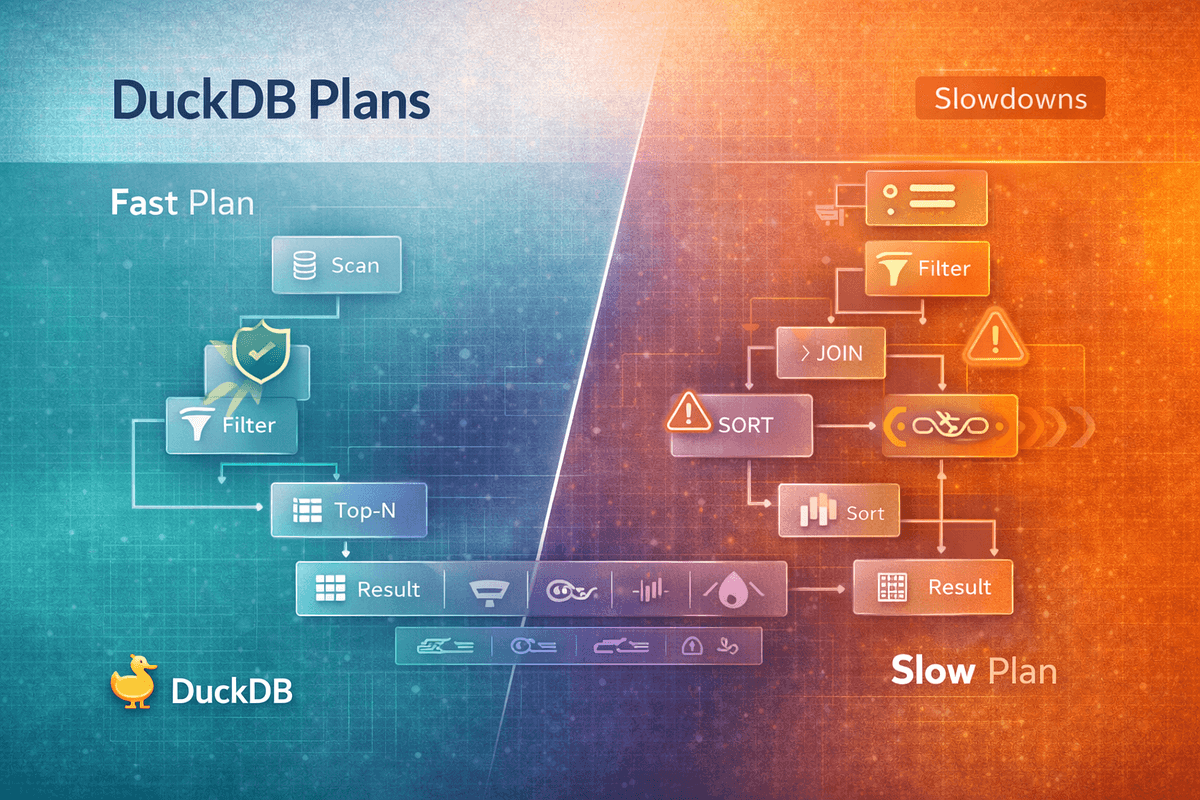
### Operational Hardening: Tuning DuckDB for Large-Scale Processing
Another recent contribution, **"DuckDB OOM on GroupBy Max: Tuning Parameters and Query,"** addresses **out-of-memory errors** during **large-scale GROUP BY and MAX operations**:
- Offers **practical tuning strategies** such as **limiting grouping sizes**, **adjusting memory management options**, and **query rewriting**.
- Guides users to **optimize resource usage** for **massive datasets**, ensuring **resilient, efficient processing** suitable for **AI feature pipelines** and large-scale analyses.
### Database Checkpointing and Data Durability
An increasingly emphasized practice is **database checkpointing**:
> **"Database Checkpointing Explained and Tuned"** highlights that **unexpected failures—like spikes in write latency or replica failures—pose risks to data integrity**. Proper **checkpointing strategies** ensure **consistent states**, facilitate **recovery**, and **minimize operational downtime**—key for **high-availability AI pipelines**.
---
## Implications for the Future
The convergence of **AI automation, interoperable architectures, and resilience protocols** signals a paradigm shift:
- **Modular, AI-centric pipelines** that operate seamlessly across local and cloud environments.
- **Proactive management** of **schema drift, feature/version control**, and **cost-performance trade-offs**.
- The rise of **agent/LLM protocols** like **MCP** points toward **autonomous, self-orchestrating workflows**—reducing operational overhead and boosting system resilience.
Organizations embracing these trends—prioritizing **automation, interoperability, and operational robustness**—will be positioned to **innovate faster, reduce costs, and deliver smarter, more reliable insights**.
---
## Conclusion: The Future of Data Engineering Is Autonomous
The **AI-powered revolution in data engineering** is no longer theoretical; it’s actively shaping the future. Tools like **DuckDB**, **Snowflake Iceberg**, **n8n**, and protocols such as **MCP** are enabling **smarter, autonomous, and resilient data pipelines**. As these innovations mature, **self-managing, self-healing workflows** will become the norm—unlocking unprecedented **efficiency, agility, and innovation**. The **Great Data Engineering Reset** is accelerating, setting the stage for **AI-enabled ecosystems** where **continuous optimization and operational resilience** are built into the core.
---
**In this evolving landscape, staying ahead means embracing automation, interoperability, and resilience—paving the way for a future where AI actively manages and optimizes the entire data lifecycle.**