# How War, Proxies, and Great Powers Are Reshaping the Middle Eastern Regional Order: An Updated Analysis
The Iran–Israel–US confrontation, once perceived as a localized flare-up, has rapidly evolved into a sprawling, multi-front regional conflict with profound and far-reaching implications. Driven by proxy networks, direct military strikes, and strategic maneuvers by global powers, this crisis is fundamentally altering the Middle East’s geopolitical landscape. Recent developments—most notably the escalation of proxy warfare, maritime insecurity, and direct strikes on Iran’s nuclear infrastructure—highlight a region in flux, teetering on the edge of broader conflict.
## From Isolated Incidents to a Multi-Front War
What began with isolated skirmishes has now expanded into a complex, interconnected regional war characterized by several critical theaters:
- **Proxy Warfare Intensifies:** Iran’s "Axis of Resistance," which includes Hezbollah in Lebanon, Iraqi Shia militias, and other affiliated groups, continues its aggressive posture. Attacks across Lebanon, Iraq, and the Gulf have increased in frequency and severity, leveraging asymmetric tactics that challenge traditional diplomacy. These proxy forces act as Iran’s strategic tools, complicating efforts to contain the conflict and raising the risk of spillovers into neighboring countries.
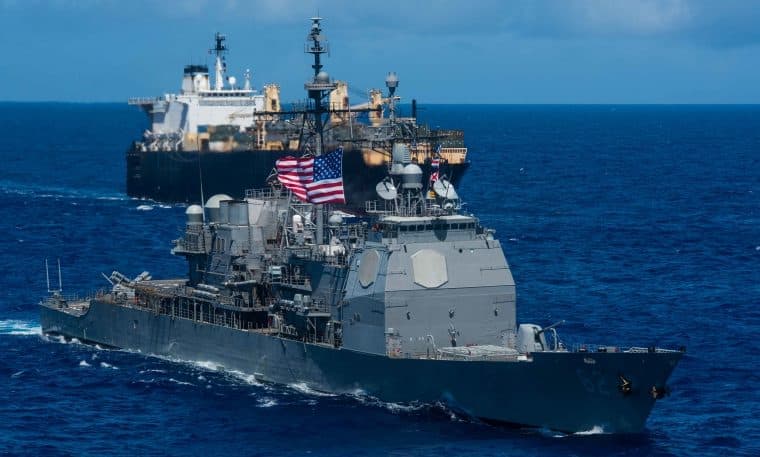
- **Maritime Security in the Strait of Hormuz:** The Strait, a vital choke point for global energy supplies, has seen a surge in attacks on commercial shipping. Reports indicate that recent assaults have targeted vessels navigating this strategic corridor, risking naval confrontations and destabilizing global oil markets. CNN notes that "the Strait is now 'in the crosshairs of conflict,'" emphasizing the threat to energy security and potential escalation into naval clashes.
- **Potential Ground Operations and Regional Spillover:** Israel signals readiness to expand its military campaign, particularly in southern Lebanon. Reports suggest Israel is preparing to establish a **northern buffer zone**—a move that could trigger a broader Lebanese-Israeli conflict. International voices, including Spain’s foreign minister, have warned that such invasions could be "tremendous" and may lead to a catastrophic regional war. Preparations for extensive ground operations indicate a high-stakes escalation with grave humanitarian and geopolitical consequences.
## Recent Developments and Strategic Dynamics
### Iran’s Proxy Calculus and Domestic Constraints
Iran appears to be adopting a cautious yet assertive stance, aiming for a prolonged confrontation rather than a quick resolution. Internal challenges—such as economic hardships, domestic unrest, and succession debates—temper Iran’s strategic calculus. Nonetheless, Tehran continues to leverage its proxy networks, seeking to maximize regional influence while maintaining internal stability. The recent American and Israeli focus on Iran’s nuclear program has further complicated Iran’s strategic posture.
### The Ongoing Shadow of Iran’s Nuclear Ambitions
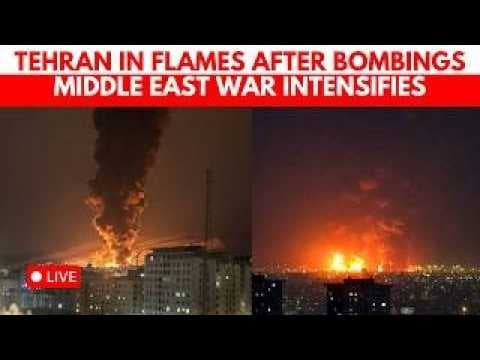
A significant recent development involves allegations that Israel conducted a **precise strike on Iran’s Taleghan nuclear compound**. According to a YouTube video titled **"IDF Bombs Iran’s Taleghan Nuclear Compound in Tehran | Iran Moved Enriched Uranium to Safer Site?"**, the attack targeted an industrial site linked to Iran’s nuclear infrastructure. Reports suggest that Iran may have relocated enriched uranium to a more secure location, raising concerns about the pace and progress of Iran’s nuclear development. The strike underscores the mounting risk of direct military conflict between Israel and Iran, with potential implications for regional stability.
### Russia’s Expanding Role and Geopolitical Reordering
Russia’s involvement has grown more overt and strategic. Moscow is capitalizing on regional chaos to expand its influence, especially through increased diplomatic and military engagement with Iran and Syria. Recent moves include providing diplomatic cover and military aid, seeking to position itself as a counterbalance to U.S.-Israeli efforts. Experts suggest that Russia’s actions are further fragmenting the regional order, creating new alignments and rivalries that threaten to entrench a **multipolar regional landscape**.
### Gulf States and U.S. Security Posture
Gulf Arab states—particularly Saudi Arabia, the UAE, and Qatar—are increasingly seeking to hedge their security interests amid escalating violence. Fears of spillover, maritime attacks, and potential ground invasions have prompted these states to deepen security ties with the United States. They are reassessing their strategic postures, balancing economic interests with enhanced security commitments, and preparing for possible escalation.
### Diplomatic Strains and Limited Leverage
International diplomacy remains fragile. While the U.S. and Israel coordinate closely and signal preparedness for escalation, many global actors advocate restraint, emphasizing the risks of a broader regional war. Efforts to de-escalate face mutual distrust and diverging interests, limiting the effectiveness of diplomatic channels. The ongoing violence underscores the difficulty of containing the crisis without significant international intervention.
## The Lebanon Expansion and Israel’s Territorial Ambitions
A particularly concerning recent development involves Israel’s shifting military strategy toward southern Lebanon. Reports indicate that Israel is signaling its intent to push further into Lebanese territory to establish a **northern buffer zone** as a defensive barrier against Hezbollah and Iranian-backed forces. This move suggests an escalation into a wider ground conflict, risking widespread destruction and a humanitarian crisis reminiscent of past Lebanon wars.
Sources reveal that Israel is actively preparing for a **major military campaign**, potentially involving extensive ground invasions. Such operations could trigger a chain reaction, drawing Lebanon deeper into the conflict and escalating tensions with Hezbollah. The risks of regional war, humanitarian catastrophe, and destabilization are substantial if these plans proceed.
## Broader Implications for Regional and Global Order
The ongoing conflict is fostering a **fragmented and contested regional architecture**, with critical consequences:
- **Collapse and Reconfiguration of Security Frameworks:** Traditional alliances are dissolving or being redefined. Proxy conflicts are replacing conventional state-to-state warfare, leading to a more chaotic and unpredictable security environment.
- **Postwar Reconstruction Challenges:** As Gaza and other conflict zones face widespread destruction, discussions are emerging about reconstruction strategies. Some analysts compare the scenario to post-conflict rebuilding efforts in Chechnya, emphasizing the enormous challenges of peacebuilding, the risks of prolonged instability, and the potential for renewed violence if reconstruction is mishandled.
- **Entrenchment of New Power Dynamics:** Major regional and global actors—including Israel, Iran, the U.S., Russia, and Arab states—are making strategic choices that will shape the region’s security architecture for years. The current trajectory suggests a **"lock-in" of new spheres of influence**, with entrenched rivalries and fragmented zones of control.
### The Rise of Proxy Capabilities and Hezbollah’s Future
A recent expert analysis, including the video titled **"The End of Hezbollah? Middle East expert on the Iran war,"**, suggests Hezbollah’s capacity to sustain prolonged conflict is under significant strain. Diminished supplies, internal fatigue, and external pressures threaten its ability to escalate or maintain large-scale operations. Iran’s broader regional strategy could be affected if Hezbollah’s proxy strength weakens, prompting Iran to seek new alignments or alter its tactics.
## Current Status and Outlook
As of now, the Middle East remains in a **highly volatile state**:
- **Maritime tensions** threaten to escalate into naval confrontations, risking disruption of global energy supplies.
- **Ground operations** in southern Lebanon are advancing, with Israel contemplating broader territorial pushes that could ignite a wider regional war.
- **Regional alliances** are shifting rapidly, with Gulf states bolstering security ties with the U.S. and Russia expanding influence amid the chaos.
**The overarching reality** is that the region is entering a **new phase of turbulence**, where war, proxy conflicts, and great power rivalry are reshaping the regional order. The coming months will be pivotal—either leading to an all-out catastrophe or offering opportunities for diplomacy and de-escalation if international efforts can gain momentum.
## Conclusion
The escalation of violence and strategic maneuvers in the Middle East underscore a profound transformation: a region where local conflicts are deeply intertwined with global power struggles. The recent strikes on Iran's nuclear facilities, the intensification of proxy wars, and the potential for wider ground conflicts point toward a **more fragmented, contested regional order**—one that could persist for years. The international community’s ability to foster dialogue and restraint will be crucial in preventing this volatile juncture from spiraling into a catastrophic regional or even global conflict.
**Vigilance, strategic patience, and concerted diplomacy** are essential to navigate this perilous phase and steer toward stability amid chaos.