# How Microstructure and Macro Forces Continue to Shape the 2026 Gold Market — Expanded with Recent Developments
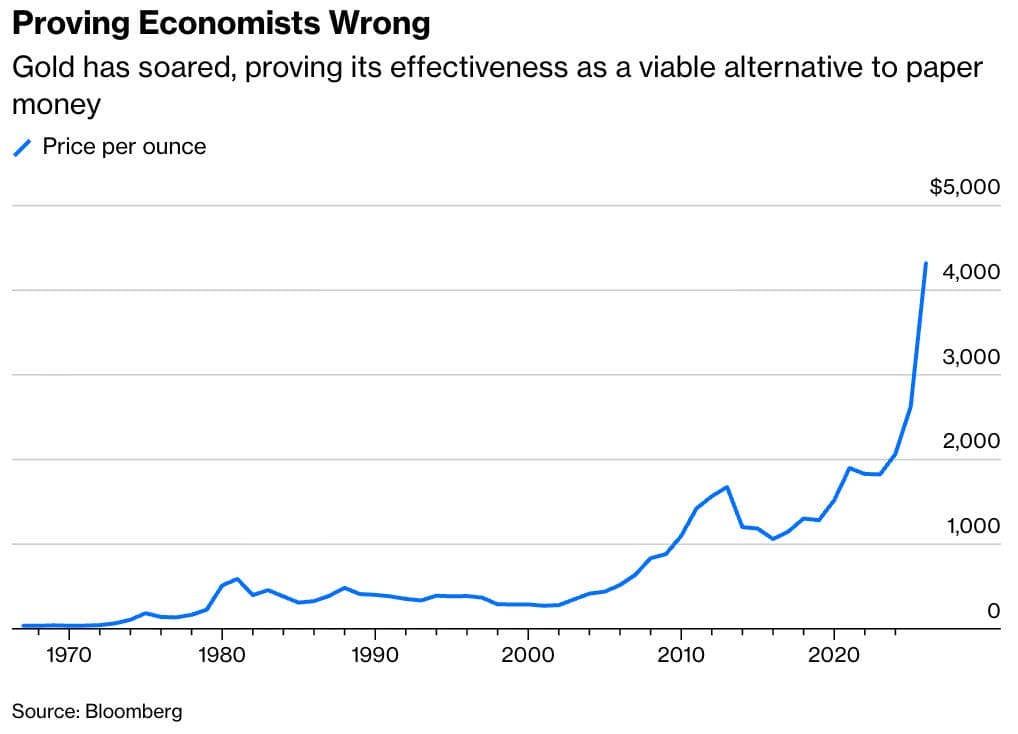
The gold market in 2026 remains at an unprecedented juncture, where resilient macroeconomic fundamentals converge with increasingly intricate microstructure dynamics. While long-term drivers—such as persistent inflation, geopolitical tensions, and a weakening US dollar—continue to underpin record-high prices, recent innovations in market infrastructure, futures mechanics, and trading instruments are adding new layers of complexity. Understanding this interplay is vital for investors, traders, and policymakers seeking to navigate the evolving landscape.
## The Macro Backdrop: Foundations of the Bullish Long-Term Outlook
Despite short-term oscillations, macroeconomic conditions sustain a robust bullish stance on gold:
- **Persistent Inflation:** Central banks worldwide are engaged in aggressive tightening, yet inflation remains stubbornly high in major economies. This ongoing inflation diminishes the purchasing power of fiat currencies, reinforcing gold’s status as a reliable hedge. Notably, **Poland’s recent announcement** to acquire **up to 150 tons** of gold exemplifies official sector confidence amid geopolitical tensions.
- **Geopolitical Uncertainty:** Tensions in regions such as Eastern Europe and the Middle East continue to catalyze safe-haven flows. Official sector demand—from central banks and sovereign funds—remains strong, underpinning fundamental support for higher prices.
- **Dollar Weakness:** The US dollar has experienced notable declines amid political uncertainties—including investigations involving Federal Reserve Chair Jerome Powell—and escalating geopolitical risks. As Reuters reported:
> *"The dollar dipped sharply, and gold hit record highs as investigations into Powell's role heightened market uncertainty."*
Experts like **Daniel Ghali** emphasize that *"Gold remains well positioned to benefit from a weakening dollar,"* which encourages global inflows and sustains its appeal as a safe haven.
Forecasts reflect a bullish consensus:
- **UBS** projects **$5,000+ within the first three quarters**, with some analysts eyeing near-term targets around **$6,200** amid mounting macro risks.
- **J.P. Morgan** has upgraded its outlook to **$5,400**,
- **Morgan Stanley** anticipates **$4,800 by Q4 2026**.
## Institutional and Official Demand: Pillars of Price Strength
A critical pillar supporting the record prices is the **continued surge in gold ETF inflows**. Recent data show **SPDR Gold Shares (GLD)** purchasing **7.72 tonnes** of gold, signaling strong investor confidence. These inflows enhance price transparency, facilitate efficient discovery, and reinforce bullish momentum.
Simultaneously, **official sector purchases**—including central banks and sovereign funds—persist at high levels. Many nations are strategically accumulating gold amidst geopolitical and economic uncertainties, effectively establishing a **price floor** and signaling confidence in gold’s resilience.
In addition, **physical supply constraints** are tightening:
- Mine production and scrap supplies are struggling to meet soaring demand.
- Large physical inventories have been absorbed, raising the risk of a **physical supply squeeze** if demand remains elevated or disruptions occur.
This **demand-supply imbalance** exerts microstructure pressures, particularly impacting **futures spreads**, **liquidity**, and **trading costs**, which increasingly influence short-term volatility and systemic stability.
## Microstructure Dynamics: The Hidden Drivers of Daily Price Movements
While macro fundamentals underpin the long-term trend, **microstructure factors** are increasingly dictating **intraday and short-term price action**:
### Contango, Roll Costs, and ETF Tracking Errors
Most **gold ETFs** operate within a **contango environment**, where futures prices are higher than the current spot price. This results in **negative roll yields**:
- During **rollovers**, ETF managers sell near-expiry futures and buy longer-dated contracts, incurring **roll costs**.
- Episodes of **spread widening** and **liquidity constraints** can cause **tracking errors** that manifest as **intraday reversals** exceeding **$40 per ounce**.
Recent **live trading videos** depict intraday swings surpassing **$40**, driven by **spread widening** and **liquidity droughts**—microstructure dislocations that can temporarily disconnect prices from macro signals.
### Futures Market: Margins, Leverage, and Rollover Risks
Futures markets are central to price discovery but carry systemic risks:
- **High margins**—initial margins of **30–40%**—require significant collateral during volatile swings.
- **Leverage** amplifies gains and losses; recent **intraday swings of $40–$50 per ounce** have tested risk management frameworks.
- **Rollover costs** in a **contango environment** involve selling near-expiry futures and purchasing longer-dated contracts at a premium, which can trigger **forced liquidations** during turbulent periods.
### Liquidity Challenges and Market Dislocations
Recent trading sessions have highlighted **liquidity stress**:
- **Widened spreads** hinder efficient execution during volatile episodes.
- **Intraday reversals exceeding $40** exemplify how **microstructure dislocations** can overshadow macro signals.
- **Slippage during liquidity droughts** impacts investor returns and heightens systemic risk.
### The January 25, 2026 Flash Event
A stark illustration of microstructure dislocation occurred during the week starting **January 23**, when gold and silver futures surged on anticipation of **FOMC** decisions, only to plummet **$50 per ounce** within minutes on **January 25**. This event was characterized by:
- **Widened spreads** and **escalated transaction costs**,
- **Liquidity droughts** hampering large trades,
- **Forced liquidations** from leveraged traders attempting to exit positions.
This **intraday reversal exceeding $40 per ounce** demonstrated how **microstructure dislocations** can sharply disconnect prices from macro fundamentals, amplifying systemic risks.
## Structural and Policy Responses: Market Infrastructure and Safeguards
Recent initiatives aim to bolster microstructure stability:
- The **Hong Kong–Shanghai Gold Collateral and Repo MoU** seeks to **enhance gold collateralization**, improving liquidity and reducing dislocation risks. This framework facilitates cross-border liquidity flows and physical supply flexibility.
- The **CME Group** has recently **raised margins** on **COMEX gold and silver futures**:
- **April gold futures** now require higher initial and maintenance margins,
- These measures aim to **reduce systemic risk** but may **trigger forced liquidations** during turbulence, potentially exacerbating dislocations.
Further, **market reports** indicate ongoing margin adjustments following episodes of extreme volatility, highlighting the delicate balance between prudential safeguards and liquidity management.
## New Developments: Enhancing Physical Delivery and Market Infrastructure
A transformative milestone is the **completion of the first physical delivery under the Gold Singapore futures contract by Abaxx Technologies Inc.** on **February 24, 2026**.
### Abaxx’s Physical Delivery under Gold Singapore Futures
**Title:** *Abaxx Exchange Completes First Physical Delivery Under Gold Singapore Futures Contract*
**Content:**
*TORONTO and SINGAPORE, Feb. 24, 2026 (GLOBE NEWSWIRE)—Abaxx Technologies Inc. (CBOE:ABXX)(OTC)*
This marks a significant step toward **more transparent, efficient settlement mechanisms** for Asian gold markets. The physical delivery reduces reliance on synthetic proxies, helping to **mitigate backwardation episodes** and **tighten microstructure dislocations**.
**Additional infrastructure improvements** include:
- The development of **cross-border collateral frameworks** like the **HK–SGE initiative**, designed to **enhance liquidity** and **streamline cross-border trading**.
- Increased **physical delivery options** and **settlement mechanisms** aimed at **reducing backwardation** and **futures dislocations**.
### Impact of Infrastructure on Microstructure Stability
These advancements are expected to:
- **Improve price discovery** and **liquidity**,
- **Reduce spreads** and **dislocation episodes**,
- Provide **more reliable delivery channels**,
- Enable **more efficient arbitrage** between spot and futures markets.
## The Rise of Micro Futures: 1 oz Gold Contracts
One recent innovation that is gaining traction is the **1-ounce gold futures contract**.
**Title:** *The New 1 oz Gold Futures Are Catching On*
**Content:**
Current open interest across all **1-ounce gold futures** stands at approximately **23,741 contracts**, representing around **$123 million** of gold. This smaller denomination:
- Offers **greater accessibility** for retail and tactical traders,
- Enhances **liquidity** and **trading flexibility**,
- Potentially **reduces systemic dislocation risks** by broadening participation and dispersing volume.
The proliferation of **micro-sized futures** aims to **lower entry barriers**, improve **price discovery**, and **mitigate extreme dislocation episodes** driven previously by concentrated large trades and leverage.
## Latest Market Color and Headlines
Recent headlines underscore ongoing safe-haven demand and heightened volatility:
- **Reuters** reported:
> *"U.S. gold futures for April delivery were down 0.4% at $5,206.80. The dollar eased, making dollar-denominated assets more attractive and supporting gold."*
This reflects safe-haven bids influenced by geopolitical developments and macroeconomic uncertainties.
- **Dillon Gage** highlighted:
> *"Gold gains on uncertainty on tariffs, Mideast,"* noting that despite a **0.9% decline** on Tuesday to settle at **$5,176.30**, bullion remains **up 9.1% year-to-date**, underpinned by ongoing safe-haven flows.
### Backwardation and Supply Tightness
A notable recent phenomenon is the emergence of **backwardation** in gold futures, signaling **immediate physical shortages** and potential dislocation episodes. As explained in a recent **YouTube video** titled *"GOLD BACKWARDATION ALERT: Why Futures Are Below Spot (This Shouldn’t Exist),"* backwardation often reflects **tight physical supplies** and **arbitrage challenges**, contributing to sharp dislocation episodes and heightened volatility.
### Supply and Positioning Data
The **Commitment of Traders (COT)** report as of **February 10, 2026**, reveals:
- **Bullion banks** initially attempted to **suppress prices** above **2049**, but prices broke through in 2024.
- Growing **speculative longs** and active tactical hedging layered microstructure risks amid volatile conditions.
## Current Status and Implications
As of late February 2026, the gold market exhibits a **dual nature**:
- The **macro bullish trend** remains intact, supported by fundamentals like inflation, geopolitical risks, and official sector accumulation.
- Conversely, **microstructure episodes**—such as **spread widening**, **liquidity droughts**, and **margin shocks**—continue to cause **sharp intraday swings** and **price disconnects**.
**Market participants should**:
- Maintain a **macro-informed bullish outlook**, but **prioritize microstructure risk management**.
- Employ **spread management**, **margin planning**, and **liquidity monitoring**.
- Be attentive to technical levels, especially the **4621 pivot point**, which recent data suggest could trigger further dislocation episodes if breached.
---
## **In Conclusion**
The 2026 gold market exemplifies a **convergence of resilient macro fundamentals and fragile microstructure conditions**. While the long-term outlook remains bullish, the microstructure risks—widening spreads, liquidity droughts, margin shocks, and dislocation events—pose persistent threats. Recent infrastructural advancements, such as the **Abaxx physical delivery milestone** and the emergence of **micro futures**, aim to **mitigate these risks** and foster a more stable environment.
**Market participants should**:
- Balance macro optimism with microstructure vigilance,
- Use technical and liquidity assessments,
- Stay informed about ongoing infrastructural developments that could stabilize or further destabilize the market.
**Ultimately**, the 2026 gold market’s environment underscores a **complex interplay**: sustained macro-driven highs intertwined with microstructure fragilities. Navigating this landscape successfully demands both macro insight and micro-level risk management to capitalize on opportunities and avoid systemic shocks.