# The 2026 Autonomous AI Ecosystem: A New Era of High-Performance, Secure, and Resilient Intelligence
The AI landscape in 2026 is marked by unprecedented advancements that have transformed enterprise capabilities, operational workflows, and the very architecture of autonomous systems. Building upon the foundational innovations of the past, recent developments have accelerated the deployment of next-generation models, ultra-low latency gateways, and sophisticated retrieval-augmented generation (RAG) pipelines—culminating in a robust, secure, and scalable AI ecosystem poised to redefine how organizations innovate and operate.
## Unleashing the Power of Next-Generation Models and Ultra-Low Latency Gateways
At the heart of this evolution are **state-of-the-art models** such as **Gemini 3.1**, **GPT-5.3-Codex**, and **Claude Sonnet 4.6**, each pushing the boundaries of AI performance:
- **Gemini 3.1** now demonstrates a remarkable **77.1% accuracy** on the ARC-AGI-2 benchmark, significantly improving multi-step reasoning in complex enterprise scenarios. Its enhanced reasoning capabilities are crucial for automating critical decision-making processes, especially in sectors like finance, healthcare, and manufacturing.
- **GPT-5.3-Codex** boasts an **extraordinarily large context window** of **400,000 tokens**, enabling it to process entire documents, extensive codebases, or prolonged dialogues without losing context. Its **up to 15x faster code execution speeds** combined with seamless deep integrations into Microsoft platforms are revolutionizing **automated coding**, **financial algorithm development**, and **robotic control systems**—reducing development cycles and increasing reliability.
- **Claude Sonnet 4.6** emphasizes **hardware-aware serving techniques** such as **quantization** and **pruning**, which drastically cut latency and computational costs. This makes **high-performance AI** accessible even in resource-constrained environments, facilitating widespread deployment across edge devices and small-scale infrastructures.
Supporting these models are **ultra‑low latency gateways** like **Bifrost**, **Helicone**, and **vLLM**, which deliver **response times as low as 11 microseconds** (Bifrost). These gateways leverage **CUDA kernels**, **Triton**, and **massively parallel execution** to enable **millisecond-level interactions** even with massive models like GPT-4 and Claude. Such capabilities are instrumental in:
- **Reducing latency** for real-time decision-making
- **Handling high-throughput workloads** in enterprise settings
- **Supporting secure, sandboxed in-browser execution** through tools like **BrowserPod**, aligning with **zero-trust security frameworks**—a critical requirement as AI-generated code or data is executed securely within enterprise boundaries.
## Advanced RAG Pipelines: Multi-Modal, Multi-Turn, and Resilient Architectures
The evolution of **retrieval-augmented generation (RAG)** pipelines has resulted in **multi-modal and multi-turn workflows** that integrate diverse data streams—text, images, audio, and sensor data—simultaneously:
- **Legal workflows** now incorporate multimedia evidence, enabling comprehensive case analysis and faster legal proceedings.
- **Technical diagnostics** combine sensor data with textual reports, accelerating fault detection and maintenance.
- **Customer support systems** utilize voice, video, and chat interactions to deliver richer and more natural experiences—enhancing user satisfaction and operational efficiency.
Architectural innovations such as **LangGraph**, a **fault-tolerant orchestration framework**, enable **dynamic chaining** of APIs, reasoning modules, and data streams. Its **self-healing** capabilities ensure **resilience**, allowing systems to recover autonomously during partial failures without human intervention. Similarly, tools like **Agentseed** facilitate **enterprise-grade reliability**, minimizing downtime and maintaining operational continuity even amid complex workflows.
These pipelines are increasingly equipped with **multi-modal reasoning** and **multi-turn dialogue management**, empowering **autonomous agents** to perform **long-term reasoning** across various data types with high accuracy and context-awareness.
## Developer and Operational Tooling: Elevating Reliability and Productivity
The AI development ecosystem continues to flourish with innovative tools designed to enhance reliability, streamline deployment, and foster collaboration:
- **Claude Code** has introduced **auto-review**, **automated pull request merging**, and **live previews**, simplifying the creation and deployment of **complex autonomous agents**. These features significantly reduce development cycles and improve code quality.
- **Skill-based architectures** and **plugin systems** foster **scalable, reusable components**, enabling developers to craft **adaptive behaviors** that evolve with enterprise needs seamlessly.
- The **Strands Agents SDK** supports **AI functions** with **community collaboration**, making it easier for **solo developers and small teams** to build **multi-channel microservice architectures**.
A recent notable advancement is **Google’s launch of the Developer Knowledge API + MCP Server**, designed to **reduce hallucinations** and **improve code assist reliability**. By combining **comprehensive developer documentation** with **context-aware information retrieval**, this API ensures AI assistants deliver **accurate, verified guidance**, a crucial factor as AI becomes embedded in core development workflows.
## Security, Provenance, and Scalable Deployment
As autonomous AI systems underpin critical infrastructure, **security and transparency** are paramount:
- Recent vulnerabilities in models like **Claude Code** have highlighted the need for **robust vulnerability management**, **sandboxing**, and **model provenance verification**.
- Tools such as **keychains.dev** now manage **over 6,700 APIs**, offering **secure API credential management** that prevents leaks and unauthorized access.
- Implementation of **SBOMs (Software Bill of Materials)** and **cryptographic signatures** enhances **component transparency and integrity**, aligning with **ISO** and **NIST** standards.
- **Offline inference stacks** like **OpenClaw** and **BrowserPod** enable **local deployment** and **offline operation**, critical for **data sovereignty** and **privacy-sensitive applications**. For example, **L88**, a **local RAG system** supporting **8GB VRAM**, demonstrates effective **edge deployment** capabilities.
Scaling these systems to support **large multi-tenant SaaS architectures** involves **containerization**, **API gateways**, and **resource isolation**, ensuring **security** and **performance** even at **enterprise scale**. Tools like **AgentReady** have achieved **cost reductions of 40–60% in token costs**, making **large-scale deployment both feasible and sustainable**.
## Emerging Interaction Paradigms and Rapid Deployment
Innovations in interaction modalities continue to enhance how autonomous agents are managed and deployed:
- **Claude Code’s "Remote Control"** feature, introduced by **Anthropic**, allows **remote control and monitoring** of AI coding sessions via **smartphones**. This facilitates **remote debugging**, **collaboration**, and **operation**, though recent **security vulnerabilities** underscore the importance of **robust safeguards**.
- Despite some industry voices like **@karpathy** viewing **CLI (Command Line Interface)** as **legacy**, it remains a **powerful tool**—especially when integrated with AI—to support **automation** and **orchestration**. Its evolution promises **more natural command interfaces** in future iterations.
- **WebSockets** continue to facilitate **faster agent rollouts**, with improvements of up to **30% per deployment** (as demonstrated by **@gdb**). This reduces deployment latency, enabling **more dynamic scaling** and **real-time updates** in large enterprise environments.
## Recent Practical Demonstrations and Innovations
A notable recent development is a **hands-on example** illustrating how developers are leveraging SDKs and APIs to **build sophisticated AI-powered tools**:
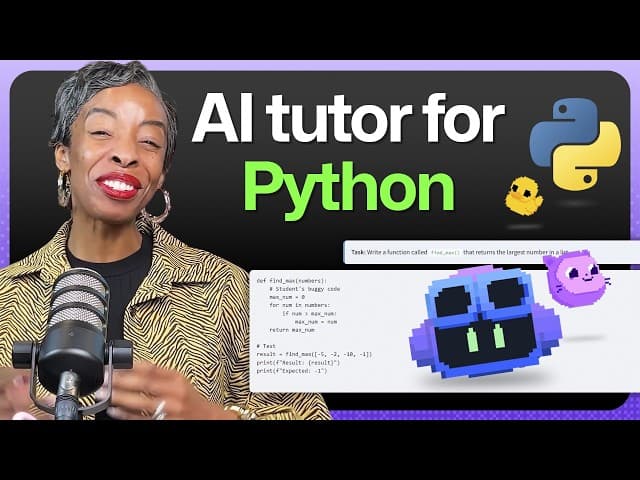
- A **YouTube video titled "How I built an AI Python tutor with the GitHub Copilot SDK"** showcases a developer creating an **interactive Python tutoring system**. Over **11 minutes**, the tutorial demonstrates **integrating Copilot’s SDK** with custom workflows, emphasizing **real-time code assistance**, **interactive feedback**, and **dynamic code generation**—highlighting how **AI-driven development** is becoming more accessible and powerful.
This example exemplifies the trend of **productizing AI capabilities**—transforming experimental prototypes into **enterprise-ready solutions** that enhance **developer productivity**, **learning**, and **automation**.
---
## Current Status and Future Outlook
By 2026, the **autonomous AI ecosystem** is **mature, security-conscious**, and **highly capable**. The deployment of **models like GPT-5.3-Codex**, **Gemini 3.1**, and **Claude Sonnet 4.6** across enterprise sectors is now routine, supported by **ultra-low latency gateways** and **fault-tolerant RAG pipelines**.
The integration of **multi-modal, multi-turn reasoning** with **offline and privacy-preserving architectures** is powering **autonomous agents** that **manage coding, decision-making**, and **multi-agent coordination** with minimal human oversight. These advancements **accelerate deployment cycles**, **strengthen reliability**, and **enhance security**, paving the way for **self-healing, adaptive AI systems**—fundamental to next-generation enterprise solutions.
Looking ahead, ongoing innovations in **performance optimization**, **model security**, and **edge deployment** will further **democratize AI**, embedding it deeply into **daily workflows** and **industrial operations**. The convergence of **powerful models**, **hyper-efficient gateways**, and **robust RAG pipelines** promises an era where **trustworthy, high-performance autonomous AI** becomes a foundational pillar of enterprise innovation and societal progress.