# New Funding Fuels AI Agent Rails, Compute, and Smarter Models: An Ecosystem Accelerating Toward Ubiquity
The autonomous AI ecosystem is experiencing a remarkable surge, driven by a fresh wave of investments, technological breakthroughs, and strategic innovations across hardware, models, safety frameworks, and infrastructure. This renewed capital infusion is not only expanding existing capabilities but also catalyzing new players and concepts that promise to reshape industries, societal infrastructure, and our daily interactions with autonomous systems. From enterprise orchestration to space exploration, autonomous agents are becoming smarter, more trustworthy, and more embedded than ever before.
## Continued Influx of Funding Accelerates Infrastructure, Orchestration, and Trust Tools
The momentum of investment remains strong, fueling the foundational layers necessary for large-scale autonomous AI deployment:
- **Render**, often called *"the AWS for AI developers"*, secured a **$100 million Series C** at a **$1.5 billion valuation**. Its platform now offers scalable runtime environments and advanced agent orchestration tools capable of managing complex multi-agent ecosystems at enterprise scale. This enables organizations to deploy, monitor, and scale autonomous agents with unprecedented ease.
- **SurrealDB**, an AI-native multi-model database designed for real-time, multi-agent data sharing, raised **$23 million** in Series A funding. Its upcoming **SurrealDB 3.0** emphasizes **multi-agent coordination** and **scalable data management**, which are vital for orchestrating autonomous ecosystems that require seamless, secure, and real-time data exchange.
- **Union.ai**, a platform streamlining data and AI workflows, secured **$19 million**, reinforcing the industry’s demand for tools that simplify **workflow orchestration** and **enterprise AI deployment**.
- **Cernel**, a Danish startup focused on **agentic commerce infrastructure**, raised **€4 million in just four weeks**. Its mission is to embed autonomous agents into marketplaces and enterprise systems, fostering **secure, scalable, and interoperable autonomous ecosystems**.
- **t54 Labs**, a new and promising player, raised **$5 million** led by Anagram, PL Capital, and Franklin Templeton. Their focus is on developing a **trust layer for the autonomous economy**, addressing critical issues of **reliability**, **security**, and **regulation** in agent-based systems.
- **Callosum**, a London-based AI infrastructure company, secured **$10.25 million** to advance **scalable AI model deployment and orchestration infrastructure**, enabling organizations to better manage large models and multi-agent systems.
- **JetScale AI**, based in Montreal, raised **$5.4 million** in seed funding to optimize **cloud infrastructure** specifically for AI workloads, improving **cost-efficiency** and **performance** in deploying autonomous agents.
- **Trace**, a startup focusing on enterprise AI agent adoption, raised **$3 million** to develop tools that address the **complexity of deploying and managing autonomous agents** in enterprise environments.
**Significance:** These investments are laying a robust groundwork for **multi-agent orchestration**, **real-time data sharing**, **trust infrastructure**, and **enterprise integration**, accelerating the transition of autonomous AI from experimental to mainstream deployment.
## Hardware and Semiconductor Innovation: Powering Embodied and Edge AI
Hardware breakthroughs remain central to enabling autonomous systems, especially those operating in energy-constrained environments such as space, robotics, and embedded devices:
- **Vervesemi**, supported by **DLI in Pittsburgh**, raised **$10 million** to develop **low-power, high-performance AI chips** optimized for edge and embedded applications, crucial for real-time autonomous decision-making in resource-limited settings.
- **Efficient Computer**, also based in Pittsburgh, secured **$60 million** in Series A funding to accelerate **energy-efficient AI hardware**, addressing sustainability concerns in robotics, spacecraft, and autonomous vehicles.
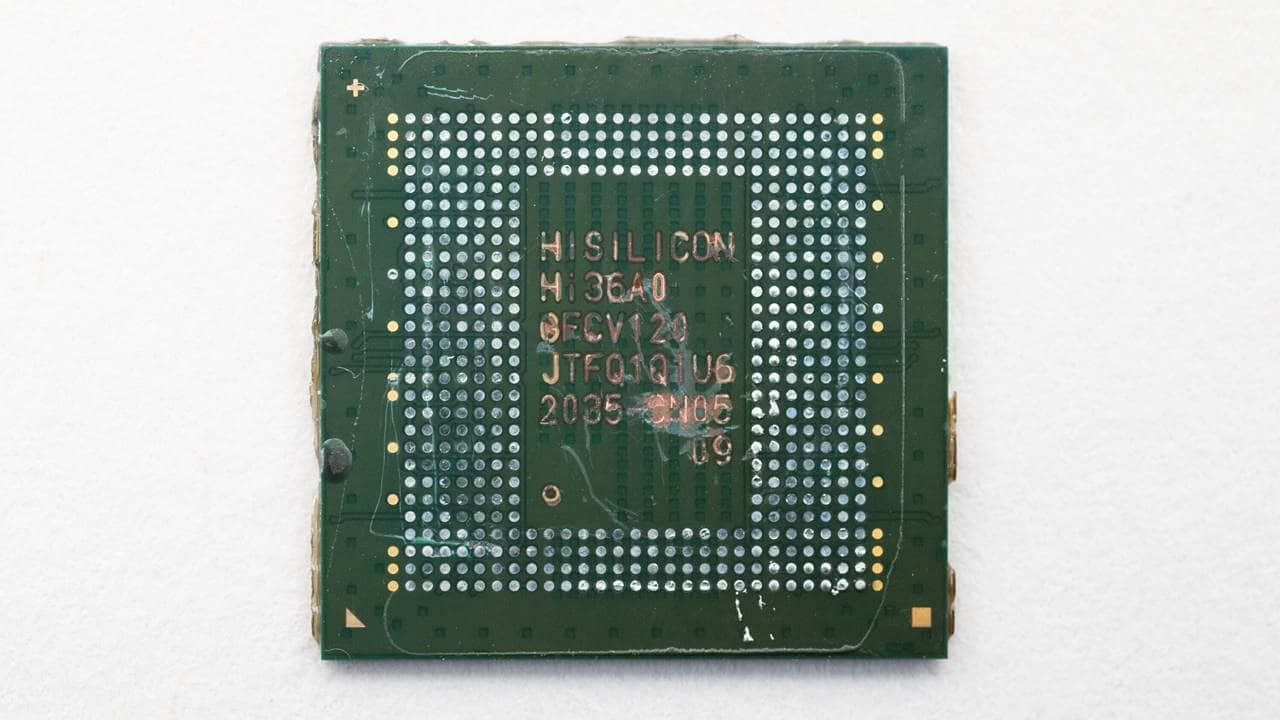
- **C2i Semiconductors** in India, backed by **Peak XV** and **Yali Deeptech**, raised **€15 million** to develop **power-efficient AI chips** tailored for **edge and space applications**, supporting autonomous systems beyond Earth.
- **Samba Nova**, a leader in high-throughput, energy-efficient AI hardware, continues scaling **large models** and **embodied systems**, tackling power consumption challenges crucial for long-term, autonomous operations.
- **Tattvam AI**, a new startup, raised **$1.7 million** from Seedcamp and others. Its focus on **chip design automation** aims to **accelerate and optimize AI hardware development**, challenging the dominance of current datacenter-centric solutions like Nvidia.
**Significance:** These innovations ensure that autonomous agents can operate **energy sustainably** across diverse environments—space, robotics, embedded systems—while fostering a more **competitive and resilient hardware ecosystem**.
## Smarter, Compact, and Task-Aware Models: Making AI More Natural and Deployable
Recent advances in **adaptive**, **task-aware**, and **on-device AI models** are redefining how autonomous systems interact with their environment:
- **Adaption Labs**, led by researcher Sara Hooker, raised **$50 million** to develop **compact, task-aware AI models** that **reduce manual prompt engineering** and **enhance adaptability**. These models facilitate **more natural interactions** across domains, making AI systems more intuitive and flexible.
- **Mirai**, specializing in **on-device AI**, announced a **$10 million seed round** to develop **autonomous decision-making capabilities** directly within **edge and embedded devices**. This empowers **real-time, local AI reasoning** without reliance on cloud infrastructure, critical for latency-sensitive or disconnected environments.
- **Potpie AI** secured **$2.2 million** to **integrate AI agents into industrial engineering systems**, enabling **autonomous operation** in complex, real-world environments with minimal manual intervention.
**Significance:** These models are **smaller**, **more task-specific**, and **energy-efficient**, allowing for **easier deployment** on **small form factors** and **reducing manual prompt engineering**, which accelerates autonomous AI adoption in sectors from manufacturing to consumer electronics.
## Building the Trust Layer: Security, Safety, and Regulatory Compliance
As autonomous agents increasingly operate in **mission-critical sectors**, ensuring **trustworthiness**, **security**, and **regulatory compliance** is paramount:
- **Lema AI**, emerging from stealth with a **$24 million** raise, focuses on **enterprise AI infrastructure** that simplifies **deployment**, **orchestration**, and **security** at scale.
- **Nullify**, a startup specializing in **AI security tooling**, secured **$12.5 million** to develop **vulnerability detection** and **trustworthiness solutions**, addressing the rising threat landscape.
- **Backslash Security** announced a **$19 million Series A**, led by **KOMPAS VC**, emphasizing **code vulnerability mitigation** and **secure deployment** of AI systems.
- **BotGauge AI** raised **₹18.1 crore (~$2 million)** to develop **agentic QA tools** that enhance **system testing** and **ongoing validation**, crucial for maintaining **trust and reliability**.
- **Sphinx** secured **$7 million** to develop **industry-specific compliance automation**, deploying **AI agents** that streamline **regulatory adherence** across finance, healthcare, and manufacturing sectors.
- **t54 Labs** continues its development of a **trust layer** for the autonomous economy, focusing on **reliability**, **security**, and **regulatory compliance** for complex autonomous agent ecosystems.
**Significance:** These tools are essential for **mitigating vulnerabilities**, **building user trust**, and **meeting regulatory standards**, making autonomous systems viable for **mission-critical applications**.
## Expanding Horizons: Robotics, Defense, Space, and Industry Automation
The scope of autonomous AI is broadening into **embodied robotics**, **defense**, **space exploration**, and **industrial automation**:
- **Stanhope AI** in London raised **$8 million** to develop **perception and decision-making models** for **autonomous vehicles**, **logistics robots**, and **service robots**, integrating **language understanding** with embodied AI.
- **Breaker**, a defense startup, secured **$6 million** to create **autonomous orchestration software** for **drones** and **robotic units**, enhancing **mission coordination** and operational autonomy.
- **Seamflow** and **Certivo** in London and Seattle raised **$4.5 million** and **$4 million**, respectively, to **automate certification and compliance workflows**, addressing a **$230 billion** market.
- **Qianjue Technology** completed a nearly **RMB 700 million (~$97 million)** Pre-A++ extension, demonstrating strong investor confidence in **industrial, logistics, and service robots**.
- **Space exploration startups** are making strides in **model compression**, **optimization**, and **autonomous interplanetary operations**, enabling spacecraft, satellites, and planetary rovers to operate **independently** and **autonomously**.
- **European initiatives**, such as **Rapidata** in Zurich, raised **€7.2 million** to develop **scalable, reliable AI/data infrastructure** supporting **multi-agent coordination** and **enterprise integration**.
**Significance:** The expansion into **defense**, **space**, **industrial automation**, and **embodied robotics** underscores the **strategic importance** and **broad applicability** of autonomous AI, driven by targeted funding and innovation.
## Current Status and Future Outlook
The current landscape is a **mosaic of innovation**, with investments fueling the development of **trustworthy**, **powerful**, and **adaptive autonomous agents**. Major advancements include:
- **Enhanced orchestration platforms** (e.g., Render, Callosum, JetScale) that manage complex multi-agent ecosystems.
- **Hardware innovations** (e.g., Vervesemi, C2i, Samba Nova) enabling **energy-efficient** operation in embedded and space environments.
- **Smaller, smarter models** (e.g., Adaption Labs, Mirai, Potpie) that operate **on-device**, **reduce manual intervention**, and **accelerate deployment**.
- **Security and trust tools** (e.g., Lema AI, Nullify, Backslash, Sphinx) that address vulnerabilities and regulatory compliance, crucial for **mission-critical applications**.
The recent influx of funding, exemplified by **Callosum's** $10.25 million, **JetScale's** $5.4 million, and **Trace's** $3 million raises, underscores an ecosystem poised for **disruption and widespread adoption**. This confluence of **technological innovation** and **financial backing** signals a future where **autonomous agents are ubiquitous, reliable, and seamlessly integrated** into industries, societal infrastructure, and daily life.
**In summary**, the ecosystem is on the cusp of a transformative era—where **trustworthy, efficient, and smarter autonomous systems** will become foundational to the future of enterprise, exploration, and everyday human activity.