# Escalating Battle Over U.S. Immigration Detention: Federal Expansion Meets Local and State Resistance
The controversy surrounding immigration detention in the United States has intensified dramatically in recent months. While the federal government, under the Biden administration, continues to pursue an aggressive strategy of expanding detention infrastructure—investing billions of dollars and increasing detainee populations—local governments, community organizations, and regional authorities are mounting formidable resistance. This ongoing clash exemplifies a profound divide: federal enforcement ambitions versus grassroots sovereignty, human rights advocacy, and legal challenges. The evolving landscape now features large-scale detention projects, community protests, legal investigations, and policy shifts that reflect the complex dynamics at play.
## Federal Drive to Expand ICE Detention Capacity: Major Projects, Billions Invested, and Rising Detainee Counts
Despite persistent reports of systemic abuse, neglect, and violations of detainee rights, federal agencies remain committed to expanding detention capacity:
- **Major Facility Expansions:**
Notably, existing detention centers are undergoing significant enlargements. For example, in Leavenworth, Kansas, authorities plan to increase capacity amid an overall detainee count that now exceeds **70,000 individuals** nationwide. These expansions often involve retrofitting current facilities, which are already plagued by overcrowding, safety hazards, and reports of abuse.
- **New Facility Developments:**
Several new detention centers are in various stages of planning and construction, especially in states like Texas, California, and Arizona. A prominent recent example is the **$68 million property acquisition** in Oakwood, Georgia, by the Department of Homeland Security (DHS) to establish a new detention facility. This purchase signals a long-term commitment to detention infrastructure, despite mounting community opposition in the area.
- **Financial Outlays:**
The federal government plans to allocate nearly **$40 billion** over the coming years toward detention infrastructure. This staggering investment underscores detention as a cornerstone of immigration enforcement, even amidst growing criticism from human rights organizations, legal experts, and immigrant advocates.
- **Systemic Concerns and Reports:**
Widespread reports continue to emerge of neglect, medical abuses, and brutal treatment within detention centers. The tragic death of **Alex Pretti** during a Minneapolis protest earlier this year exemplifies systemic failures that persist despite oversight efforts. Such incidents have intensified calls for accountability, reform, and improved oversight.
## Political and Policy Dynamics: Enforcement Rhetoric and Strategic Priorities
The federal push is rooted heavily in political narratives emphasizing border security and law enforcement:
- **Enforcement Rhetoric:**
White House officials frame detention capacity expansion as essential to controlling illegal migration, often portraying detention as a matter of national security. This stance frequently clashes with advocates for humane treatment and policies addressing the root causes of migration—such as violence, poverty, and instability in home countries.
- **Policy Continuity and Priorities:**
Despite widespread criticism, the Biden administration has maintained the trajectory of detention expansion, citing the need to manage rising detainee numbers and uphold enforcement goals. Recent White House messaging continues to reinforce this approach, even as civil rights groups warn that such policies undermine dignity and due process.
## Regional Variability: Divergent Enforcement Practices and Local Responses
While federal efforts press forward, regional enforcement practices and local responses vary considerably:
- **The Minneapolis Case:**
Reports indicate a **drawdown of ICE activities** in Minnesota, driven by political shifts, legal challenges, and operational considerations. This contrasts sharply with states like Texas, where detention efforts are accelerating through new facility openings and capacity increases.
- **Legal and Political Resistance:**
- **South Fulton, Georgia:** Recently **voted to ban ICE detention centers**, passing local legislation aimed at preventing new facilities from opening. This represents a significant victory for local sovereignty and community resistance.
- **Maryland:** Attorney General **Anthony Brown** filed a lawsuit challenging the construction of an ICE detention center, citing violations of local laws and humanitarian concerns.
- **Ohio:** Facing legal challenges and community opposition, proposed detention projects have encountered delays, reflecting resistance in the Midwest.
- **Community Mobilizations:**
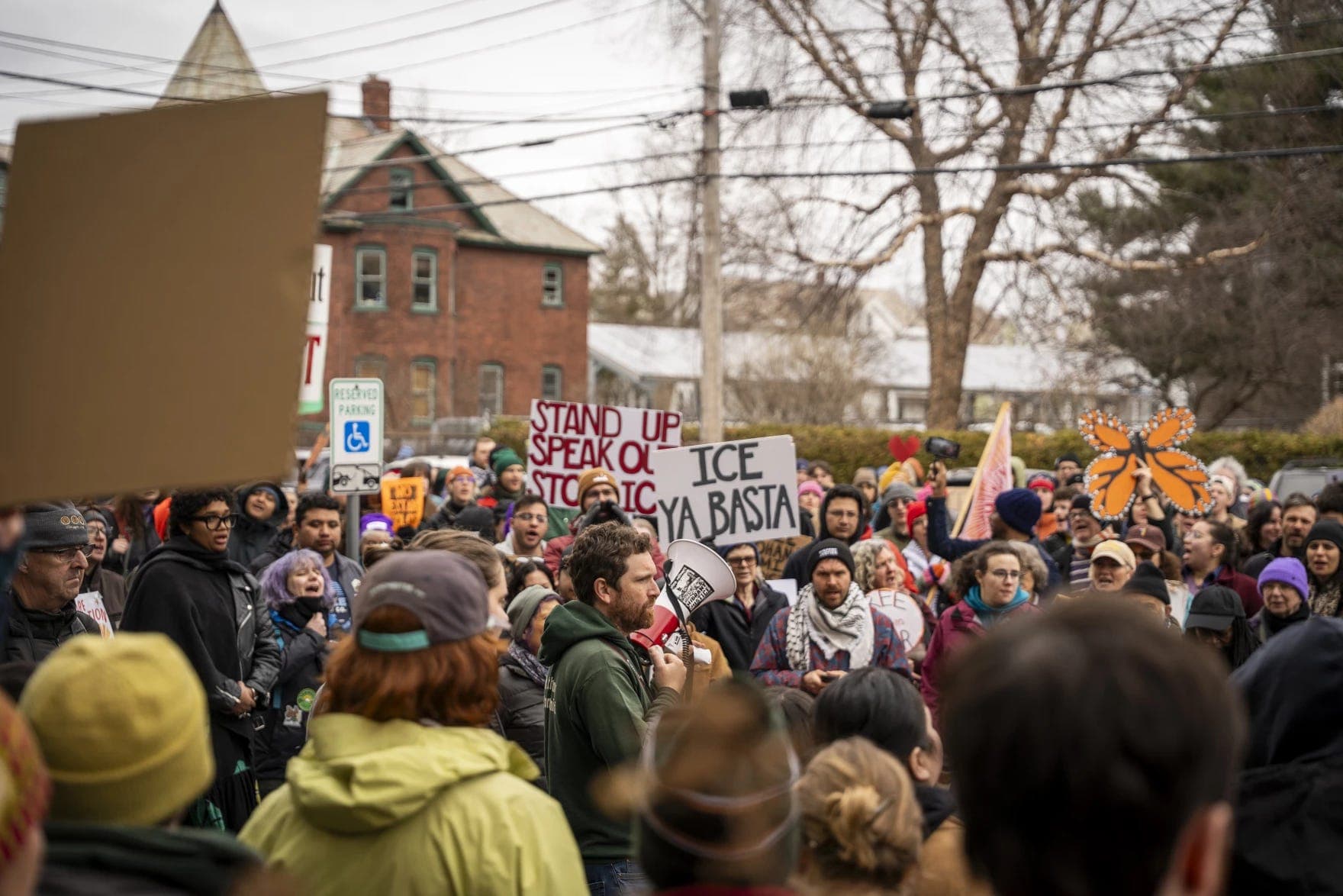
Grassroots protests remain highly active. For instance, in **Olathe, Kansas**, residents gathered en masse outside a detention center following reports of ICE activity. Similarly, student-led walkouts and demonstrations have surged in **Bend, Oregon**, and **Camden County, New Jersey**, where residents oppose enforcement actions at schools, bus stops, and other public spaces.
## New Facility Developments and Property Purchases Fuel Local Pushback
Recent property transactions and detention facility proposals have further ignited local resistance:
- **Oakwood, Georgia:**
The DHS’s **$68 million purchase** of a property to establish a detention center has sparked protests and legal challenges from residents concerned about safety, environmental impacts, and community disruption.
- **Roxbury, New Jersey:**
ICE's announced plan to open a large warehousing facility in Roxbury has provoked widespread outrage. Community groups launched petitions, protests, and legal petitions demanding reconsideration of the project, framing it as a regional human rights issue.
- **Wilson County, Tennessee:**
After local opposition to plans for a detention center in Lebanon, community members voiced concerns about safety and environmental impacts, leading to delays and increased scrutiny of the project.
## State-Level Scrutiny and Oversight Efforts Grow
States and oversight agencies are increasingly scrutinizing detention practices:
- **Alaska:**
Following the arrest of a Soldotna family by ICE, state lawmakers launched investigations into detention policies and practices, highlighting concerns about potential abuses and local enforcement practices.
- **Federal Investigations:**
The **Office of Inspector General (OIG)** continues probing detention center conditions, notably investigating the death of **Alex Pretti** and systemic neglect reports. These investigations aim to uncover systemic failures and push for reforms.
- **Legal Reforms and Court Rulings:**
Courts are actively scrutinizing ICE detention practices. Recently, rulings have granted bail to detained workers such as two **SUNY Upstate employees** held for months, signaling a possible shift toward more humane and lawful detention standards.
## Regional Divergence: Expansion Versus Retrenchment
The regional landscape remains uneven:
- **Expansion:**
Texas, Arizona, and Georgia continue to see new detention facilities and capacity increases, supported by local political backing, federal funding, and some community acceptance.
- **Retrenchment and Resistance:**
Conversely, regions like **Minneapolis** are scaling back detention efforts amid legal challenges and community resistance. The successful passage of the **South Fulton's ban** exemplifies local efforts to restrict detention infrastructure.
- **Legal and Zoning Barriers:**
Many detention projects face delays, legal challenges, or outright blocks due to zoning laws, community opposition, and legal appeals, creating a patchwork enforcement landscape across the country.
## Recent Developments: Key Projects, Legal Battles, and Resistance Movements
Several recent events illustrate the current dynamics:
- **South Fulton’s Ban:**
The city’s vote to prohibit ICE detention centers marks a significant victory for local sovereignty and could serve as a model for other municipalities seeking to resist detention expansion.
- **Alaska Investigations:**
Following ICE’s arrest of the Soldotna family, lawmakers launched investigations into detention practices, raising questions about local enforcement and detainee rights.
- **Oakwood’s Property Purchase:**
The DHS’s acquisition in Georgia has inspired protests and legal challenges from residents concerned about community impacts.
- **Roxbury’s Facility Plans:**
ICE’s plans for a warehousing facility in New Jersey have sparked protests and legal petitions, illustrating regional resistance.
- **Ohio and Other States:**
Legal rulings and community opposition have halted or delayed detention projects, signaling resistance across the Midwest.
## Notable Recent Developments and Official Responses
### **Hennepin County Attorney’s Office Criticizes DOJ**
The **Hennepin County Attorney’s Office** publicly blasted the Department of Justice (DOJ) over a **closed civil rights investigation** into detention practices, citing concerns about systemic neglect and abuses. This sharp criticism underscores growing frustration at federal oversight agencies and highlights the persistent issues within detention facilities.
> *"The DOJ’s decision to close this investigation without accountability is unacceptable. We need transparency and reform to ensure detainee rights are protected,"* stated the County Attorney’s Office.
### **Mayor Ras J. Baraka Signs Executive Order Restricting ICE Enforcement**
In a significant local move, **Mayor Ras J. Baraka** of Newark, New Jersey, signed an **executive order** restricting ICE enforcement actions within the city limits. The order limits local cooperation with ICE, prohibits city resources from being used in detention activities, and affirms the city’s commitment to protect immigrant communities.
> *"Our city stands against unjust detention and will continue to defend the rights and dignity of all residents,"* Mayor Baraka declared.
## The Broader Implications and Future Outlook
The current scenario underscores a nation deeply divided over immigration detention policies. The federal government’s ongoing commitment of nearly **$40 billion** to expand detention infrastructure is met with increasingly organized and strategic resistance at the local and state levels. Legal investigations, community activism, zoning laws, and executive orders are all shaping a patchwork of enforcement that varies widely across the country.
**Implications include:**
- **Potential for Reform:**
Increased legal scrutiny, investigations, and grassroots resistance could lead to reforms that curb detention expansion, improve detainee rights, and promote humane standards.
- **Regional Resistance as a Catalyst:**
Local bans, legal actions, and policy measures—like South Fulton’s ordinance—may inspire other jurisdictions to limit or halt detention projects, creating a fragmented enforcement landscape.
- **Uncertain Future:**
The trajectory depends on multiple factors: the outcomes of ongoing legal battles, political shifts at federal and state levels, and the resilience of grassroots movements. Some regions will continue expanding detention capacity, while others will resist or impose restrictions.
### **Current Status and Outlook**
As of now, federal efforts to expand detention facilities persist but face mounting obstacles. Community protests, legal investigations, and local ordinances are increasingly constraining detention growth in numerous jurisdictions. The divide between federal enforcement ambitions and local resistance has never been more pronounced.
**The future of immigration detention in the U.S. hinges on whether federal authorities can overcome legal and political resistance or whether local and regional efforts will succeed in curbing detention expansion.** The coming months will be pivotal in shaping whether the nation moves toward further detention infrastructure or begins a significant shift toward reform, oversight, and humane treatment.
In sum, the battle over immigration detention is a defining issue of U.S. immigration policy today—one that will influence the country’s approach to human rights, law enforcement, and community sovereignty for years to come.