# Why Only a Few Firms Are 'Future-Built' with AI: The Critical Path Toward 2026 — Updated with Latest Developments
In the rapidly shifting landscape of digital transformation, artificial intelligence (AI) remains the most transformative force reshaping industries, economies, and societies. Despite soaring investments—from government initiatives and venture capital to corporate commitments totaling hundreds of billions—the stark reality persists: **only an estimated 5% of organizations are truly ‘future-built’ with AI**. These pioneering firms have seamlessly integrated AI into their strategic visions, operational models, and sustainability commitments, positioning themselves for dominance as 2026 approaches.
The core challenge isn’t solely deploying sophisticated algorithms; it’s **building resilient, sustainable infrastructure**—a fundamental prerequisite for scalable, long-term AI deployment. Recent developments across sectors and regions underscore that **overcoming persistent barriers** and **unlocking AI’s full potential** depend critically on **establishing a durable, energy-resilient backbone**.
---
## The AI Adoption Gap: Strategy, Talent, and Infrastructure Barriers
While global investments continue to surge—highlighted by firms like **Hamilton Lane**, which recently raised nearly **$2 billion** for infrastructure funds, and AI-focused ETFs surpassing **$100 million**—the disparity in AI readiness remains pronounced. Several entrenched barriers hamper widespread adoption:
- **Lack of cohesive, long-term AI strategies** aligned with sustainability and operational efficiency.
- **Talent shortages** in data science, AI engineering, and related fields, constraining scaling efforts.
- **Data quality, governance, and security issues** that erode trust and compliance.
- **Legacy infrastructure systems** that hinder agility and rapid deployment.
This isn’t just a technical issue; it’s a strategic imperative. Organizations lagging in AI infrastructure risk obsolescence amid seismic shifts across energy, manufacturing, healthcare, and finance sectors. Conversely, those investing in **renewable energy infrastructure**, **advanced measurement and modeling tools**, and **embedding AI into core operations** are gaining resilience, boosting valuations, and securing market leadership.
---
## Transforming Data Centers into Renewable and Low-Carbon Power Hubs
A **defining recent trend** is the **transformation of traditional data centers into energy-efficient, renewable-powered hubs**. As AI workloads grow exponentially, so does the demand for processing power—making **energy sustainability** **not just desirable but essential**.
### Recent Innovations and Strategic Moves:
- **Integration of renewables**—solar, wind, and other sources—to **drastically reduce carbon footprints and operational costs**. Major players are focusing on **building data centers that serve as renewable energy hubs**, thereby supporting both AI scalability and climate commitments.
- **Advanced cooling technologies**, such as **immersion cooling** and **free-air cooling**, are reducing energy consumption by up to **50%**, enabling large-scale deployment with sustainability.
- **Energy storage solutions**, particularly **large-scale batteries**, are vital for stabilizing grids and managing the intermittency of renewable sources.
- **Smart grid integration**, equipped with **detailed measurement, modeling, and control systems**, fosters **resilient, adaptive energy ecosystems** capable of supporting intensive AI workloads.
**Alain Mahieu**, an energy innovation expert, emphasizes that **transforming data centers into renewable-powered hubs** is fundamental for **sustaining AI deployments and achieving global climate goals**. These efforts underpin **a resilient backbone for future AI ecosystems**.
### Notable Recent Developments:
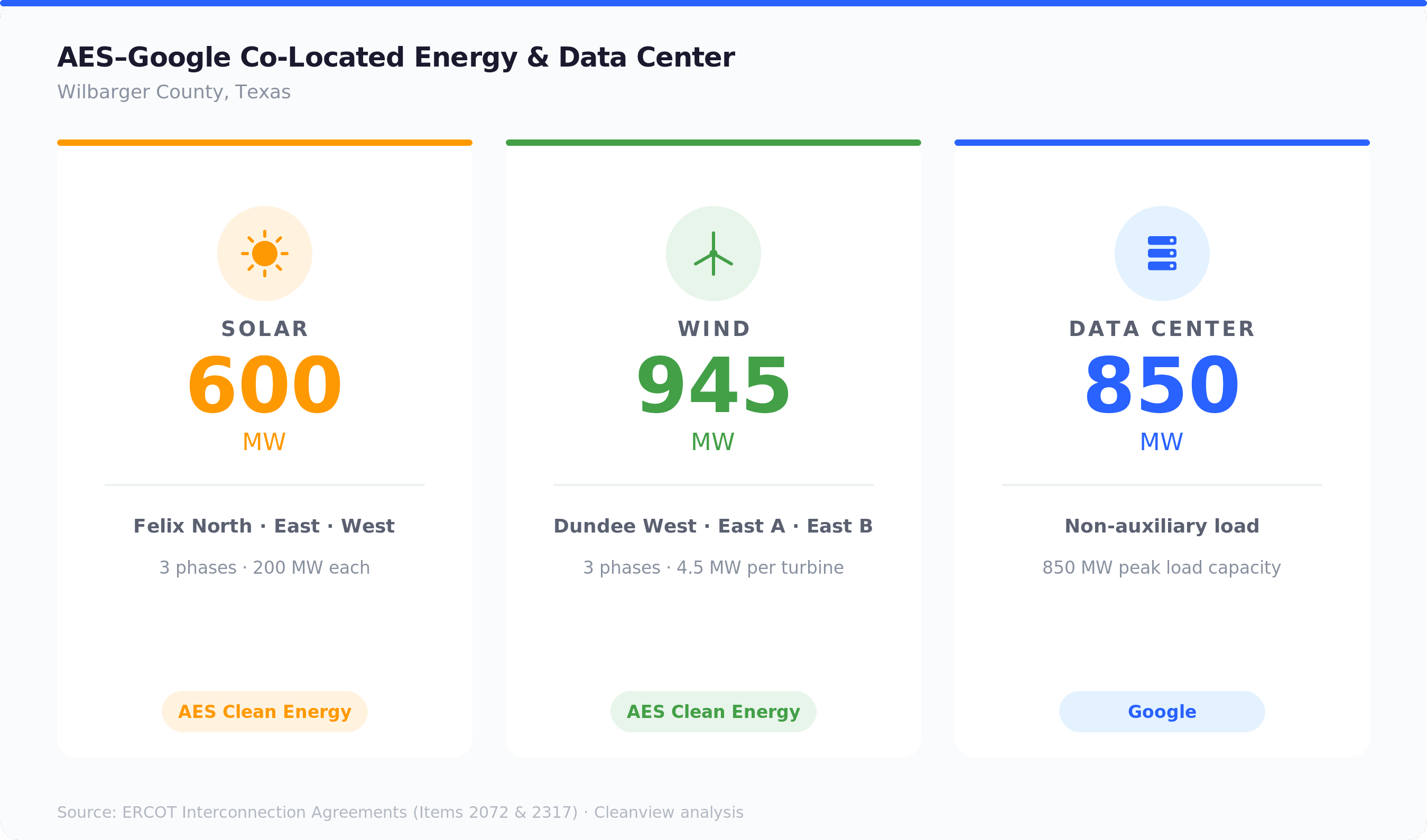
- **Google** announced plans to power its data centers with **1 gigawatt of solar energy** through a **partnership with TotalEnergies**, marking a significant step toward large-scale renewable procurement.
- **Brookfield** and **Qai** unveiled a **$20 billion global expansion** dedicated to **developing integrated compute centers**, emphasizing the scaling of **high-performance, renewable-powered infrastructure**.
- **Bloom Energy (BE)** reports a **$20 billion backlog** of energy projects tailored for AI workloads, leveraging **fuel cell solutions** to provide **stable, low-carbon energy**.
- Industry leaders like **Vladislav Vestberg**, former CEO of Ericsson, have transitioned to **Digipower X**, a startup focused on **renewable energy solutions for AI infrastructure**, signaling broad industry commitment to **energy resilience and sustainability**.
---
## Sector and Regional Initiatives: Leading the Charge
### Energy Sector
Investments and innovations are accelerating to support AI-driven transformation:
- **ICG Asia-Pacific Infrastructure** and **Ray8 Energy** are spearheading large-scale **battery storage projects in Japan** to **scale storage capacity**, **enhance grid resilience**, and **integrate renewables**.
- **Hyperscalers** such as **AWS** and **Google Cloud** are exploring **nuclear power options**, including **microreactors**. A recent feature, *"The AI Energy Race: Why Hyperscalers Are Buying Nuclear Power Plants"* (34:38, 14K views), highlights a strategic shift toward **scalable, low-emission microreactors** to support AI workloads sustainably.
- **ARC** and **Nucleon** have signed an **MOU** to deploy **ARC-100 microreactors** in **Alberta and Texas**, promising **safe, reliable, and low-carbon energy solutions** for high-demand data centers.
- **Constellation Energy** and **CyrusOne** announced a partnership to develop the **Freestone Energy Center**, aiming to provide **resilient, low-carbon power** for new data center operations.
### Manufacturing, Healthcare, and Finance
- **Manufacturers** deploying AI for predictive maintenance focus on **energy-efficient data centers** and **scalable sensor networks** to reduce operational costs.
- **Healthcare providers** are building **energy-efficient, scalable data platforms** to handle increasing data complexity for diagnostics and personalized medicine.
- **Financial institutions** depend on **resilient, high-capacity data platforms** for AI-driven fraud detection and risk management, emphasizing **secure, sustainable infrastructure**.
### Regional Decentralization
- **Arizona** is witnessing a surge in **decentralized energy projects**, driven by **favorable regulations**, **lower operational costs**, and **abundant renewables**, reducing reliance on overburdened centralized grids.
- **India** continues rapid AI infrastructure development, with **Unicorn India Ventures** announcing a **Rs 1,200 crore (~$145 million)** fund dedicated to **semiconductors, spacetech, and AI infrastructure**, emphasizing regional strategic growth and supply chain resilience.
---
## Silicon Valley’s Shadow Power Grid: A New Paradigm
One of the most striking recent developments is the rise of **private, decentralized power grids** tailored specifically for data centers. Silicon Valley firms are actively **building a 'shadow' power grid**—a network of **private energy procurement** and **localized microgrids**—to **circumvent vulnerabilities** in the traditional grid system.
The **GW Ranch project** in West Texas exemplifies this trend. It aims to establish a **self-sufficient energy ecosystem** capable of supporting massive AI data centers with **renewable and low-carbon energy sources**. This move reflects a **strategic effort by tech giants and investors** to **ensure energy security**, **reduce dependence on fragile public grids**, and **maximize renewable integration**.
The **shadow grid** concept is gaining traction as companies seek **greater control and resilience**, especially amid increasing incidents of grid failures and outages.
---
## Political and Regulatory Pressures: Reinforcing Private and Decoupled Energy Solutions
Recent political and regulatory developments are adding new urgency to the shift toward **private, resilient energy infrastructure** for AI. Notably:
- **Former President Donald Trump’s** recent **call for big tech firms to build their own power plants**, as explained in the video *"Trump’s Ultimatum to Big Tech: Build Your Own Power Plants"* (5:08, over 2,000 views), signals a **political push for energy sovereignty** among large technology companies. This underscores concerns about **overdependence on public grids** and **systemic vulnerabilities**.
- Several regions, including **California**, have experienced **grid failures**—such as the widespread outages that led **Microsoft** to withdraw a **$60 million** project, resulting in **around 800 job losses**. These incidents have prompted policymakers to **encourage firms to develop private power solutions** to **mitigate systemic risks**.
- **The Biden administration** and **European regulators** are pushing **grid modernization reforms**—such as **PJM Interconnection’s** efforts to **fast-track data center power deals**—to **reduce deployment barriers** and **facilitate renewable integration**.
These evolving policies and pressures reinforce the trend: **building private, decoupled energy sources** is increasingly seen as essential for **AI infrastructure resilience**.
---
## The Return to the Atom: Learning to Love Nuclear Again
A notable recent development is the **renewed emphasis on nuclear power**, especially **microreactors**, as a **clean, scalable energy source** for AI infrastructure.
### Key Highlights:
- **Hyperscalers** and AI firms are investing heavily in **microreactor technology**. For example, **ARC** and **Nucleon** signed MOUs to deploy **ARC-100 microreactors** in **Alberta and Texas**, promising **safe, reliable, low-carbon power** tailored for high-demand AI data centers.
- The report **"Learning to Love the Atom Again: Why the Future of Artificial Intelligence is Nuclear"** underscores that **nuclear energy’s safety, scalability, and zero-emission profile** make it an ideal partner for AI infrastructure—especially as fusion energy advances.
- **CFS** (Commonwealth Fusion Systems) is on track to launch **SPARC** by **2027**, promising **limitless, clean energy** that could revolutionize power supplies for AI and reduce dependence on intermittent renewables.
This resurgence signifies a **strategic understanding** that **resilient, diversified energy portfolios**—combining renewables, nuclear microreactors, and fusion—are essential to support AI’s exponential growth.
---
## Cooling Technologies, Talent, Safety, and Sovereign Funding
### Next-Generation Cooling
The evolution of cooling technologies remains critical:
- **Liquid cooling**, including **immersion** and **direct-to-chip** methods, reduces energy consumption and supports higher-density AI deployments.
- The article *"Liquid cooling, skilled talent and safety will make or break the next data centre era"* underscores that **technological innovation**, **workforce upskilling**, and **safety standards** are decisive for sustainable growth.
### Talent Development & Safety
Developing **skilled professionals**—engineers, safety operators, and cybersecurity specialists—is vital to manage **complex cooling systems**, safeguard data, and ensure safety protocols. Talent shortages could slow deployment and compromise quality.
### Sovereign and Institutional Investment
Recent movements include **VivoPower’s** **$30 million PIPE**, supporting its **sovereign AI data center strategy**. Additionally, **regional and national governments** are increasing funding and incentives to develop resilient AI infrastructure, recognizing its strategic importance.
---
## The Current Landscape and Broader Implications
The evolving landscape makes it clear that **the journey to becoming ‘future-built’ with AI by 2026** hinges on **investments in energy resilience, measurement and modeling tools, advanced cooling, and decentralized infrastructure**. Firms prioritizing **renewable and nuclear energy solutions**, **grid modernization**, and **embedding AI into resilient infrastructure** are best positioned to **lead the AI economy of tomorrow**.
Regional initiatives—from **India’s aggressive renewable energy push** to **Arizona’s decentralized projects** and **Alberta’s microreactor deployments**—are converging into a **global ecosystem** supporting **resilient, sustainable AI infrastructure**.
---
## Implications and The Road Ahead
The current landscape makes it clear that **the path to ‘future-built’ with AI by 2026** demands **energy resilience, technological innovation, and strategic foresight**. Firms that **invest early** in **renewables, nuclear microreactors, and fusion**, **modernize grids**, **adopt cutting-edge cooling**, and **develop skilled talent pools** will emerge as **industry leaders**.
### Key Takeaways:
- **Energy diversification**—including renewables, nuclear microreactors, and fusion—is vital.
- **Grid modernization and decentralization** reduce systemic risks and improve resilience.
- **Advanced cooling technologies** and **measurement/modeling tools** underpin scalable AI deployment.
- **Proactive engagement with policy** accelerates infrastructure development and mitigates systemic vulnerabilities.
- **Building private, decoupled energy solutions** is increasingly necessary, as political pressures and incidents underscore the fragility of reliance on public grids.
**The window to ‘future-build’ is closing rapidly.** Immediate, decisive action—embracing **energy diversification**, **technological advances**, and **infrastructure resilience**—will shape the competitive landscape of the AI economy in the coming years. Organizations that lead this transformation will not only secure their future but also influence the trajectory of global AI development.
---
## The Current Status & Strategic Outlook
The momentum behind **renewable energy**, **nuclear microreactors**, and **grid modernization** is unmistakable. The integration of **advanced measurement, modeling, and cooling technologies** accelerates, supported by **policy reforms and private investments**. Firms that **act decisively now**—embracing **energy diversification, technological advances**, and **resilient infrastructure**—will gain a decisive competitive edge.
The landscape today reflects a confluence of **technological breakthroughs, policy shifts, and strategic corporate moves**, all indicating that **resilient, low-carbon, and innovative energy systems** underpin the next wave of AI development. Those leading this charge will shape the **next era of global digital and economic dominance**.
---
### **In conclusion**, achieving true ‘future-built’ status with AI by 2026 hinges on **integrating renewable and nuclear energy solutions, upgrading grids, deploying advanced cooling and measurement systems, and cultivating specialized talent**. The rising tide of **private and public investments**, **technological innovation**, and **policy reforms** signals that **the critical path is energy resilience**. Firms that recognize and act on these imperatives will define the future of AI, securing a resilient, sustainable, and competitive position in the global economy of tomorrow.
---
## Recent Notable Articles & Developments
### **"Google Is Proving You Don't Need On-Site Gas to Build Large Data Centers Quickly"**
Google’s approach demonstrates that **large, scalable AI data centers** can be **powered entirely by renewable energy**, eliminating reliance on onsite gas generators. This shift is pivotal for **sustainable scaling** and **reducing carbon footprints** in AI infrastructure.
### **"What the Ratepayer Protection Pledge Means for You"**
The **Ratepayer Protection Pledge** involves tech companies agreeing to **cover electricity costs tied to their AI data centers**. This policy aims to **encourage private investment** in **resilient, low-carbon energy sources** and **reduce the financial risks associated with grid outages**.
### **"The Next Big Data Center Play for Tech Investors - Battery Power"**
Tech firms are investing heavily in **large-scale battery storage** to **support AI workloads**, emphasizing that **energy storage solutions** are critical for **grid independence and renewable integration**. This trend reflects a strategic move to **maximize resilience** and **reduce reliance on fossil fuels**.
---
## Final Reflection
The landscape underscores that **the journey to ‘future-built’ with AI by 2026 is fundamentally an energy story**. Firms that prioritize **diversification of energy sources**, **grid independence**, **advanced cooling and measurement**, and **talent development** will be the ones leading the next phase of AI-driven innovation. The convergence of **technological breakthroughs, policy initiatives, and private sector strategies** makes it clear: **resilience and sustainability are the new competitive edges** in AI’s future.
**The pathway is clear:** immediate, strategic investments in diversified, low-carbon, and resilient energy infrastructure will determine who leads the AI-powered economy of tomorrow. Those who act decisively now will not only secure their position but also shape the trajectory of global digital advancement.
---
*This updated analysis emphasizes that the true enabler of AI’s future is **energy and infrastructure resilience**. The firms that recognize this reality and invest accordingly will define the next era of technological and economic dominance.*