# How Inflation Surprises, Geopolitical Tensions, and Regulatory Shifts Continue to Shape 2026’s Global Markets
The year 2026 stands out as a period of unprecedented complexity and volatility across global financial markets. Persistent inflation surprises, ambiguous signals from central banks, escalating geopolitical conflicts, and rapid fragmentation in regulation and technology are intertwining to create a landscape marked by turbulence and transformation. These forces are not only influencing short-term market swings but are also fundamentally reshaping asset classes—including currencies, gold, cryptocurrencies, equities, and commodities—demanding new strategies and heightened vigilance from investors worldwide.
---
## Persistent Inflation Surprises and Ambiguous Central Bank Guidance Sustain Market Volatility
Despite years of aggressive monetary tightening, inflation continues to defy expectations, maintaining a high level of unpredictability that complicates policymaking and investor decision-making.
- **Inflation Data Surprises:** Recent releases, such as the US Producer Price Index (PPI) for December, revealed an unexpected uptick, signaling that inflation at the producer level remains stubbornly elevated. This has prompted markets to reprice expectations, with many now factoring in **additional rate hikes** from the Federal Reserve rather than a future easing cycle. Such surprises contribute to sharp swings across FX, bond, and equity markets.
- **Labor Market Resilience:** US payroll data for February showed **130,000 new jobs**, indicating moderation but not a significant slowdown. More notably, **wage growth remains persistent**, sustaining inflationary pressures. This resilience in the labor market supports economic stability but delays the Fed’s easing, prolonging uncertainty and triggering risk-off episodes that cause rapid market re-pricing.
- **Central Bank Communications:** The Federal Reserve continues to send mixed signals—some officials emphasize the need for further tightening, while others hint at a cautious pause. This **"policy ambiguity"** feeds into **"risk-on/risk-off" cycles**, where investors constantly adjust their expectations, heightening volatility across currencies, equities, and bonds.
### Market Impacts
- **FX Volatility:** The US dollar exhibits unpredictable swings—initial declines driven by dovish hopes are often reversed amid renewed inflation concerns. Recent episodes, such as EUR/USD's sharp swings, reflect this environment driven by risk sentiment shifts and geopolitical headwinds. Analyses like *"US Dollar Can’t Shake Risks"* highlight how safe-haven flows and risk sentiment oscillations keep the currency landscape volatile.
- **Gold’s Safe-Haven Rally:** Gold continues its ascent, surpassing US Treasuries as a preferred safe asset amid geopolitical tensions and currency uncertainties. Its performance underscores gold’s **enduring role as an inflation hedge** and a stabilizer during turbulence, challenging dollar dominance in diversified portfolios.
- **Equity Sector Divergence:** Market performance remains highly sectorally split. **Energy and defense stocks** rally amid regional conflicts and supply disruptions, while **high-growth tech sectors** face headwinds from monetary tightening and increasing regulatory scrutiny. This divergence underscores how macroeconomic and geopolitical factors unevenly impact industries.
- **Broader Precious Metals Rally:** Silver has experienced a **sharp rise—nearly 4%—** driven by heightened safe-haven demand amid trade tensions and geopolitical risks. Its industrial uses and appeal as an alternative hedge are also bolstered by ongoing supply chain disruptions, making silver a key asset in the current environment.
---
## Escalating Geopolitical Tensions Reshape Market Dynamics
Geopolitical developments continue to serve as primary catalysts influencing investor sentiment, commodity prices, and risk premiums, with recent events adding new layers of complexity.
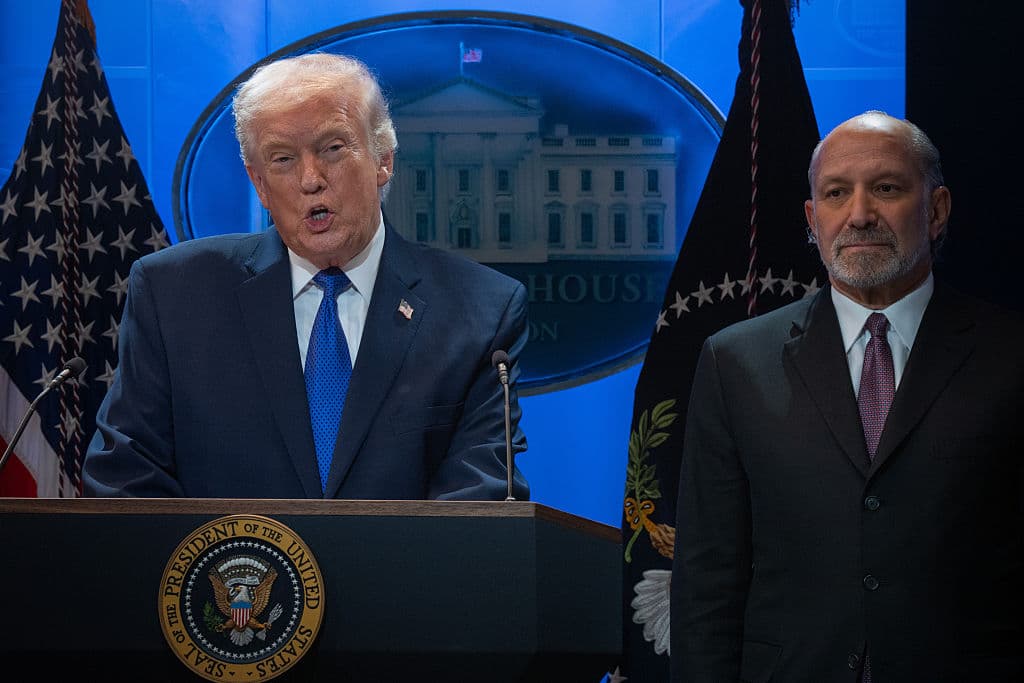
- **US–Iran Negotiations:** While recent signals suggest cautious progress in nuclear talks, risks of escalation persist. Notably, **Trump’s diplomatic moves**, including a temporary easing of sanctions, have provided Iran some relief. Bloomberg reports that **"Trump’s increased pressure on Iran"** aims to recalibrate US policy, but geopolitical uncertainty remains high. These tensions threaten energy markets with potential supply disruptions, supporting elevated volatility and risk premiums.
- **Russia’s Internal Strain and Strategic Moves:** Despite Western sanctions constraining its economy and energy exports, Russia has increased pipeline gas exports via **TurkStream** by over **10%**. This effort aims to **maintain influence and revenue streams** amid economic pressures. A recent *RAND* analysis highlights that **"Western sanctions are biting harder into Russia’s fragile economy,"** with military and infrastructure expenditures stretching the budget. The report warns of **internal economic fragility** and suggests the potential for **domestic unrest or strategic shifts within months**—some analysts estimate about **four months** before destabilization akin to post-Soviet crises.
- **US–China–Taiwan Tensions:** Heightened legislative measures penalizing China for actions against Taiwan have increased regional instability. These frictions raise **risk premiums** and disrupt trade flows, especially in semiconductors and technology sectors. Meanwhile, China is accelerating **domestic innovation efforts** to reduce supply chain vulnerabilities and challenge US technological dominance.
### Additional Geopolitical Developments
- **Energy Markets:** Regional conflicts, US–Iran negotiations, and sanctions have kept **energy prices elevated**. Iran and Venezuela’s increased exports amid disruptions elsewhere continue to keep supply tight, adding to volatility.
- **Defense Sector Gains:** Rising geopolitical risks prompt governments globally to **expand defense budgets**, boosting **defense stocks** and military procurement. According to *"Global defence spending continues to grow"*, expenditures reached **USD 2.63 trillion in 2025**, up from **USD 2.48 trillion in 2024**, reflecting a sustained increase driven by regional conflicts and strategic competition.
- **Europe–China Policy Tensions:** The European Union adopts a cautious approach toward China, balancing economic ties with strategic concerns. While broad sanctions are avoided, increased scrutiny of Chinese investments—particularly in critical infrastructure—is reshaping global investment and trade flows.
---
## Strategic Policy Responses and Infrastructure Vulnerabilities
In response to ongoing inflation, supply chain disruptions, and geopolitical risks, nations are deploying bold policy initiatives:
- **EU LNG Diversification:** The EU’s ban on Russian LNG imports has spurred a surge in LNG tanker demand, boosting Europe’s maritime sector but raising concerns about energy independence and strategic resilience. Countries are seeking alternative suppliers like Qatar and the US, which may also influence global LNG prices and supply stability.
- **Russia’s Increased TurkStream Flows:** Despite sanctions, Russia ramped up pipeline exports via TurkStream by over **10%**, aiming to **counter European diversification efforts** and sustain influence over energy supplies amid geopolitical tensions.
- **OPEC+ Discipline:** The cartel continues managing crude output carefully, adjusting quotas to support prices amidst ongoing disruptions, helping crude markets maintain relative stability despite geopolitical uncertainties.
- **US Critical Minerals Initiative:** The US announced a **$12 billion** program to develop a **strategic reserve of critical minerals** (lithium, cobalt, rare earths). This initiative aims to **secure supply chains**, **curb inflation**, and **reduce dependence on China and Africa**, marking a significant move toward **technological sovereignty**.
### Infrastructure and Tech Resilience
- **Subsea Network Under Strain:** The global communication backbone faces mounting pressure from rising AI demand and geopolitical tensions. The **FLAG submarine cable system**, vital for international data flows, is under stress, increasing risks of supply chain disruptions and cascading market effects.
- **Cybersecurity and Strategic Investments:** Countries are investing heavily to **protect submarine cables, data centers, and semiconductor supply chains** against cyber threats and sabotage. These efforts are reshaping **technological sovereignty** priorities and strategic security agendas.
---
## Accelerating Regulatory and Technological Fragmentation
The regulatory landscape remains highly dynamic, impacting liquidity, risk premiums, and global trade flows.
- **Banking Sector Tightening:** Increased capital and liquidity requirements—especially in Europe—are effectively **tightening credit conditions**. This **"silent tightening"** constrains bank lending, raises counterparty risks, and could slow economic momentum.
- **Institutional Crypto Adoption and Evasion Risks:** Major institutions like **UBS** and **Coinbase** are expanding crypto services, signaling broader acceptance. Digital assets are increasingly used in **cross-border transactions**, especially in sanctioned or emerging markets such as Venezuela and Zimbabwe, serving as **risk mitigation tools**. A UBS report projects gold prices could reach **$6,200** near term, driven by **geopolitical risks and tariff troubles**.
- **Export Controls and Tech Sovereignty:** Countries are enacting stricter export bans—on **Nvidia** chips and other advanced technology—to **protect strategic industries**. These measures influence global investment and supply chains, adding risk premiums and deepening technological bifurcation.
- **US Supreme Court Tariffs Ruling:** The recent *"SCOTUS decision"* in *"striking down Trump-era tariffs"* (6-3) effectively nullifies certain tariffs under the **International Emergency Economic Powers Act**. While this could **reduce trade barriers**, it also injects **uncertainty** for industries relying on tariffs, impacting supply chains and market expectations.
- **Sanctions and Supply Chain Disruptions:** Persistent sanctions—particularly against Russia—continue to disrupt supply chains and increase shipping costs, fueling inflation and regional fragmentation. Analyses highlight the **"long-term structural effects of sanctions"**, which will influence global trade dynamics for years.
### Digital Assets and Sanctions Evasion
Blockchain and digital assets are increasingly critical in **supply chain management**, **cross-border payments**, and **resilience strategies**. Institutional adoption, especially in sanctioned markets, underscores their strategic importance. However, investigations by firms like Elliptic reveal that **five crypto exchanges** are allegedly aiding Russian actors in **circumventing sanctions**, complicating enforcement efforts and posing systemic risks.
---
## Deepening US–China Decoupling and Strategic Rivalry
The US–China rivalry has intensified, with profound implications:
- **Export Controls and Semiconductor Race:** The US has intensified restrictions on advanced **Nvidia** chips, aiming to slow China’s technological ascent. China responds by **accelerating its domestic semiconductor development** and AI capabilities, further bifurcating global supply chains.
- **Sanctions and Investment Restrictions:** Targeted sanctions against Chinese firms involved in military and coercive actions—particularly related to Taiwan—continue to rise. Chinese companies are **relocating manufacturing and R&D** to Southeast Asia and Africa, deepening the geopolitical divide.
- **Military and Tech Modernization:** Both superpowers are heavily investing in **cyber capabilities**, **military modernization**, and **technological sovereignty**, increasing systemic risks and pushing toward **deglobalization**.
---
## Japan’s Currency Policy and Diplomatic Efforts
Recent electoral victories have emboldened Prime Minister Sanae Takaichi to adopt a more assertive stance on **yen stabilization**. An analysis titled *"Why Japan’s Emboldened PM Won’t Toy with Risks of a Weak Yen"* suggests interventions aim to **prevent excessive yen depreciation**, protecting **export competitiveness** and **financial stability**. These policies could **amplify currency swings** and influence cross-border capital flows.
Meanwhile, diplomatic efforts in the Middle East—particularly between **Saudi Arabia** and **UAE**—seek to **prevent escalation** in US–Iran tensions. Back-channel talks are viewed as essential to **avert broader conflict**, recognizing that escalation could trigger **oil market upheavals** and further destabilize the global economy.
---
## Systemic Infrastructure Vulnerabilities and Cascading Risks
Disruptions to critical infrastructure—such as submarine cables, shipping lanes, and energy routes—remain central concerns:
- **Subsea Cables and Maritime Tensions:** The **FLAG cable system** and congested shipping lanes in the South China Sea and Middle East could trigger **cascading geopolitical and financial shocks** if disrupted.
- **Cybersecurity and Strategic Investments:** Countries are allocating significant resources to **protect submarine cables, data centers, and semiconductor supply chains** against cyber threats and sabotage, reinforcing **technological sovereignty** and strategic security priorities.
---
## Current Status and Implications
As 2026 unfolds, these intertwined elements produce a **highly fragmented and volatile environment**:
- The **US dollar** remains the **primary safe haven**, often rallying during risk-off episodes driven by geopolitical tensions and monetary divergence. However, **gold** and **digital currencies** are gaining traction as alternative hedges against currency and inflation risks.
- **Gold** continues its ascent, with UBS projecting **$6,200** in the near term, fueled by **geopolitical uncertainties, tariff disputes**, and inflation concerns. **Silver** has also surged nearly 4%, reinforcing its role as a safe haven and industrial metal amid supply chain disruptions.
- **Equity markets** exhibit **sectoral divergence**: energy and defense outperform amid conflicts and supply issues, while high-growth tech sectors face headwinds from tighter monetary policy, regulatory hurdles, and geopolitical strains—especially in AI, semiconductors, and strategic industries.
- **Digital assets** are increasingly embedded in **resilience and sovereignty strategies**, especially in sanctioned markets and regions seeking to bypass traditional channels. Nonetheless, risks from **regulatory crackdowns, cyber threats**, and illicit activities—such as crypto exchanges facilitating sanctions evasion—remain significant.
- **Geopolitical risks**—including Russia–China alliances, regional conflicts, infrastructure vulnerabilities, and energy shocks—continue to threaten systemic stability, with disruptions to shipping and energy routes likely to produce cascading economic and financial effects.
- **Policy responses** such as the EU’s LNG diversification, the US critical minerals program, and OPEC+ crude management are reshaping supply chains and strategic dependencies, influencing investment flows and geopolitical alignments.
---
## Implications and Forward Outlook
The current landscape suggests **elevated volatility will persist**, with **risk premiums remaining high**. Investors are increasingly turning to **safe-haven assets**—notably the US dollar, gold, and silver—while adjusting to a **fragmented regulatory environment** that accelerates technological and trade bifurcation.
**Gold’s near-term target** may approach **$6,200**, driven by geopolitical tensions, inflation, and tariff disputes. Meanwhile, **silver’s recent surge** underscores its dual role as a hedge and industrial metal amid ongoing supply chain constraints.
The **geopolitical environment**, characterized by US–China decoupling, regional conflicts, and infrastructural vulnerabilities, underscores the need for **disciplined risk oversight and resilience frameworks** at the portfolio level. Incorporating **geopolitical risk analysis** into investment strategies is essential to navigate the heightened uncertainty.
**Strategic policy initiatives**—including energy diversification, critical mineral development, and defense spending—are reshaping the global landscape, but they also introduce new risks and opportunities that will define the trajectory of markets in the months ahead.
In sum, **2026 continues to be a year of profound transformation**, demanding vigilance, adaptability, and strategic foresight to manage risks and capitalize on emerging opportunities in an environment of unprecedented volatility and fragmentation.