# How Museums Are Reimagining Space, Stories, Ethics, and Community in a Transformative Era
In an era characterized by rapid technological advances, ecological crises, and a societal push for diversity and inclusion, museums are undergoing a profound transformation. No longer merely repositories of artifacts and history, they are evolving into **dynamic civic spaces**—platforms where **storytelling**, **ethical stewardship**, **sustainability**, and **community participation** intersect. These shifts are redefining museums as **societal catalysts** capable of fostering empathy, justice, ecological responsibility, and social cohesion through innovative spatial design, technological integration, and inclusive programming.
## From Guardians to Civic and Community-Centered Institutions
Historically, museums prioritized **preservation**, **scholarly research**, and **artifact display**, often with limited public interaction. Today, however, they are **co-creating narratives with communities**, embracing **repatriation and restitution efforts**, and committing to **sustainable operations**. Modern institutions serve as **platforms for dialogue, healing, and social justice**, transforming from **static custodians** into **living, community-engaged hubs** that reflect and influence societal values.
This evolution emphasizes **ethical storytelling** and **inclusive participation**, reinforcing the museum’s role as an **agent of societal resilience and cultural dialogue**. As one expert states, *"Museums are increasingly spaces where societal narratives are shaped collaboratively, ensuring diverse voices are represented and heard."* Such initiatives are vital in addressing contemporary challenges like cultural disenfranchisement and ecological crises.
## Spatial Strategies: Redesigning for Inclusivity and Sustainability
Recent projects worldwide exemplify how **spatial innovation** is shaping cultural landscapes, making them more accessible, adaptable, and community-focused:
### Adaptive Reuse and Heritage-Sensitive Extensions
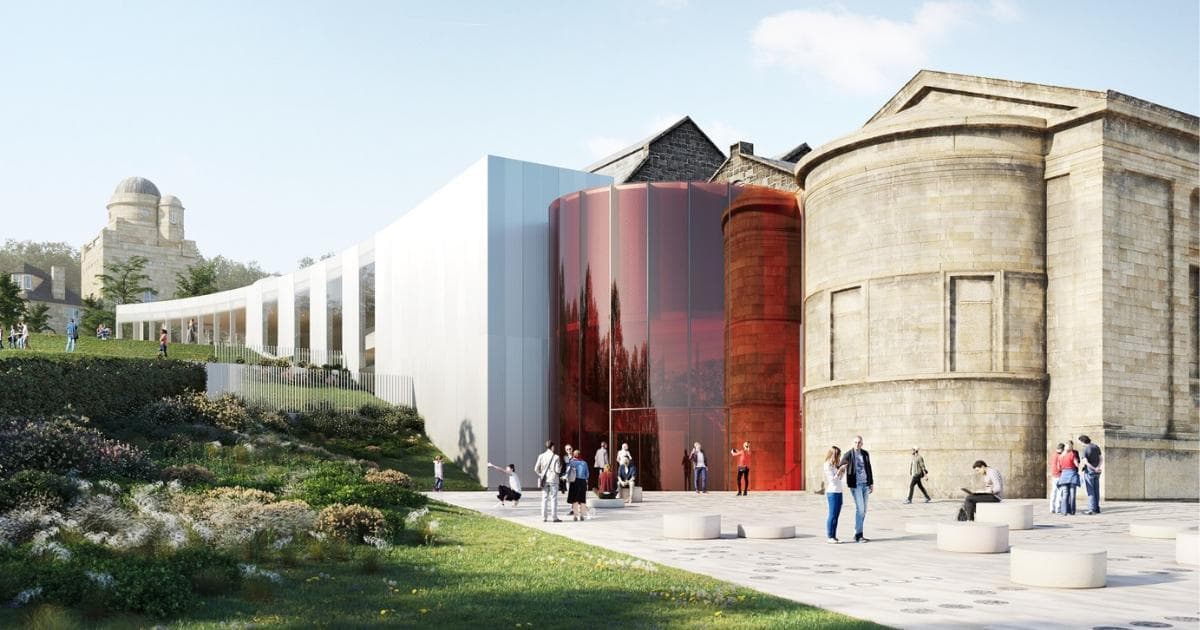
- **Paisley Museum in Scotland** exemplifies **heritage-conscious redevelopment**, seamlessly blending historic architecture with modern extensions. The renovation features a **striking new entrance** and **panoramic galleries**, inviting locals and visitors to engage with heritage in **meaningful ways**. This approach underscores the importance of **heritage preservation combined with accessibility and community participation**.
- Architect **Dingdong Tang** specializes in **transforming disused structures**, such as old factories, into **vibrant community spaces**—respecting heritage while addressing current social needs.
- The **Kistefos Museum Expansion** in Norway, scheduled to open in 2031, emphasizes **climate-conscious architectural design**—utilizing **renewable energy**, **eco-friendly materials**, and **innovative construction practices**. It demonstrates how **heritage preservation can align with ecological sustainability**, setting a responsible standard for cultural infrastructure.
- In Berlin, a **DAM Preis-winning project** repurposed an **industrial structure** into a **flexible, multifunctional cultural venue**, exemplifying **adaptive reuse** and **urban revitalization**.
- The historic **Casa Batlló** in Barcelona now hosts **contemporary exhibitions**, making **heritage sites** more **accessible** and **engaging** for diverse audiences.
### Large Public Spaces for Civic Engagement
- The **Tate Modern’s Turbine Hall**, transformed from an industrial site, functions as a **vibrant hub for contemporary art and societal dialogue**, hosting large-scale installations, performances, and community events that **amplify public voices**.
- The **Rijksmuseum’s pavilions**, designed by **Foster + Partners**, extend the museum’s reach into **urban civic spaces**, fostering **public interaction** and **urban vitality**.
- The upcoming **Kanal Brussels** (opening 2026) aims to **foster urban renewal** and **public participation** through innovative architecture and programming, establishing itself as a **center for artistic experimentation and social dialogue**.
### Architecture as Narrative
- The **Serralves Foundation**, with **Frank Gehry’s deconstructivist design**, exemplifies how **architecture can serve as storytelling** and **community engagement**—transforming space into a **medium for cultural dialogue**.
- The **Vasa Museum** employs **multimedia storytelling**, **interactive displays**, and **immersive visuals** to deepen engagement with maritime history, demonstrating how **digital innovations broaden educational reach**.
## Embracing Technology and Promoting Inclusivity
Contemporary museums are harnessing **cutting-edge technologies** and **inclusive programming** to expand participation:
- **AI Co-Creation**: Projects like **Mansfield Museum’s AI-driven narratives** demonstrate how **artificial intelligence** can **amplify marginalized voices** and **co-create participatory stories**, enriching **diversity and representation**.
- **Sensory and Neurodiversity-Inclusive Programming**: Initiatives such as **Notre-Dame Whispers** focus on **sensory-friendly storytelling**, ensuring that **neurodivergent visitors** and those with **diverse sensory needs** feel welcomed and included, promoting **equity**.
- **Visitor-Centered Design**: Resources like **Planning For People in Museum Exhibitions** emphasize **accessibility** and **emotional engagement**, creating experiences that resonate emotionally and intellectually.
- **AI and Immersive Technologies**: A recent **YouTube video titled "AI and Immersive in Museums and Heritage"** highlights how **AI-driven storytelling**, **virtual reality**, and **multimedia displays** are transforming visitor experiences. These innovations enable **more personalized**, **engaging narratives** and **broader accessibility**, making history and culture **more immersive and participatory**.
## Operational Innovations and Best Practices
To maximize societal impact, museums are adopting **innovative operational strategies**:
- **Collaborations with Non-Traditional Creators**: Partnering with **theatrical designers** and **performance artists** like **Jon Astbury** enables **immersive, emotionally resonant exhibitions** that challenge conventional paradigms.
- **Sustainable and Modular Exhibition Design**: Institutions such as the **Ulster Transport Museum** employ **eco-friendly practices**, utilizing **recyclable materials** and **flexible modular components** to reduce waste and **adapt exhibitions efficiently**.
- **Waste Reduction and Reusable Structures**: Many museums are developing **reusable, modular interactive elements**, aligning with ecological responsibility—particularly in temporary exhibitions.
- **Depots as Public Engagement Spaces**: Examples like the **Ulster Transport Museum**, **South Tyrol’s archaeological depot**, and the **Debrecen Natural History Center** demonstrate how **collections** can serve as **accessible centers for research, education**, and **community involvement**, transforming **storage spaces** into **vibrant ecosystem nodes**.
## Recent Projects and Developments: Expanding the Museum Ecosystem
### Rotterdam’s Harbour Revival with a Future-Facing Photography Museum
**Rotterdam** is elevating its cultural landscape through a new **photography museum** within its historic port area. This project aims to **reflect Rotterdam’s identity as an innovation and diversity hub** by integrating **industrial heritage** with **contemporary visual storytelling**. An involved architect remarks, *“This space reimagines the port’s history while embracing its future as a creative center.”* It exemplifies how **heritage and innovation** can coexist to foster **community identity**.
### South Tyrol’s Archaeological Depot by Peter Pichler Architecture
This regional **heritage hub** incorporates **sustainable infrastructure**, **public engagement zones**, and **advanced display technologies** to transform **collections** into **community-centric ecosystems** for **research**, **education**, and **public participation**. Its design emphasizes **ecological responsibility** and **cultural storytelling**, offering a **model for regional heritage preservation**.
### The 2026 Serpentine Pavilion by Lanza Atelier
This **temporary architectural installation** emphasizes **community participation**, **environmental responsibility**, and **spatial adaptability**, fostering **public dialogue** and **storytelling**. It exemplifies how **innovative design** can act as a **catalyst for social cohesion** and **environmental awareness**.
### Debrecen Natural History Center
Recently completed, this center exemplifies a **holistic approach**—merging **interactive exhibits**, **scientific research facilities**, and **public engagement areas**—all designed with **sustainable materials** and **energy-efficient systems**. It stands as a **model for integrating education, conservation, and community involvement**.
### On-Site Archaeological Discoveries at MiQua in Cologne
Recent excavations beneath the **future MiQua Jewish Museum** in Cologne uncovered a **rare Roman staircase** and a **unique lararium**, connecting visitors directly to **layered histories**. These findings deepen the museum’s storytelling, emphasizing **preservation**, **contextualization**, and **archaeological narrative**.
### Vasarely’s Centre Architectonic Turns 50
Celebrating **half a century** since its opening, the **Centre Architectonic**, dedicated to **Victor Vasarely’s Op Art**, remains a **symbol of spatial innovation**. Its upcoming **anniversary exhibition** highlights **space as a perceptual canvas**, demonstrating how **architectural environments** can **engage viewers’ senses** and **foster artistic dialogue**.
### Oslo’s Architectural Landmarks
Oslo exemplifies how **public space**, **landscape**, and **collective identity** intertwine through thoughtful design:
- The **Oslo Opera House** by Snøhetta invites public interaction with its **slope-shaped roof**.
- **Vigeland Park** functions as an **open-air museum** fostering social dialogue.
- The **Munch Museum** emphasizes **accessibility** and **cultural inclusivity**.
- The **National Museum’s** renovation seamlessly integrates historic architecture with modern extensions.
- The **Akershus Fortress** combines **historical preservation** with scenic landscape and **public access**.
- The **Ekeberg Sculpture Park** offers outdoor art experiences fostering **community gatherings**.
These examples demonstrate how **public space**, **landscape integration**, and **community engagement** are central to Oslo’s cultural architecture.
## The Current Status and Broader Implications
Today, museums are **more than custodians of history**; they are **active agents shaping societal values**, **collective memory**, and **cultural identity**. Their evolution—driven by **spatial innovation**, **technological advances**, and **inclusive programming**—ensures their **continued relevance** amid pressing challenges like **climate change**, **social inequality**, and **cultural disenfranchisement**.
By embedding **ethical storytelling**, **sustainable practices**, and **inclusive engagement**, museums position themselves as **civic anchors**—spaces that **foster empathy**, **justice**, and **ecological responsibility**. Their transformation underscores a **commitment to societal resilience and cultural diversity**, vital for navigating today’s complexities.
## Navigating a Transformative Future
Museums are becoming **living institutions**, promoting **reconciliation**, **innovation**, and **community resilience**. Recent projects—including the **Natural History Collection Center in Debrecen**, the **Serpentine Pavilion 2026**, the **Kistefos Zero Emission Expansion**, and the **Casa Batlló exhibition**—demonstrate how **spatial and technological innovation** deepen **narrative richness** and **inclusive participation**.
Heritage-sensitive expansions like **AL_A’s completed extension to Paisley Museum**, featuring a **red glass entrance** and **panoramic gallery**, exemplify the trend toward **accessible, community-focused design**. These initiatives not only enhance the physical presence of museums but also foster **dialogue and social cohesion**.
### **New Highlight: 'Catwalk - The Art of the Fashion Show' at Vitra Design Museum**
Adding to this landscape of innovation, the **Vitra Design Museum** recently hosted **'Catwalk - The Art of the Fashion Show'**, an exhibition that **reimagines how space, performance, and community interaction** intertwine in fashion presentations. Challenging traditional staging, the exhibition explores **fashion as a narrative medium** and **space as a communal stage**. A dedicated **YouTube video** showcases how **multimedia, performative elements**, and **spatial design** foster **deep engagement** and **dialogue**, exemplifying how museums are broadening beyond static displays into **dynamic cultural arenas**.
## Broader Implications for Society
Modern museums are **more than repositories of the past**; they are **active civic spaces**—platforms for **dialogue**, **healing**, and **ecological stewardship**. Their ongoing evolution—powered by **spatial innovation**, **technological integration**, and **collaborative programming**—underscores their vital role in **addressing societal challenges** like **social inequality**, **climate change**, and **cultural disenfranchisement**. As they adapt, museums will continue to be **crucial in fostering empathy**, **justice**, and **sustainable development**, shaping more **inclusive and resilient societies** for the future.
---
**Recent developments** further exemplify this shift. In Ireland, **Limerick** is now considering a **Women’s History Museum** in a repurposed **former IRE building**—originally a sports and recreation center—highlighting the trend toward **heritage-sensitive adaptive reuse** and expanding **inclusive narratives**. This initiative aims to **center women's stories**, promote **community engagement**, and **respect historic architecture**, aligning with the broader movement to make **museums more representative and accessible**.
Similarly, Ireland’s government has announced proposals to accept the **former International Rugby Experience building** in Limerick as the site for this **new national women’s museum**. The initiative is expected to **join Ireland’s other cultural landmarks**, such as the **Crawford Gallery in Cork** and the **Museum of Country Living**, in fostering **diverse and inclusive cultural narratives**. These projects underscore how **community-focused, heritage-sensitive conversions** are shaping the future of **inclusive storytelling and civic engagement**.
## Conclusion
The ongoing transformation of museums reflects a fundamental shift—from static custodians of the past to **dynamic, inclusive, and environmentally responsible civic spaces**. Through **spatial innovation**, **technological advances**, and **community-driven programming**, museums are increasingly positioned as **centers for societal resilience**, **cultural dialogue**, and **ecological stewardship**. Their evolution demonstrates a shared commitment: fostering **empathy**, **justice**, and **sustainability**, ensuring they remain vital in shaping a more **equitable and resilient future**.
*As museums continue to adapt and innovate, they reaffirm their role as **living institutions**—spaces where **space**, **stories**, **ethics**, and **community** converge to forge a collective future rooted in understanding and shared values.*