# From Busywork to Brain-Friendly Productivity: The Latest Breakthroughs and Developments
In today’s hyper-distracted digital landscape, the quest for genuine productivity is undergoing a seismic shift. No longer is the aim simply to **do more, faster, busier**; instead, a **holistic, neuroscience-informed** approach is emerging—one that champions **intentional, neuro-aligned routines** designed to nurture **mental health, deep engagement, and purpose-driven work**. Recent innovations, backed by cutting-edge research and technological advances, are transforming how individuals and organizations move toward **sustainable, brain-friendly productivity systems** that honor our natural cognitive rhythms and resilience.
## The Need for a Paradigm Shift: Rethinking Core Cognitive Challenges
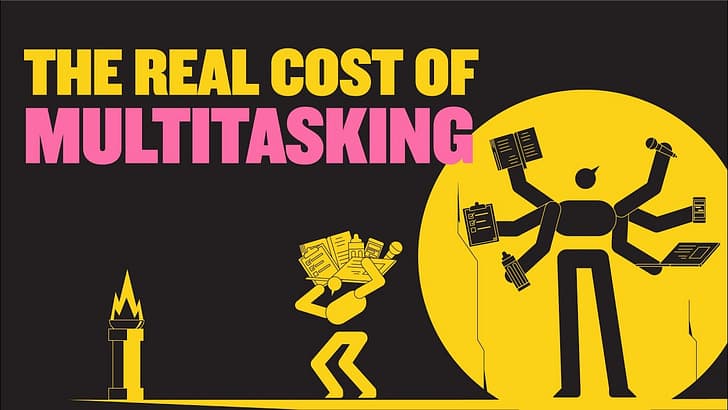
Traditional productivity models—characterized by **multitasking, reactive schedules, and constant notifications**—are increasingly proven to be ineffective. Scientific studies demonstrate that such practices **fragment attention**, **deplete mental resources**, and **accelerate burnout**. The **willpower myth**, which suggests that **self-control alone** sustains focus amidst distractions, has been debunked; mental effort is **limited**, and **willpower depletes rapidly** under digital overload.
Recent research emphasizes the importance of **deliberate, intentional work** aligned with our **neurocognitive rhythms**. Moving away from superficial busywork toward **purposeful, sustainable routines** is now recognized as essential for **long-term effectiveness and well-being**.
## Neuroscience-Informed Strategies for a Brain-Friendly Approach
### Time-Blocking & Environmental Design
Innovators are refining **time management techniques** to **harmonize with neurobiological cycles**:
- **Multi-layered time blocks** delineate **deep focus sessions**, **collaborative meetings**, and **restorative activities**.
- **Color-coding and visual cues** help reduce **decision fatigue**, enabling the brain to **quickly recognize task types**.
- Incorporating **buffer zones** between activities **prevents spill-over** and **lowers stress**, facilitating **seamless transitions**.
- Recognizing the importance of **self-care periods**—like walks, meditation, or leisure—has gained prominence as **crucial for mental clarity** and **emotional resilience**.
### Collaborative Scheduling & AI Assistance
Teams are shifting toward **shared templates** and **synchronized calendars**, with **AI playing an increasingly central role**:
- **Reducing unnecessary meetings** creates **more space for deep work**.
- **Standardized planning templates** foster **clarity** and **purposeful collaboration**.
- This **cultivates a culture of intention**, transforming effort from reactive busywork into **goal-oriented, meaningful work**.
- **AI tools** now **suggest optimal meeting times** based on **participants’ energy levels and availability**, **resolve conflicts**, and **prioritize tasks** considering **deadlines**, **importance**, and **natural energy peaks**.
- Thought leaders like **Cal Newport** advocate for AI as **helper, not replacement**, to **reduce mental clutter** and **maximize deep work**. As AI capabilities **advance**, their support roles **expand further**, making **task management more efficient and less mentally taxing**.
### Micro-Habits & the 1- and 2-Minute Rules
Recent strategies emphasize **micro-habits** and the **2-Minute Rule**:
- **Micro-habits** are **small, manageable actions** that **overcome inertia** and **foster routine consistency**.
- The **2-Minute Rule** encourages **immediate completion** of tasks **taking less than two minutes**, **reducing procrastination** and **building momentum**.
- The **One-Hour Deep Work Rule**—dedicating just **one focused hour daily**—has gained traction, with understanding that **consistent, undistracted periods** lead to **compound results** over time.
### Building Resilience Through Discomfort & Neuro-Reset Techniques
A **groundbreaking perspective** from **"The Uncomfortable Art of Staying Sharp"** emphasizes that **true cognitive resilience** develops through **embracing discomfort**:
> *"A sharp mind involves pushing through mental fatigue and practicing focus amidst distractions—training ourselves to **embrace discomfort** rather than avoid it."*
This **approach** encourages **deliberate exposure** to **challenging environments**, such as working amid distractions or unfamiliar settings, to **strengthen mental endurance**. Over time, **embracing cognitive discomfort** **enhances capacity** for **deep work** despite interruptions, **improves recovery from distractions**, and **builds mental stamina**.
Recent practical tools include **"Reset Your Nervous System in 5 Minutes"** routines to **soothe stress and recover focus** and methods to **calm overactive minds** via **Vagus Nerve techniques**, which **reduce anxiety** and **enhance clarity**.
### Environmental Design & Digital Boundaries
Research underscores that **unstructured environments and constant distractions** amplify **procrastination**. Effective strategies involve:
- **Digital decluttering**—disabling notifications, using **device-free zones**, and **minimalist toolsets**.
- **Dedicated workspaces** that **support focus**.
- **Digital boundaries** are crucial, especially considering **digital addiction** and **nomophobia** (the anxiety of being disconnected). Studies show that **overdependence on smartphones** correlates strongly with **procrastination**, making **notification management** and **digital detoxes** essential.
## The Role of Cutting-Edge Tools & Trends
The **movement toward mindful productivity** is supported by **innovative tools**:
- **Distraction management techniques**, such as **disabling notifications** and **limiting app access**, are **scientifically proven** to **improve attention spans**.
- **Open-source apps** **detect procrastination habits**, **set boundaries**, and **guide focused sessions**, empowering users to **manage digital distractions** effectively.
- Resources like **"This free open-source app breaks procrastination loops"** demonstrate how **behavioral insights** and **intentional boundaries** foster **sustainable routines**.
- **Deep work routines** and **recovery practices**, including a **16-minute YouTube episode featuring Jake Kennington of Actively Human**, emphasize **purposeful routines** and **intentional breaks**.
Recent articles advocate **AI minimalism**—using **a small, high-impact set of tools**—to **reduce mental clutter**. For example, **"Why the best AI entrepreneurs only use 3 tools while everyone else hoards 50+"** illustrates that **selectivity enhances focus**.
### Digital Organization & Self-Hosting for Clarity
A recent example highlights **self-hosted digital organization**:
> *"I needed a warranty for a humidifier I bought 18 months earlier. I was certain I stored it on Google Drive, but after hours of searching, I realized a **self-hosted document management system** was more effective."*
This underscores that **simplicity and control** often **outperform complex, cloud-based solutions**, especially when **privacy**, **customization**, and **mental clarity** matter most.
## The Latest Developments: Integrating Resilience & Energy-Cycle Scheduling
**A crucial breakthrough** is the **integration of resilience training with AI support**, creating **holistic, brain-friendly productivity systems**:
- **Resilience training** emphasizes **pushing through cognitive discomfort**, **embracing challenging environments**, and **building mental endurance**.
- **AI tools** are increasingly **designed to align tasks with individual energy rhythms**:
- **Scheduling algorithms** recommend **peak times** for **demanding work** based on **personal alertness cycles**.
- They **filter distractions** and **manage task prioritization** to **maximize cognitive efficiency** during **high-energy windows**.
- **Feedback mechanisms** monitor **mental fatigue**, prompting **breaks** or **task shifts** when necessary.
This **synergistic approach** fosters a **sustainable workflow**—where **resilience training** and **technological support** work together to **enhance focus**, **reduce stress**, and **build mental stamina**.
### The Newport-Huberman Protocol
A **notable recent development** is the **Topological Success: Newport-Huberman Protocol**, which **combines Cal Newport’s deep work principles** with **Andrew Huberman’s neurobiological insights**:
> *"By structuring work around neural states of arousal and attention, individuals can optimize focus and resilience,"* explains the protocol.
This **framework** helps **align work routines** with **neural states**, making **challenging tasks more approachable** and **sustainable**.
### Making Hard Work Feel Easier
Techniques from **Scott H. Young**—such as **task redesign**, **reward framing**, and **energy management**—aim to **reduce perceived effort** and **boost motivation**:
> *"We can make hard work feel easier by matching work to our cognitive strengths and increasing long-term rewards."*
These **strategies** support **long-term engagement** and **mental ease**.
## Practical Strategies for a Brain-Friendly Routine
- **Daily One-Hour Deep Work**: Dedicate **just one focused hour**—preferably during **peak energy times**—to **undistracted, high-quality work**. Over time, this **compound effort** yields **significant progress**.
- **Scheduled Restorative Breaks**: Incorporate **buffer zones**, **short walks**, or **mindfulness routines** to support **mental recovery**.
- **Device-Free Zones**: Designate specific **areas or times** free of digital devices to **enhance focus**.
- **Feedback & Monitoring**: Use **AI tools** or **habit trackers** to **monitor progress**, **detect fatigue**, and **refine routines**, ensuring **long-term sustainability**.
## Addressing Sleep & Physiology: The Foundation of Cognitive Performance
A recent pivotal insight highlights the **power of sleep and dreams** in **cognitive restoration**:
> *"Unlocking The Power of Sleep And Dreams" by Matthew Walker underscores that **quality sleep** is fundamental for **memory consolidation**, **emotional regulation**, and **mental clarity**.*
Practices such as **sleep hygiene**, **consistent sleep schedules**, and **sleep-informed task scheduling** are now recognized as **integral** to **brain-friendly productivity**.
## The Current Status & Broader Implications
The **latest breakthroughs** reveal an **integrated, holistic approach** to **productivity** that includes:
- **Aligning routines with neurobiological rhythms**
- **Leveraging AI for personalized task management**
- **Building resilience through deliberate discomfort and neuro-informed habits**
- **Implementing micro-habits** to lower activation energy
- **Designing environments and digital boundaries** to foster sustained focus
This **collective evolution** aims to **transform productivity** from superficial busyness into **meaningful, sustainable achievement**—prioritizing **mental health, purpose, and long-term fulfillment**.
## The Future of Brain-Friendly Productivity
The **movement toward neuro-aligned, resilient routines** is gaining momentum. As **AI tools** grow more sophisticated and **resilience practices** become more accessible, individuals and organizations are increasingly capable of **personalizing workflows** that **respect human neurobiology**. The integration of **sleep optimization**, **discomfort embracing techniques**, and **digital boundaries** promises a future where **deep, purposeful work** is **not only possible** but **sustainable**.
### Final Reflection
The **latest developments** affirm that **sustainable success** depends on **designing routines** that **align with our neurocognitive strengths**. By **embracing controlled discomfort**, **leveraging technology thoughtfully**, and **prioritizing well-being**, we can **shift from busywork to brain-friendly productivity**—fostering **mental health**, **long-term achievement**, and **deep engagement** in the modern age.
---
**In summary**, the ongoing evolution emphasizes **neuro-aligned routines**, **resilience-building**, and **technological support** to **transform work into a sustainable, purposeful pursuit**. As these **innovations mature**, the promise is a future where **deep, meaningful work** flourishes—anchored in **mental health**, **long-term growth**, and **deep engagement**.
---
## Recent Articles & Practical Resources
One notable addition is the article titled **"[PDF] Deep Work Rules For Focused Success In A Distracted World"**, which offers **practical guidelines** inspired by Cal Newport’s principles:
> *"Newport proposes four golden rules that could help individuals perfect techniques for deep, undistracted work."*
Another valuable resource is the article **"Does Multitasking Make You Less Productive?"**, which explores **scientific evidence** demonstrating **multitasking’s detrimental effects** on focus and efficiency, reinforcing the importance of **single-tasking** and **intentional scheduling**.
## Implications for Today and Tomorrow
The **current landscape** signals a **paradigm shift** toward **mindful, resilient, and neuro-aligned routines**. With **AI** and **behavioral science** advancing rapidly, the capacity to **personalize productivity systems** that **respect human neurobiology** will only grow. This evolution promises not just **higher efficiency** but also **enhanced mental health**, **long-term sustainability**, and **meaningful engagement**—building a foundation for a future where **work and well-being** coexist harmoniously.
---
**In essence**, the movement from superficial busywork to **intentional, brain-friendly productivity** is now supported by a confluence of **research**, **technology**, and **resilient habits**. It invites us all to **rethink** how we work, learn, and grow—toward a **more sustainable**, **purposeful**, and **mentally healthy** future.