# The 2026 AI Frontier: Autonomous Agents, Multimodal Models, and Their Security and Ethical Challenges—An Expanded Perspective
The year **2026** marks a pivotal juncture in artificial intelligence, where advancements in **autonomous agents**, **multimodal models**, and **integrated infrastructure** are reshaping industries, societal norms, and security landscapes. Driven by rapid model launches, innovative hardware, and widespread deployment, this era is simultaneously unveiling profound **opportunities** and **risks**—from groundbreaking scientific exploration to escalating security vulnerabilities. Building upon earlier insights, this article synthesizes recent developments, emphasizing the technological breakthroughs, deployment trends, and the critical ethical and security considerations that define the current AI epoch.
---
## Cutting-Edge Model Launches and Architectures
The AI ecosystem in 2026 is distinguished by **state-of-the-art models** that push the boundaries of understanding, reasoning, and autonomous operation:
- **Anthropic’s Claude Sonnet 4.6** has established itself as a **safety-focused powerhouse**, excelling in **media comprehension** and **complex reasoning** tasks. Marketed as **"Opus-like intelligence at Sonnet prices,"** it now underpins **safety-critical applications**, democratizing access to advanced AI capabilities while emphasizing robustness.
- **DeepMind’s Gemini 3.x and Deep Think** have achieved **record-setting scores** on **ARC-AGI benchmarks**, notably excelling in **media synthesis**—from high-fidelity audio to autonomous media generation—fueling **creative industries** and **entertainment** sectors.
- **OpenAI’s GPT-5.3-Codex-Spark** introduces **specialized, plate-sized chips** optimized for **high-throughput autonomous reasoning and coding**. These hardware innovations deliver **15x faster decision-making speeds**, accelerating deployment in **robotics**, **logistics**, and **emergency response** scenarios.
- **Grok 4.2** pioneers a **multi-agent debate architecture**, where **specialized AI agents** internally **discuss and resolve** complex tasks, producing **more reliable and comprehensive outputs**. This **internal consensus mechanism** is integral to managing **autonomous complex workflows**.
### Widespread Multimodal and Edge AI Capabilities
In tandem with foundational models, **real-time, on-device multimodal AI** is becoming ubiquitous:
- **Google’s Lyria 3** now delivers **crystal-clear audio** and **granular media control**, empowering **content creators** with **immersive media tools** that facilitate **live editing** and **media synthesis**.
- **Samsung’s Galaxy S26**, equipped with **“Hey Plex” AI assistant** powered by **Perplexity Brain**, seamlessly integrates with **Bixby** and **Google Assistant**, offering **personalized, context-aware interactions** directly on smartphones—ranging from **visual recognition** to **autonomous decision-making**.
- **Apple’s ongoing research** into **visual intelligence** within **wearables**—like **camera-equipped AirPods**—aims to enable **real-time visual analysis** and **augmented reality**, transforming passive assistants into **proactive, environment-aware companions**.
- The release of **Wispr Flow** on Android signifies a **major leap** in **agent-enabled mobile multimodal applications**:
> **"Now You Can Experience Wispr Flow By Dictating To Your Android Device"** — After two years in development, Wispr’s **Flow AI-powered dictation app** now allows **voice-controlled, multimodal AI interactions** directly within smartphones, expanding **edge AI deployment** and **personal assistant capabilities**.
---
## Integration of Agents and Tooling into Daily Workflows
The integration of **autonomous agents** and **advanced tooling** into **productivity platforms** is accelerating:
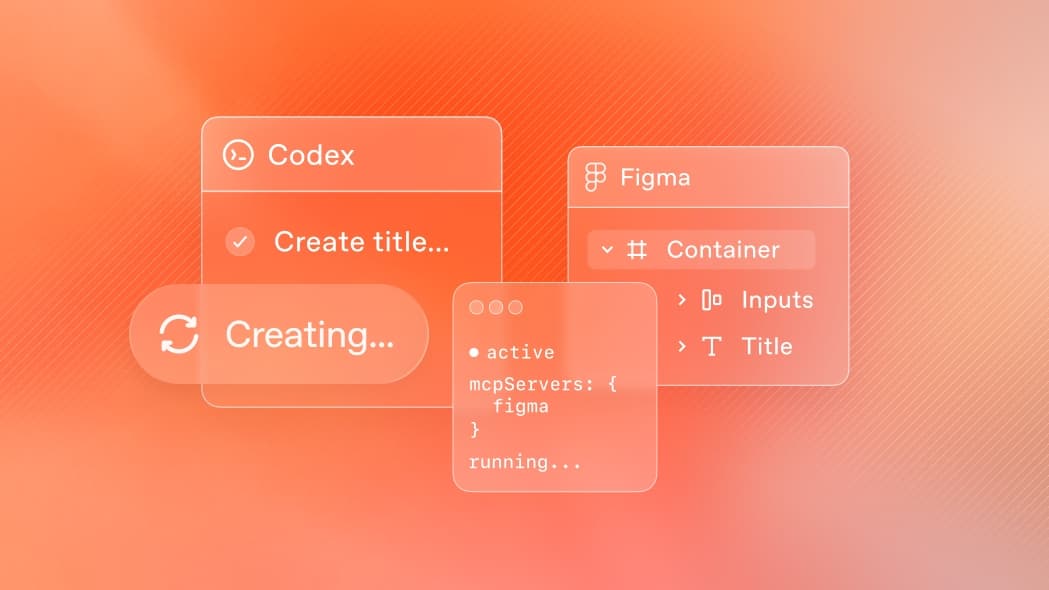
- **Figma**, integrating **OpenAI’s Codex**, enables **design-to-code workflows**, allowing designers to **generate, modify, and refine code snippets** within their familiar environment—streamlining **UI/UX development**.
- **Rover by rtrvr.ai** facilitates **turnkey website AI agents**, embedding **actionable AI** directly into web pages with **a single script tag**. These agents **assist users** by **navigating**, **answering queries**, and **performing actions** autonomously.
- **Trace**, raising **$3 million**, aims to **solve the enterprise AI agent adoption barrier** by providing **robust management tools**, **trust frameworks**, and **integrations** that ensure **scalability** and **security** in organizational contexts.
- **Gemini automations on Android** and **Anthropic’s partnership with Vercept** exemplify efforts to **embed AI assistants** deeply into **computing environments**, enabling **seamless, trustworthy AI interactions**—from **personal computing** to **enterprise workflows**.
---
## Escalating Security, IP, and Assurance Challenges
As AI systems become more capable and integrated, **security vulnerabilities** and **ethical concerns** grow in severity:
- **Model distillation and intellectual property theft** are prevalent. Notably, **Chinese labs** such as **Deepseek**, **Moonshot**, and **MiniMax** have **distilled Claude’s data** through over **16 million queries**, raising alarms over **model exfiltration** and **espionage**. **Anthropic** publicly criticizes these entities for **proprietary data theft**, highlighting **malicious manipulation risks**.
- **Distillation attacks** and **model extraction techniques** are continuously evolving, with **new tools** emerging to **detect**, **prevent**, and **mitigate** such breaches. Nonetheless, **malicious actors** leverage **open-source models** and **public code repositories** to **craft malicious scripts** and **cyberattack vectors**.
- The **proliferation of open-source AI models** exacerbates **security risks**, enabling **low-quality, harmful, or malicious code snippets** to spread rapidly, further complicating **trust and safety**.
- **Hardware supply chain issues**, such as **GPU and memory chip shortages**, persist. Companies like **BOSS Semiconductor** are racing to develop **next-generation 2nm GAA chips**, promising **cost reductions** and **energy efficiency**, vital for **large-scale AI deployment**.
- **Space-based AI infrastructure** has become a reality, with **orbiting data centers** and **satellite AI networks** supporting **deep space exploration**. These **autonomous space systems** could assist **interplanetary missions** and **planetary colonization**, but also introduce **unprecedented security and control challenges**.
---
## Ethical and Societal Impacts
The widespread deployment of **autonomous agents** and **multimodal AI** raises critical **societal and ethical questions**:
- **Privacy violations** are escalating due to **visual intelligence embedded in consumer devices**. Devices like **Apple’s camera-equipped AirPods** and **Meta’s facial recognition glasses** can **capture and analyze visual data** in real time, fueling fears of **mass surveillance** and **loss of anonymity**.
- **Job displacement** accelerates across **creative industries**, **coding**, and **decision-making roles**, prompting urgent debates on **regulation**, **worker retraining**, and **social safety nets**.
- The rise of **AI avatars** and **autonomous support systems** in **healthcare**, **customer service**, and **rural outreach** challenges **trustworthiness** and **authenticity**, especially in regions with limited human resources. Ensuring **trust** and **ethical deployment** remains a top priority.
---
## Recent Ecosystem Signals and Practical Deployments
The AI ecosystem continues its rapid evolution with notable recent developments:
- **Faster agent rollouts** are now standard, driven by **websocket-based communication** that **boost deployment speeds by 30%**, enabling **real-time responsiveness** in **autonomous workflows**.
- **Jira’s latest update** introduces **collaborative AI-human workflows**, fostering **synergistic project management** and **software development**.
- **Consumer devices** like the **Samsung S26 Ultra** and **FancyView Y2 AI glasses** exemplify **AI integration into daily life**, offering **visual analysis**, **AR features**, and **personalized assistance**, but also raising **privacy and security** questions.
- **Amazon’s Alexa+** now offers **customizable personalities**, enabling **more engaging interactions** but also igniting **discussions on AI manipulation** and **user trust**.
- **YouTube reviews**, such as the **14:48-minute hands-on of the S26 Ultra**, highlight **performance** and **privacy considerations**—underscoring the **pressure on manufacturers** to balance **feature richness** with **security**.
---
## Current Status and Broader Implications
By 2026, **frontier models** and **autonomous agents** are **redefining standards** across sectors:
- Launches like **Anthropic’s Sonnet 4.6**, **DeepMind’s Gemini**, and **OpenAI’s GPT-5.3** exemplify **progress toward more capable, multimodal, and autonomous systems** operating seamlessly across **cloud**, **edge**, and **space**.
- **Security vulnerabilities**, **IP risks**, and **ethical dilemmas** are escalating, demanding **robust governance**, **interpretability**, and **security standards**.
- The advent of **space-based AI** introduces **unprecedented opportunities** for **scientific discovery and exploration**, yet also **new security and control challenges**.
**The path forward** hinges on **coordinated global efforts**: establishing **regulatory frameworks**, advancing **explainability and transparency**, and creating **trustworthy AI ecosystems**. Only through **responsible innovation** can society **harness AI’s transformative potential** while **mitigating its risks**.
---
## Conclusion
The landscape of **2026** reflects a **dynamic interplay** between **technological breakthroughs** and **urgent challenges**. As **autonomous agents** and **multimodal models** become integral to **everyday life**, the importance of **ethical governance**, **security safeguards**, and **public trust** cannot be overstated. This year stands as a testament to **human ingenuity** and the **necessity of responsible stewardship**—a defining moment to shape AI's future for the betterment of society.