# Secret Residential Lab Raid Sparks Widespread Health and Security Fears
A recent clandestine raid in Las Vegas has dramatically exposed the troubling reality of unregulated biological research taking place in residential environments across the United States. With authorities uncovering over **1,000 biological samples** in a hidden home laboratory, this incident has ignited urgent concerns about **public safety**, **national security**, and the **gaps in regulatory oversight** that allow such operations to flourish undetected.
## The Discovery: Unmasking a Hidden Biological Threat
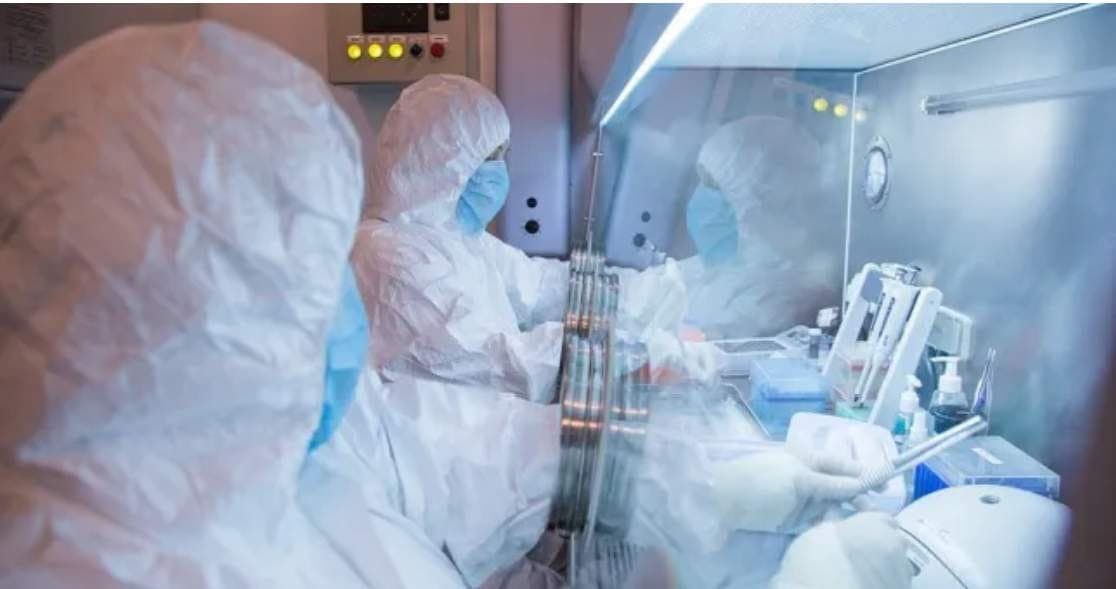
Late last week, law enforcement officials executed a search warrant at an unassuming residence in Las Vegas. Behind the facade of an ordinary home, investigators uncovered a **sophisticated biological laboratory**—a rare find that revealed **more than 1,000 biological samples**. These samples are now under intense forensic scrutiny to determine their nature, potential threats, and origins.
The property manager associated with this clandestine operation was detained and subsequently arrested. Evidence suggests a possible **connection to earlier controversial biolab cases in California**, hinting that this operation might be part of a broader, clandestine network operating across state borders. The scale and technical complexity of this setup highlight a disturbing trend: **illicit bio-research increasingly moving into residential environments**, often outside the purview of existing regulations.
## Immediate Community and Public Health Concerns
The discovery has shaken local residents, many of whom fear **potential accidental exposure** to dangerous pathogens housed within the lab. “It’s unsettling to think dangerous pathogens could be just a wall away,” shared a neighbor, expressing widespread community anxiety.
Preliminary reports indicate that **multiple individuals** who came into contact with the lab have fallen seriously ill. While authorities have not disclosed specifics, health officials are actively investigating the pathogens involved, environmental contamination risks, and the potential for further exposure. This situation has reignited calls for **urgent safety protocols** and **stricter oversight** of biological research, especially in unregulated settings.
This incident also highlights **regulatory gaps**, particularly in residential zones where oversight is minimal or nonexistent. Experts warn that such unregulated bio-labs significantly increase the risks of **accidental releases**, **bioterrorist activities**, and **public health emergencies**, especially when safety standards are ignored or overlooked.
## Broader Security and International Implications
Adding a concerning international dimension, intelligence sources suggest **possible foreign connections** to the operation. While official confirmation remains pending, investigations point toward **clandestine networks involved in unauthorized biological research** with foreign ties. This aligns with ongoing fears about **foreign entities** attempting to bypass U.S. regulations, conducting covert experiments, and potentially proliferating dangerous pathogens.
The proliferation of **unmonitored residential bio-labs** poses a **grave threat**—not only to national security but also to **global stability**. The risk of **highly dangerous pathogens** escaping or being weaponized, coupled with the possibility of **bioterrorist attacks**, underscores the severity of these clandestine operations. The Las Vegas case exemplifies how such labs can operate largely unchecked, raising alarms about a **new frontier in biological threats**.
## Scientific Warnings and International Calls for Action
In response to this alarming event, a **global coalition of scientists and health experts** has issued an urgent appeal to **suspend all high-risk biological research**, particularly experiments involving **'mirror bacteria'**—genetically engineered pathogens designed to evade current defenses. An influential recent publication titled *"Extreme biological risks to life on Earth"* emphasizes that **mismanaged or malicious use** of such research could **trigger pandemics or bioweapons**, with catastrophic consequences.
The scientific community underscores the need for **stricter governance**, **international transparency**, and **bans on the most dangerous types of biological experiments**. These measures are critical to prevent research from spiraling into catastrophic scenarios.
## Policy and Legislative Responses
Recognizing the emerging threat, lawmakers at federal and state levels are advocating for comprehensive reforms, including:
- **Mandatory licensing and routine inspections** of all biological laboratories, especially those operating outside official, regulated facilities.
- **Enhanced background checks** for individuals involved in biological research activities.
- **Stricter penalties** for illegal or unregulated bio-lab operations.
- **Community reporting systems** to empower residents and authorities to identify suspicious activities promptly.
- **Tighter licensing requirements** for new and existing bio-labs to ensure adherence to safety standards.
A recent GAO report (*GAO-26-107348*, published February 2026) highlights **significant oversight gaps** in high-risk gain-of-function research, emphasizing the **urgent need for robust regulatory frameworks**. The report notes that **current policies are inadequate** to prevent dangerous research from operating unchecked, especially in unofficial or unregulated environments.
## Connecting the Dots: Related Incidents and Broader Networks
The Las Vegas raid is not an isolated event. Recent investigations include a **California biohazard lab raid in Fresno County**, where authorities seized mysterious items prompting a **FBI investigation**. These incidents suggest a **wider clandestine network** engaged in illegal biological research, operating across multiple states and often in residential or semi-hidden settings.
Such interconnected operations underscore the **systemic vulnerabilities** in biosafety oversight and the **urgent need for cohesive policies** at all levels of government to prevent further proliferation.
## The Global Context: Transparency and International Risks
A comprehensive recent study estimates that there are approximately **3,625 high-containment biolabs worldwide**, with **73% of these facilities** failing to disclose their locations or activities. This lack of transparency creates **dangerous blind spots**, enabling rogue actors to exploit unmonitored labs for malicious purposes.
The Las Vegas case exemplifies how systemic vulnerabilities in **global biosafety frameworks** can be exploited. Without increased **international cooperation**, **transparency initiatives**, and **research governance**, rogue laboratories may continue to operate clandestinely, posing severe **public health** and **security risks** globally.
## Practical Guidance and Public Vigilance
Authorities emphasize the importance of **public vigilance**. Biological or chemical samples can be **concealed in innocuous-looking packages**, such as vials, toy capsules, or pill containers. Residents, postal workers, and delivery personnel are urged to **report suspicious packages or items immediately** to authorities, preventing accidental exposure or malicious use.
## Current Status and Next Steps
The investigation into the Las Vegas operation remains ongoing. Forensic teams are analyzing the seized samples to identify pathogens and trace their origins, while law enforcement continues interrogating suspects. There is a possibility of **additional arrests** and the dismantling of broader networks.
In the meantime, authorities are reevaluating **biosecurity protocols** across agencies and reinforcing **enforcement measures**. The incident has prompted policymakers to push for **more cohesive, enforceable regulations** at local, state, and federal levels, as well as renewed efforts to foster **international transparency**.
## Implications and Moving Forward
This case serves as a **wake-up call** about the **profound risks** posed by **unregulated biological research in residential and clandestine environments**. It underscores the **urgent necessity** of:
- **Enhancing oversight mechanisms** to monitor, regulate, and inspect bio-labs effectively.
- **Promoting international transparency** and cooperation.
- **Increasing public awareness** and **community involvement** in biosecurity efforts.
As policymakers pursue tighter regulations, the **Las Vegas raid could catalyze sweeping reforms** aimed at closing existing oversight gaps and strengthening biosecurity measures nationwide. The incident reinforces the critical importance of **vigilance, scientific prudence**, and **international collaboration** to **safeguard public health** and **prevent future crises** stemming from rogue biological laboratories.
---
### **New International Scientific Call to Halt 'Mirror Bacteria' Research**
In the wake of escalating biological risks, an **international coalition of scientists** has issued a **compelling plea to immediately suspend high-risk research involving 'mirror bacteria.'** These genetically engineered pathogens are designed to **evade current defenses** and **pose catastrophic risks** to life on Earth. Experts warn that such experiments, if misused or falling into malicious hands, could **trigger pandemics or bioweapons** with devastating consequences. They advocate for **stricter international governance, enhanced transparency**, and **comprehensive bans** on the most dangerous biological research to prevent catastrophic outcomes.
---
## **Conclusion**
The Las Vegas clandestine biolab raid underscores the **critical and urgent need** for **strengthened oversight**, **greater transparency**, and **international cooperation** in biological research. With unregulated labs operating in residential settings and a global proliferation of undisclosed high-containment facilities, the risks of **bioterrorism**, **public health emergencies**, and **global instability** are mounting.
This incident should serve as a **wake-up call** for policymakers, scientists, and communities worldwide. Implementing **cohesive regulations**, fostering **international transparency**, and maintaining **public vigilance** are essential steps toward **mitigating these emerging threats** and ensuring a safer future for all.