# Building a Secure and Resilient Ecosystem for Autonomous Agents in 2024: Advances in Security Foundations, Sandboxes, and the OpenClaw Ecosystem
The landscape of autonomous AI agents in 2024 is undergoing a profound transformation, driven by **innovations in security**, **interoperability**, and **long-term resilience**. As these agents become integral to mission-critical sectors such as finance, healthcare, government, and enterprise, ensuring their **trustworthiness**, **safety**, and **robustness** is more vital than ever. Recent technological breakthroughs are steering us toward **scalable, auditable ecosystems** with **security embedded at their core**, enabling autonomous agents to operate safely and effectively in increasingly complex, real-world environments.
---
## Evolving Sandbox Architectures: From OpenClaw to NanoClaw and Beyond
**Sandboxing** remains the cornerstone of autonomous agent security, providing **isolated execution environments** that prevent malicious behaviors and system breaches. The foundational **OpenClaw** framework introduced initial sandbox concepts, but limitations in **security robustness**, **context retention**, and **stability during long-term tasks** spurred the development of more advanced architectures.
### NanoClaw and Domain-Specific Variants
Building upon OpenClaw, **NanoClaw** has emerged as a significant evolution, offering **persistent, confined environments** with **sophisticated conflict resolution** and **state management**. NanoClaw supports **long-term, audit-friendly operations**, making it indispensable for **enterprise-grade applications** that require **reliable, continuous agent activity** over extended durations—crucial for compliance and operational stability.
In addition to general-purpose sandboxes, **domain-specific variants** have gained prominence:
- **HermitClaw**: Designed for **desktop confinement**, restricting agents to **predefined directories** and **filesystem boundaries** to prevent data leaks and unauthorized access.
- **BrowserPod for Node.js**: Enables **safe execution of untrusted code within in-browser, serverless sandboxes**, empowering **self-writing agents** with **dynamic code updates** while safeguarding host systems.
Recent insights emphasize that deploying **long-term, persistent sandbox environments** like NanoClaw and HermitClaw is essential for **enterprise deployment**, ensuring agents can operate securely over **extended periods** without compromising system integrity.
### Standardization and Deployment Tools
To facilitate widespread adoption, **SDKs such as the Rivet Sandbox Agent SDK** aim to **standardize interfaces** across platforms, reducing **fragmentation** and **streamlining cross-platform development**. Complementing these are tools like the **Deploy-to-AWS plugin** (introduced in early 2026), designed to **simplify cloud deployment workflows**. While promising **frictionless deployment**, industry experts stress the importance of **rigorous vetting** to **avoid new attack vectors**, maintaining a focus on **secure, verified pipelines**.
---
## Hardware-Backed Trust Mechanisms and Edge Inference: Fortifying the Ecosystem
**Hardware-backed trust mechanisms** have become indispensable, especially for sectors handling **sensitive data**—notably finance, healthcare, and government. Technologies such as **trusted hardware enclaves**, **Hardware Security Modules (HSMs)**, and **secure attestation protocols** **fortify sandbox security** by **protecting secrets**, **verifying data integrity**, and **preventing credential leaks**.
### Breakthrough Hardware and Credential Proxies
A landmark development is **SambaNova's SN50 AI chip**, announced in early 2026. This **state-of-the-art inference hardware** delivers **up to 5x faster performance** compared to previous chips, supporting **massive inference speeds**—for instance, **16,000 tokens/sec** on **multi-modal, multi-turn models like Qwen3.5**. These chips **reduce inference costs**, **improve latency**, and **enable scalable edge deployment**, making **secure, hardware-backed autonomous operation** feasible across diverse environments.
Supporting this infrastructure are tools like **keychains.dev**, which exemplify **secure credential proxies**. Such tools enable **AI agents to access over 6,700 APIs** via simple commands like `keychains curl`, **without exposing sensitive credentials**, thus **maintaining confidentiality**.
### Verifiable Trust and Attestation
Complementing hardware capabilities are **hardware attestation mechanisms** that embed **verifiable proof of agent authenticity**, **enhancing trust** in **mission-critical applications** operating in **semi-trusted or untrusted environments**. These attestations **link hardware identities** with **behavioral proofs**, establishing **trust anchors** vital for **enterprise deployment**.
Adding momentum, **@svpino’s recent report** highlights a **new AI chip** that is **5x faster** than existing alternatives and supports **3x cheaper operation** of **agentic applications**, further accelerating hardware innovation aimed at **security**, **scalability**, and **cost efficiency**.
---
## Ecosystem Tooling: Observability, Self-Healing, Orchestration, and Threat Intelligence
A **comprehensive tooling ecosystem** is essential for **long-term health, trustworthiness, and scalability** of autonomous agents:
- **ClawMetry**: Provides **real-time dashboards** for **monitoring OpenClaw-based agents**, offering insights into **performance**, **behavioral anomalies**, and **security threats**.
- **Scoutflo**: Offers **log and metric aggregation** across **cloud** and **Kubernetes**, supporting **automatic incident diagnosis** and **root cause analysis**—reducing **downtime** and **manual troubleshooting**.
- **OpenBug**: Demonstrates **autonomous self-healing**, analyzing **bug reports**, proposing **fixes**, and supporting **self-repair**, which is critical for **trustworthy, scalable autonomous systems**.
### Orchestration and Lifecycle Management
Structured workflows and **orchestration platforms** bolster management:
- **Oz**: Facilitates **mass deployment**, **skill chaining**, and **management across distributed infrastructure** with an emphasis on **security** and **reliability**.
- The **SPECTRE lifecycle framework** introduces a disciplined process:
- **/Scope**: Define objectives
- **/Plan**: Strategize actions
- **/Execute**: Perform tasks
- **/Clean**: Tidy resources
- **/Test**, **/Rebase**, **/Evaluate**: Continuous feedback and iteration
This **structured approach** enhances **development reliability**, **security auditing**, and **long-term maintainability**, which are vital for **enterprise adoption**.
Additional tools like the **Terraform Blast Radius Explorer** enable **visual resource dependency mapping**, reducing deployment risks, while platforms such as **Lightning AI** streamline **building and testing inference servers**. **Manastone.ai** now offers **one-command deployment solutions** for **chat**, **authentication**, **subscriptions**, and **databases**, **accelerating secure scaling**.
### Threat Intelligence and Security Signal Platforms
In threat intelligence, platforms like **SikkerAPI** serve as **community-driven honeypot IP reputation services**, enabling operators to **proactively assess threat IPs**. **IPAware** offers **geolocation**, **malicious threat detection**, and **security signals**, empowering **predictable, scalable threat assessment** without request limits or overage fees.
---
## Innovations in Identity, Provenance, and Protocols
### **Agent Passport**: Standardizing Trust and Attestation
A **major breakthrough** is the **Agent Passport** protocol—an **OAuth-like standard** for **AI agent identity verification and attestation**. It **links credentials** to **hardware identities** and **behavioral proofs**, enabling **verifiable, accountable autonomous agents**.
> *"Agent Passport simplifies trust management, enabling verifiable, accountable autonomous agents, much like OAuth does for human users."* — Industry analyst, 2024
### **Content Provenance and Auditability**
Tools such as **SnapTag** embed **invisible watermarks** into media assets, verifying **origin and authenticity** without disrupting user experience. Platforms like **Airlock** facilitate **comprehensive audit trails** for **media, code, and data**, bolstering **regulatory compliance** and **trust** in autonomous outputs.
### **Secure Deployment and Protocol Advances**
Edge inference hardware from **EffiFlow** and similar providers support **robust, secure deployment** of **multi-modal models like Qwen3.5**, expanding deployment options across **data centers** and **remote edge sites**.
### **Tensorlake AgentRuntime**: Streamlining Deployment at Scale
Among the most impactful innovations is **Tensorlake AgentRuntime**, a **scalable platform** that **eliminates infrastructure management complexities**:
- Supports **deployment of AI agents at scale** **without managing underlying infrastructure**
- Facilitates **multi-tenant, multi-model orchestration**
- Integrates seamlessly with **automation workflows**
- Provides **developer-friendly APIs** and **monitoring tools** for **continuous oversight**
> *"Tensorlake AgentRuntime empowers teams to deploy autonomous agents effortlessly, focusing on development rather than infrastructure."* — Industry leader, 2024
This platform **enhances orchestration, security**, and **scalability**, making **enterprise-grade deployment** more accessible and reliable.
---
## Progressing Toward Efficiency and Interoperability
**Model efficiency and interoperability** continue to advance rapidly:
- The release of **MiniMax-M2.5-MLX-9bit**, a **highly efficient quantized text generation model**, exemplifies efforts toward **powerful yet resource-efficient AI** suitable for **edge environments**. Utilizing **9-bit quantization**, it **dramatically reduces memory footprint** and **compute requirements**, enabling **real-time inference** on **low-power hardware** without sacrificing accuracy.
- The **Symplex** protocol—an **open standard**—enables **semantic negotiation**, **dynamic capability exchange**, **data sharing**, and **task delegation** among **distributed agents**. Its adoption fosters the development of **interoperable multi-agent ecosystems** capable of **adapting in real-time** and **collaborating effectively across heterogeneous systems**.
- Practical experiences with **local agent harnesses** highlight the importance of **strict sandbox boundaries**, **credential leak prevention**, and **formal workflow verification** to **prevent malicious exploitation**. These lessons inform **robust, secure local deployment strategies** and **long-term safety protocols**.
---
## Enhancing Developer Experience and Multi-Agent Collaboration
**Mato**, a **multi-agent terminal workspace**, introduces an **intuitive interface** akin to **tmux**, enabling teams to **visualize**, **orchestrate**, and **manage multiple agents** seamlessly. Features include:
- **Parallel process management**
- **Workflow visualization**
- **Rapid switching and debugging**
- **Enhanced monitoring and troubleshooting**
> *"Mato transforms multi-agent orchestration into an intuitive, collaborative experience."* — Hacker News, 2024
**SkillForge** automates converting **UI screen recordings** into **agent skills** by analyzing **user interactions** and **automation sequences**, **accelerating skill development** and **reducing manual scripting efforts**. This fosters **rapid prototyping** and **continuous improvement** of autonomous capabilities.
CLI tools like **Jira extensions** now facilitate **AI agent-human collaborative workflows**, supporting **dynamic task assignments**, **status updates**, and **progress tracking**, further **integrating autonomous agents** into enterprise processes.
---
## Securing the Foundations: Memory Safety and Codebase Integrity
A notable trend in 2024 is the **adoption of memory-safe programming languages** for **agent platform implementations**. For instance, **Ladybird Browser** has **adopted Rust**, renowned for its **memory safety guarantees** and **security features**. As highlighted on Hacker News:
> *"Ladybird adopts Rust, with help from AI, to replace C++ in pursuit of a safer, more secure browser environment."* — 165 points
This transition **reduces vulnerabilities**, **mitigates supply chain risks**, and **enhances resilience**, aligning with **best practices for secure software development**.
---
## New Frontiers: Persistent Cognitive Memory and Data Access
### **DeltaMemory**: Persistent, Fast Cognitive Memory for AI Agents
**Title: DeltaMemory**
**Content:**
*Fastest cognitive memory for AI Agents*
AI agents often struggle with **retaining knowledge across sessions**. **DeltaMemory** addresses this gap by providing **high-performance, persistent memory modules** that enable **rapid access** to **long-term knowledge**, supporting **context-aware interactions** over days, weeks, or months.
**Key features** include:
- **Ultra-low latency data retrieval**
- **Scalable storage systems** supporting **billions of data points**
- **Seamless integration** with existing agent frameworks
- Designed to **complement** or **replace** traditional **short-term memory** modules
This innovation **bridges reasoning over short-term context** with **long-term knowledge**, vital for **mission-critical, autonomous operations** requiring **retained memory**.
### **API Pick**: Secure Data Access for Developers and Agents
**Title: API Pick**
**Content:**
*Data APIs for AI agents & developers — free to start*
**API Pick** provides a **suite of secure, reliable data APIs** covering **over 6,700 endpoints** such as **email validation**, **company info**, **phone lookup**, and more. Using simple CLI commands like `api-pick curl`, **agents** and **developers** can **access data securely** without exposing **sensitive credentials**.
This toolkit **streamlines data integration**, ensuring **privacy**, **security**, and **scalability**—key for **autonomous agents operating in dynamic, sensitive environments**.
### **Building a Production-Ready API**
The **"Building a Production-Ready API Step by Step"** guide emphasizes **OpenAPI** and **contract-first design** principles:
- **Design APIs** with **formal specifications** before implementation
- Use **OpenAPI** to **validate**, **test**, and **monitor** APIs continuously
- Integrate **security protocols** early to **prevent vulnerabilities**
Adopting these practices **reduces risks**, **accelerates deployment**, and **ensures secure, reliable interactions** among autonomous systems.
---
## Current Status and Broader Implications
The **2024 ecosystem** exemplifies a **mature convergence** of **security**, **interoperability**, and **scalability**—transforming autonomous agents from **experimental prototypes** into **enterprise-ready systems** capable of **long-duration, trustworthy operations**.
**Key implications include:**
- Deployment of **long-term, persistent sandbox environments** like **NanoClaw** and **HermitClaw** ensures **security boundaries** are maintained during complex, prolonged tasks.
- **Hardware-backed trust mechanisms**, **verifiable attestation**, and **secure hardware chips** **reduce attack surfaces** and **enable scalable edge deployment**.
- **Standard protocols** such as **Agent Passport** and **Symplex** **foster interoperability**, **trust**, and **collaboration** among diverse agents.
- **Tools for observability, self-healing, and threat intelligence** underpin **reliable, autonomous operation** over extended periods.
- The shift toward **memory-safe codebases** (e.g., Rust adoption in browsers like Ladybird) **mitigates vulnerabilities** at the foundational level.
- Deployment platforms such as **Tensorlake AgentRuntime** and **KiloClaw** **simplify scaling** and **secure deployment**, even in resource-constrained environments.
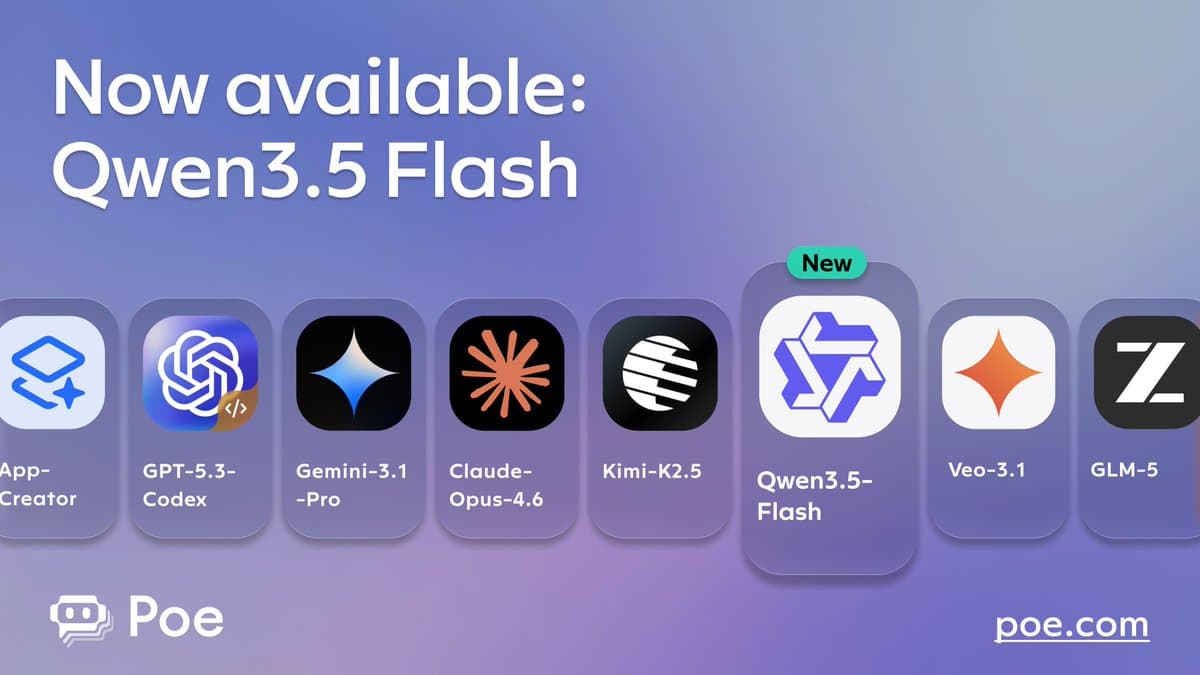
- Hardware innovations—like **SambaNova's SN50 chip**, **Qwen3.5 Flash**, and **multi-modal models**—support **high-performance inference** at the edge, complemented by **sandbox management tools**.
Recent breakthroughs such as **DeltaMemory** for **persistent cognitive storage** and **API Pick** for **secure, scalable data access** are redefining **long-term, context-aware autonomous systems**. Coupled with **best practices** in **API development** and **formal safety verification**, these advances **set the stage** for **trustworthy, scalable, and resilient AI ecosystems**.
In conclusion, **2024 marks a pivotal year** where **security**, **trust**, and **interoperability** are **integral to the core architecture** of autonomous agents—ensuring they are **powerful**, **trustworthy**, and **aligned** with societal and enterprise values in an increasingly automated world.