The U.S. labor market in 2026 remains marked by fragile dynamics and deep structural shifts, with new data and emerging trends underscoring the complexity facing policymakers as they navigate an uneven and polarized recovery. Despite modest weekly private-sector job gains, the latest midyear Bureau of Labor Statistics (BLS) benchmark revisions reveal a softer labor market than headline figures suggest, while sectoral layoffs, regional disparities, and immigration enforcement pressures intensify. Wage stagnation amid mixed inflation signals continues to strain consumer confidence and complicate Federal Reserve policy decisions. Meanwhile, structural transformations driven by AI, automation, and shifting worker expectations reshape labor market fundamentals, even as political gridlock inhibits coordinated reforms. Recent developments on rental vacancies and a surge in upskilling among workers add new dimensions to this evolving landscape.
---
### Midyear BLS Revisions Confirm Hidden Labor Market Weakness Despite Modest Job Gains
The midyear BLS benchmark revisions revealed that employment in late 2025 and early 2026 was revised downward by approximately **350,000 jobs**, marking a second consecutive year of significant downward adjustments. This revision challenges narratives of a resilient labor market and highlights underlying softness masked by headline employment gains.
- **Monthly layoffs remain elevated near 115,000**, consistent with recessionary pressures.
- **Long-term unemployment persists at 27% of all unemployed**, signaling entrenched structural mismatches.
- Internal Federal Reserve assessments now indicate a **net job decline in 2025**, complicating the policy outlook.
- Acting BLS Chief David Long emphasized the credibility of data amid skepticism:
> “There is no phony economic data and no outside interference in our labor statistics.”
- Fed Governor Christopher Waller noted:
> “The data revisions confirm that the labor market is weaker than headline numbers imply, complicating our policy decisions.”
Contrasting these revisions, **February 2026 weekly private-sector employment data** show modest gains concentrated in healthcare, professional services, and select manufacturing subsectors. However, analysts caution that these short-term improvements do not reverse a broader pattern of a fragile, polarized labor market.
---
### Deepening K-Shaped Recovery: Sectoral Layoffs and Regional Labor Market Realignments
The labor market’s bifurcated recovery deepens, driven by technology disruption, demographic shifts, immigration enforcement, and uneven regional economic transformations:
- **Technology Sector:** The ongoing **$650 billion AI investment wave** creates a stark divide. Legacy giants like Meta and Amazon continue layoffs driven by automation, while AI-focused firms such as Nvidia expand rapidly. AI startups flourish, but benefits remain concentrated within limited segments.
- **Healthcare:** While adding **82,000 jobs in January 2026**, rural and underserved areas face severe staffing shortages, intensifying wage pressures.
- **Logistics and Transportation:** The **SELF DRIVE Act** accelerates autonomous vehicle adoption. UPS and FedEx plan to lay off over **20,000 drivers in Q3 2026**, signaling profound structural change.
- **Manufacturing and Food Processing:** Semiconductor firms benefit from government incentives, but food processors like Tyson Foods impose hiring freezes amid supply chain issues.
- **Finance Sector Migration:** Texas surpasses New York as the largest finance employment hub, driven by tax incentives and innovation clusters in Dallas and Austin, exacerbating regional disparities.
Regions such as Romulus, Michigan, Pennsylvania, Texas, and Florida face compounded labor challenges due to immigration enforcement and Temporary Protected Status (TPS) expirations. Michigan Governor Michael Barr stressed:
> “We must tailor policies to address this uneven job redistribution to prevent widening inequality.”
Heightened immigration enforcement and administrative backlogs constrain labor supply:
- California’s **$35 million immigrant support allocation** aims to offset federal deportation impacts amid a state budget deficit.
- The phased rollout of the **Systematic Alien Verification for Entitlements (SAVE) program** complicates eligibility verification, slowing hiring in agriculture and healthcare.
- USCIS procedural delays persist despite the resolution of the May 2025 DHS partial shutdown.
- Increased ICE activity in Texas and Florida, coupled with TPS expirations affecting Yemeni nationals, worsen seasonal labor shortages in agriculture.
- Political responses are fragmented: Romulus cut ICE funding, while the federal “Freeze ICE” bill advances in the House but stalls in the Senate; enforcement uncertainties persist in Minnesota and other states.
Labor economists warn:
> “Without comprehensive immigration reform, the patchwork of enforcement and administrative delays will worsen labor shortages and deepen regional disparities.”
Declining native-born labor force participation compounds these supply constraints.
---
### Wage Stagnation Amid Mixed Inflation Trends Undermines Consumer Confidence
Wage growth has slowed sharply, limiting household purchasing power as inflation dynamics remain mixed:
- Wage increases hit a **five-year low of 0.5% in Q2 2026** (ADP data), lagging behind inflation.
- Headline CPI inflation eased to **2.2% year-over-year in June 2026**, the lowest since 2023, but core PCE inflation remains sticky at **2.9%**, above the Fed’s 2% target.
- This divergence dampens consumer confidence and discretionary spending.
- Labor turnover is projected to reach **52% by year-end 2026**, driven by workers seeking better benefits, flexibility, and security.
- Nearly half of surveyed firms have shifted from merit-based raises to flat, across-the-board **“peanut butter” raises**, risking demotivation and entrenched wage stagnation.
A leading labor economist commented:
> “The disconnect between soaring corporate profits and stagnant worker pay fuels a sense of betrayal that threatens social cohesion.”
Federal Reserve Chair Austan Goolsbee cautioned:
> “Headline inflation improvements mask persistent wage pressures and labor market complexities that require ongoing vigilance.”
---
### Federal Reserve Maintains Cautious Stance Amid Mixed Signals and Leadership Uncertainty
The Federal Reserve has kept the federal funds rate steady in the **3.50%–3.75% range throughout 2026**, navigating conflicting labor market and inflation signals with prudence:
- The March and June FOMC meetings concluded with near-unanimous votes to hold rates, but minutes reflect vigorous debate and openness to hikes if inflation or wages accelerate.
- Governor Christopher Waller described a March 2027 rate cut as a “coin flip,” highlighting ongoing uncertainty.
- Confirmation of Fed Chair nominee Kevin Warsh remains stalled amid congressional gridlock, prolonging leadership ambiguity.
- Vice Chair for Supervision Michael Bowman emphasized heightened regulatory scrutiny amid early credit tightening.
- Mortgage rates eased slightly to **6.1% in June 2026**, marginally improving affordability, though delinquencies remain elevated in vulnerable markets.
Former Dallas Fed President Richard Fisher warned:
> “Premature policy easing risks unraveling inflation gains; sustained higher rates may be necessary well into 2027.”
At the 2026 Technology-Enabled Disruption Conference hosted by the Federal Reserve Bank of Boston, officials discussed AI’s dual role as both a labor disruptor and a policymaking tool. The Fed is actively developing AI integration strategies, signaling a future where AI shapes labor dynamics and monetary policy alike.
Chair Goolsbee also highlighted a recent tariff ruling’s potential to ease inflation:
> “The tariff ruling offers a potential lever to reduce price pressures, complementing our existing policy tools.”
---
### Structural Transformation: AI, Automation, Worker Activism, and Labor Market Challenges
Fundamental shifts continue reshaping labor markets:
- The **SELF DRIVE Act** hastens autonomous vehicle adoption, threatening thousands of driving and logistics jobs.
- The **college wage premium reversed since 2025**, fueling debates over higher education’s value and driving demand for alternative credentials and reskilling.
- Chronic **childcare shortages** disproportionately reduce female and low-income labor force participation.
- The “loyalty penalty,” where long-tenured workers face wage stagnation, contributes to rising turnover rates.
- Union membership hit a **17-year high of over 17 million workers by mid-2026**, fueled by organizing in manufacturing, healthcare, and tech-adjacent sectors.
- Gig economy unionization efforts at Uber and Lyft have intensified, reflecting rising worker activism.
- High-profile labor disputes at SpaceX and Amazon have heightened public awareness of worker rights.
- Public skepticism toward official labor data has grown, fueled by viral social media narratives, challenging government transparency.
- Housing affordability constraints continue to limit worker mobility; however, recent rental vacancy data show promising progress.
- Lansing, Michigan, is pioneering AI and employee monitoring regulations amid growing concerns over algorithmic management and worker privacy.
---
### Emerging Labor Market Developments: Upskilling Surge and Rental Vacancy Progress
Two recent developments shed light on evolving labor market dynamics:
- **Upskilling Amid AI Uncertainty:**
As AI’s disruptive potential grows, job seekers are doubling down on education and skill acquisition. Artificial intelligence literacy is becoming a baseline expectation rather than a specialized skill, driving increased enrollment in reskilling programs, online courses, and vocational training. This surge reflects workers’ efforts to adapt to rapid technological change and secure stable employment amid uncertainty.
- **Rental Vacancy Improvements:**
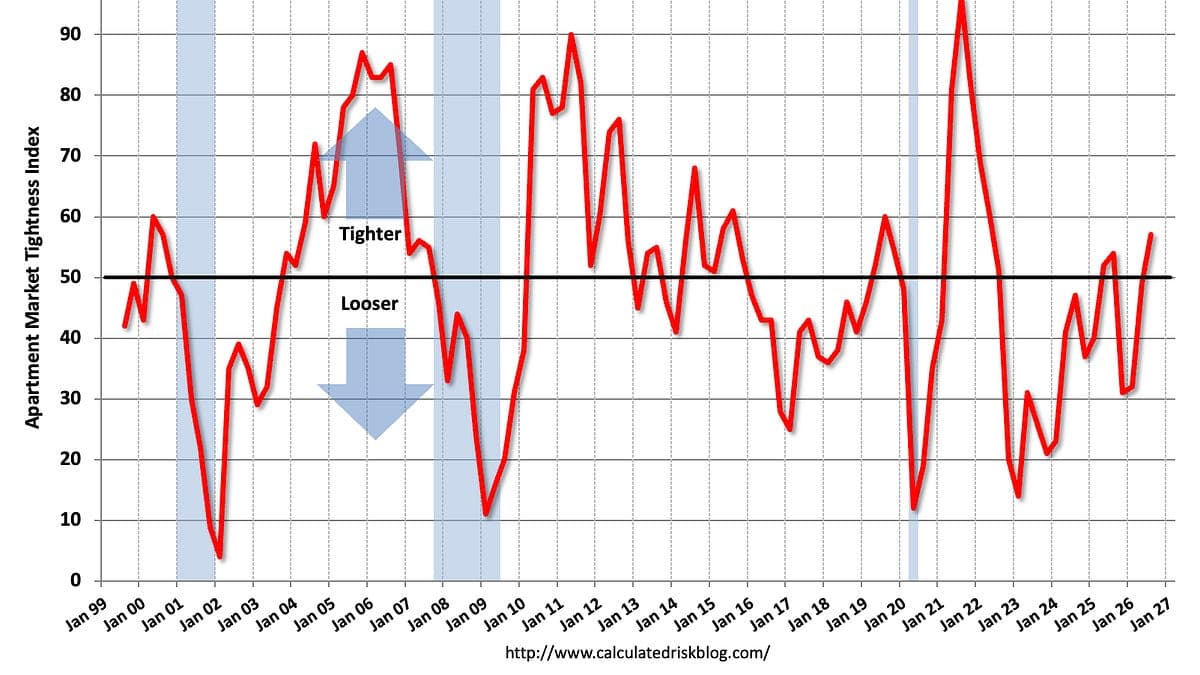
Rental vacancy rates rose to **7.2% in mid-2026**, a notable increase that may help ease shelter-driven inflation pressures. Given that shelter costs constitute a significant portion of CPI inflation, improved vacancy rates could support lower inflation and help keep mortgage rates steadier. This development offers a glimmer of relief for housing affordability and worker mobility, which have constrained labor market participation.
---
### Policy Proposals and Political Gridlock: Risks of Entrenched Fragility
Multiple policy initiatives aim to address labor market challenges but face significant hurdles:
- A proposed **“No Tax on Tips” deduction** could reduce federal income taxes for millions of tipped workers by an average of **$1,400**, providing much-needed financial relief.
- Retrospective analyses show a mixed labor market record under the Trump administration: robust job gains in 2024 with **1.5 million jobs added**, followed by a sharp slowdown in 2025 with only **181,000 jobs added**—the fewest in over two decades.
- The Niskanen Center advocates reforms to the **taxable wage base** to stabilize unemployment insurance (UI) trust funds, ensuring benefit availability amid economic volatility.
- Experts stress that UI reforms must be integrated into broader frameworks addressing skills mismatches, social safety nets, and workforce development.
Yet, political polarization and a wave of congressional retirements have stalled critical reforms in immigration, childcare, workforce development, AI governance, and UI solvency.
- Lawmakers cite polarization, burnout, and electoral uncertainty for their departures, impeding bipartisan cooperation.
- The prolonged Fed leadership vacuum reflects this broader political stalemate.
- Experts warn that without urgent, coordinated action, fragile labor market conditions and regional disparities risk becoming entrenched, threatening long-term economic health.
---
### International and Broader Economic Context
The International Monetary Fund (IMF) projects the U.S. economy to remain “buoyant” with accelerating growth in 2026 but cautions about persistent inflation risks and labor market vulnerabilities:
- IMF Managing Director Kristalina Georgieva emphasized the Fed’s challenge in balancing growth with achieving the **2% inflation target by 2027**.
- The IMF’s external assessment reinforces the Fed’s cautious stance and highlights the need for complementary fiscal policy addressing structural labor market issues.
- Without comprehensive reforms, inflation pressures and labor market imbalances could complicate the Fed’s policy path.
The economic slowdown in **Q4 2025**, exacerbated by a partial government shutdown, disrupted federal services and dampened confidence, compounding labor market fragility.
---
### Conclusion: Navigating a Fragile Labor Market at a Crossroads
As 2026 progresses, the U.S. labor market stands at a precarious juncture shaped by fragile balances and complex trade-offs. Accelerating AI and automation drive transformative yet uneven structural shifts, exacerbating sectoral and regional disparities. Labor supply challenges—intensified by immigration enforcement, administrative delays, and demographic trends—compound workforce shortages. Wage stagnation amid mixed inflation undermines consumer confidence, while political gridlock stalls essential reforms in immigration, childcare, AI governance, and unemployment insurance.
The Federal Reserve’s cautious, data-driven approach contends with leadership uncertainty and the imperative to harness AI as both a disruptor and policymaking tool. Encouraging signs like rising rental vacancies and a surge in upskilling offer some hope, but without transparent, coordinated bipartisan action addressing critical labor market reforms, the risk grows that fragility and inequality will become entrenched, threatening broadly shared prosperity in an increasingly complex economic environment.
---
**Sources:** Bureau of Labor Statistics 2026 revisions; ADP wage reports; Federal Reserve FOMC minutes and speeches; USCIS and DHS updates; ICE enforcement data; SAVE program documentation; Nvidia and tech sector earnings; healthcare employment statistics; Fannie Mae Q1 2026 earnings; congressional and judicial developments; labor market research; corporate profit-worker pay gap analyses; union organizing reports; childcare and workforce participation studies; Niskanen Center UI solvency analysis; Q4 2025 growth and government shutdown assessments; Federal Reserve Bank of Boston 2026 Technology-Enabled Disruption Conference; recent tax policy proposals; Bloomberg retrospective labor market analyses; Fed Chair Austan Goolsbee statements on tariffs and inflation; Federal Reserve official warnings on interest-rate cuts; IMF outlook statements; CME Group Fed Watch tool; Benzinga coverage of Fed rate decision signals; Governor Newsom’s $35 million immigrant support allocation; Binance News on weekly private-sector employment gains, February 2026; recent rental vacancy data; labor market upskilling reports.