# Evolving Safety Frameworks and Technological Safeguards in Long-Horizon Autonomous Agents of 2026
As 2026 advances, the landscape of long-horizon autonomous agents continues to expand in complexity and capability, driven by breakthroughs in reasoning, perception, platform architecture, and integration into critical sectors. Simultaneously, the safety, security, and regulatory frameworks surrounding these systems have evolved to meet the mounting risks posed by their deployment at scale. The recent developments reveal a concerted effort to embed safety from silicon to software, address adversarial threats, and establish normative standards—ensuring these systems serve society reliably and ethically.
## Breakthroughs in Autonomous Agent Capabilities and Deployments
The technological frontier has witnessed remarkable progress:
- **Advanced Reasoning and Planning:** Models such as **Mercury 2**, the state-of-the-art reasoning diffusion language model, now process over **1,000 tokens per second**, enabling **multi-week planning** and highly nuanced, long-term decision-making. This speed enhances agents’ ability to undertake complex, multi-step tasks with higher predictability but also raises safety concerns related to **goal drift** and **unintended behaviors**.
- **Multimodal Perception:** Systems like **Google Gemini 3.1 Pro** exemplify the integration of reasoning with perception across modalities—text, images, and audio—culminating in **next-generation autonomous solutions** for applications from **medical diagnosis** to **autonomous vehicles**. While these agents improve situational awareness, they demand sophisticated safety benchmarks to ensure **reliable interpretation** and **goal alignment**.
- **Platform and OS Innovations:** Platforms such as **Google’s Opal** enable **agent-driven workflows** emphasizing **scalability, traceability, and safety**. These facilitate **better oversight** and **auditability** of multi-agent processes, critical for deployment in high-stakes environments.
- **Industry Deployments:** Investments like **Wayve’s $1.5 billion Series D** fuel autonomous mobility initiatives, particularly in urban contexts, where safety is paramount. These deployments test the robustness of agents operating amidst real-world unpredictability.
**Significance:** These technological advancements unlock unprecedented autonomy but necessitate rigorous safety measures to prevent unpredictable or hazardous behaviors, especially as agents become integral to sectors such as healthcare, defense, and transportation.
## Progress in Safety Evaluation and Verification
Ensuring **predictability** and **goal alignment** is vital. The AI community has developed a suite of evaluation and verification tools:
- **Comprehensive Benchmarks:** **Super-benchmarks** assess agents across diverse real-world scenarios, exposing safety gaps in reasoning, perception, and decision pathways. **Multimodal safety benchmarks**—like **SAW-Bench** and **BiManiBench**—evaluate agents’ physical understanding and goal fidelity.
- **Process Reward Modeling (PRM) & World Guidance (WG):** These frameworks facilitate **goal alignment** by capturing **decision pathways** and enabling **context-aware reasoning**, reducing risks of **behavioral drift**.
- **Interpretability and Auditability:** Tools such as the **Model Context Protocol (MCP)** improve **system transparency**, making systems more **traceable** and **regulatory-friendly**.
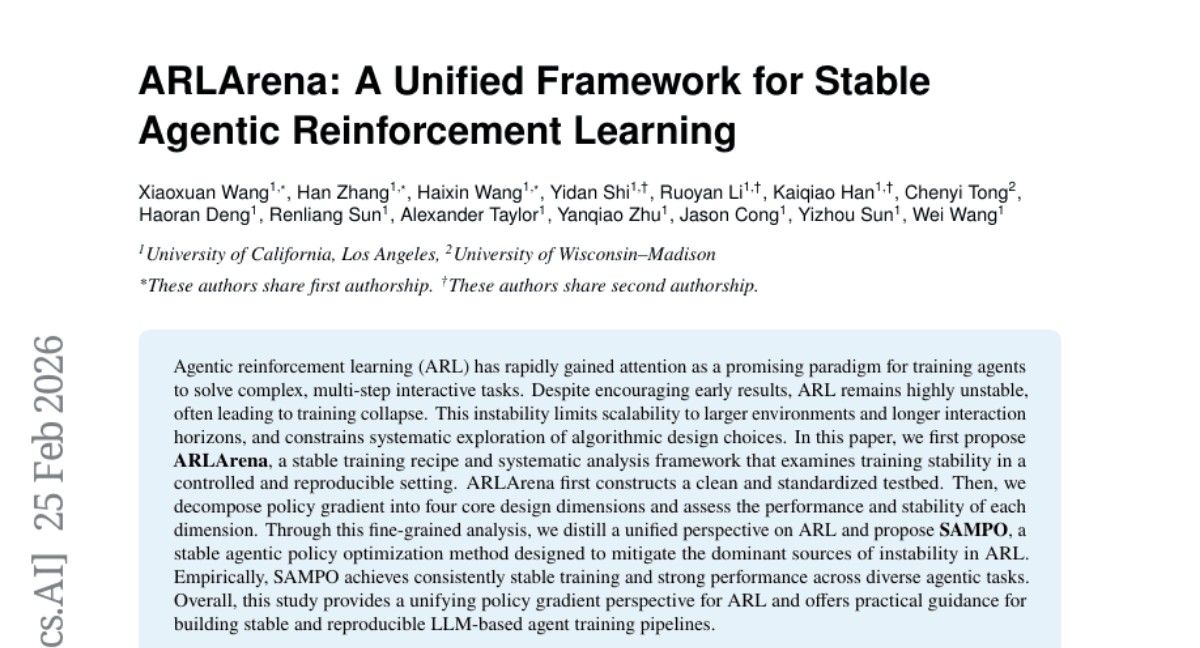
- **Robustness and Hallucination Mitigation:** Initiatives like **ARLArena**, **GUI-Libra**, **JAEGER**, and **NoLan** focus on **robustness**, **consistency**, and **hallucination detection**, ensuring agents perform reliably over extended periods.
**Implications:** These evaluation frameworks underpin **safe deployment**, **regulatory approval**, and **continuous safety improvements**, especially critical in high-stakes fields like healthcare and defense.
## Hardware Safeguards: Embedding Safety at the Silicon Level
Recognizing that **software safeguards alone are insufficient**, industry leaders are embedding safety directly into hardware:
- **Trusted Execution Environments (TEEs):** Companies such as **MatX**, founded by ex-Google TPU engineers, develop **hardware-enforced safety modules** that **prevent tampering**, **unauthorized reprogramming**, and **data exfiltration**—forming a **trust foundation** from silicon upward.
- **LLM-Optimized Chips:** Firms like **SambaNova** have secured **$350 million** for **specialized chips** with **real-time verification** features and **adversarial attack resilience**, essential for **defense**, **healthcare**, and **industrial** applications.
- **Hardware-backed Enclaves:** These **secure modules** serve as **trust anchors**, limiting **malicious manipulations** and **system vulnerabilities**, crucial for **autonomous defense systems** and **critical infrastructure**.
**Significance:** Embedding safety at the hardware level **substantially enhances robustness**, reduces vulnerabilities, and fosters **trustworthiness** in autonomous systems.
## Confronting Evolving Security Threats
Despite technological strides, **adversarial threats** persist and adapt:
- **Model Theft & Extraction:** Campaigns—particularly Chinese-led—have targeted proprietary models like **Claude**, risking **behavioral theft**, **malicious replication**, and **goal manipulation**.
- **Prompt and Visual Attacks:** Attackers exploit **prompt injections**, **visual memory exploits**, and **disinformation** techniques to **manipulate outputs** or **exfiltrate sensitive data**. For example, **Claude’s security tools** have unexpectedly triggered **cybersecurity flash crashes**.
- **High-Profile Failures:** The healthcare sector experienced **dangerous misclassifications**—notably **ChatGPT Health**’s failure to recognize urgent medical emergencies—highlighting the **critical importance of rigorous safety validation** in high-stakes environments.
**Defense strategies** now incorporate:
- **Hardware Enclaves and Trusted Execution:** Isolate critical processes to prevent tampering.
- **Anomaly Detection & Human Oversight:** Tools like **CanaryAI** monitor system behavior for anomalies, while human-in-the-loop controls provide essential oversight in sensitive deployments.
- **Cross-Modal Verification:** Agents employ **multimodal cross-checks** to detect hallucinations and manipulations, ensuring **output integrity**.
**Implication:** Layered defenses—combining hardware, anomaly detection, and human oversight—are essential to **maintain system integrity** and **prevent malicious exploits**.
## Regulatory and Normative Developments
As autonomous agents become embedded in societal infrastructure, **regulatory frameworks** and **international norms** are evolving:
- **EU AI Act:** Set for phased rollout starting **August 2026**, emphasizing **transparency**, **auditability**, and **risk management**. Organizations are now required to **integrate safety and security measures** into development pipelines to meet compliance.
- **Defense and Critical Infrastructure Standards:** Agencies like the **Pentagon** are implementing **stringent verification protocols** and **security standards** to protect **military** and **critical systems** against adversarial threats.
- **International Dialogue:** Discussions on **autonomous weapon regulation**, **cross-border oversight**, and **conflict prevention** continue, aiming to **prevent misuse** and **foster stability**.
- **Industry Governance:** Companies like **Anthropic** have intensified efforts around **ethical AI practices**, **web crawling policies**, and **public accountability**, promoting **responsible development**.
**Significance:** These frameworks aim to **standardize safety practices**, **prevent misuse**, and **cultivate international cooperation**—crucial for societal trust and stability.
## Recent Industry Moves and Infrastructure Developments
Recent initiatives are shaping the **future infrastructure** and **enterprise adoption** of autonomous systems:
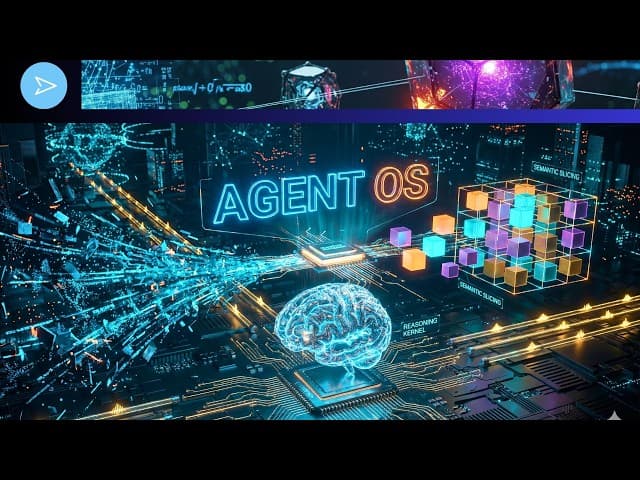
- **Multi-Agent Operating Systems:** **AgentOS** offers a **multi-agent management platform** emphasizing **runtime safety**, coordinating multiple agents while maintaining safety boundaries. A recent demo (video: 31:43) showcases its potential for **scalable, safe multi-agent workflows**.
- **Enhanced Speech and Robotics Integration:** **gpt-realtime-1.5** emphasizes **more reliable real-time speech interactions**, vital for **voice-enabled autonomous systems**. Meanwhile, **Intrinsic** and **Google** are partnering to embed **AI-driven robotic safety protocols** in manufacturing environments.
- **Enterprise & Infrastructure Investments:** Companies like **AWS** are shifting toward **outcome-based pricing models** and reorganizing around **AI agents**, signaling a broader industry recognition of **autonomous system safety and oversight** as core business concerns.
- **Public and Regulatory Pushback:** Recent responses, such as **Massachusetts’** rejection of **ChatGPT** use within the executive branch, underscore societal concerns about **AI safety** and **trust**, emphasizing the need for **transparent, safe deployment standards**.
**Implication:** These moves reflect a **shift toward robust, scalable, and safe infrastructure** for enterprise and governmental adoption, with **safety and oversight** at the forefront.
## Current Status and Future Outlook
The trajectory of **long-horizon autonomous agents** in 2026 showcases **remarkable technological progress** intertwined with **heightened safety and security efforts**. The integration of **hardware safeguards**, **layered defenses against adversarial threats**, and **rigorous regulatory frameworks** signifies a maturing ecosystem committed to **trustworthy AI deployment**.
**Key takeaways:**
- **Technological innovations** are enabling agents to operate over **extended horizons** and in **complex environments** with increasing autonomy.
- **Safety evaluation** tools and **verification research** are central to **aligning systems** with societal values and regulatory standards.
- **Hardware-level safeguards** and **layered security defenses** are critical to **resilience** against evolving threats.
- **Regulatory frameworks** like the **EU AI Act** and **international norms** are shaping responsible development and deployment.
- **Industry investments** and **infrastructure shifts** point toward a future where **autonomous agents** are embedded seamlessly into societal functions—if safety and oversight are maintained.
Ultimately, **balancing innovation with responsibility** remains the central challenge. The ongoing collaboration across industry, academia, and government will determine whether society can harness the full potential of autonomous agents while safeguarding against their risks—ushering in an era of **trustworthy, safe, and ethically governed AI**.