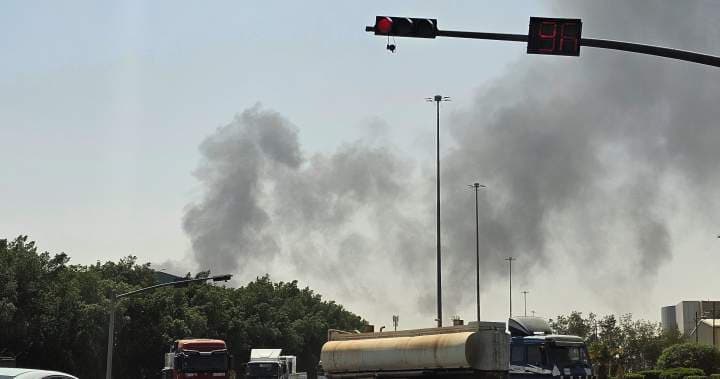
The global security environment in 2030 continues to be defined by intensifying geopolitical rivalries, protracted kinetic conflicts, and an expanding array of asymmetric threats that challenge international stability. Recent developments have further complicated this landscape, underscoring the urgent need for coordinated diplomatic, military, and economic responses to manage escalating risks and prevent wider conflagrations.
---
### Ukraine Conflict: Persistent Stalemate Amid Intensified Drone Warfare and Expanding Foreign Fighter Presence
The war in Ukraine remains the principal kinetic flashpoint of global instability, characterized by entrenched attritional battles and evolving warfare modalities:
- **Incremental Ukrainian Advances Against Staunch Russian Defenses**: Ukrainian forces have reclaimed roughly **400 square kilometers** and eight settlements in recent months, demonstrating improved operational capabilities and effective integration of Western-supplied weaponry such as HIMARS and precision artillery. However, Russian forces maintain heavily fortified positions in eastern Donbas, resulting in a fragmented and highly fluid frontline that hinders decisive breakthroughs.
- **Escalation of Drone and Missile Exchanges**: The conflict’s aerial dimension has intensified markedly. Russian air defense systems reportedly intercept **up to 300 Ukrainian drones daily**, including complex **swarm tactics** designed to saturate and disrupt artillery and logistics nodes. Ukraine continues persistent missile strikes targeting Russian supply chains and command centers, while Russia’s retaliatory missile campaigns focus heavily on Ukraine’s energy infrastructure to undermine civilian morale ahead of the harsh winter. Notably, Ukraine’s diversification and hardening of its energy grid have prevented the worst blackout scenarios, mitigating some humanitarian impacts.
- **Growing Foreign Fighter Involvement**: Intelligence reports highlight that over **1,700 African fighters** are currently engaged on the Russian side, reflecting a significant internationalization of the conflict. This influx complicates both the military dynamics on the ground and the prospects for post-conflict reconciliation and security stabilization, raising concerns about the conflict’s spillover effects and the long-term security implications for the African region.
- **Maritime Tensions and Kremlin Instability**: Russia is facing operational strains and morale challenges, illustrated by sabotage-linked explosions near Leningrad and a series of Kremlin purges targeting high-ranking military officials. Naval confrontations have escalated in the Baltic and Black Seas, with Russia condemning increased Western naval patrols and seizures. These developments heighten the risk of inadvertent escalation in these strategically sensitive maritime zones.
- **Diplomatic Deadlock and NATO’s De-confliction Role**: Despite ongoing efforts, Geneva negotiations remain stalled with no immediate political resolution in sight. NATO has maintained a focus on de-confliction measures along Eastern European borders to prevent accidental clashes, though the risk of miscalculation remains elevated given the conflict’s intensity and complexity.
---
### Iran’s Nuclear Ambitions and Regional Posture: Accelerated Weapons Development Amid Deepening Sino-Iranian Ties
Iran’s trajectory continues to heighten Middle Eastern volatility, driven by accelerated nuclear weapons development, expanded military cooperation with China, and intensifying proxy conflicts:
- **Accelerated Nuclear Development at Parchin**: Satellite imagery confirms increased activity at the **Parchin military complex**, consistent with Tehran’s drive toward establishing an “irreversible” nuclear weapons capability. Supreme Leader Ayatollah Khamenei has publicly dismissed Western diplomatic overtures as “doomed to fail,” while Foreign Minister Abbas Araqchi reaffirmed uranium enrichment as a “non-negotiable” red line, signaling a firm hardening of Iran’s nuclear stance.
- **Deepening Military Cooperation with China**: Exclusive reports reveal Iran is nearing acquisition of **supersonic anti-ship missiles from China**, significantly enhancing its maritime strike capabilities in the Persian Gulf and the Strait of Hormuz. This emerging arms deal exemplifies the deepening Sino-Iranian strategic partnership amid broader U.S.-China geopolitical rivalry, complicating allied naval operations in one of the world’s most critical energy transit corridors.
- **Expanded IRGC Exercises and Coercive Posturing**: The Islamic Revolutionary Guard Corps (IRGC) has conducted large-scale military drills along Iran’s southern coast, including intermittent closures of the **Strait of Hormuz** to demonstrate its capacity to control this vital chokepoint and exert geopolitical pressure on global energy markets and regional adversaries.
- **Surge in Proxy Conflicts and Regional Instability**:
- Violence has intensified in Gaza, Lebanon, Syria, and Yemen, resulting in rising civilian casualties and elevating fears of a broader regional conflagration.
- The **Gaza International Security Force (ISF)** has seen expanded multinational involvement amid escalating hostilities, with Pakistan cautiously negotiating potential troop contributions, reflecting the complex regional and international stakes in the conflict.
- **Internal Repression and Societal Polarization**: Iran’s domestic crackdown on dissent persists, with credible reports of death sentences linked to January’s protests. This harsh repression risks deepening internal polarization and diminishing the prospects for diplomatic engagement.
- **U.S. Diplomatic Strategy**: The recent **State of the Union** emphasized a dual approach of calibrated pressure combined with diplomacy, underscoring Washington’s intent to balance containment of Iran’s nuclear ambitions with sustained engagement despite Tehran’s entrenched defiance.
---
### Strategic Friction and Systemic Risks: Nuclear Rhetoric, Arms Control Breakdown, and Asymmetric Threats
- **Escalating Nuclear-Risk Rhetoric from Moscow**: Russia continues to issue stark warnings about the potential for inadvertent or deliberate nuclear conflicts, reflecting heightened anxieties stemming from the erosion of key arms control treaties and transparency mechanisms. This unraveling arms control architecture fuels mutual distrust, increasing the risk of flashpoints not only in direct confrontations but also through proxy and asymmetric engagements.
- **Global Calls for Arms Control Renewal**: Pope Leo’s recent appeal for the renewal of U.S.-Russia nuclear arms talks echoes widespread international concerns regarding the existential threats posed by deteriorating strategic stability.
- **U.S. Military Drawdown in Syria and Regional Implications**: The ongoing withdrawal of U.S. forces from northeastern Syria risks creating a security vacuum that could facilitate an ISIS resurgence and undermine U.S. influence over proxy conflicts and humanitarian operations across the broader Middle East.
- **Escalating Asymmetric Threats and Transnational Crime**:
- The killing of CJNG leader ‘El Mencho’ has triggered violent reprisals in western Mexico, including arson attacks and highway blockades.
- A newly established **U.S. military-led task force** is intensifying intelligence sharing and operational cooperation with Mexican authorities to counter the cartel’s increasing use of weaponized drones and advanced surveillance technologies.
- U.S. agencies are accelerating deployments of counter-drone systems and upgrading border infrastructure to address evolving transnational criminal threats.
---
### Economic and Technological Competition: De-risking, Europe-China Engagement, and Arctic Governance Challenges
- **Global De-risking Amid U.S.-China Rivalry**: Middle powers are actively recalibrating trade and economic relationships to diversify supply chains and reduce dependencies amid the bipolar tech and economic rivalry between Washington and Beijing. This realignment reflects a pragmatic response to geopolitical volatility.
- **Germany’s Pragmatic Reset with China**: German Chancellor Friedrich Merz recently secured a Chinese commitment to increase imports of high-quality German goods, signaling Europe’s largest economy’s pragmatic approach to balancing economic interests amidst geopolitical tensions.
- **Taiwan’s Semiconductor Sovereignty**: Taiwan continues to resist U.S. pressure to relocate semiconductor manufacturing, emphasizing its sovereignty and the strategic importance of its semiconductor industry. Meanwhile, China accelerates indigenous semiconductor and aerospace development to counter U.S. export controls, intensifying cybersecurity and economic frictions.
- **India’s Nuanced Economic Balancing**: India selectively eases restrictions on Chinese firms while simultaneously bolstering domestic production capabilities, reflecting a nuanced approach to managing economic interests alongside geopolitical considerations.
- **East Asian Diplomatic Strains**: Japan’s public criticism of China’s dual-use export controls adds further tension to regional diplomatic relations, complicating East Asian security dynamics.
- **Arctic Geopolitics and Governance**: Sino-Russian Arctic cooperation has cooled following PLA leadership purges. Simultaneously, the U.S. and Denmark have intensified efforts to secure shipping lanes and resource access, although Denmark’s refusal to host a U.S. hospital ship highlights domestic sensitivities complicating governance and territorial disputes in this strategically vital region.
---
### Strategic Imperatives and the Way Forward
The interwoven nature of current global threats demands urgent, coordinated international action across multiple domains:
- **Institutionalize Crisis Communication and De-confliction**: Expand and formalize direct communication channels among key actors—Russia, NATO, Iran—to reduce risks of inadvertent escalation, particularly amid intensified drone and missile exchanges.
- **Enhance Multilateral Diplomacy and Humanitarian Access**: Prioritize stabilization efforts in Gaza, promote Palestinian reconciliation, and sustain calibrated U.S.-Iran dialogues to prevent further Middle East destabilization.
- **Integrate Stabilization and Counterterrorism Efforts**: Coordinate across multiple conflict zones—including Syria, Myanmar, eastern Congo, and Nigeria—to degrade extremist networks and support long-term peacebuilding.
- **Safeguard Maritime Chokepoints**: Implement joint diplomatic and security initiatives to protect strategic trade arteries such as the Strait of Hormuz, Bab el-Mandeb, and Suez Canal from disruption.
- **Balance Technological Competition with Cybersecurity Cooperation**: Pursue structured trade diplomacy aimed at easing U.S.-China tensions while protecting critical supply chains against emerging cyber and tech threats.
- **Reinforce Arctic Governance Frameworks**: Manage territorial disputes, environmental protection, and strategic competition through multilateral mechanisms to preserve stability in the Arctic region.
- **Mitigate Iran’s Regional Risks**: Employ calibrated humanitarian aid and sustained diplomatic engagement to temper hardline tendencies and reduce the risk of wider conflict escalation.
- **Adapt Economic Policies to Geopolitical Volatility**: Navigate inflationary pressures, fiscal constraints, and market uncertainties amid ongoing geopolitical shocks.
- **Bolster Regional and Domestic Security Capacities**: Enhance Europe and North America’s ability to confront rising political unrest, evolving terrorist threats, and the expanding menace of weaponized drones.
---
### Conclusion
As 2030 unfolds, the international security landscape remains a complex and precarious web of grinding kinetic conflicts, strategic rivalries, and asymmetric threats. The protracted war in Ukraine epitomizes the brutal and evolving nature of contemporary conflict, compounded by rising foreign fighter flows and maritime tensions. Iran’s accelerating nuclear ambitions, intensifying repression, and deepening Sino-Iranian military ties compound Middle Eastern volatility, while Russia’s nuclear rhetoric and the breakdown of arms control frameworks exacerbate systemic global risks.
Simultaneously, escalating economic and technological competition among great powers reshapes global trade and diplomatic alignments, with middle powers navigating a delicate balancing act amid U.S.-China rivalry. Against this volatile backdrop, sustained, coordinated, and multilateral engagement remains imperative to prevent escalation, protect vital interests, and uphold a fragile global order under mounting strain.