Ford’s 2025 Financial Story Deepens: Record Revenue, Heavy Losses, and an Uncertain EV Future
Ford Motor Company’s 2025 financial results initially revealed a stark duality: a record-breaking **$187 billion in revenue** set against sizeable losses, primarily driven by a **$19.5 billion writedown on EV assets**. Since then, new data on Ford’s 2026 EV market performance, executive commentary on costly strategic pivots, and evolving market dynamics have added critical layers to the story—highlighting both the promise and peril of Ford’s ongoing transformation.
### Recap: A Financial Rollercoaster in 2025
Ford’s 2025 results underscored the complexity of navigating the transition from combustion engines to electric vehicles:
- **Q4 2025 loss of $11.1 billion**, the largest quarterly deficit in nearly two decades, predominantly due to the massive EV asset writedown.
- **Full-year net loss of $8.2 billion** despite record revenue, reflecting elevated costs from recalls, platform retooling, and EV development.
- **Margins remained pressured**, with supply chain challenges and operational inefficiencies weighing on profitability.
- The company maintained a **robust ~4.2% dividend yield**, continuing to attract income-focused investors even as profitability faltered.
- Following the earnings release, Ford shares rallied to **12-month highs near $14-$14.5**, buoyed by institutional buying (notably from DNB Asset Management) and heightened options market activity signaling mixed but active investor interest.
### New Developments: 2026 EV Sales Trends and Market Share
Recent industry data reveals that Ford’s EV momentum has encountered significant headwinds early in 2026:
- According to **CarEdge’s US EV sales update**, Ford experienced a **notable dip in EV sales during Q4 2025 and into 2026**, in contrast to competitors like General Motors, which gained ground to solidify second place in the US EV market behind Tesla.
- This sales softness reflects broader challenges including **production bottlenecks, model refresh delays, and intensifying competition** as legacy automakers and new entrants ramp up EV offerings.
- Ford’s declining fourth-quarter EV sales mark a concerning trend that raises questions about the company’s ability to maintain or grow its market share in a rapidly evolving segment.
### Executive Insights: Jim Farley on the Costly EV U-Turn and Strategy Execution
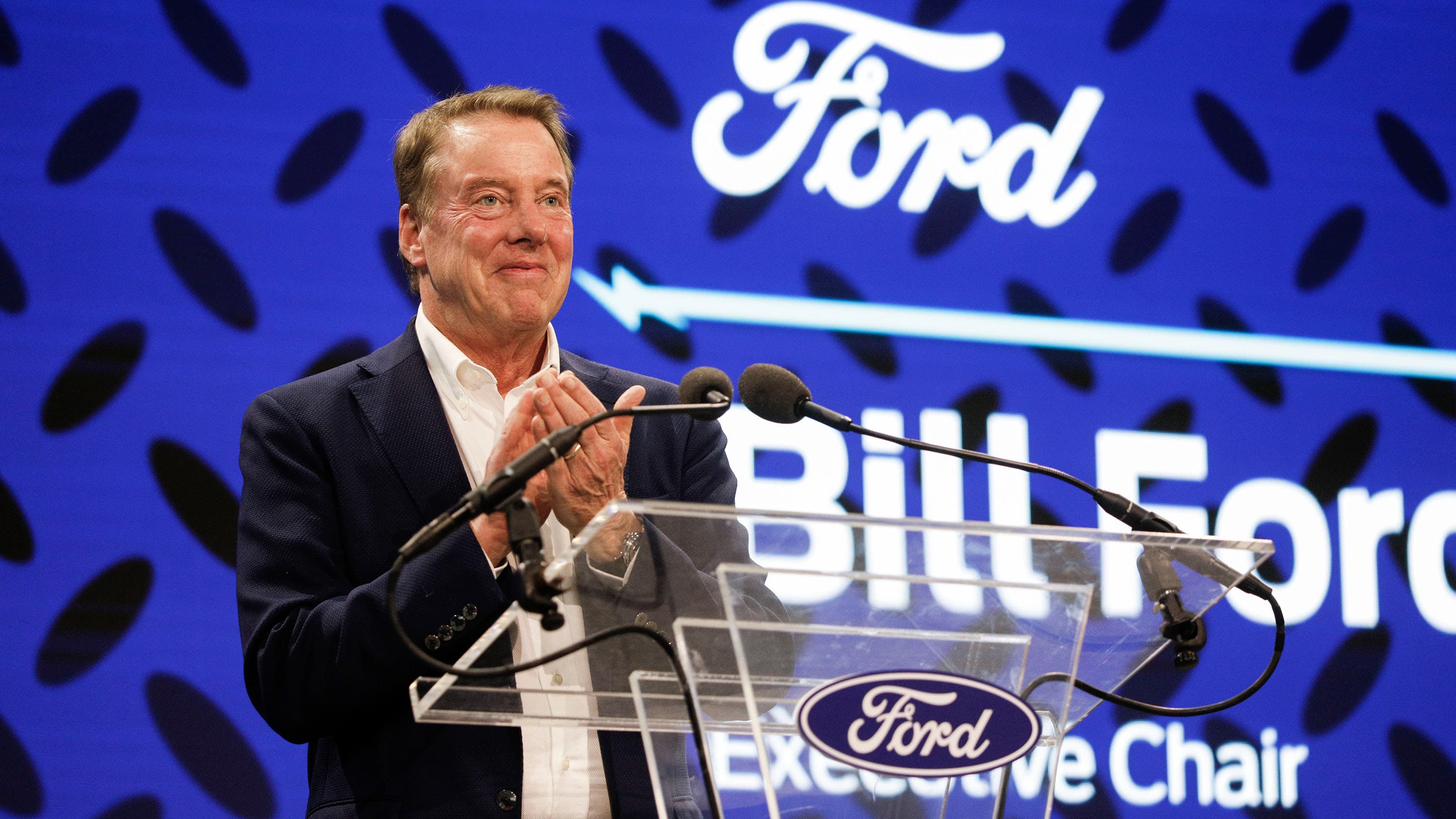
Ford’s CEO Jim Farley has publicly acknowledged the financial and strategic challenges embedded in the company’s electric vehicle pivot:
- Farley described the company’s EV transition as a **"costly U-turn,"** emphasizing that previous investments and platform decisions required recalibration to better align with market realities and technological advances.
- He noted that Ford’s **operating margin has averaged just around 3% over the past five years**, a figure far below industry leaders, illustrating the financial pressure the company faces.
- Farley’s commentary highlighted the **trade-offs between aggressive EV investment and short-term profitability**, with a clear message that margin improvement will depend on scaling newer EV platforms efficiently and controlling capital allocation.
- The CEO underscored Ford’s “full-throttle” approach to electrification and off-road vehicle segments, signaling confidence in long-term growth but also acknowledging near-term execution risks.
### Implications for Profitability, Dividend, and Investor Sentiment
The combination of slowing EV sales, costly strategic pivots, and margin pressure has intensified the debate around Ford’s near- and medium-term outlook:
- **Profitability remains uncertain.** While record revenue underscores demand and product strength, the substantial EV writedown and ongoing costs highlight the challenges of turning ambitious EV plans into sustainable profits.
- The **dividend yield of ~4.2%** continues to be a strong draw for income investors, but its sustainability depends heavily on Ford’s ability to improve cash flow and earnings amid elevated capital expenditure for EV development.
- Investor interest remains robust, as evidenced by the recent stock rally and institutional buying, but mixed insider trading activity reflects internal uncertainty about valuation and timing.
- The current stock price, trading near or slightly above analyst targets, may already incorporate some optimism about Ford’s EV turnaround, but the **execution risk and market competition warrant close monitoring**.
### Looking Ahead: What to Watch in 2026
As Ford progresses through 2026, several key factors will shape investor confidence and the company’s trajectory:
- **Upcoming earnings reports and guidance updates** will be critical to assess whether Ford can stabilize margins and return to profitability.
- **EV delivery trends and market share shifts** will provide tangible evidence of the company’s competitiveness in the electric vehicle sector.
- **Cost control measures and capital allocation decisions**, especially around platform investments and recalls, will influence both profitability and dividend sustainability.
- Continued **investor scrutiny and market sentiment** will hinge on Ford’s ability to demonstrate tangible progress in its EV strategy execution without sacrificing financial discipline.
### Conclusion
Ford’s 2025 results—marked by record revenue and heavy losses—were only the beginning of a tumultuous journey. Recent sales data and executive remarks reveal a company wrestling with the high costs and strategic recalibrations necessary to compete in the electrified future. While the **~4.2% dividend yield and recent stock strength reflect enduring investor interest**, the path to consistent profitability and market leadership remains fraught with risk. As 2026 unfolds, Ford’s ability to execute on its EV ambitions, manage costs, and sustain dividends will be decisive factors shaping the legacy automaker’s next chapter.